At Werner Enterprises, the software problem began with something the trucking company already liked: its own transport-management system. It was homegrown. It did things Werner’s way. Some prospective suppliers were unwilling to work with it, according to Werner’s technology chief, Danny Lilley. Platform Science was willing. In an industry devoted to moving things, the revealing question was what could stay put.
- Virtual Vehicle connects truck hardware, driver apps, and fleet systems.
- Compatible factory equipment can spare fleets an aftermarket installation.
- The 2025 Trimble telematics acquisition widened the company’s reach.
That is the useful starting point for understanding Platform Science. The company sells fleet software, certainly. But its larger proposition concerns the relationship between things that wear out at different speeds. A truck remains a truck while the applications around it change. Why should replacing one force an expensive conversation about replacing the other?
01 / The cab has a compatibility problem
Founded in San Diego in 2015 by Jack Kennedy and Jake Fields, Platform Science entered a business accustomed to proprietary systems. Kennedy had been president of Qualcomm Enterprise Services. Fields brought experience building companies in connected vehicles and industrial IoT. Their stated mission, “make transportation smart,” becomes more interesting when translated into a practical ambition: give fleets more control over their technology.
Virtual Vehicle is the infrastructure for that ambition. It combines computing on the vehicle with cloud services, connecting drivers, devices, vehicle data, and applications. On compatible trucks, it can use hardware installed by the manufacturer. For vehicles without compatible equipment, the platform supports aftermarket hardware. The word “compatible” deserves its place in the sales conversation.
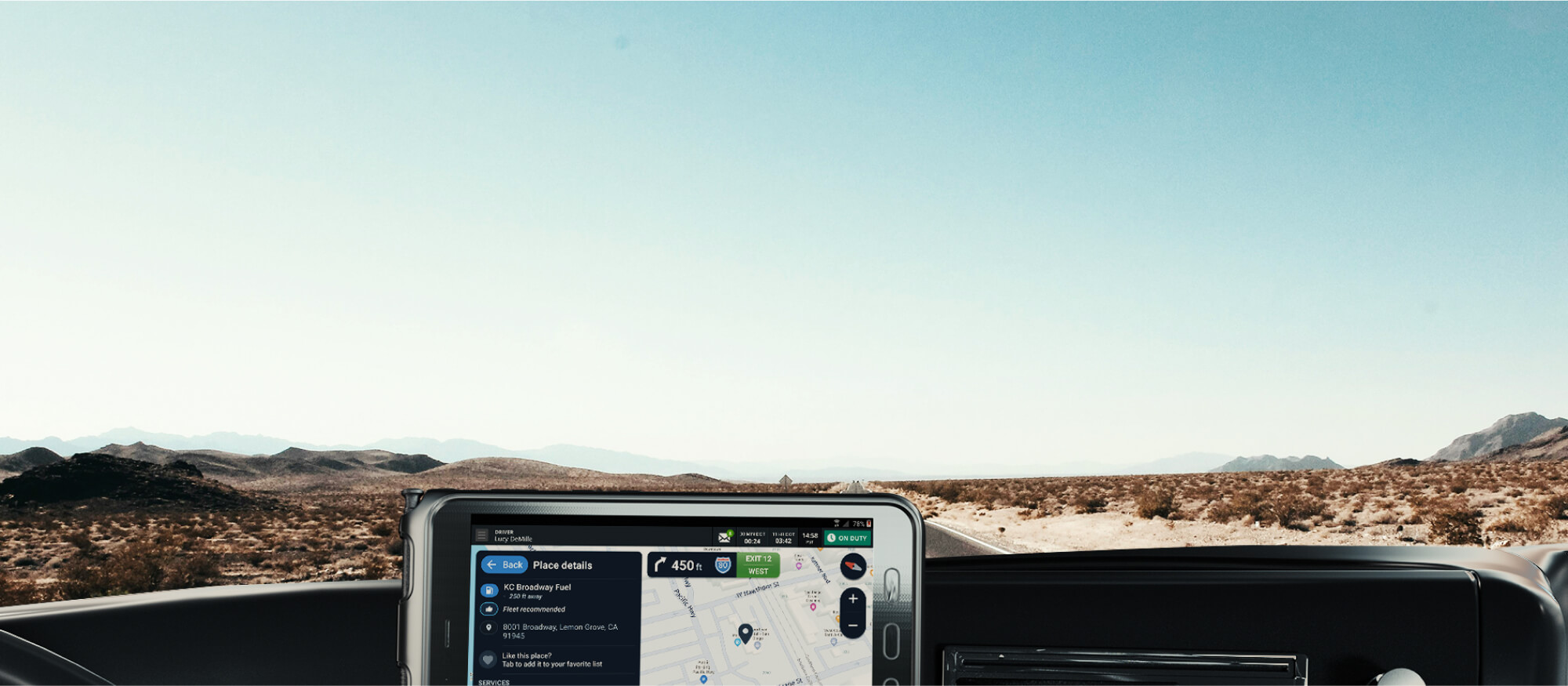
The smartphone comparison is helpful because the central trick is familiar. One device can support applications from several makers. Platform Science’s marketplace applies that logic to navigation, document capture, weigh-station bypass, maintenance, and other fleet tasks. Collaborations with Daimler Truck North America, Navistar, and PACCAR put vehicle manufacturers inside the strategy. Getting access to the truck is part of getting distribution.
02 / The small tyranny of typing
A driver’s working day contains plenty of tasks that do not require driving. Hours need recording. Inspections need documenting. Dispatch needs updates. Platform Science’s own applications include PS HOS for hours of service, PS DVIR for vehicle inspections, PS Messages for communication, and PS Workflow for guided jobs and automated entries. Instinct Fleet Solutions adds another family of driver and back-office products.
At Werner, nearly 80 percent of the driver data needed by the back office travels through PS Workflow, according to Platform Science’s customer spotlight. The significance is less typing and fewer disconnected steps. Lilley’s account also identifies an early procurement obstacle: suppliers that would not accommodate the existing system. Platform Science’s flexibility offered a reason to choose it without starting the entire operation over.
“We have a homegrown, custom-built TMS system that some solutions were unwilling to work with.”Danny Lilley / VP and CTO, Werner Enterprises
Mesilla Valley Transportation supplies a different test. Platform Science reports onboarding 1,600 MVT trucks in 76 days, averaging more than 20 daily. That is evidence of a completed deployment at one fleet, rather than a universal timetable. Cheema Freightlines’ spotlight describes another incentive: simpler workflows and a more approachable driver experience as its operation grew.
About 21 trucks per day, averaged across the rollout. A deployment measure, not a promised customer result.
03 / The people buying in also build trucks
This is an enterprise SaaS business, with fleet software, application management, integrations, and rollout support. Customers include carriers such as Schneider, Werner, C.R. England, and Covenant. The buying decision reaches beyond a monthly software bill: vehicle equipment, installation, integration work, and driver training all belong in the calculation. A fleet should ask for a scoped deployment quote before treating factory hardware as automatic savings.
Building this infrastructure has required substantial capital. A $115 million Series C led by SoftBank Vision Fund 2 was announced in February 2022. Another $125 million in growth capital followed in April 2024. That round included Daimler Truck, PACCAR, Cummins, Schneider, C.R. England, and RyderVentures. When customers and manufacturers invest, the cap table starts resembling a diagram of the market.
04 / Buying a bigger installed base
In February 2025, Platform Science announced completion of its acquisition of Trimble’s global transportation telematics business units. Trimble became a shareholder and gained a board seat. Its Enterprise, Maps, Vusion, and Transporeon businesses remained outside the deal. This distinction matters: Platform Science bought a defined telematics operation, with a continuing commercial relationship around it.
The transaction announcement had put the acquired businesses’ trailing annual revenue at approximately $300 million and recurring annual revenue at approximately $200 million in the second quarter of 2024. Those are figures for the acquired units at that time, not Platform Science’s current consolidated revenue. The deal made the platform’s compatibility promise consequential for a broader population of existing users.
05 / Open does not mean anything goes
More partners bring more useful work into reach. In March 2025, Cummins and Platform Science announced Vehicle Health Intelligence, bringing engine-health capabilities into Virtual Vehicle. A July 2026 Michelin Connected Fleet partnership targeted predictive tire insights. In May 2026, Platform Science announced Canadian ELD certification on Daimler’s CTP2 hardware, a specific development for compatible cross-border fleets.
There are boundaries. Every new Android application version requires Platform Science’s SPEED certification. Hardware support, regulatory coverage, integration fit, and training still need checking. Buyers comparing alternatives such as Samsara or Geotab should test their own workflow on their actual equipment. The useful lesson to copy is to preserve what already works, then measure one troublesome handoff before expanding the deployment.
Platform Science even takes that test on the road. Its Connected Vehicle Lab includes a 53-foot demonstration trailer. There is something pleasingly literal about selling a software ecosystem by bringing a truck. For the fleet manager, the final examination remains ordinary: can the driver finish the next task with less fuss?