connected-vehicles
(20)
The PR Firm That Taught a Highway to Explain Itself
Global-5 found a durable niche in the least glamorous moment of a public project: when a driver, resident or reporter asks, “What does this mean for me?” Its answer is equal parts newsroom, research lab and road crew.
Zonar’s big idea: make the driver get out and look
A wooden prototype became a fleet-management business by making vehicle inspections harder to fudge. Now Zonar wants to run the rest of the school-bus day, too.
Toyota’s Cars Produce a Torrent of Data. This London Team Makes It Useful.
Toyota Connected Europe sits behind the app, the fleet dashboard and the data pipe - turning signals from connected cars into services people can understand and Toyota can operate.

Journeo Makes the Bus Stop Talk - and the Depot Listen
The British transport-tech group found a profitable place between the bus, the screen and the cloud. Its best trick is making equipment bought in different decades behave like one system.

Raj Kanaya Has Spent a Career Making Machines Talk
Before cars became software, Raj Kanaya was already wrestling with the pipes beneath the cloud. His route from data-center switches to connected vehicles reveals a career built around one stubborn question: how do you make complicated infrastructure useful?
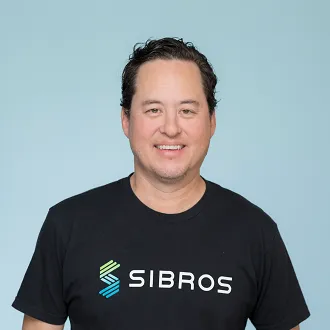
Albert Lilly Has Spent a Career Making Complicated Technology Make Sense
From online compliance courses to cars that update overnight, the Sibros CMO has built a career around a deceptively hard task: translating complex systems into useful stories.

A Third Recall Sent Him Back to the Dealer. So He Built the Software Layer Carmakers Were Missing
Sibros started with an irritating question: why should a software bug require a trip to the dealership? Its answer grew into a cloud control room for the messy, safety-critical life of a modern vehicle.

Urgently Put the Tow Truck on a Map - Then Learned the Map Wasn't the Business
The app made a miserable roadside ritual feel trackable. The harder lesson was that software can optimize a tow, but it cannot wish away trucks, weather, thin margins or customer concentration.

David Hodge Is Teaching Fleets to Speak Software
He started with subway directions that worked underground. Now the Embark founder and former Apple engineering manager is removing the hardware, handoffs, and guesswork from running connected vehicles.
Audax Labs
The Seattle-area technology company pairs consulting muscle with a shelf of homegrown products - betting that enterprise transformation works better when the people drawing the blueprint can also build the machinery.

AIRLINQ
The connected world runs on a mess of SIMs, carriers, invoices and national rules. AIRLINQ wants to turn that mess into one control panel - and make every connected car, meter and machine easier to operate as a business.
Aeris
Aeris spent three decades making machines talk over cellular networks. Now, with 104 million devices in its orbit, it wants to make sure nobody dangerous is listening - or speaking back.
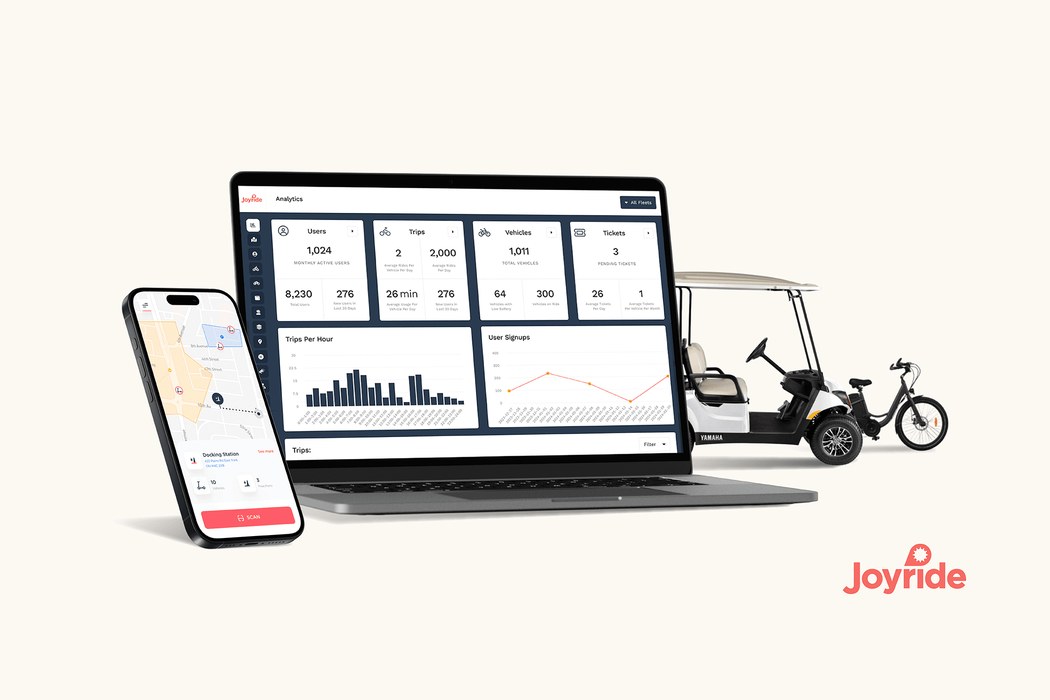
Joyride
Joyride is a Toronto-based mobility software company that gives operators, cities, dealers and OEMs a white-label platform to launch and run shared and rental fleets of e-bikes, e-scooters, golf carts, low-speed vehicles and other lightweight vehicles. Its hardware-agnostic system turns vehicles into connected, keyless and trackable assets, pairing branded rider apps with a fleet-management dashboard, IoT connectivity, payments and increasingly AI-driven operations tools. Founded in 2014 and backed by Yamaha Motor, Joyride powers fleets across 250+ markets on five continents.

Commsignia
Commsignia is a vehicle-to-everything (V2X) technology company that builds the software stacks, on-board units, roadside units and cloud platforms that let cars, road infrastructure and traffic operators talk to one another. Founded in Hungary in 2012 and now headquartered in Santa Clara, California, the company supplies standards-compliant C-V2X and DSRC solutions used by automakers, road operators and departments of transportation across more than 20 countries, with the goal of reducing collisions and smoothing traffic flow under the banner 'Trust for the road ahead.'
Standard Fleet
Standard Fleet is a San Francisco-based software company building a hardware-free fleet management platform for the connected-vehicle era. It plugs directly into a vehicle's own cloud API to deliver telematics, digital keys, automated payments and EV management across 30+ automakers - no dongles or aftermarket devices required. Started as a consumer app for Tesla owners, it now connects roughly 100,000 EVs for rental, rideshare, leasing, insurance, corporate and government fleets, and was the first third-party app authorized on Tesla's fleet platform.

Arun Rajagopalan
Arun Rajagopalan is the Co-Founder and CEO of Motorq, a San Francisco-based connected vehicle data platform that gives enterprises direct access to OEM-embedded vehicle data without any aftermarket hardware. With a career arc that spans vehicle control systems engineering at Robert Bosch, strategy consulting at Booz & Company, and big-data leadership at Mu Sigma, Arun founded Motorq in 2016 to solve a deceptively simple problem: cars are generating enormous amounts of data, but that data is locked inside hundreds of incompatible systems. Motorq unlocks it, normalizes it, and pipes it to fleets, insurers, and OEM dealers through clean APIs. The company has raised $89.3M in total funding, including a $40M Series B led by Insight Partners in February 2022, and now has partnerships with 10 of the top global OEMs covering more than 51 million vehicles.

Jozsef Kovacs
Jozsef Kovacs was the co-founder and CEO of Commsignia, the world's largest company fully dedicated to Vehicle-to-Everything (V2X) communication technology. Born in Hungary and trained as a computer scientist and PhD researcher in cooperative intelligent transportation systems, he co-founded Commsignia in 2012 alongside fellow researchers from the Hungarian Academy of Sciences. Under his leadership, Commsignia deployed V2X technology across 130+ intersections in Las Vegas, secured partnerships with Volkswagen, Audi, Ford, and major OEMs, raised $26M+ in venture funding, and expanded to 20+ countries. Kovacs passed away in late 2021, leaving behind a company that continues to lead the global V2X industry.

Lei Zhang
Lei Zhang is the CEO of CARIAD, Inc., Volkswagen Group's U.S. automotive software subsidiary based in Mountain View, California. A seasoned technology executive with 16+ years spanning Microsoft, Google, Huami, and NIO, Zhang now leads CARIAD's Interior, Infotainment & Digital Experience division globally. Known for pioneering NIO's NOMI digital assistant and championing software-defined vehicle innovation, he earned MotorTrend's Software-Defined Vehicle Innovator Award in 2023. His work sits at the intersection of Android OS expertise, AI-driven user experience, and the fast-evolving world of connected, electric mobility.

Marc Jones
Marc E. Jones is the Board Chairman of Aeris Communications, a San Jose-based IoT connectivity company he has led since 2005 and served as President & CEO from 2008 through early 2025. A Stanford undergraduate and law school graduate who grew up in the south suburbs of Chicago, Jones transformed Aeris from a company on the verge of collapse — personally investing alongside employees to rescue it — into a global IoT platform managing nearly 100 million connected devices including 41 million connected vehicles for Fortune 500 clients such as Chrysler, Honda, and Bosch. Named by Goldman Sachs as one of the nation's best entrepreneurs in 2012 and 2013, he also serves on the boards of CDW, Ingersoll Rand, Stanford University, and Stanford Health Care, and chairs Management Leadership for Tomorrow (MLT), a nonprofit dedicated to advancing underrepresented minorities into executive roles.

Sameer Misson
Sameer Misson is the co-founder and CEO of Gluon Solutions, Inc., a Livermore, California-based enterprise software company building IoT, AI, and cloud platforms for the automotive and fuel ecosystem. Under his leadership, Gluon has developed Petromo (fuel station and convenience store management), Gluon Auto (vehicle and fleet monitoring), and EZ Lister (auto parts catalog and fitment tools), collectively serving 100+ businesses. A serial entrepreneur with roots in his family's automotive parts business (Mission Trading Company / MTC Parts), Misson also holds a J.D. from Golden Gate University and studied computer science at UC Berkeley, combining legal, business, and technical expertise in his work across IoT, blockchain, and SaaS.