Breaking
Aeris surpasses 100 million connected devices — January 2026 TA Associates makes strategic investment in Aeris — November 2025 Marc Jones transitions to Board Chair as Aziz Benmalek named CEO — February 2025 CDW Corporation names Marc Jones to Board of Directors — January 2023 Marc Jones named Stanford Health Care Board Chair — January 2022 Aeris acquires Ericsson's IoT Accelerator and Connected Vehicle Cloud — 2022 Goldman Sachs names Marc Jones one of America's best entrepreneurs — 2012 & 2013 Aeris surpasses 100 million connected devices — January 2026 TA Associates makes strategic investment in Aeris — November 2025 Marc Jones transitions to Board Chair as Aziz Benmalek named CEO — February 2025 CDW Corporation names Marc Jones to Board of Directors — January 2023 Marc Jones named Stanford Health Care Board Chair — January 2022 Aeris acquires Ericsson's IoT Accelerator and Connected Vehicle Cloud — 2022 Goldman Sachs names Marc Jones one of America's best entrepreneurs — 2012 & 2013
Board Chairman • Aeris Communications

Marc Jones

Stanford JD. Silicon Valley CEO. 100 million connected devices.

He personally invested to save a company on the edge. That company now connects the world.

100M+
IoT Devices
41M
Connected Vehicles
30+
Years at Aeris
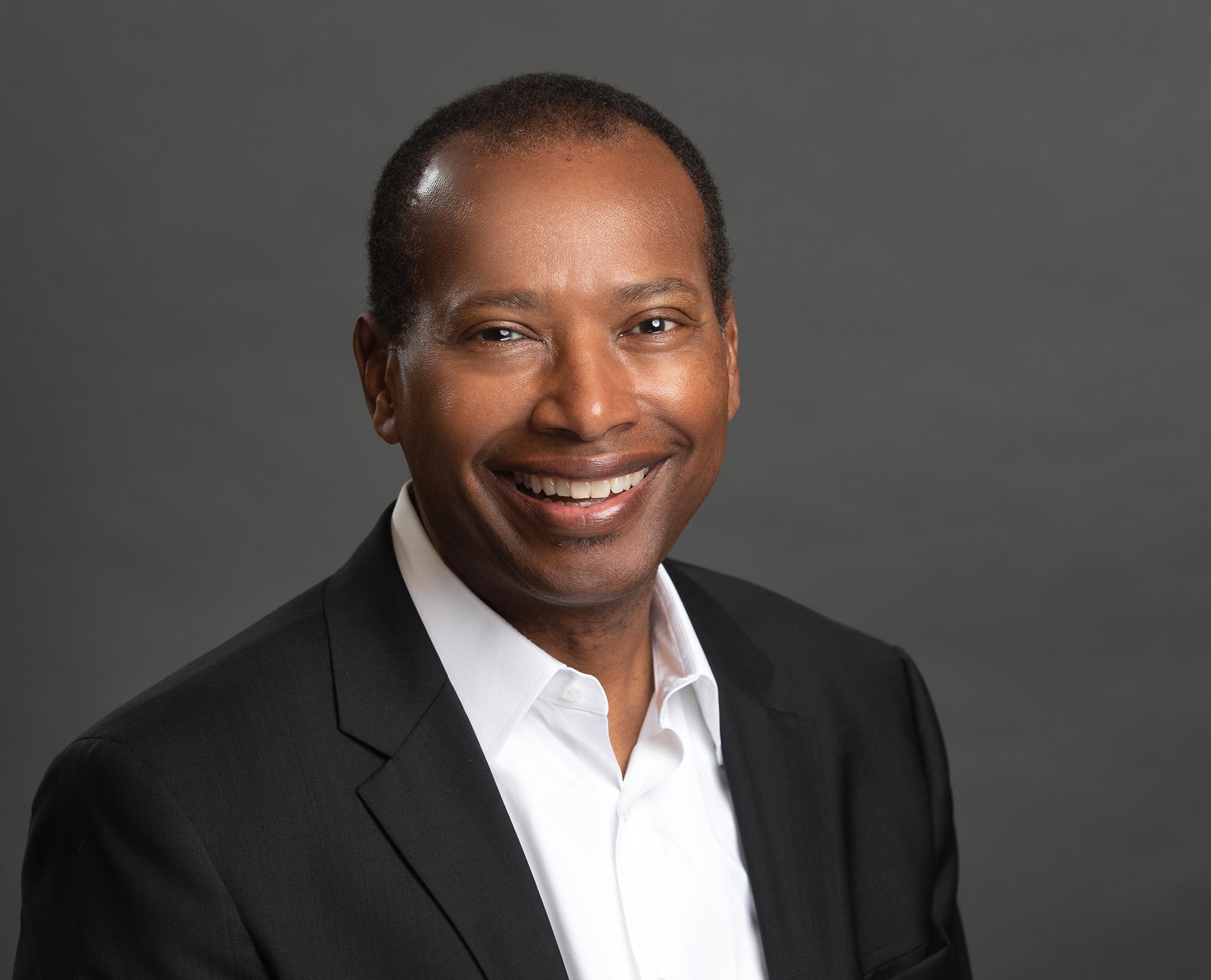
Marc Jones, Board Chairman of Aeris Communications

Marc E. Jones • Palo Alto, California

Share LinkedIn Twitter/X Facebook

The Company He Rescued Now Connects a World

When the parent company of a little-known cellular IoT firm called Aeris pulled its funding in the mid-2000s, most people would have walked away. Marc Jones wrote a personal check instead. He had been serving on the board, had spotted the technology's potential, and decided that potential was worth his own money. Today, he and Aeris's employees together own 96 percent of a company that manages nearly 100 million connected devices and more than 41 million connected vehicles for clients like Chrysler, Honda, and Bosch. That is not a turnaround story. That is a forty-year bet on seeing what others missed.

Jones grew up in the working-class African-American suburbs south of Chicago, in a household defined by his mother's relentless self-improvement - she earned her bachelor's, master's, and PhD in education while raising two children and working full time. He arrived at Stanford as an undergraduate in the mid-1970s, then stayed for law school, earning his JD in 1982. He graduated into a world that had not yet invented the career he would actually have.

His first job was at Pillsbury, Madison & Sutro - now Pillsbury Winthrop - where he spent five years doing securities work. He completed somewhere between 75 and 100 transactions: VLSI Technology, the Chevron-Gulf merger, Software Publishing Corporation, Autodesk. His colleague Frank Currie said of him at the time: "Marc is extraordinary with people... very diplomatic... doesn't parade his intelligence." That reputation has followed him across every role since.

"Running a business involves problem solving and identifying what needs solving. Lawyers excel at staying calm and dissecting problems."
- Marc Jones

In 1987, Jones left law for investment banking at L.F. Rothschild, Unterberg, Towbin. The market crashed that October and took the role with it. It was his wife Lisa who told him to talk to Gordon Campbell at Chips and Technologies, a semiconductor company that had been trying to recruit him. "The only time you get excited," she told him, "is when you're talking to Gordie about Chips." He joined. He became general counsel, then head of corporate development, eventually managing a $270 million division. A lawyer had become an operator.

From there, he moved to Madge Networks, where he was named President and COO in his early thirties - the kind of role that either defines you or breaks you. He helped grow Madge from a $40 million revenue company into a $500 million industry leader and guided its successful IPO in 1993. After Madge, he became Chairman, President, and CEO of Visionael Corporation, raising more than $40 million for the enterprise network management firm. By the early 2000s, he had built, funded, taken public, and sold multiple technology companies.

Chapter Two

Betting the House on IoT

In 2004, Jones took time off to be with his family. He joined Aeris's board as an outside director and quickly saw that the company - which had built a network enabling machines to talk to each other over cellular infrastructure - had a serious technological gap threatening its survival. When Caisse de dépôt et placement du Québec, the Canadian pension fund that owned Aeris, decided to exit, Jones and Lisa invested their own capital to keep the company alive. No institutional round. No venture cavalry. Just a bet.

He became Chairman in 2005 and President & CEO in 2008. Over the following seventeen years, he transformed Aeris from a connectivity niche player into what TA Associates - one of the world's leading growth private equity firms - described, when making its strategic investment in November 2025, as a company with "deep roots and proven expertise in powering some of the world's largest and most complex global IoT programs."

In Jones's words, on the TA investment

"Aeris has deep roots and proven expertise in powering some of the world's largest and most complex global IoT programs, delivering AI-powered security and deep data-driven insights through our reliable connectivity management platform. This investment from TA marks a significant milestone in our journey."

The Ericsson acquisition in 2022/2023 was the move that changed Aeris's scale entirely. By acquiring Ericsson's IoT Accelerator and Connected Vehicle Cloud businesses, Aeris absorbed one of the world's most sophisticated global IoT management platforms - the same platform used by automakers and enterprise clients across dozens of countries. Jones had taken a company he personally rescued and turned it into the kind of infrastructure play that institutional investors spend decades looking for.

By January 2026, Aeris had surpassed 100 million connected devices - nearly 90 percent growth and well ahead of the broader IoT market. When Jones stepped back from the CEO role in February 2025, handing day-to-day leadership to Aziz Benmalek while remaining Board Chair, he left behind a platform managing more connected devices than most countries have citizens.

100M+
Connected Devices Managed
41M
Connected Vehicles
96%
Employee + Jones Ownership
2x
Goldman Sachs Best Entrepreneur

A Career That Keeps Changing Industries

Jones has never stayed in one lane long enough to be captured by it. Each transition has been driven by a combination of circumstance, opportunity, and his wife Lisa's frankness. The pattern that emerges across forty-plus years is someone who moves toward complexity and then finds a way to simplify it.

1979 - 1982
Stanford Law School - Earned both his undergraduate (Political Science) and law degrees from Stanford. The legal training would become his career's throughline - not as a practice, but as a way of thinking.
1982 - 1987
Pillsbury, Madison & Sutro - Securities attorney completing 75-100 transactions including the Chevron-Gulf merger, Autodesk, and VLSI Technology. Built the calm, diplomatic deal-making style his peers would cite for decades.
1987
L.F. Rothschild, Unterberg, Towbin - Investment banking, briefly. The October 1987 market crash ended the role but opened the door to tech.
1987 - Early 1990s
Chips and Technologies - Joined as General Counsel, grew into Head of Corporate Development, and eventually managed a $270 million division. A lawyer becoming a full-stack operator.
Early - Mid 1990s
Madge Networks - President & COO - Guided the company from $40M to $500M in revenue and led its successful IPO in 1993. Madge became a global networking equipment leader under his tenure.
Late 1990s - 2004
Visionael Corporation - Chairman, President & CEO - Led the enterprise network management pioneer, raising over $40 million. Testified before Congress on cybersecurity (2004) and Sarbanes-Oxley compliance.
2005
Aeris Communications - Chairman - Invested personally when funding collapsed; became the company's anchor and strategic compass.
2008 - 2025
Aeris Communications - President & CEO - Built the company into a global IoT platform over 17 years, including the landmark Ericsson acquisition in 2022.
2025 - Present
Aeris Communications - Board Chairman - Transitioned from CEO as Aziz Benmalek took the helm; continues to shape Aeris strategy and sits on four major company and institutional boards.
The Moment That Changed Everything
"The only time you get excited is when you're talking to Gordie about Chips." - Lisa Jones to Marc, 1987, after the market crash that ended his banking career and launched everything that followed.

Four Boards, One Throughline

The boardroom portfolio that Jones has assembled is genuinely unusual. It spans a publicly traded IT giant (CDW), an industrial multinational (Ingersoll Rand), a world-class university (Stanford), and a major health care system (Stanford Health Care). The common thread is not sector - it is complexity. Each organization operates at institutional scale, faces technology transformation pressure, and benefits from a leader who has spent his career at the intersection of law, finance, and product-building.

Of all his board roles, the one Jones speaks about with the most energy is Management Leadership for Tomorrow (MLT), which he chairs. MLT prepares underrepresented minorities for executive careers. Jones describes its impact in statistical terms - "MLT fellows generate higher incomes and better career trajectories" - but the personal meaning behind the work runs deeper. He grew up watching his mother earn three degrees while working and raising children. He arrived at Stanford and lacked confidence in a room full of high achievers. MLT is his way of building the bridge he had to find on his own.

"MLT fellows generate higher incomes and better career trajectories... they demonstrate the value of paying it forward."
- Marc Jones, on Management Leadership for Tomorrow

Friend Doug Montgomery - whose father James, a prominent Chicago attorney, first made Jones want to go to law school - describes him simply: "Marc galvanizes people from all walks of life... he goes out of his way to help people." The Stanford Law profile calls it differently: he is extraordinary with people, doesn't parade his intelligence, and stays calm under pressure. Both descriptions have been accurate since 1982.

What He Has Built and Where He Has Served

  • Named by Goldman Sachs as one of the nation's best entrepreneurs in both 2012 and 2013 - among a select group of top 100 at the Builders & Innovators Summit
  • Led Aeris to 100+ million connected devices and 41 million connected vehicles by January 2026, representing ~90% growth and outpacing the IoT market
  • Orchestrated the acquisition of Ericsson's IoT Accelerator and Connected Vehicle Cloud businesses (2022/2023), transforming Aeris into a global-scale platform
  • Secured strategic minority investment from TA Associates in November 2025 to accelerate Aeris's Agentic AI and IoT security capabilities
  • Grew Madge Networks from $40M to $500M in revenue and led its successful IPO as President & COO
  • Raised $40M+ for Visionael Corporation as Chairman, President & CEO
  • Testified before the U.S. Congress on cybersecurity and Sarbanes-Oxley compliance (2004)
  • Elected to Stanford University Board of Trustees (2018) and named Chair of Stanford Health Care Board (2022)
  • Elected to CDW Corporation Board of Directors effective January 2023
  • Chairs Management Leadership for Tomorrow, advancing underrepresented minorities into senior executive roles
  • With Aeris employees, holds approximately 96% of the company - an extraordinary degree of founder-led ownership at Aeris's scale

What Marc Jones Says When He Speaks Plainly

"Aeris has deep roots and proven expertise in powering some of the world's largest and most complex global IoT programs, delivering AI-powered security and deep data-driven insights through our reliable connectivity management platform. This investment from TA marks a significant milestone in our journey."
"I'm honored to take on this role at Stanford Health Care. It is a transformational time for health care, with tremendous opportunities to reimagine the clinical environment for our patients and improve health for all."
"We're taking technology's benefits but not our share of responsibilities. Any tool can be used for good and bad."
"Running a business involves problem solving and identifying what needs solving. Lawyers excel at staying calm and dissecting problems."

Six Facts That Tell the Whole Story

01

Marc Jones and Aeris employees together own approximately 96% of the company - an almost unheard-of figure for an enterprise tech firm at this scale, and the direct result of a personal financial bet he and his wife made when institutional money walked away.

02

He holds a BA in Political Science and a JD, both from Stanford - two degrees, one university, no STEM background whatsoever. He built a 100-million-device IoT platform on top of a law education.

03

As a young attorney, Jones worked on the Chevron-Gulf merger - one of the largest corporate transactions of the early 1980s, and one of the defining deals of the leveraged-buyout era.

04

His path into technology was accidental: a stock market crash eliminated his banking job, and his wife Lisa told him he only came alive when talking about Chips and Technologies. He joined the next morning.

05

Goldman Sachs named him one of America's best entrepreneurs in both 2012 and 2013 - back-to-back recognition at its Builders & Innovators Summit, a select group of top 100 national entrepreneurs.

06

He simultaneously sits on the boards of a university, a hospital network, a publicly traded IT company, and an industrial multinational - four entirely different sectors, governed simultaneously, from Palo Alto.