The engineer who filters water with a plant, scales data platforms across three continents, and still files the pull request himself.
Senior IT Manager at Procter & Gamble. Former startup COO at 23. Currently: Fujioka, Japan. Previously: everywhere a problem needed solving.
He is somewhere in Fujioka, Japan right now. Not at a P&G campus boardroom giving a presentation about digital transformation - he's probably in a Databricks notebook reviewing pipeline costs, or on a GitHub pull request that the AMA region's data infrastructure depends on. There is a gap between how Ali Mannan Tirmizi appears on paper and what he actually does with his days, and the gap is the interesting part.
In 2017, as a final-year electrical engineering student at LUMS in Lahore, he co-founded Xyla Water - a startup that filtered contaminated water using plant xylem tissue, the same biological mechanism a tree uses to drink. No electricity. $2 upfront. A technology lifted from an MIT lab and put into the hands of families in Punjab. He was 23, and his co-founders were from Pakistan, Palestine, Belgium, and India - people who had never met in person before gathering in Oslo that summer, because the YSI program said they should.
That is a specific kind of ambition. Not the kind that wants to disrupt an industry from a corner office, but the kind that takes a material science paper seriously enough to turn it into a product, cross a time zone to shake someone's hand, and then actually file the paperwork. The Hashoo Foundation gave him a prize for it. Harvard gave him a seed grant. A panel of global judges picked his team out of 10,000 applications.
He joined Procter & Gamble in 2019. The startup chapter closed. What followed was not a retreat from ambition but a redirection of it - into one of the world's largest consumer goods companies, where the data problems are comically large and the infrastructure that supports them is a continent-spanning engineering challenge. He is now the PS Supply Chain Platform Engineering Lead and DevOps Manager for P&G's AMA Datahub platform, covering Asia, the Middle East, and Africa. That's not a title you get by sitting quietly in meetings.
In sixteen months, his team grew the AMA Datahub from two applications to fourteen. In the last fiscal year, he reduced cloud spending by $220,000. He also led the ARL Reporting Tool - P&G's ESG compliance reporting system for Australia. The stack is Databricks, Azure cloud, GitHub, Azure DevOps. The problems are supply chain visibility, data governance, cost optimization, and the kind of cross-regional coordination that requires someone comfortable operating across cultures at four in the morning.
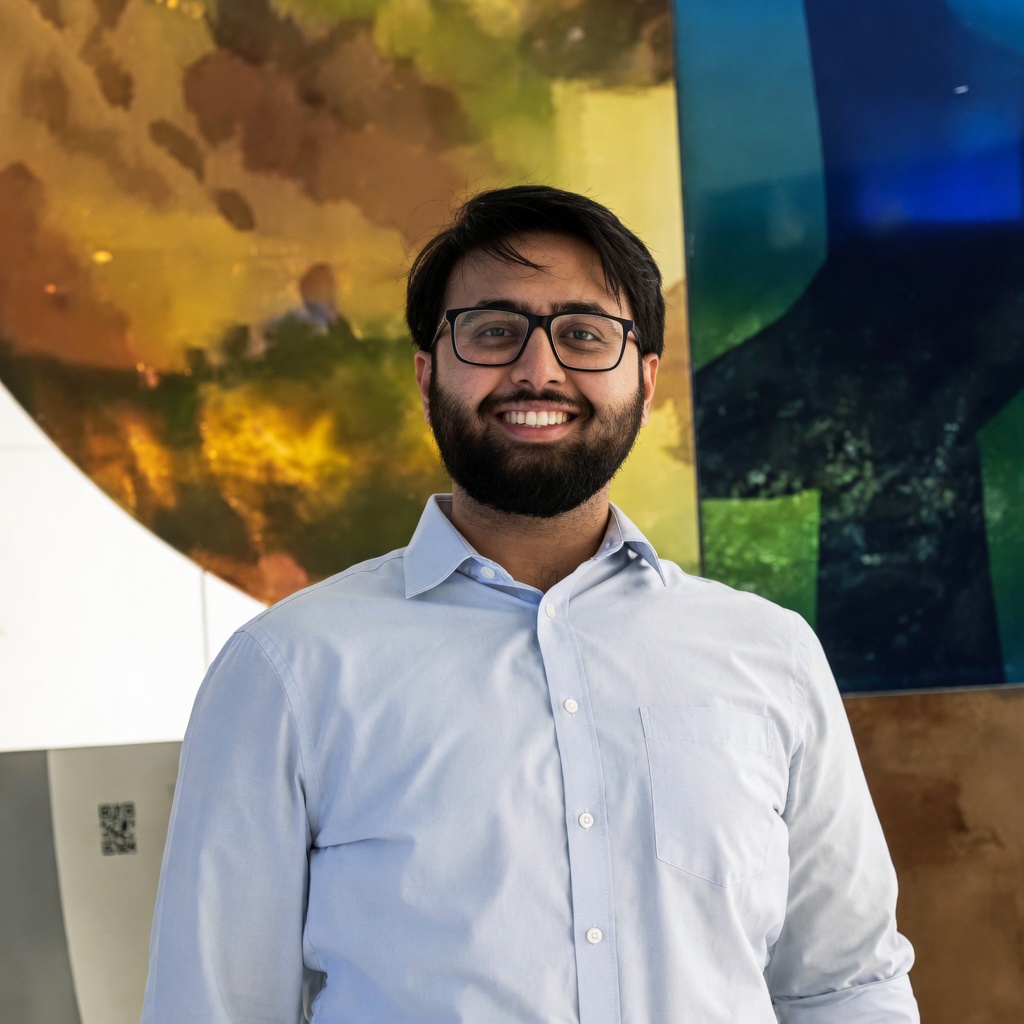
P&G's AMA region is not a small problem. Asia, Middle East, Africa - dozens of markets, wildly different data maturity levels, regulatory requirements that change by country, and a supply chain that runs 24 hours a day. The Datahub platform is what holds it together on the engineering side.
Ali's team went from two applications on the platform to fourteen in sixteen months. That pace required not just technical skill but the kind of cross-team diplomacy that gets stakeholders in Mumbai, Dubai, and Nairobi to agree on a data schema at the same time.
The $220,000 in cloud cost reduction is worth understanding on its own terms. Cloud costs at enterprise scale are notoriously hard to bring down because they're distributed across teams, regions, and use cases that don't talk to each other. Cutting that number requires both technical forensics - finding where money is wasted, which workloads can be optimized, which storage tiers are wrong - and organizational persuasion, because nobody voluntarily gives up their compute budget.
He also led the ARL Reporting Tool for Australian ESG compliance. ESG reporting is unglamorous. It is also increasingly the legal and reputational surface area of large companies. Building a system that can ingest, normalize, and present supply chain sustainability data for regulatory audit is engineering with real stakes - the kind where the edge case is a fine or a headline.
What's interesting about where he is now versus where he started is the continuity of method. At Xyla Water, he was trying to solve a supply problem - getting clean water to people who couldn't afford the infrastructure to treat it. At P&G, he's solving a different supply problem: getting reliable data to the people who run the infrastructure that moves goods across three continents. The problems are different. The impulse is the same.
Five people who had never met in person - from Pakistan, Palestine, Belgium, and India - assembled in Oslo in the summer of 2017 because the Young Sustainable Impact program brought them there. They had been matched online based on a shared conviction that the problem of water access in the developing world was both urgent and solvable with existing materials science.
The technology they chose was plant xylem tissue, the vascular system plants use to pull water upward against gravity. MIT researchers had demonstrated that the same tissue could filter bacteria and protozoa from contaminated water at 99.99% efficacy. No electricity. No chemicals. The kind of solution that is almost embarrassing in its simplicity once you know it works.
Xyla Water's model was Robin Hood by design: end users in Punjab province would not pay for the filters. The cost would be covered elsewhere in the supply chain. Four thousand, eight hundred liters of clean water per filter per year. Ten dollars annual operating cost. Two dollars upfront. The math, when you hold it next to the cost of waterborne illness, is not complicated.
Ali was COO. He was 23. The startup won a Harvard Seed Grant, the Hashoo Foundation entrepreneurial prize, and the Green Entrepreneur Award. Then life moved on - as it does - and the team dispersed into careers, carrying the thing they'd built as proof of what was possible when engineers take a water crisis seriously.
"I aspire to work on moonshot ideas that make an impact."
- Ali Mannan TirmiziPhysics minor. Entered as an engineer, graduated as someone who had already presented a Hyperloop pod design to SpaceX and Tesla engineers, co-founded a water startup, and studied public policy at UMass Amherst on a US State Department scholarship.
Part of the LUMS team that designed a Hyperloop pod and presented it to SpaceX and Tesla engineers. The kind of thing that teaches you what rigorous looks like - not for a grade, but for people who build rockets.
The Oslo chapter. Plant tissue. Clean water. Harvard grant. Five people who met online and built something real.
University of Massachusetts, Amherst. Comparative Public Policy. One of a small cohort selected globally for the Study of the United States Institutes for Student Leaders program.
Multiple recognitions in the final year of the Xyla Water chapter. Hashoo Foundation entrepreneurial prize added to the pile. Then: graduation.
Joined P&G. Moved from startup velocity to enterprise scale - and somehow kept the same approach: build the thing, measure what matters, cut what doesn't work.
Four articles on data management, ML vs. predictive analytics, data storytelling, and AI privacy. Writing that proves he thinks about the field, not just operates in it.
Fujioka. AMA Datahub. $220K saved. 14 apps. Still filing the pull request himself.
BS Electrical Engineering • Physics Minor • 2014 - 2018
LUMS produced engineers who presented to SpaceX. Also engineers who co-founded water startups. Also Ali Mannan Tirmizi, who managed to do both while getting a physics minor. The institution has opinions about rigor. It left marks.
Comparative Public Policy • SUSI Leaders Program • 2017
US State Department selected him for a program that sends emerging leaders to study American institutions. He studied comparative public policy. The engineer studying governance is not a detour - it is the origin of someone who later builds systems that have to work across governments, regions, and regulatory frameworks.
February 2024. The problem every data platform engineer encounters: the information that should be connected, isn't. Written by someone who has spent years building the pipes that connect what shouldn't be separate.
Read on DATAVERSITY →July 2023. On the gap between having data and having a culture that uses it. The technical problem is usually not the hard problem. The hard problem is getting people to believe what the numbers say.
Read on DATAVERSITY →February 2023. The clarification the field needed. Two things that get confused in boardrooms and job descriptions - written by someone who has to make the distinction matter in production systems.
Read on DATAVERSITY →October 2022. The first piece. On the tension between systems that want more data and regulations that say no. A live question for anyone building data infrastructure at global scale.
Read on DATAVERSITY →Selected from 10,000+ global applicants. One of 25 young entrepreneurs worldwide recognized for combining technical innovation with social impact.
Study of the United States Institutes for Student Leaders. Comparative Public Policy. UMass Amherst. A US government selection, not an application fee and a committee.
Seed funding from Harvard for Xyla Water. The kind of institutional recognition that says: this idea is worth giving money to, not just applause.
Pakistani foundation recognizing entrepreneurial ventures with genuine social impact. Xyla Water's Robin Hood model - where end users pay nothing - fit the brief.
For environmental innovation. Awarded to Xyla Water for the plant xylem filtration approach - sustainable materials, no energy input, real-world water safety outcomes.
LUMS team member presenting to SpaceX and Tesla engineers. Technically not an award. Practically speaking, the most useful feedback loop an engineering student can ask for.
What makes Ali Mannan Tirmizi legible as a person - rather than as a resume with bullet points attached - is the consistency of the instinct that runs through everything. The Hyperloop team was attracted to a very hard technical problem. Xyla Water was attracted to a very basic human problem. P&G's AMA Datahub is, underneath all the enterprise vocabulary, a problem about connecting things that need to be connected. These are not different problems. They are the same problem wearing different clothes.
He has 500+ LinkedIn connections and writes for DATAVERSITY and lives in Fujioka, Japan, where P&G sent him because the work requires it. He's Pakistani, which means he carries a specific experience of what it looks like when infrastructure fails - power, water, data, governance. That experience is not incidental to his work. It is probably why he takes systems reliability personally in a way that people who grew up with stable infrastructure sometimes don't.
His Instagram handle is @alimannan94. Born 1994. Thirty-one years old, give or take. Fujioka is not where this ends. The man is mid-stride, and the interesting question is not where he's been - the resume handles that - but where the stride lands next.
"I aspire to work on moonshot ideas that make an impact."
- Ali Mannan Tirmizi