data-management
(54)
Ikon Science wants to make every rock tell a better story
RokDoc made Ikon Science a specialist in reading the subsurface. With Curate and a widening software portfolio, it is taking on the work of making that knowledge usable across an energy business.

Wonde wants school apps to stop asking for the same data
More than 30,000 schools use Wonde to connect their records with education software. Its business rests on a deceptively ordinary promise: change the class list once, and let the right apps catch up.
FE fundinfo and the business of getting the numbers straight
Before a fund reaches an investor, its data has a lot of travelling to do. FE fundinfo has built a business around making sure the same facts survive the trip.
AutoRek and the money that refuses to match
Behind every smooth payment sits a less glamorous job: proving the numbers agree. AutoRek has spent decades doing that work. Its next bet is on AI that can explain the exceptions.

Ravi Shankar Made a Career of Moving Less Data - and More Minds
He began as a software developer, learned to sell an idea without sanding off its technical edges, and has spent more than a decade making a contrarian case for leaving enterprise data where it lives.
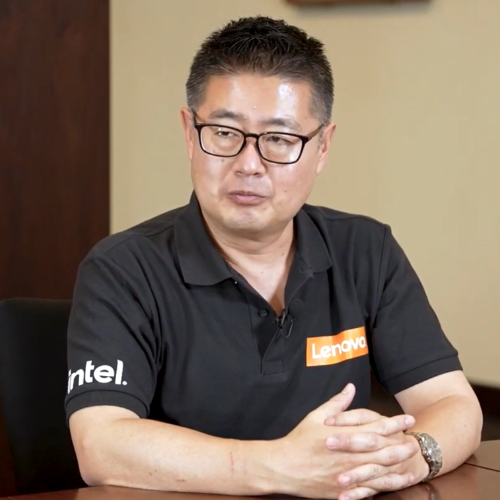
Masayoshi Nakano Has Spent 30 Years Teaching New Technology to Speak Human
From SharePoint to Watson to cloud data, Masayoshi Nakano has built a career around a deceptively difficult job: making the next wave of enterprise technology legible before it becomes ordinary.

Boomi Bet the Enterprise Would Become a Mess. Now It Wants to Wire the AI Age.
A startup above a Pennsylvania pizza shop survived the integration wars by rebuilding itself for SaaS. Twenty-six years later, Boomi is betting that the same plumbing can keep enterprise AI from becoming another expensive island.

Carl Madaffari Learned the Database, Then Learned to Tell Its Story
After two decades inside Epsilon's data machinery, Carl Madaffari took a breath, changed lanes, and found a second act translating complex products into plain business value.
SAS Stayed Private for 50 Years. Now It Has to Outrun Open Source AI
The mainframe-era statistics company is betting that regulated enterprises will pay for something free AI stacks struggle to guarantee: one governed path from messy data to a decision someone can defend.
Magic Software spent 43 years making old systems talk - then joined a bigger machine
The Israeli software veteran outlasted several computing eras by connecting what companies already owned. Its products carry the story, but services pay most of the bills - and a 2026 merger gives that model a larger engine.

Fran Wilson Has a Map for Marketing’s Messiest Rooms
After helping Red Hat grow from its startup years to IBM’s $34 billion acquisition, Fran Wilson built a practical creed for enterprise marketing: share the map, choose fewer bets, and let trustworthy data settle the arguments.
The Colorado Startup Teaching Your Phone to Diet on Netflix
Video eats the wireless network alive. A husband-and-wife team on Colorado's Western Slope built AI that puts it on a diet - on the device, before it ever clogs the tower.

AvePoint Spent 25 Years Guarding Your Files. Now It Wants to Guard Your AI.
Two engineers coded their first product in a public library. A SPAC deal, $419 million in revenue and 28,000 customers later, AvePoint is wagering that the next great data problem is the AI you just turned on.

The Company That Put a Sensor on the Mousetrap
Everyone chasing smart-building glory wanted to control the thermostat. Microshare went after the mousetrap, the toilet paper roll, and the mop - and built a business on the parts of a building nobody wants to think about.

The Outsourcing Shop That Answers Your Inbox From Dipolog
A 130-person outsourcing team in a small northern Mindanao city quietly runs the inbox, the spreadsheet and the sales pipeline for businesses on the other side of the world.

Everpure Wants to Turn the Storage Room Into an AI Control Room
Pure Storage changed its name, but the more consequential move is underneath the sign: a flash-storage pioneer is trying to make the data layer itself searchable, governed and ready for AI.

The 57-Year-Old Data Company Quietly Sitting Under Modern Marketing
Acxiom began with mailing lists and one computer in Arkansas. Today, its identity layer helps global brands decide when scattered signals belong to the same person - and how to act on that knowledge without losing control of the data.

Intense Technologies
A quiet Hyderabad software house has spent three decades building the plumbing behind your phone bill, your bank statement and your insurance onboarding - and selling it back to some of the world's largest companies.

Master Works
Master Works is a Riyadh-based Saudi technology company that helps public- and private-sector organizations turn data into assets. Founded in 2010, it delivers data management, business intelligence, artificial intelligence, computer vision, cloud and digital-transformation services alongside home-grown software products such as the P+ project-management platform and the Baseer speech-analytics engine. With around 700 employees and offices across the Gulf, Egypt, Jordan and India, it serves more than 140 clients and is positioned as a national data champion for Saudi Arabia's Vision 2030.
Canoe Intelligence
Canoe Intelligence is a New York-based financial technology company that uses AI and machine learning to automate the collection, extraction and management of data from alternative investment documents. Its cloud platform turns the unstructured PDFs, capital calls, statements and tax forms that flood back offices into standardized, verified data that institutional investors, capital allocators, wealth managers and asset servicers can trust. Serving more than 325 clients - including firms such as Blackstone and Hamilton Lane - Canoe processes tens of millions of documents a year and raised a $36M Series C in 2024 led by Growth Equity at Goldman Sachs Alternatives.

Cardo AI
Cardo AI is a fintech company building the operating system for asset-based finance and private credit. Its platform unifies deals, collateral data, workflows, cash-flow modeling, and reporting into a single system purpose-built for the operational demands of structured credit - replacing spreadsheets and fragmented tools used by asset managers, bank lenders, credit originators, and fund administrators. Founded in 2018 by Altin Kadareja and Euron Metaliaj, the company runs technology across more than $100B in asset volume and raised a $15M Series A in November 2024 co-led by Blackstone Innovations Investments, FINTOP Capital, and JAM FINTOP.

Directus
Directus is an open-source data platform that wraps any SQL database with an instant REST and GraphQL API plus a no-code admin app, letting developers and non-technical users manage content and data without building a backend from scratch. Founded on a project Ben Haynes started in 2004 and incorporated as a company in 2020, Directus has surpassed 30 million downloads and is used by organizations including Adobe, Bose, Tripadvisor, AT&T and the U.S. Navy.

Promethium
Promethium is a Menlo Park-based enterprise data company that builds an Instant Data Fabric - an agentic platform designed to give business users, analysts, and AI agents trusted, self-service access to data across hundreds of sources without first moving or centralizing it. Its federated query engine, 360 Context Engine, and conversational data-answer agent Mantra translate natural-language questions into governed SQL, metadata, lineage, and visualizations. Founded in 2018 by Kaycee Lai and now led by CEO Prat Moghe, the company has raised about $34.5 million to date, including a $26 million Series A led by Insight Partners.
Siepe
Siepe is a Dallas-based financial technology company that builds cloud software and tech-enabled services for private credit, CLO, and alternative investment managers. Founded in 2012 by former hedge-fund CTO Michael Pusateri, Siepe helps front, middle, and back-office teams turn scattered loan, borrower, and investor data into a single, transparent asset - reducing operational risk and letting managers scale without adding proportional headcount. In August 2024 the company raised a $30M Series B led by WestCap.

Jason Eiswerth
Jason Eiswerth is the CEO of Canoe Intelligence, a New York-based financial technology company that uses machine learning to ingest, categorize, extract, and validate alternative investment documents and data for more than 400 investment firms. A technology entrepreneur with more than 20 years of senior management experience, he took the helm in 2020 and has since guided Canoe through multiple funding rounds, including a $36 million Series C led by Goldman Sachs in 2024, while positioning the company as core infrastructure for the alternatives industry.

DvSum
DvSum is a Sunnyvale, California data intelligence company founded in 2014 by Aashish Singhvi. Its cloud platform unifies data catalog, data quality, data governance and data lineage into a single automated system, and layers AI agents on top - including a 'Talk to Your Data' conversational agent (CADDI) that lets business users query their data in plain language. More recently DvSum has extended its agentic AI approach into telecom with an Active Network Intelligence stack (AURA) that helps operators detect, diagnose and resolve network issues before subscribers call.

Grasp Technologies
Grasp Technologies is a travel-data company founded in 1996 that consolidates, cleans and normalizes fragmented booking, expense and payment data for travel management companies, travel agencies and corporate travel programs. Its platform pairs a data-unification engine (graspDATA), Power BI-driven business intelligence (graspANALYTICS) and a virtual-card payment product (graspPAY) that connects to more than 90 banks. Headquartered in Dublin, Ohio, the company says it powers over $40 billion in transactions and serves customers in more than 60 countries.

Michael Pusateri
Michael Pusateri is the CEO and founder of Siepe, a Dallas-based fintech he started in 2012 after a career running technology inside hedge funds. Siepe builds software and managed services for CLO managers, private credit funds, and other alternative investment firms, and closed a $30 million Series B led by WestCap in August 2024. Before Siepe, Pusateri was CTO at Carlson Capital and CTO/co-COO at Highland Capital Management.
Reed Overfelt
Reed Overfelt is the Chief Executive Officer of Black Tiger, an AI-powered master data management and governance platform. He is a career enterprise-software operator with roots at Microsoft, later leading growth at Aurea Software, running Redwood Software as Group CEO, and steering ventures including FEV Tutor and GAN Integrity. He argues, publicly and often, that master data is the foundation of enterprise AI.

NetApp
NetApp is a San Jose-based data infrastructure company that helps enterprises store, manage, protect and move their data across on-premises systems and every major public cloud. Founded in 1992 as Network Appliance, it built its business on the ONTAP data management operating system and today sells all-flash storage arrays, cloud storage services and software that increasingly targets AI and machine-learning workloads. A Fortune 500 company trading on the Nasdaq as NTAP, it reported record fiscal-2026 revenue of roughly $6.93 billion.