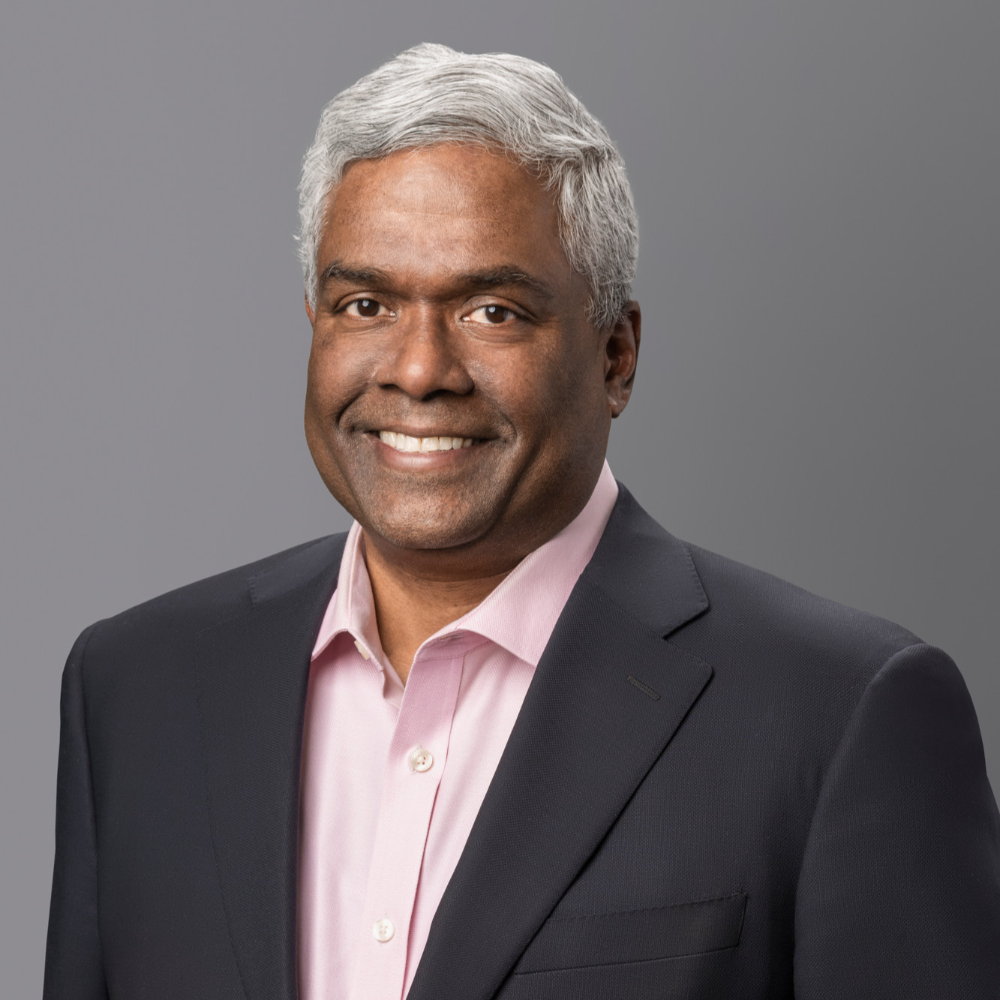
In Pampady, Kottayam - a small town in Kerala famous mostly for rubber estates and churches - two boys grew up in a house where the rule was simple: everyone cooks, everyone cleans, no exceptions. Their mother made that rule stick. It's the kind of thing you remember when you're running a $21 billion company.
George Kurian and his identical twin Thomas were accepted to IIT Madras - the dream of every Indian engineering aspirant - and then turned it down. Princeton had called with partial scholarships. At 17, they packed up and flew across the world together. George has said that having each other made the cultural leap manageable: "It gave us a friend to navigate the big cultural transition between India and the US."
Princeton costs money, even with scholarships. George solved that the straightforward way: he parked cars, worked the cafeteria, cooked pizza, and mixed drinks. "Parking cars, working in the cafeteria, being a pizza chef, bartending - you name it," he recalls. "It taught me that it takes all kinds of people to make a business work." That's not a lesson you pick up in a classroom. That's something you learn at 2am counting tips.
The NetApp Data Platform enables you to do for your organisation's data what Google did for the internet's data - harmonise it, unify it, and transform it into knowledge to power your business.
- George Kurian, NetApp CEOThe Career Switcheroo
After Stanford's MBA in 1995, George joined McKinsey. Around the same time, Thomas left McKinsey to join Oracle. Later, George moved from Oracle to McKinsey. They literally traded career paths - not by plan, but because each found the other's former employer interesting. "It wasn't that we intended to do that. It's just that we both had good experiences and were interested in trying it out," George explained. The kind of coincidence you can only pull off if you're extremely confident and extremely similar.
From McKinsey, George went to Akamai as Vice President, then to Oracle to run software engineering and product management, then to Cisco where he led the Application Networking and Switching Technology Group. Each stop built a different layer: consulting taught system-level thinking, networking taught infrastructure, and Cisco taught him how enterprises actually buy and run complex technology. All of it would matter.
Arriving at NetApp - and Staying
George joined NetApp in 2011 as Senior Vice President of the Storage Solutions Group. Two years later he was Executive Vice President of Product Operations - running strategy and development for the entire product portfolio. In June 2015, he was named CEO, succeeding Tom Georgens. He has held that role for more than a decade.
When he took the helm, NetApp was a respected but increasingly threatened hardware storage company facing cloud-native competition, a shrinking core market, and investor impatience. Kurian's answer was methodical: reposition the company around the data layer, not the hardware, and make NetApp the software and services fabric that ties on-premises storage to every major cloud provider. AWS, Azure, Google Cloud - all of them. NetApp doesn't pick sides. It sells to everyone.
He has described the early years bluntly: "It was a really all-consuming effort to get the company turned around." The CEO role, he says, can be "fairly lonely" because the people around you are simultaneously your team and your subordinates, your board and your superiors - rarely your peers. He built through it anyway.
80% of the time on an AI project is spent wrangling data - discovery, classification, synchronisation, governance. Before any model is trained.
- George Kurian, NetApp INSIGHT 2025The AI Bet
Kurian spotted the AI opportunity early - not as a model builder, but as an infrastructure play. In most enterprises, 85 to 90 percent of data is unstructured: documents, images, voice recordings. It never got integrated into business systems. AI needs that data. That makes data management - NetApp's core business - suddenly mission-critical again.
At NetApp INSIGHT 2025 in Las Vegas, Kurian opened with an etymology lesson: the word "data" comes from the Latin datum. He called the current moment "the era of data-enabled intelligence." The speech landed: NetApp now positions itself as building high-performance flash storage arrays and intelligent data infrastructure for AI workloads, with NVIDIA and Lenovo partnerships at the center of enterprise GPU cluster builds.
His stated goal - matching what search did for the internet, but for enterprise data - is a clear, testable ambition. FY2025 results suggest the positioning is working: $6.57 billion in revenue, up 4.9% year-over-year, with operating income up 10.1%.
On the Record
"Our goal is to help our clients understand what they need to do to get ready for AI with their data."
On AI readiness"Taking actions at the point that the data is created is far more efficient than trying to copy the data into other places, transform it and then rewrite it back."
On data architecture"Asia is our fastest-growing business, and we see it as a really important market."
On global growth, 2025"It gave us a friend to navigate the big cultural transition between India and the US."
On arriving at Princeton with Thomas, age 17Leadership Style
People who work with Kurian use the same words: execution-focused, methodical, customer-centric. He's not a flashy keynote personality. He shows up with data. He tracks outcomes. His engineering background and consulting discipline mean he asks the question: does this work, and how do we know?
He also holds to something learned in that Kerala kitchen: responsibility doesn't come with rank. At NetApp, this has translated into building a culture that values long-term customer relationships over short-term deal cycles. The company's hybrid cloud positioning - deeply integrated with public cloud providers rather than competing with them - reflects the same pragmatic thinking.
What He Built
Record FY2025
$6.57B revenue (+4.9% YoY), $1.34B operating income (+10.1% YoY), GAAP EPS up 22.5%.
Hybrid Cloud Platform
NetApp now integrates deeply with AWS, Azure, and Google Cloud - vendor-neutral data fabric at enterprise scale.
AI Infrastructure
Partnerships with NVIDIA and Lenovo positioning NetApp storage as the data layer for enterprise AI workloads.
Asia Growth
Under Kurian, Asia became NetApp's fastest-growing business region, with a tailored partner strategy per market.