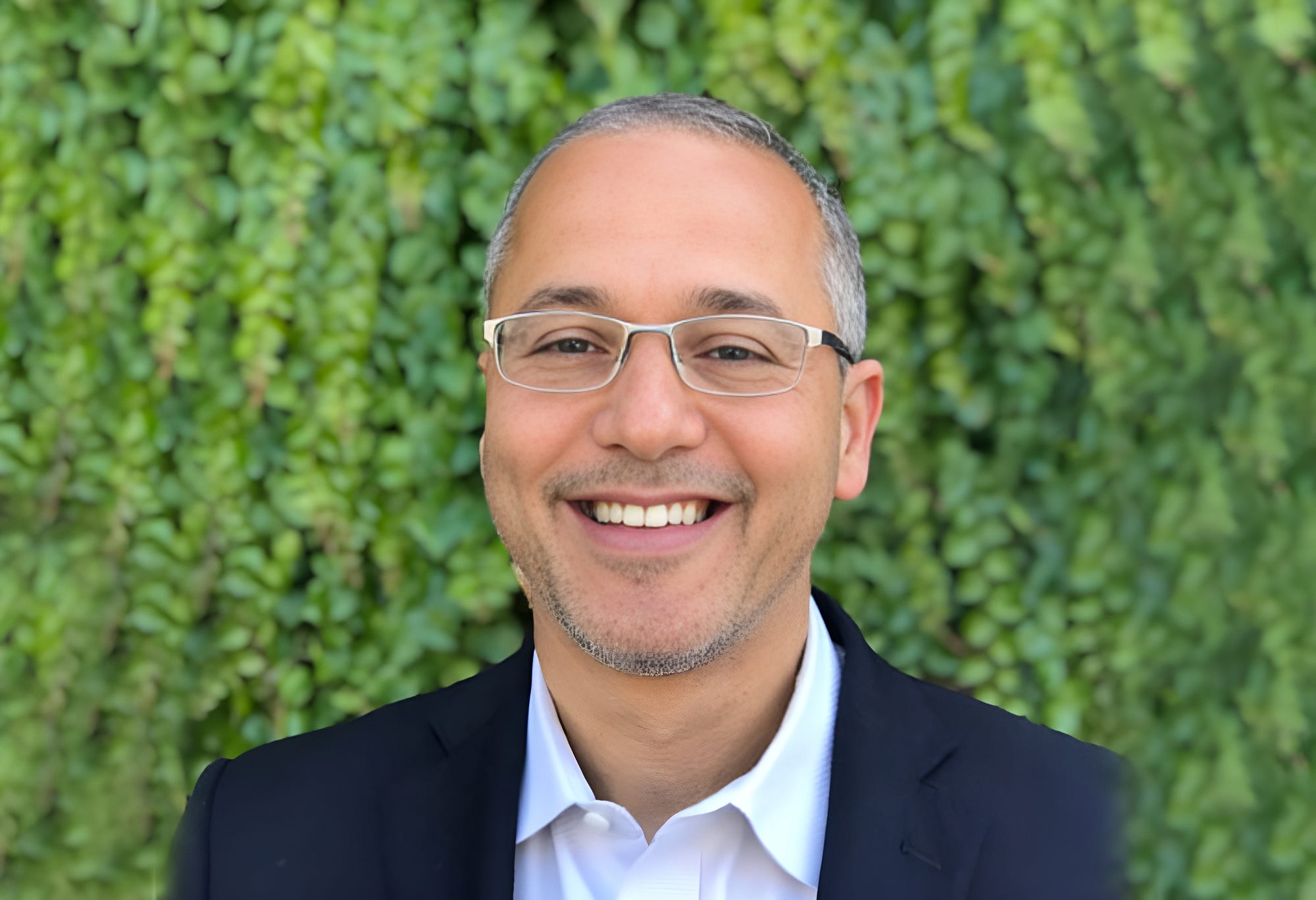
The Coaster Salesman Who Keeps Selling Companies to Tech Giants
He was five years old when he made his first sale. He'd watched his parents settle into their American neighborhood and decided the neighbors needed coasters. He went door to door. He closed the deal. The product didn't matter; the pattern did. Omar Tawakol has been pitching and selling ever since - just with longer closing cycles and more zeroes.
Tawakol grew up between two worlds. His first eight years in upstate New York, then his adolescence back in Cairo, then MIT for his undergraduate degree in engineering. Two master's degrees at Stanford - one in Industrial Engineering, one in Computer Science, where he also published AI research in a field most people didn't take seriously yet. That was the mid-1990s. He was studying context for computer agents before most engineers knew what a context window was.
He took that dual fluency - technical depth and market instinct - into a series of companies that kept landing at the center of wherever the internet was heading next.
"People love content, and they hate disruptions, so they'll literally pay money not to see ads." - Omar Tawakol
His first real startup, CoRelation, built a recommendation engine in 2001. The customers were Nordstrom and Barnes & Noble. The company was acquired in 2002. He moved into behavioral targeting at Audience Science, where he watched digital advertising shift from contextual guesswork to data-driven targeting. That observation became the seed of BlueKai.
In January 2008, the month most startups were quietly shutting down their ambitions ahead of the financial crisis, Tawakol co-founded BlueKai with three partners. The idea: build the first real-time bidded auction system for behavioral data. Not selling ads. Selling the data that made ads valuable. "We do not sell ads" became a kind of manifesto. Fortune 100 marketers could now target audiences with surgical precision across the open internet.
He learned a hard lesson along the way. He built a sophisticated dynamic pricing model - commodity data at fifty cents, premium attributes at five dollars - and watched agencies shrug and ask for a simple quarterly rate card. Elegant solutions lose to practical ones. He gave them what they needed. Oracle noticed. In 2014, they bought BlueKai for more than $400 million, a 10x net revenue multiple. Tawakol stayed on as SVP and GM of the Oracle Data Cloud.
But he's not built to stay. By 2017, he was watching a different phenomenon. Executives like Satya Nadella were answering emails faster than their own subordinates - because they used meetings as the primary surface for work. Tawakol thought: what if AI could make everyone's working memory as sharp as a CEO's? That became Voicea, a voice AI platform for meeting transcription and intelligent summaries. His original hypothesis was wrong - users didn't want voice commands; they wanted full transcripts they could trust before acting on AI summaries. He rebuilt around what users actually needed. Cisco bought it in 2019. The platform was running inside 10,000+ companies.
He spent three years at Cisco running product-led growth for Webex. Then, in late 2022, he started watching what generative AI could do to video. Not just to generate it - but to understand it, spatially, frame by frame, surface by surface. He saw a scene: an influencer making coffee in their kitchen. He saw the cabinet door. He saw that a brand could live there - not stamped on screen like a billboard, but placed as if it had always been there. Photorealistic. Tracked. Seamless. Post-production, no crew required.
That's Rembrand. The company launched in February 2023 with $9 million in seed funding from Greycroft, UTA, L'Oreal's BOLD Ventures, and Good Friends. L'Oreal wasn't just an investor - they were also a client. Their VC fund backing a company that places their products into videos is a bet and a trial at the same time.
In 2025, Rembrand closed a $23 million Series A, acquired Mirriad's US operations, and merged with Spaceback - a social advertising automation company - to create what they're calling an AI-powered ad factory. The combined entity employs 75+ people and operates two distinct platforms: in-content advertising and social content automation. Tawakol serves as CEO of the merged company. Casey Saran, Spaceback's co-founder, joined Rembrand's board.
All while sitting on the boards of LiveRamp (NYSE: RAMP) and The Trade Desk (Nasdaq: TTD) - the latter appointed him in August 2025 with CEO Jeff Green calling him "one of the most influential forces in ad tech and AI." That's not hyperbole from a press release. Tawakol has been at the table for three of the most defining transitions in digital advertising: data management, voice AI, and now AI-native content integration.
His thesis hasn't changed. Consumers hate interruptions. Brands need reach. The answer isn't louder ads. It's making the brand part of the story. "Consumers love content. Brands want reach. We can and should change that by making brands part of the story." In that single sentence is everything he's been building toward since he knocked on the neighbor's door with a stack of coasters and a pitch.