A flat tire is a small mechanical problem with excellent dramatic instincts. It waits for rain, a meeting, a dark shoulder or a child asking whether help is almost here. For decades the standard response was another uncertainty: call a number, describe a location, and wait inside a silent black box. Urgently's founding insight was almost comically simple. Put the black box on a screen.
The company built a digital layer between stranded drivers, the brands responsible for helping them and thousands of independent towing and roadside businesses. A request could arrive from an app, an automaker, an insurer or a call center. Urgently's system would identify the vehicle and problem, locate an appropriate provider, price and dispatch the job, send updates, track arrival and record completion. The driver could watch a tiny truck move across a map instead of calling every 20 minutes to ask the most natural question in roadside assistance: where are you?
The product was certainty
Urgently launched its roadside service in 2014 after a broader founding effort narrowed its focus. The early pitch was “Uber for roadside assistance,” a phrase that made investors nod because it compressed a messy business into three familiar ideas: on-demand ordering, location-aware matching and cashless payment. Drivers could summon a tow, tire change, jump-start, lockout rescue or fuel delivery without joining a traditional motor club.
But the more durable product was not the consumer app. It was the white-label operating system behind somebody else's promise. Automakers, insurers, fleets, rental companies and mobility platforms already had drivers to protect. A breakdown could turn an expensive car, insurance policy or rental agreement into an angry memory. Urgently offered those companies an integrated way to manage the ugly moment under their own brand.
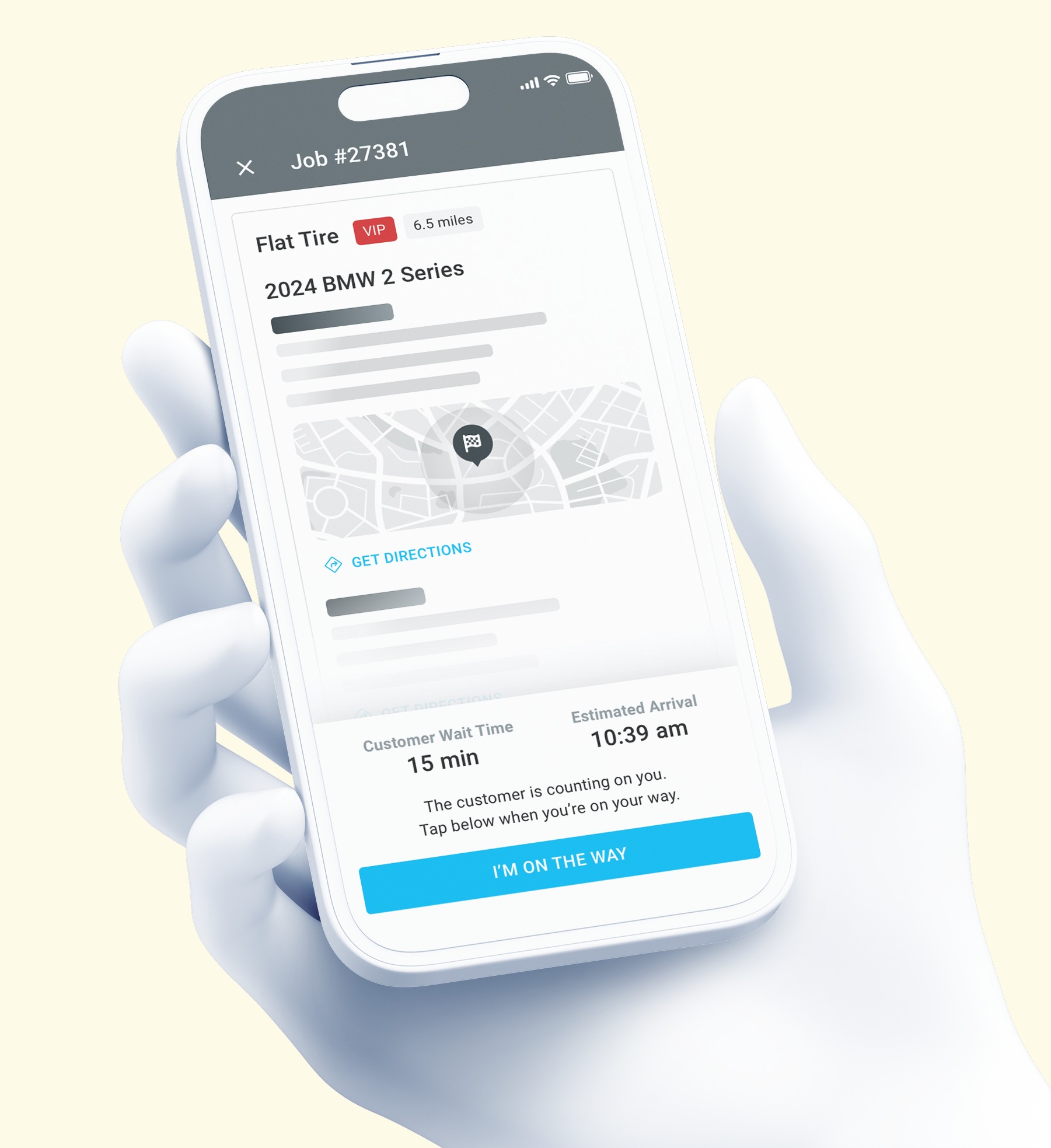
One breakdown / five visible handoffs
That workflow is the useful difference. Traditional programs often rely on call centers, static rate cards and serial phone calls. Urgently built a three-tier platform: digital interfaces at the front; data processing, optimization and pricing in the middle; and operations plus partner connectivity at the back. Its models draw on service history, provider supply, demand, weather, traffic, GPS and vehicle data. The goal is not mystical AI. It is fewer manual decisions, a better match and a price likely to get a truck moving.
“A stranded driver does not want innovation. They want to know who is coming, when, and what happens if the answer changes.”The Urgently product in one sentence
Automakers bought the argument
Strategic investors arrived early. Allianz and Verizon joined a $7 million Series A in 2015. In 2019, BMW i Ventures, Porsche Ventures and Jaguar Land Rover's InMotion Ventures participated in a $21 million Series B. BMW also chose Urgently for its U.S. assistance program across BMW, MINI, Rolls-Royce and BMW Motorrad. The cap table doubled as a customer-development strategy: earn credibility with the institutions that had the most to lose when roadside service felt ancient.
Uber made Urgently assistance a driver benefit. Volvo used it for Roadside Assistance Plus. Fleets and rental operators could connect roadside cases to maintenance and vehicle operations. By 2025, the company was preparing nationwide assistance for Sony Honda Mobility's AFEELA drivers. Each partnership placed Urgently one layer below the brand the driver recognized.
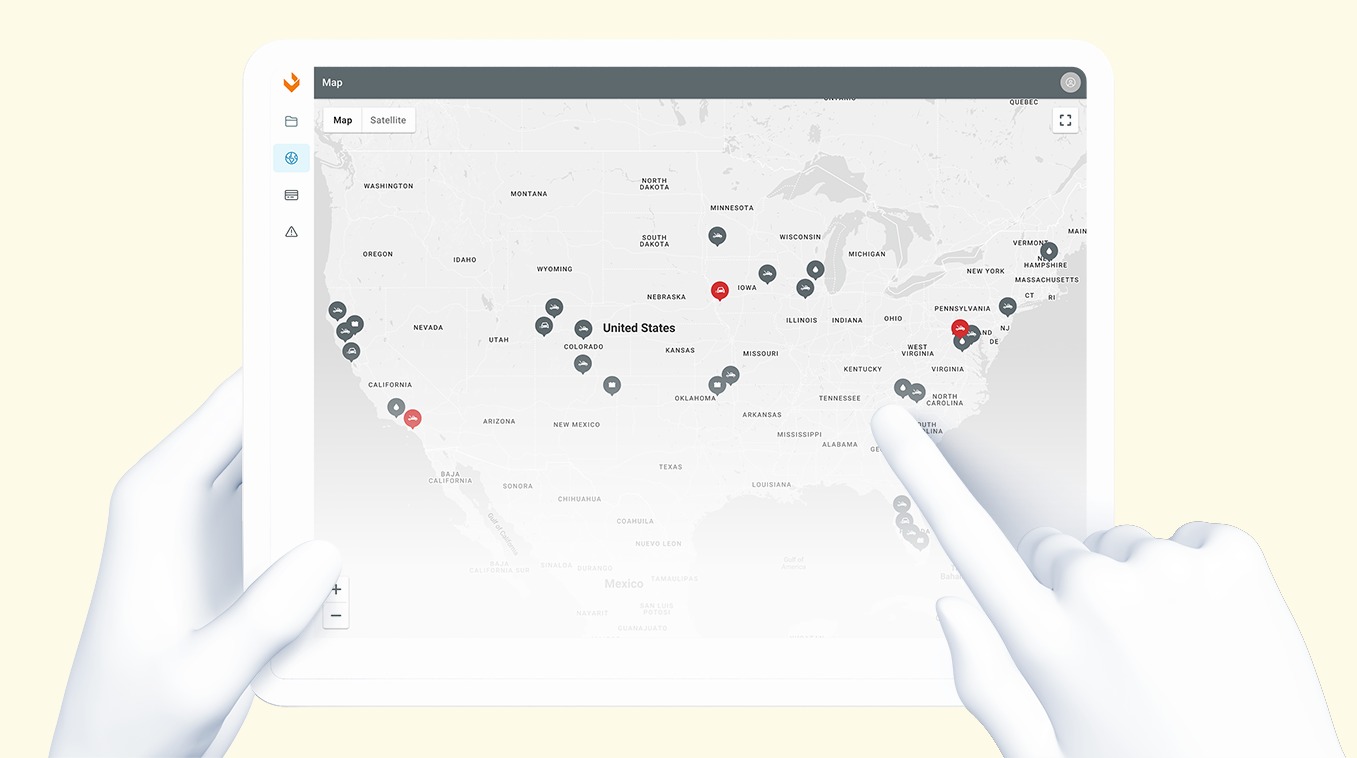
The business model followed that position. Urgently contracted with customer partners to run roadside programs, then fulfilled events through independent providers. Providers were small and midsize businesses, contracted non-exclusively, often serving several dispatch networks. Urgently could expand without purchasing a tow fleet, while providers received digital jobs and payment. Direct memberships and on-demand consumer help existed, but enterprise programs supplied the center of gravity.
What failed first
The interface did not fail first. The financial cushioning did. Urgently had spent heavily to build technology and scale operations, and it had recorded losses since inception. Two customer relationships exposed the fragility. One major partner's merger reduced volumes; another top-five global automaker changed strategy and wound down a mobile technical-support contract in late 2024. Customer contracts were commonly non-exclusive, often terminable on 90 days' notice and carried no guaranteed volume.
Revenue hit the brakes / USD millions
In 2024 revenue fell 23 percent to $142.9 million. Urgently cut operating expenses, improved gross margin by 1.6 percentage points and reduced its operating loss, evidence that management understood the assignment. Yet its auditor again raised substantial doubt about the company's ability to continue as a going concern. The business needed profitability, capital or a combination with deeper scale. Preferably all three.
This is where the Uber analogy breaks. A roadside marketplace cannot send any nearby sedan. The provider needs the correct truck, equipment, permits and willingness to accept a particular job at a particular price. Snowstorms create demand exactly when roads slow supply. Rural coverage is not rescued by a national total. Electric vehicles may require flatbeds or specialized handling. Call-center humans remain necessary when a garage ceiling is too low, a police rotation controls the roadway or the app's neat categories meet an untidy ditch.
The moat is measured in acceptable ETAs
Network size is marketing. The operational advantage is having the right provider, close enough, properly equipped and sufficiently paid to accept now.
What changed their mind
By 2025 the board was examining financings, restructurings, asset sales and acquisition proposals. The eventual buyer was also the clearest answer to Urgently's constraints. Agero had decades of roadside operations, a large provider network and the volumes of major automakers and insurers. Urgently brought a technology-forward platform, dispatch optimization and strength with automotive, fleet and rental customers.
The sale process was less romantic than the strategy slides. One rival offered a $100 million enterprise value but insisted on customer-retention conditions. Agero improved its proposal from a range of $75 million to $85 million to $115 million, moved quickly and did not demand that condition. When customer concentration is already the bruise, a deal that can fail if customers move is not much of a bandage. The board chose certainty.
Agero announced a $5.50-per-share cash offer in March 2026. Holders tendered about 58.7 percent of voting shares, clearing the minimum. The merger closed April 28, making Urgently a wholly owned Agero subsidiary. The independent public-company experiment lasted about two and a half years. The product survived; independence did not.
Software made the service legible. Scale made the service dependable.Why the Agero combination made sense
What builders can copy
The first steal is observational: find the anxious question customers repeat. “Where is my tow?” revealed an entire broken workflow. Urgently answered it with shared state, not a decorative dashboard. The driver, partner, provider and operator could see one event advancing through the same sequence.
Copy this
Start with one stressful handoff. Expose status, ownership, ETA, price and exceptions. Then sell the cleaner experience to the institution whose reputation is at risk.
Skip this when
Local supply is too thin, jobs are too irregular, providers cannot earn enough, or one enterprise buyer can erase the economics with a 90-day notice.
The second steal is strategic: the end user does not always need to be the payer. Urgently's original consumer proposition made the experience easy to understand. Its enterprise wedge gave it distribution through companies that already owed drivers assistance. A startup can use a sharp consumer story to sell infrastructure upstream.
The third is less comfortable. Treat physical constraints as product requirements. Map provider density before launching a market. Measure acceptance and completion by geography, service type, hour and weather. Design the price for the supplier's economics, not merely the buyer's budget. Build graceful human escalation before edge cases become emergencies. And never confuse signed partners with guaranteed volume.
Under what conditions does the model not work? Where there are too few capable providers; where regulated roads or tow rotations block open dispatch; where severe weather overwhelms supply; where pricing cannot cover the provider's deadhead miles; where connected-vehicle data is inaccessible; or where a tiny group of customers controls most demand. A beautiful marketplace can still be empty at 2 a.m.
Urgently's achievement was not eliminating that reality. It was making the reality observable and improvable. The company turned a frantic phone tree into a trackable service, persuaded exacting automotive brands to put it behind their customer promises, and accumulated data that could make the next dispatch smarter. Its ending is not a tidy victory lap. It is a useful merger of complements: Urgently's map and Agero's trucks, software logic and operational density, the pixel and the winch.