Imagine a road inside a road. It runs down the middle of Interstate 4 through Orlando. It has its own entrances, its own exits and a price that changes with traffic. Trucks are not allowed. Tolls arrive electronically. For the engineers, this is a managed lane. For the driver approaching at highway speed, it is a rapid series of questions.
This gap between technical fact and human decision is where Global-5 makes its living. The Longwood, Florida firm is usually described as an advertising, marketing and public-relations company. That is accurate in the way that describing a traffic controller as a person with a radio is accurate. The instrument is not the job. The job is helping people move through complexity without making a bad turn.
Mary Hamill, the company’s president and CEO, spent her first career in television news. She anchored and reported in Missouri, Colorado, Utah, Washington and Orlando, producing thousands of hours of live coverage. Matt Hamill came through advertising and publishing, including six years as national advertising director for AAA’s Car and Travel. They cofounded Global-5 in 1996. One knew what an anxious public asks under deadline; the other knew how to put an answer in front of it.
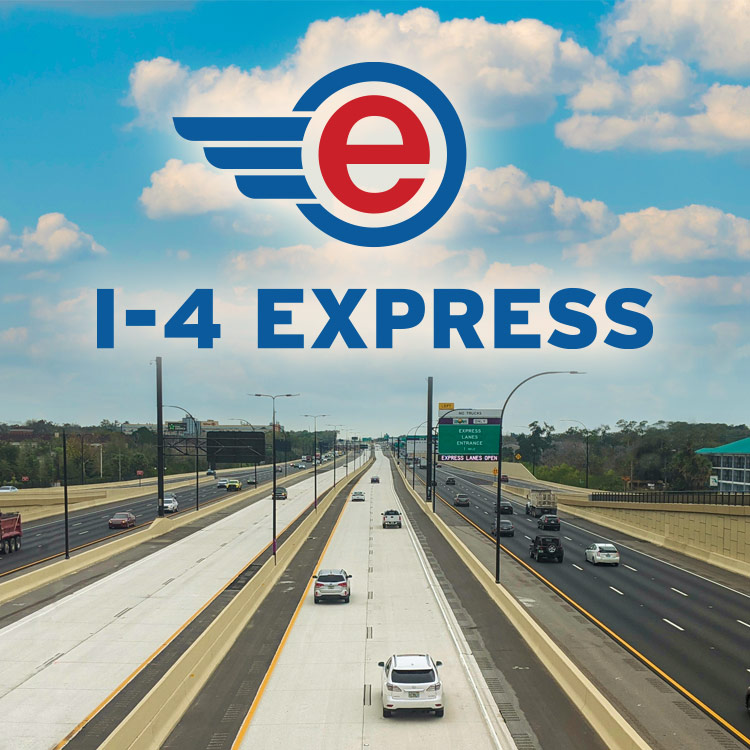
The campaign began with a useful admission
Central Florida drivers did not need more enthusiasm about asphalt. They needed to understand what I-4 Express would do for them and how to enter it. So Global-5 began with a scientifically valid telephone survey and focus groups conducted with Florida Opinion Research. The findings reduced a complicated system to three benefits: less stress, a way around congestion, and no stopping to pay because tolls were electronic.
That sequence matters. The creative work came after the listening. Global-5 then built a 13-week campaign around the moments when the information was useful: digital billboards near entry points, traffic-radio spots, social and YouTube ads, newspaper pages, displays at large employers and hospitality businesses, and Waze “zero-speed takeover” ads shown while cars were stopped. Reporters rode the lanes on a bus before opening day. The website served as the instruction manual.
Listen
Survey attitudes before making the promise.
Simplify
Turn mechanics into three useful benefits.
Demonstrate
Put press and drivers close to the experience.
Measure
Count attention, comprehension and behavior.
The campaign aimed for at least nine million impressions. During its run, 97,452 users initiated 120,331 sessions on the I-4 Express site. The new lanes recorded 868,000 trips in their first month, nearly 20 percent above the Florida Department of Transportation forecast. Communications did not lay the concrete, of course. But the numbers show that people learned enough to try the thing.
“Surveys help us determine which messages audiences need to hear.”Gabriel Smith, Global-5
A follow-up survey produced the sort of small fact that can redirect a large campaign. Sixty-eight percent of respondents said they were more likely to use I-4 Express after learning that large trucks were excluded. It is hard to imagine an agency brainstorm inventing that insight. A driver had to say it. Global-5’s craft is partly knowing when to stop talking and ask.
The launch was honored in the Stevie Awards’ small-budget marketing category, defined as less than $3 million. Keep that ceiling separate from the surrounding I-4 Ultimate reconstruction, a $2.4 billion infrastructure project.
A newsroom with a production studio attached
Global-5’s market position becomes clearer when you look at what sits under one roof: research and strategy, public involvement, crisis and media relations, graphic design, paid media, websites and mobile tools, photography, animation, video, learning systems and event logistics. ORBIT, its alert platform, sends personalized email and text updates. Studio 5 handles production. The company can research confusion, write the explanation, film the demonstration, build the page, run the public meeting and check whether behavior changed.
Its customers are public bodies and the organizations that build with them: USDOT and the Federal Highway Administration, state departments of transportation, transit and toll agencies, municipalities, engineering firms and construction teams. That customer list explains the niche. A conventional creative agency may need weeks to learn the vocabulary of managed lanes or vehicle-to-infrastructure systems. An engineering consultancy may understand every specification but lack reporters, producers and media buyers. Global-5 occupies the seam.
The business model is project work, often won in the public-sector ecosystem as a prime or specialist partner. The offering is broader than publicity. Georgia DOT asked Global-5 to select, launch and operate a learning-management system. FHWA needed an internal knowledge portal and traveling exhibit for vehicle-to-infrastructure deployment. MetroPlan Orlando used the firm for workshops about connected and automated vehicles. A public project produces many forms of ignorance, and each one becomes a communications assignment.
When the future needed volunteer drivers
The Tampa Connected Vehicle Pilot was a $21 million real-world deployment, funded in part by USDOT. Cars, buses, streetcars and roadside equipment would exchange safety information in downtown Tampa. “Connected vehicles” sounds self-explanatory until someone asks a practical question: connected to what, and why should I let researchers put this in my car?
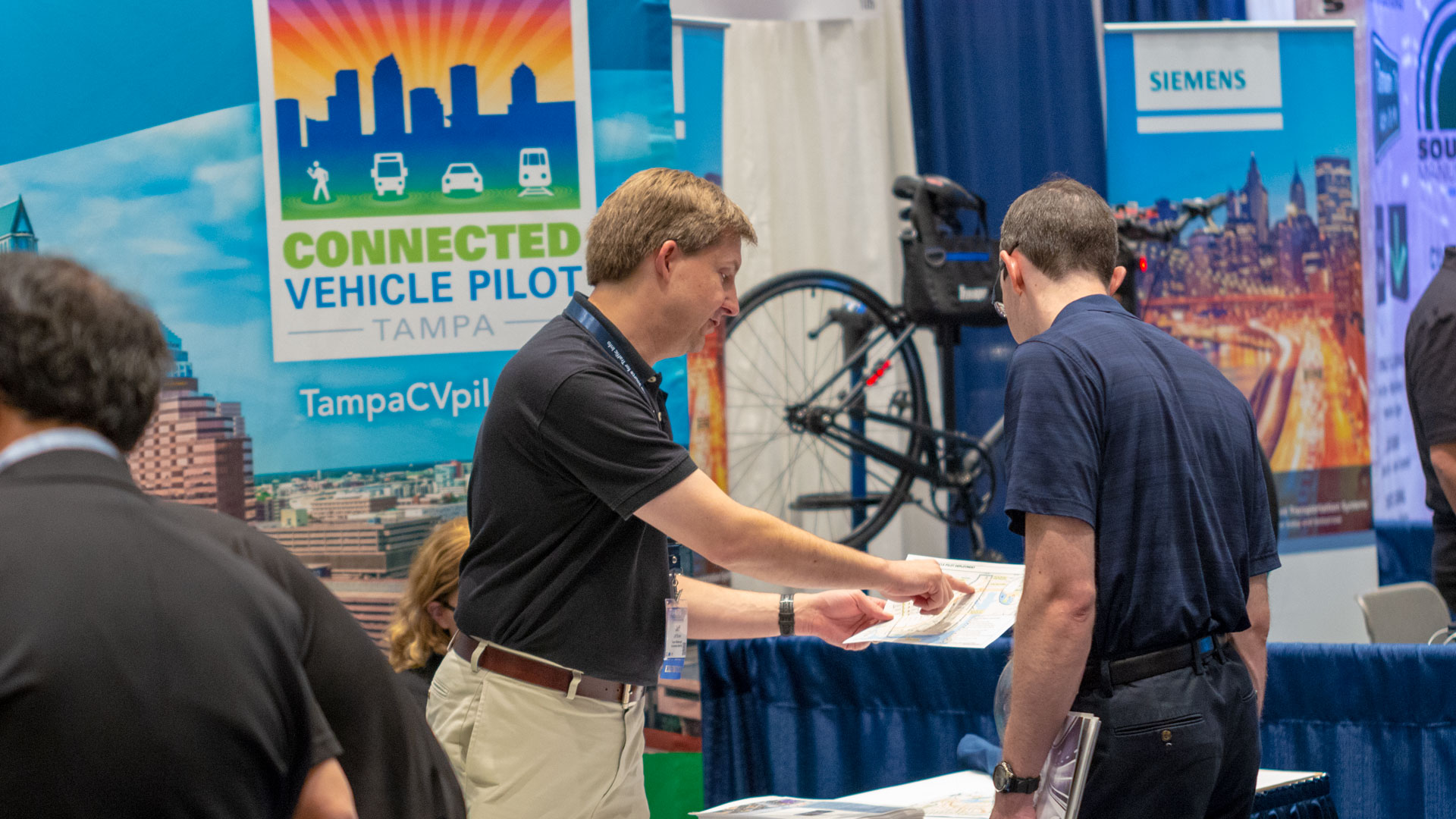
Global-5 branded the project, made multimedia explanations, handled stakeholder education, recruited participants and trained them. More than 1,000 local drivers enrolled, along with ten buses and eight streetcars. Reporters were invited into connected cars for a downtown demonstration. Discovery Channel noticed. The project later entered the ITS World Congress Hall of Fame.
The tactic was not futuristic language. It was the opposite: show ordinary motorists receiving safety messages on roads they recognized. Make the invisible system visible. Let someone sit in the seat. For technical organizations, this is the most portable lesson in Global-5’s work. A demonstration compresses explanation. The audience can see the benefit, the limit and the required behavior at once.
What another team can borrow
The billboards are not the playbook. Neither is a particular social platform. Those are replaceable. The durable pattern is an order of operations: interview the audience before naming the benefit; turn a system into a choice; place the instruction near the moment of decision; give trusted intermediaries something useful to share; let people experience the service; measure what they do afterward.
The conditions matter. The service must deliver a real benefit. Operational facts must be stable enough to explain. The communications team needs access to users, subject experts and useful measures. If an agency treats outreach as decoration after every consequential decision has been made, even excellent creative work is left advertising a conclusion.
Thirty years after its founding, Global-5 still carries the habits of its founders’ old trades. Journalism begins with the audience’s question. Advertising decides where the answer should appear. Transportation adds a severe constraint: the answer may need to work while somebody is moving. That is why the company’s best campaigns feel less like promotion than wayfinding. They tell you where you are, what happens next and which lane to take.
Continue exploring