The founding story of Sibros begins with the least futuristic experience in motoring: waiting for a dealership to update software. Hemant Sikaria had spent five years at Tesla, where he helped build the systems that could send new code into a car without asking its owner to surrender an afternoon. Then his family's non-Tesla vehicle suffered a software-related recall. And another. On the third trip, the absurdity sharpened into a business question. If Tesla could repair code through the air, why could the rest of the industry not do the same?
In 2018, Sikaria started Sibros with his cousin Mayank Sikaria, an engineer who had worked at Faraday Future. The name is family shorthand: Sikaria Brothers. Their first proposition was simple enough to fit on a whiteboard - connect a vehicle to the cloud, collect what it is doing, and send safe software changes back. The implementation was anything but simple.
A modern car can contain roughly 30 to 150 electronic control units. They may come from different suppliers, speak different protocols, run different operating systems, and govern everything from an entertainment screen to an airbag. A phone update that goes wrong is annoying. A brake-controller update that goes wrong is a safety event. Sibros chose to work in that difficult middle, between cloud software's appetite for speed and automotive engineering's demand for proof.
01 / The closed loop
The product is not an update button. It is a loop.
Sibros calls its core product the Deep Connected Platform. The useful way to understand it is not as one giant application but as a loop with four verbs. Connect provisions the machine. Collect retrieves selected signals from sensors and controllers. Update delivers software or configuration changes. Command lets an authorized operator run diagnostics or take a remote action. A fleet team, a service department, and a software engineer can view the same vehicle through different interfaces.
Deep Logger is the listening part. It can collect live streams or files, apply conditions, compress data at the edge, and harmonize signals that arrive in different formats. Deep Updater is the release manager, controlling which software goes to which hardware configuration and under what safety conditions. Deep Commander handles remote actions and diagnostics. Deep Insights turns fleet data into alerts and analysis. Sibros also sells automotive bootloaders, network stacks, APIs, testing tools, and engineering services. In 2026 it added a standards-based SOVD diagnostic interface for work performed in a service bay, near a vehicle, or remotely.
“Data tells you that something is wrong. An update fixes it. More data tells you whether the fix held.”The Sibros logic, reduced to one sentence
That closed loop is the point of difference. A basic telematics vendor can move data. An OTA specialist can move code. A systems integrator can assemble a custom stack. Sibros sells a tested product that combines those jobs across heterogeneous fleets. If one customer exposes a bug and Sibros fixes the shared product, every customer can benefit. It is the enterprise-software advantage, dragged through the harsher conditions of automotive safety, regulation, and spotty connectivity.
02 / The change of mind
Automakers pulled Sibros beyond OTA alone
The first pain was remote updates. Customer conversations changed the scope. Automakers also needed to know what was happening inside vehicles, diagnose failures without a handheld tool, manage many software configurations, and prove that a repair worked. Sikaria has said Sibros expanded as the team learned more about those adjacent problems. It built data collection beside deployment, then added remote commands and diagnostics. What began as a cure for dealership recall visits became lifecycle software.
This matters because an automaker's traditional process aims at launch day. Thousands of people push a model into production, then many move to the next model. Software behaves differently. The vehicle sold yesterday still needs a team tomorrow, because code defects, security requirements, paid features, and user expectations continue for years. Sibros fits in the space between the factory gate and the scrapyard.
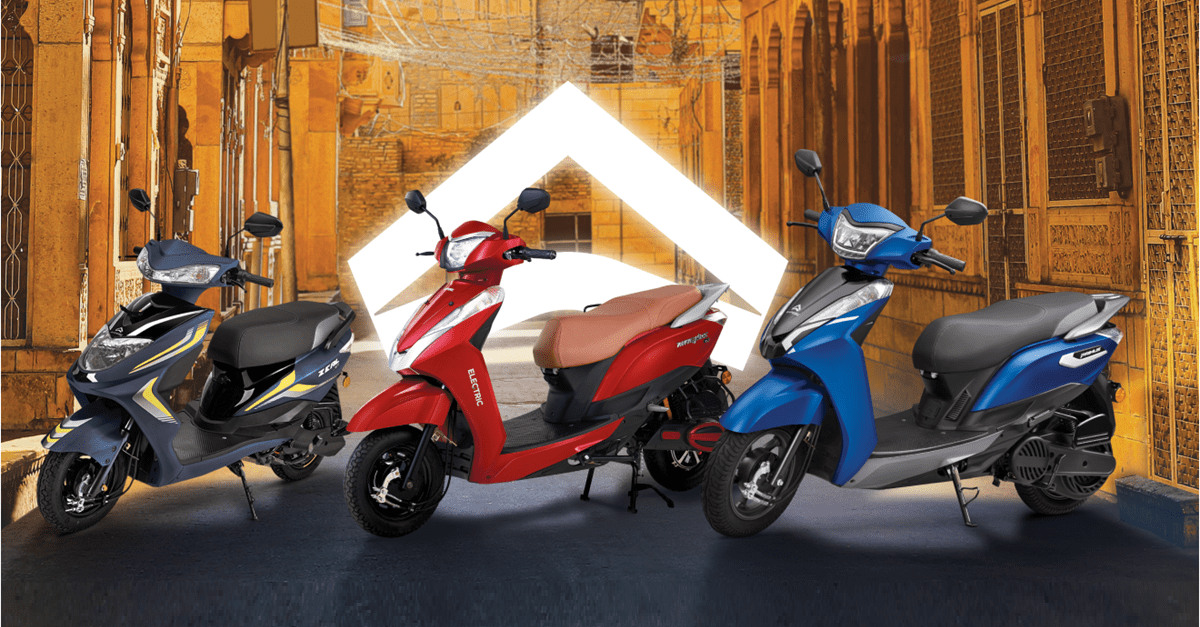
The company says its platform now supports more than 35 OEMs. Its site names a mixed garage: Mahindra, Bajaj Auto, Ford, KTM, Autocar, Harbinger, Workhorse, Xos, ZM Trucks, Range Energy, and others. In an early 2025 interview, Sikaria said more than 300,000 vehicles were running Sibros software across the United States, Europe, India, Thailand, and China. The list included mopeds, motorcycles, passenger cars, trucks, school buses, cranes, tractors, and construction equipment. He also said 19 customer relationships began in 2024.
03 / Dollars without a price tag
What it costs is private. What it can change is visible.
Sibros does not publish a price list. Platform contracts are negotiated, and apps in its marketplace are offered privately. The bill will vary with fleet size, modules, regions, integrations, support, data volume, and how much engineering the customer needs. Any neat per-vehicle number would be fiction.
There are, however, useful economic clues. Sibros says a pre-integrated bundle can deploy in under 90 days and its product approach can reduce connected-vehicle capital and operating expense by up to 50 percent. Those are company claims, not audited guarantees. The mechanism is credible: reuse one platform across models, avoid stitching together multiple vendors, filter expensive data before transmission, and replace some dealer visits with remote work. Whether the savings survive a real procurement depends on the starting architecture.
The liveliest example came from an anonymized two- and three-wheeler manufacturer. Deep Logger data showed that most customers recharged their vehicles only to about 60 percent. The manufacturer concluded its battery could be oversized and considered reducing future pack size, a change it believed could save millions in annual build cost. This is the stronger version of the connected-car pitch. The cloud is not merely keeping firmware current; field behavior reaches backward into the bill of materials.
Mahindra describes a different payoff. Its partnership uses OTA updates, field diagnostics, and logging to link the manufacturer with vehicles after production. A fix can arrive without a service visit. A technician can inspect fault codes before the customer arrives and order the right part. A software feature can become an upgrade rather than waiting for the next model year.
04 / The first thing that fails
Usually, it is not the cloud. It is the organization.
The founding failure was obvious: software had to travel by car to a dealer. Inside an OEM, the earlier failure is often ownership. Hardware teams, suppliers, cloud teams, service operations, legal departments, and model programs each control a slice. No single group owns software for the whole vehicle and its whole life. The technical stack then mirrors the org chart - fragmented, slow, and full of handoffs.
Sibros cannot fix that with an API. Its platform assumes the vehicle has compatible telematics or a route to connectivity. The customer must govern signing keys, update policies, safe-state checks, privacy, and incident response. Engineers must map controllers and configurations correctly. Leaders must fund a post-launch software team. A tiny fleet, a simple machine, or a manufacturer with a mature proprietary stack may gain little by adding another vendor.
Safety also narrows the room for clever shortcuts. Sibros' updater and bootloader products received a UL-issued ISO 26262 ASIL-D rating, and the company lists automotive cybersecurity, information-security, privacy, and UNECE software-update compliance. Certifications do not make an integration safe by themselves. They establish processes and components on which a safe program can be built. The customer still owns the vehicle.
What another builder can copy
- Start with the expensive nuisance. The dealer trip made an abstract software gap concrete.
- Own the feedback loop. Observe, act, and measure the result instead of selling one isolated tool.
- Productize the repeated 80 percent. Shared fixes and integrations compound across customers.
- Filter at the edge. Moving every byte is not insight; it is a cloud bill.
- Design for the oldest constraint. Safety, weak networks, supplier boundaries, and long lifecycles are the product brief.
05 / The platform move
The plumbing now comes with an app shelf
Sibros raised $3.5 million in seed capital, $12 million in a 2020 Series A, and $70 million in a 2022 Series B led by Energy Impact Partners. Google, Qualcomm Ventures, Fontinalis Partners, Iron Pillar, Nexus Venture Partners, and Moneta Ventures joined that large round. In January 2026, Niterra participated in another $9 million growth financing. The capital funded a broad product, international teams, and the slow integrations required to become automotive infrastructure.
The strategic turn arrived in January 2026 with the SDV App Marketplace. Once Sibros has solved the secure pipe into a fleet, partners can sell applications on top: battery intelligence, warranty analysis, crash reporting, tire health, cybersecurity, compliance, and AI-assisted consumer features. Sibros shifts from being only the plumbing to becoming a route to market. Joining the SOAFEE industry initiative that same month placed it inside the push for more open, cloud-native vehicle standards.
This is where Sibros sits in the market: below the shiny in-car feature, above the controllers and networks, and beside the automaker's own engineering teams. It competes with internal builds, systems integrators, and platforms from Sonatus, Aurora Labs, Airbiquity, Elektrobit, Harman, Bosch, and Wind River. Its argument is breadth plus reuse. Buy one composable layer instead of rebuilding logging, deployment, diagnostics, and remote control for every model.
That argument works when a manufacturer wants speed, has many configurations, and accepts a common platform. It weakens when connectivity is absent, customization overwhelms reuse, data cannot leave a jurisdiction, or the buyer insists that the vehicle cloud is core proprietary technology. Sibros is not magic dust for a disorganized car program. It is leverage for an organization ready to operate cars as living software products.
The amusing thing about the software-defined car is that its most valuable feature may be avoiding a chair in the dealership waiting room.The humble consumer payoff behind the enterprise stack
The third recall gave Sikaria the right problem. The automakers gave Sibros the larger one. Cars needed remote updates, yes, but also memory, observation, diagnosis, control, and a responsible owner after launch. Eight years later, the company is still selling that unglamorous continuity. In an industry fond of concept cars and theatrical dashboards, keeping yesterday's vehicle useful tomorrow is a quieter business - and a substantial one.