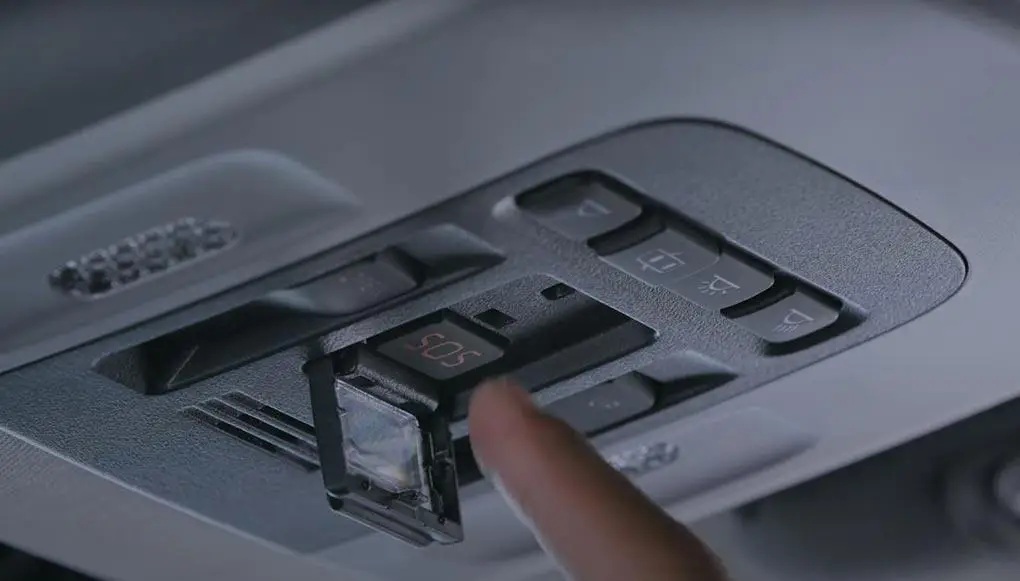
The red SOS button in a Toyota is an unusually concise piece of writing. Three letters promise that, when the road goes wrong, somebody will answer. Behind that promise sits Toyota Connected North America: a software company whose work stretches from the dashboard to the cloud and, finally, to a human being who can help.
It is tempting to judge a connected car by its screen. Screens are photogenic; call routing is not. Yet the routing offers a better introduction to this company. A vehicle can detect an event, transmit information and make a connection. Each step must lead somewhere useful. Otherwise, the car has merely become a very expensive messenger.
- The job: build Toyota and Lexus connected-service software, including the Drivelink platform behind Safety Connect.
- The users: drivers and passengers; the business customers include Toyota companies and mobility partners.
- The distinctive choice: own the service platform and feedback loop, while using specialist technology partners.
- The useful lesson: test the whole journey, including what happens when a call drops.
A button is only the beginning
Toyota reported five million cumulative connected customer calls in November 2024. Those calls covered ordinary requests, such as help finding a destination, alongside stolen-vehicle assistance and collision notifications. The distinction matters. Five million calls does not mean five million emergencies, five million customers or five million lives saved. It means the service had become part of the practical business of owning a car.
Safety Connect is the name owners encounter. Drivelink is the platform underneath. Depending on the vehicle and service, it connects an SOS request or automatic collision notification with assistance, supports roadside help and helps locate stolen vehicles. Destination Assist handles a less dramatic predicament: needing directions. A system built for distress must also be good at the everyday.
That chain carries more than conversation. Vehicle information can give agents context for the situation. The point is not to accumulate an impressive heap of telemetry. It is to make the next action better informed. For a driver, the entire operation should feel simpler than its architecture looks.
- 01VehicleSOS or detected event
- 02ConnectionNetwork + cloud
- 03AgentContext + conversation
- 04AssistanceResponse to the need
The decision to own the conversation
Toyota and Microsoft announced Toyota Connected in April 2016, with Zack Hicks as its founding president and CEO. The initial plan joined vehicle data, cloud technology and services development. Microsoft supplied Azure technology and engineering support. GeekWire reported an initial Toyota investment of $5.5 million and a minority Microsoft stake. That figure describes the beginning of the company, rather than the bill for its later platforms.
The decisive operational move came in summer 2019, when Toyota Connected launched Drivelink and replaced a third-party telematics platform. Its subsequent case study describes an irritating weakness in the earlier arrangement: obtaining reports and accounts of how problems were being handled could take weeks. For a company trying to improve a service, information arriving that late is a peculiar kind of brake.
“We have that complete ability because it’s our own platform.”Dan Fisher, Drivelink call-center director, 2022
The attractive part of bringing the platform inside Toyota was the shorter distance between a problem and the people able to change it. Ownership made the feedback loop more direct. This is a useful way to understand TCNA’s place in the market: an automaker’s software and service organization, with access to the vehicle program and its customer experience. Comparable safety services include GM’s OnStar. A fleet operator shopping for software across many vehicle brands has a different purchasing problem.
The business is also less simple than a monthly app subscription. TCNA develops and maintains technology for Toyota companies and partners; owners encounter it through vehicles, apps and branded connected-service packages. Some features have trials, others require paid service. Model, equipment and market affect availability. The commercial relationship is embedded in the car, which makes a universal price tag rather unhelpful.
Own the platform. Borrow the right tools.
Bringing work in-house did not produce a vow to make every component. Twilio Flex supplies contact-center technology. In its customer case study, Twilio reports a 13% reduction in after-call work and an 18% decrease in average monthly handle time. These are reported operational improvements, not independent measurements of emergency outcomes.
November 2024
Twilio case study
Twilio case study
One feature is particularly easy to appreciate: reconnecting a dropped vehicle call to the same agent. Anybody who has repeated a problem to three representatives understands the appeal. In a roadside incident, continuity has greater value than conversational elegance. The software remembers who was helping, so the customer need not start the story again.
AWS supplies another part of the machinery. A 2024 technical account describes a phased Drivelink cloud migration: replicated data, parallel environments and gradual changes to traffic. Its transferable principle is reversibility. Keep a working route available while the replacement proves itself. That demands engineering time and duplicate infrastructure during transition; the published account offers no project budget.
For another organization to copy this approach, it needs people capable of operating the service and knowing whether it is healthy. Buying cloud capacity alone does not provide that judgment. Small releases and a rollback path are useful precisely because the team can identify trouble and act on it.
When the minivan makes the call
The 2025 Sienna turns the same connected-service logic toward a different problem. Its standard Advanced Rear Seat Reminder uses millimeter-wave radar to detect movement in a defined rear-seat area under specified conditions. Warnings can escalate from chimes and flashing lights to the horn. With the required Safety Connect registration and notification settings, alerts can also reach a registered phone through messages and an automated call.
This is a telling extension of the business. The relevant event occurs after driving has stopped. TCNA’s telematics infrastructure supports the automated calling, giving a sensor another way to get somebody’s attention. But sensing remains limited: the system may not detect every occupant in every circumstance, and the driver remains responsible for checking the vehicle. A reminder deserves to be understood as a reminder.
In June 2025, Intrado and Toyota Connected announced another extension: advanced collision data delivered in an i3-compliant format to compatible 911 call-handling systems through AT&T’s emergency network. The announced availability covered select model-year 2026 Toyota and Lexus vehicles in the United States. Its appeal lies in fitting useful information into an existing emergency workflow. A new data stream has little practical charm if the recipient has to hunt for it.
The dashboard has a human audience, too
Emergency services are the sharpest example of TCNA’s work, but hardly the whole portfolio. It also develops vehicle-data infrastructure, voice interaction and user interfaces. Toyota’s virtual voice assistant can control audio and climate functions; certain equipped vehicles allow additional commands. The benefit is mundane and welcome: accomplishing something without excavating a menu.
The enhanced Lexus Interface announced for the 2026 ES brings configurable home-screen widgets, a quick-control menu and embedded voice-assistant functions. TCNA engineers and designers contributed to the system. The embedded functions are particularly interesting because some familiar requests can be handled onboard. Cloud services offer reach; onboard computing can shorten the trip for tasks that need not leave the car.
Mobility software also escapes the privately owned vehicle. In 2018, Servco launched Hui in Honolulu using an app developed with Toyota Connected. The service began with 70 vehicles at 25 locations and smartphone-based reservations and digital access. That application of vehicle connectivity is pleasantly tangible: book the car, find it, open it, drive it. No philosophical debate about mobility is required at the parking space.

Software with somewhere to be
TCNA’s published culture combines customer focus, ownership and kaikaku, or transformational change. Its engineering accounts also emphasize kaizen: improvement in smaller increments. The two ideas can coexist. Change the organization’s relationship to an essential service, then improve that service carefully. The careers page gives the culture some concrete texture, advertising an annual training allowance, paid parental leave and daily catered lunches. Software still requires feeding the people who write it.
There are hard boundaries around the promise. Connected services can depend on cellular availability, GPS, working vehicle hardware, registration, consent and an active service plan or trial. Coverage can disappear. Hardware can be unsuitable. A voice assistant and a cloud platform cannot bargain a signal into existence. Owners should check the terms and equipment for their own vehicle rather than infer eligibility from the Toyota badge.
For businesses, the lesson is equally specific. Owning a platform pays off when the organization has the access, operational capacity and engineering skill to turn feedback into a better service. Toyota Connected has built around that relationship for a decade. Its most interesting product may be the distance it removes between the car that asks for help and the people who can answer.
Follow the work
Explore Toyota Connected, its products and services, and company news and engineering stories. Follow the team on LinkedIn and Instagram.
For a closer look: inside Drivelink, the contact-center case study, the cloud migration, and Kevin O’Dell’s SIGNAL 2025 session details.