The problem with Hemant Sikaria’s car was that he knew too much. A software recall is an inconvenience for any owner. For an engineer who had helped cars receive new software remotely, it was also a puzzle. Why was the solution he had worked on at Tesla still unavailable in his own driveway?
The car was from another manufacturer. Software-related recalls began arriving in 2017. Across his family, several vehicles came from the same brand, multiplying the nuisance. Each appointment made a technical limitation into a household scheduling problem. The software needed attention; the owner had to go somewhere.
By the third recall, the question had become difficult to leave alone. Sikaria and his cousin Mayank would eventually build Sibros around it. There is something pleasingly unglamorous about this beginning. A company concerned with the future of the automobile began with the present-day irritation of getting one serviced.
“It’s kind of borne out of that frustration and experience,” Sikaria said. Both ingredients mattered. Plenty of people dislike visiting a dealership. Fewer arrive at that feeling with years of experience developing the machinery that might spare them the trip.
The doors were the visible part
Before the recurring appointments, there was a fairly direct engineering education. Sikaria earned bachelor’s and master’s degrees in electrical and computer engineering at Carnegie Mellon University. After graduating in 2009, he joined Oracle as a software developer. In 2011, he moved to Tesla’s firmware team.
Firmware occupies the point where a computer program acquires physical consequences. In a car, instructions become a moving window, a suspension adjustment or a door opening. A mistake can become considerably more inconvenient than a misplaced button on a website. Sikaria’s work placed him close to that boundary.
He helped develop Tesla’s over-the-air update system and later served as technical lead for Body and Chassis Firmware. His responsibilities included systems such as body controls, air suspension, security and authentication. Those are the workings an owner expects to cooperate without being asked to contemplate them.
Then there were the Model X Falcon Wing doors, whose opening motion rather defeats any ambition to go unnoticed. Sikaria oversaw design and integration work on them. He also holds patents related to that work. It is a useful detail in a career often described through the less photogenic business of software updates.
A door supplies an immediate verdict. It opens properly, or it does not. Behind the theatre sits the same demanding coordination found elsewhere in a vehicle: electronics, sensors and software have to agree. Sikaria’s route to founding a software business passed through objects people could touch.
“Connectivity is key to streamlining and expediting the evolution of mobility.”
Hemant Sikaria
A family name, shortened for business
After leaving Tesla, Sikaria took time to travel with his wife. The next company arrived in 2018. He and Mayank began Sibros that August in a shared coworking space. Mayank brought experience from Faraday Future, giving the pair different views of the same industry’s engineering problems.
The name was a family compression: Sikaria Brothers became Sibros. The co-founders are cousins, and Hemant’s brother was an investor. Even a company working on remote connectivity can have a remarkably close origin.
Another connection reached back to Tesla. Craig Carlson, who had led its firmware organization, became an advisor to Sibros. Sikaria had worked under him and described him as a mentor. The relationship carried an earlier apprenticeship into a new business, with the former engineer now responsible for setting the direction.
That is a less solitary picture of company-building than the usual founder portrait permits. A cousin supplies complementary experience. A brother invests. An old manager returns as an advisor. The original problem may belong to one owner; the attempt to solve it quickly acquires other people.
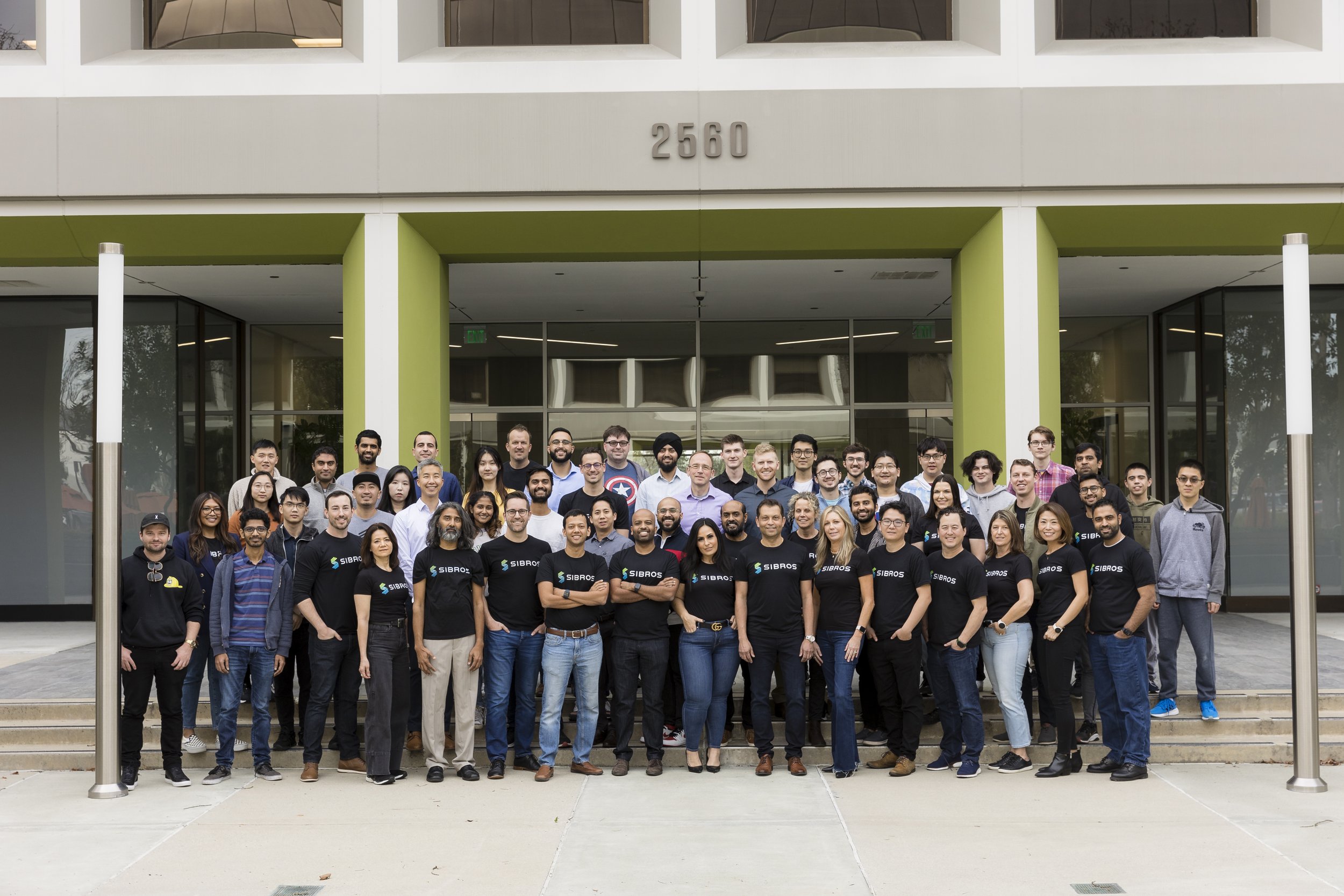
The useful part is the return journey
Sikaria’s proposition requires looking past the dashboard. The infotainment screen is an obvious place to notice new software. Much of a vehicle’s software, however, lives elsewhere. In explaining the problem, he has described vehicles containing between 50 and 150 microcontrollers, each running software.
That range is an explanation of complexity, rather than a specification for every car. Different components have different jobs. Their software versions also need to remain compatible. Delivering a file is one task. Keeping a collection of cooperating computers in a usable state is a larger one.
Sibros organized its platform around three capabilities: collecting data, delivering updates and issuing remote commands. Deep Logger, Deep Updater and Deep Commander give those functions appropriately literal names. Underneath the branding is a continuing conversation between the product in use and the organization that built it.
The data side deserves as much attention as the download. Sikaria has described processing and filtering information on the vehicle, then sending selected snippets to the cloud. Collecting everything would be a poor substitute for deciding what an engineer actually needs to learn. Useful information has to be chosen.
Remote commands add another part of the service relationship. They can help a manufacturer examine a vehicle before arranging the next step. A physical repair may still require a workshop. Knowing more beforehand can make that visit better prepared. The original frustration becomes a guide to reducing unnecessary journeys.
There is a particular discipline in this way of thinking. The owner sees a car. The engineer sees interconnected systems. A founder selling to manufacturers must also see the people who will integrate the software, investigate a problem and answer the customer. Each view makes different demands on the same product.
An engineer learns to build a company
At Sibros, Sikaria became responsible for more than a technical subsystem. The CEO role includes strategy, people and customer outcomes. Solving an engineering problem inside one automaker had given him experience; selling a product to other automakers required an organization capable of repeating the work.
He has described the importance of bringing automotive and cloud experience together. The disciplines meet at a real seam. One team understands what must happen inside the vehicle. Another understands the services through which information and changes move. The customer needs the combined result to function as a coherent product.
“At the end of the day, it is the people that make the difference in a company,” he said. In this setting, the line has a practical meaning. The platform crosses boundaries between components, suppliers and software environments. The people building it have to cross some boundaries of their own.
The work also puts security inside the product conversation. Sikaria has described inviting white-hat hackers and penetration-testing firms to challenge Sibros’s systems. Remote access brings responsibility along with convenience. A manufacturer needs ways to reach its vehicles while controlling who can send instructions and what those instructions can do.
He discussed the wider implications of connected vehicles in a December 2024 appearance on SAE Tomorrow Today, including regulation and security. By then, the subject had expanded beyond whether an update could arrive remotely. The questions included how manufacturers could operate that capability at scale, and what would make their customers comfortable relying on it.
That progression is part of Sikaria’s own change of occupation. A technical lead can concentrate on a defined piece of the machine. A CEO must explain how the product fits into the business and the relationships around it. The engineering background supplies detail; leadership requires making that detail useful to other people.
Recognition and financing had arrived earlier. In 2022, Sikaria was named to the Silicon Valley Business Journal’s 40 Under 40. That year also brought Sibros’s $70 million Series B. The two events describe different kinds of progress: public recognition for a founder, and capital for the company’s work.
Neither explains the daily attraction of the job quite as clearly as his interest in customers’ factories. Sikaria has written about visiting manufacturing plants and learning from the different products customers make. For someone whose business lives between cloud services and physical machines, the factory remains a useful place to look.
More kinds of vehicles, the same unfinished job
The range extends beyond passenger cars. Sibros describes supporting vehicles including motorcycles, buses, commercial trucks and agricultural equipment. The appeal is easy to understand: a software maintenance problem can interrupt a working machine as readily as a family’s transport. The circumstances change; the need to manage software persists.
In January 2026, the company announced an SDV App Marketplace and joined SOAFEE, the industry initiative concerned with software-defined vehicles. Niterra also announced participation in a $9 million growth financing round. Its announcement described Sibros as having been used by more than 30 manufacturers across more than 40 architectures.
Sibros deployment figures as of January 2026. OEMs are original equipment manufacturers.
The money was intended to support product development, commercial operations and expansion of the sales and marketing team. These are the comparatively prosaic requirements of getting a useful engineering idea into more customers’ hands. A product needs people who can explain it, integrate it and stay involved after the agreement.
By October 2026, Sibros’s newsroom was recording another industry acknowledgement: Autotech Council’s Startup of the Week. The milestones have moved well beyond the shared workspace. Yet the most revealing measure of Sikaria’s ambition remains close to the beginning: what happens to a vehicle after someone has bought it?
His answer gives the manufacturer a continuing role in the product’s working life. Information can return. Software can change. A problem can be examined before the owner starts rearranging the day. The engineering sits behind those possibilities, out of sight when it works.
For a career that includes doors designed to attract attention, there is a certain elegance in that destination. Sikaria is building toward a service experience with less ceremony: a vehicle improves, its owner carries on, and nobody has to admire the waiting room.