A repair technician standing beside a broken air conditioner has many problems. The customer wants an arrival time. The dispatcher wants a status update. The accounts team wants the right parts charged to the right job. Somewhere in the office, a sprawling software system knows all this. The person holding the wrench may not. Appify built its business in that gap.
- Appify makes web and mobile workflows that connect to enterprise systems such as Salesforce, SAP, Oracle and NetSuite.
- It began as Turbo Systems in 2017, then launched ready-made Field Sales and Field Service apps with its 2020 rebrand.
- Its customers include field operators and other organizations with awkward processes, including construction firms and universities.
- The company now sells an AI-assisted platform, but the useful test is still whether a real worker can finish a real task.
A box of parts is still work
The first version of the proposition was familiar: here is a no-code toolkit; use it to make an app. There is genuine value in that. A business analyst can create forms, permissions and workflows without waiting for a software project to crawl through a development queue. Yet a blank canvas is an odd gift for a company that is already short of time. Someone still has to decide what goes on it.
In 2020, then-CEO Jen Grant spoke with customers and reached a more useful answer. Appify would give them applications with the essential functions already assembled, then let them tailor the details. The marketplace opened with Field Sales and Field Service. A salesperson could prepare a quote from a tablet in the field. A repair worker could see job information and update a customer record while still at the site. The difference sounds modest until one counts the trips back to the office it can remove.
“Here’s an app that you can launch in minutes.”Jen Grant, then-CEO, on the 2020 marketplace
The rebrand arrived at the same time. Turbo Systems, it turned out, suggested cars to too many people. Appify told prospects what the company did. But the sharper change was in what it delivered: a starting point close enough to the finished job that a customer could imagine using it tomorrow.
The last mile of a large system
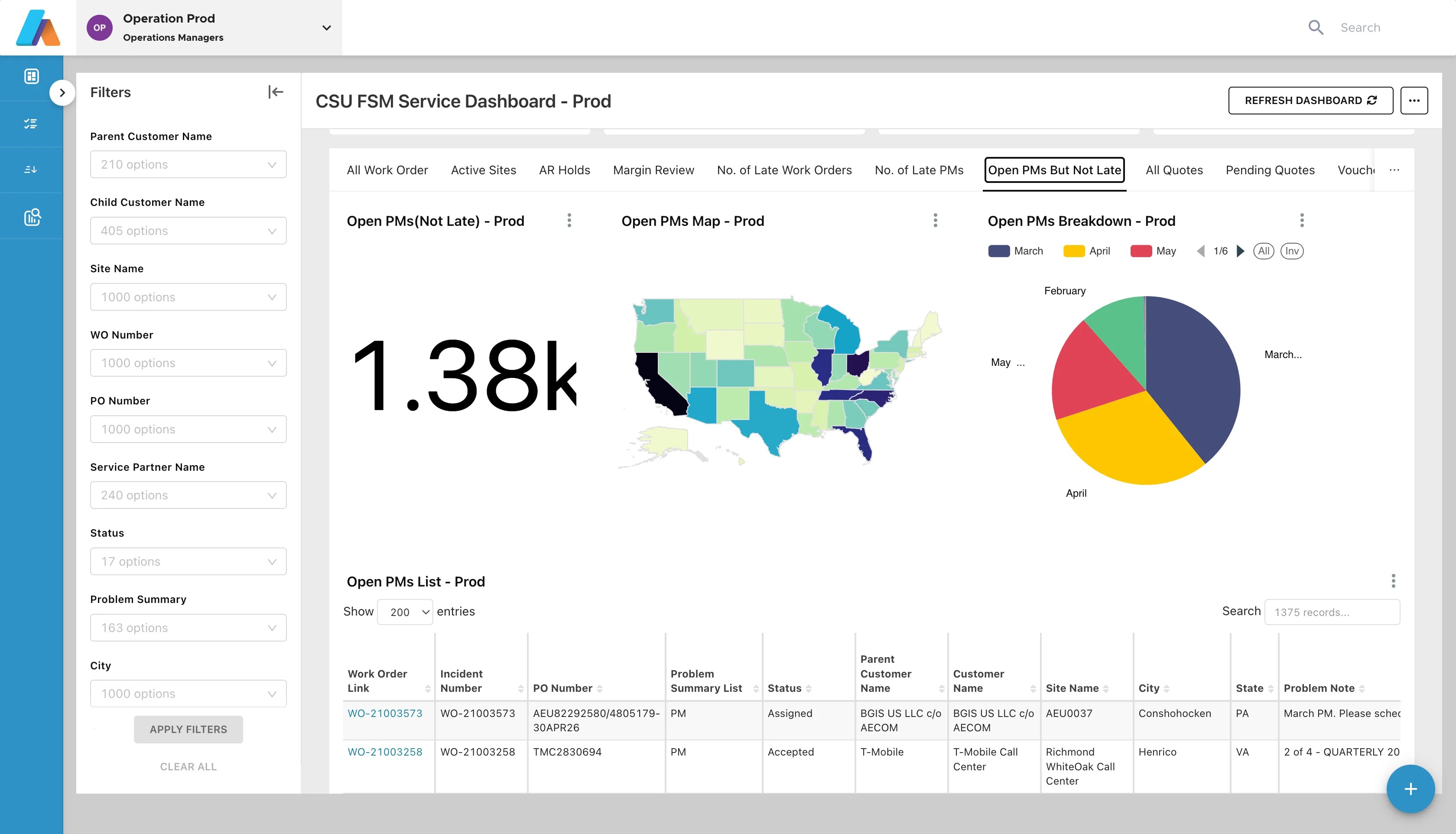
Appify does not ask every business to throw away its existing software. Its established pitch is to connect to systems of record and put the missing workflow on top. The company lists integrations and use cases across Salesforce, SAP, Oracle and NetSuite. That position matters because the hardest enterprise change is often the one that demands everyone replace everything at once.
Consider Appify’s account of a Florida HVAC company. Staff were entering information into more than seven customer portals, with roughly 20 minutes of manual work per job. Different field maps, authentication methods and synchronization failures made the problem larger than the data entry itself. Appify describes a layer that maps fields for each portal, synchronizes updates, raises alerts when a sync fails and records the trail. It is not a glamorous demo. It is the machinery that keeps a customer from calling twice to ask where the technician is.
ERP, CRM and service data stay where the business already manages them.
Forms, roles, approvals and portal mappings turn records into actions.
A quote, work order or customer update moves without a return trip.
The same platform has wandered far from the original service van. Appify shows roof inspection, dispatch, inventory, customer portals and student course planning. Fordham University appears among the organizations displayed on its website, alongside industrial and service companies. The company says its platform has processed more than 20 million transactions and serves more than a dozen industries in production. Those are company-reported figures, but the range itself makes the point: the product is a way to shape a process, not one fixed industry application.
A platform fee and the hard edges
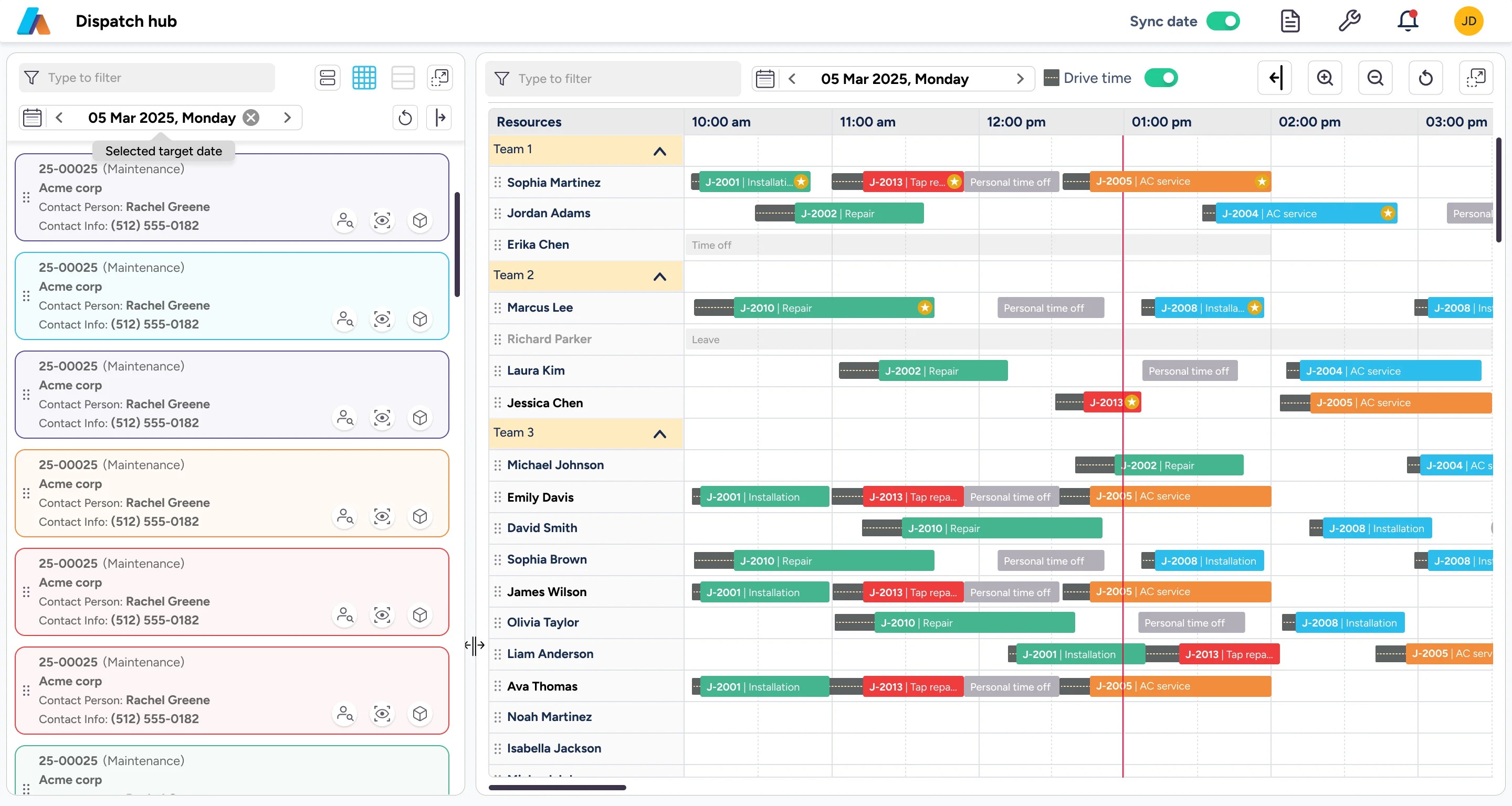
Appify sells to businesses, not individual consumers. Its current pricing page lists a subscription with Appify Studio, mobile clients, portals, workflows, role-based access control, APIs and unlimited apps and objects. There is no public flat dollar price. Advanced functions such as private cloud hosting, dispatch scheduling, single sign-on and branded app packaging receive tailored prices; configuration, training and custom API work are also offered as services. This is a sensible way to price a product whose easy middle can be standardized while its awkward edges vary from customer to customer.
A buyer should therefore compare Appify with more than one alternative. A custom software team can make precisely the workflow a company wants, but must also build and maintain every connection. A field service suite may work quickly if the operation matches its design. Large low-code platforms offer broad tooling, though the application still needs to be assembled. Appify’s bet is that prebuilt solutions plus configurable integration land in the useful space between those choices.
What changed after the marketplace
The company’s 2020 financing gives a sense of the wager. It announced a $3.45 million extension to an $8 million Series A, with Mayfield joined by B Capital and Nassau Street Ventures. By 2022, CSG had selected Appify’s platform to help power Workforce 360, a mobile application for field service staff. The announced relationship was a product selection and partnership. It placed Appify’s software inside a larger field service offering, where the quality of the worker experience would matter more than the elegance of the builder.
The current pitch has moved again. Appify now advertises Unshackle, an AI agent meant to build, extend and migrate enterprise applications from descriptions of business processes. Its platform page describes generated data models, interfaces, permissions and automation, and promotes private cloud deployment and a flat platform fee. These are Appify’s claims about the product, not a measured account of what every implementation achieves. The intriguing continuity is that the company is still trying to shorten the distance between a problem described and an application used.
For a reader who wants to copy the lesson, the method is plain. Watch where people re-enter the same data, wait for an approval or leave a job to update a record. Build one connected workflow around that moment. Give users a credible starting app, then let them change the parts peculiar to their business. It works best when the underlying systems have usable access and someone owns the process well enough to describe its rules. Where data is trapped, permissions are muddled or the process changes by the hour, the hardest work happens before anyone drags a widget onto a screen.
The surprising thing about Appify is how ordinary its best story is. The company set out to make app building faster. It learned that the customer’s real ambition was smaller and more urgent: get the quote out, update the work order, tell someone the technician is on the way. The app is only interesting because the job gets done.