A colleague asks Legal whether a proposed deal needs an NDA. The answer, naturally, is “it depends.” It depends on the party, the information, the territory, the existing contract and the sort of exception that only appears after someone has already forwarded the question to six people. To the business, those words can sound like a queue. To a lawyer, they are an honest description of the job. BRYTER found its opening in the space between the two.
- BRYTER lets legal teams turn repeatable advice into self-service forms, decisions, documents and approvals.
- Its BEAMON AI suite adds research, drafting and document review; Hybrid Agents connect AI to controlled workflows.
- It sells subscription software to corporate legal teams, law firms and professional services firms, with pricing offered by quote.
- The useful lesson: choose one repeated, rule-governed task, map its exceptions, then build and test with the people who use it.
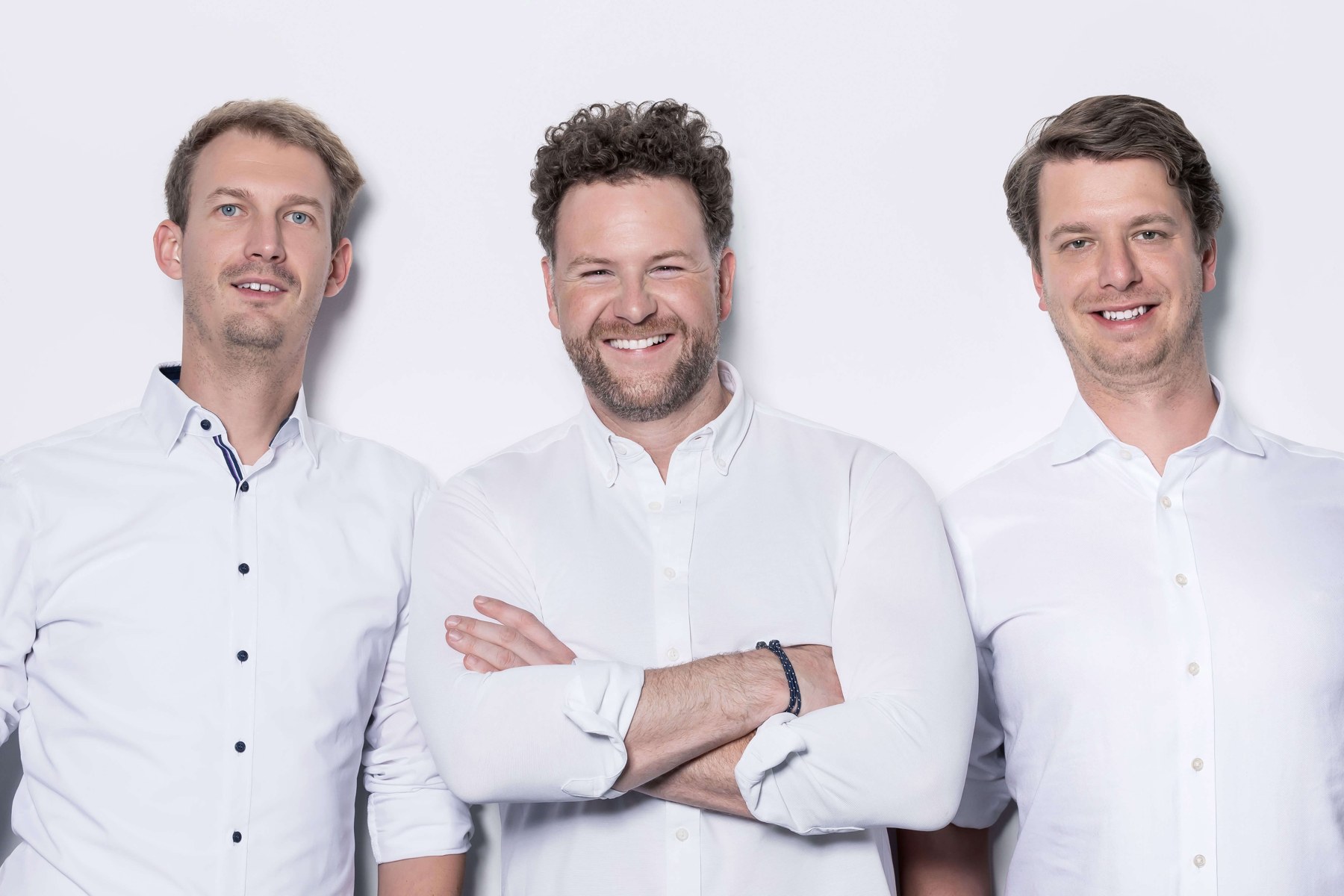
The company was founded in 2018 by Michael Grupp, Micha-Manuel Bues and Michael Hübl. Grupp and Bues had practiced law; Hübl brought product experience. Their first proposition was almost mischievously simple: if a lawyer could explain a recurring decision as a series of questions, perhaps the lawyer could publish that reasoning as an application without waiting for a developer. A request that once arrived as a vague email could become a guided interview. The output might be an answer, an approved document, a risk score or a handoff to the right specialist. Even the name needed a quick revision: an early 2018 soft launch used “Ryter”; within days, the founders had settled on BRYTER.
The first product was a better question
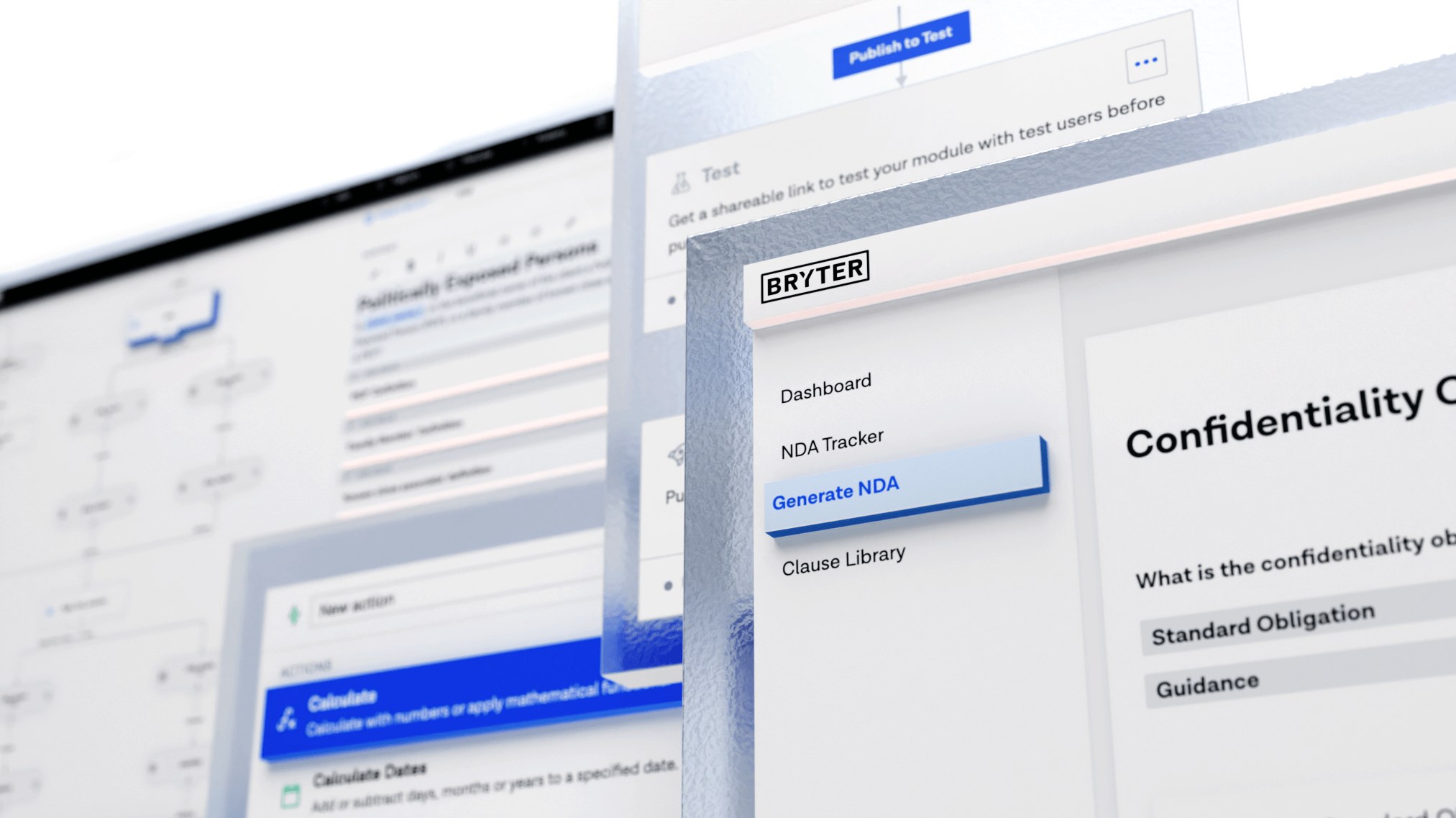
BRYTER Workflows is the company’s no-code builder. A legal operations team can make an intake form, route a request, apply rule-based logic, generate a document and record the result. This is less glamorous than asking a chatbot to “think like a senior partner.” It is also where many legal teams spend their Tuesdays. Contracts have to be classified; privacy incidents have to reach the proper desk; requests must arrive with enough information to act on them.
Telefónica Germany used BRYTER to build an NDA generator, a data breach reporting assistant and a virtual legal assistant for requests. Its legal team wanted to make routine help available without making every colleague learn whom to email first. ING Germany built a portal to direct legal requests and keep its contract database current. The team said its initial build took two focused weeks, followed by testing, feedback and revisions. The software was easy enough to assemble; getting the stakeholders comfortable with the path through it was the harder part.
“We try to get people to love our legal services. We don’t want to be seen as a blocker to slow things down.”Christian Wünsche, Telefónica Germany
That line captures the product’s quiet ambition. The customer is often a lawyer or a legal engineer, but the person who feels the benefit may be a salesperson facing a deadline, an employee reporting a possible breach or an operations manager who no longer has to decipher a shared inbox. BRYTER’s named users range from ING and McDonald’s to law firms including Ashurst and Linklaters, as well as the Big Four. In July 2026 the company said more than 15,000 people used its products. The reported scale belongs to BRYTER; the smaller customer stories show what those people are doing.
TD SYNNEX offers the eye-catching number. Its legal operations team reported saving 95% of the time previously spent on one manual workflow after automating the decisions and document creation. That is a customer account about a particular process, not a promise for every deployment. It does, however, reveal BRYTER’s target: work that repeats often enough for the effort of mapping it to pay back.
Then the machine learned to read
Generative AI changed what could happen before a workflow reached its decision point. In May 2025 BRYTER launched BEAMON AI for lawyers: tools to research, summarize, draft, compare and review documents, including high-volume extraction. Three months later it introduced Hybrid Agents, which join model-driven analysis to rules, integrations and human checks. Imagine a pile of contracts under a new regulatory requirement. AI can find clauses and flag gaps; a workflow can organize the results, send uncertain cases for review and prepare amendments. The point is to carry work beyond the first plausible paragraph.
This combination is BRYTER’s position in a crowded market. General workflow platforms can build almost anything, but require a legal team to supply much of the domain fit. Legal AI assistants can be excellent readers and drafters, but a draft is only one station in a process. Contract platforms go deep on the contract life cycle. BRYTER tries to sit where legal AI, expert rules and process orchestration meet. Its public examples include claims analysis, billing guideline checks, due diligence, NDA review and regulatory readiness assessments.
There is an important limit to the trick. A model can extract the wrong clause, and a decision tree can encode a bad rule with immaculate consistency. Even the best workflow needs an owner who knows when policy changes, what counts as an exception and which outputs merit review. Telefónica Germany’s general counsel, Marcel Ritter, described BEAMON as a “super-fast legal answering machine” that still needs a knowledgeable person to correct it. That is a useful purchasing test: if nobody can own the legal reasoning, buying an interface will not supply it.
The bill includes the process
BRYTER sells business software, not a public one-price utility. Its pricing page asks buyers to request a quote for Workflows and pricing for BEAMON AI. The AI product’s published license descriptions divide features across Single, Team and Pro plans, with some integrations and workflow-building features tied to higher tiers or add-ons. The 2021 Series B, led by Tiger Global, brought in $66 million to fund expansion after the company said it had passed 100 customer firms in Europe and the US. Neither that financing nor a customer’s time-saving claim tells a buyer what their own rollout will cost.
The spend is also measured in attention. ING’s two-week build involved a legal operations specialist and a lawyer focused on one portal, plus time to test it. A sensible starting point is a request that arrives repeatedly, follows mostly stable rules and has a named expert willing to specify exceptions. Give it an intake form. Record where a person must decide. Test it with the colleagues who will actually submit requests. Only then ask whether AI would improve the reading, drafting or triage inside it. A one-off strategic negotiation offers little repetition; a chaotic policy with no agreed owner gives automation nothing reliable to follow.
BRYTER has continued to change the way people build on the platform. In February 2026 it announced conversational creation of workflow modules, letting users describe an application in a prompt rather than model every step by hand. In July it announced a partnership with Septeo CNEE to bring BEAMON AI into German insolvency case management, where documents and case context already sit. The practical idea is consistent with its beginnings: the tool should meet the work where the work happens.
Lawyers will continue to say “it depends.” Sometimes the sentence signals judgment no software should pretend to possess. Sometimes it conceals the same five questions the team has answered for years. BRYTER’s business depends on telling those situations apart. Its best argument is not that the machine has learned to be a lawyer. It is that a lawyer’s routine knowledge can finally stop living in an inbox.