The photograph existed. That was the irritating part. Somewhere in White Castle Roofing’s collection of job pictures was the image Luke Hansen wanted: a particular shingle, on a particular house, useful to a particular customer. The camera had done its job. The filing system had declined the assignment.
- CompanyCam gives job photos a project, a timeline and an audience.
- Its customers build, repair and maintain things that offices cannot always see.
- AI turns captured observations into editable reports.
- The useful habit: file evidence while doing the work.
The filing cabinet failed first
Hansen’s family ran a roofing business in Nebraska. They already understood photography’s value. Pictures helped with inspections, quality control, insurance and sales. But a screen full of anonymous filenames and a collection of drives made those pictures awkward to reuse. Taking more photographs merely enlarged the haystack.
The family wanted organization by time, date and address. Luke searched for an app, came up empty, and worked with a local development shop. Testing at White Castle and a nearby foundation repair business suggested a market beyond the family. CompanyCam was founded in 2015. Its first employee, developer Chad, worked from a windowless roofing-office backroom. Software glamour arrived somewhat later.
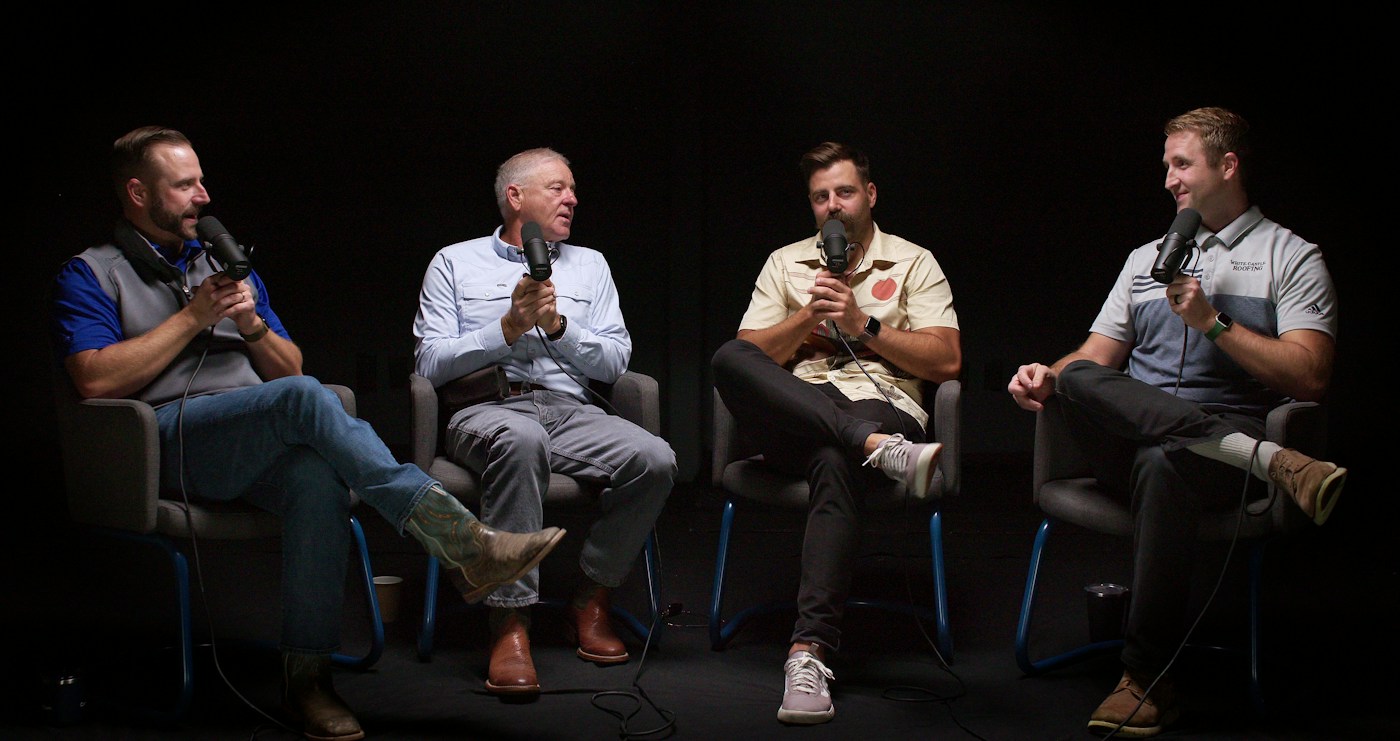
A photograph with an address
Today, CompanyCam runs on iOS, Android and the web. A contractor creates a project for a job, takes pictures inside it, adds descriptions or markup, and shares the record. The office can see what the field crew sees. A customer can receive a gallery or a live timeline instead of requesting another update.
That small change rearranges the work. A photo of damaged siding belongs beside the job details. A comment about it stays beside the photo. A checklist can ask for evidence of a completed step. Time spent reconstructing events becomes time spent responding to them.
Offline capture matters here. Basements and job sites are imperfect places to demand a connection. Crews can record photos and videos, then sync when service returns. The promise of real-time visibility still depends on that return.
Four trades, one view
Consider ServiceOne, an Omaha business handling plumbing, HVAC, electrical work and appliance repairs. It already took job photographs. According to CompanyCam’s February 2026 customer account, the trouble was finding and sharing them across emailed records.
Moving the trades into one project-based system gave technicians, coordinators and salespeople access without forwarding attachments. ServiceOne salesman John Salmans described the benefit plainly:
“Our whole team can visualize what we see in the field.”John Salmans · ServiceOne
This is a vendor-published account, rather than an independent productivity study. Still, its mechanism is persuasive: the office can inspect the evidence before interrupting the technician. Four different trades need fewer translations of the same situation.
The report writes itself. Almost.
CompanyCam’s AI tools extend the same idea. During a walkthrough, a user speaks observations and takes photos. The system organizes that material into an editable document. Daily logs and progress recaps use information already recorded on the project.
The order matters. Capture comes before composition. An elegant report cannot recover an unphotographed condition or an observation nobody dictated. CompanyCam’s own guidance asks users to review and edit generated documents before sharing them. The human remains responsible for what the customer receives.
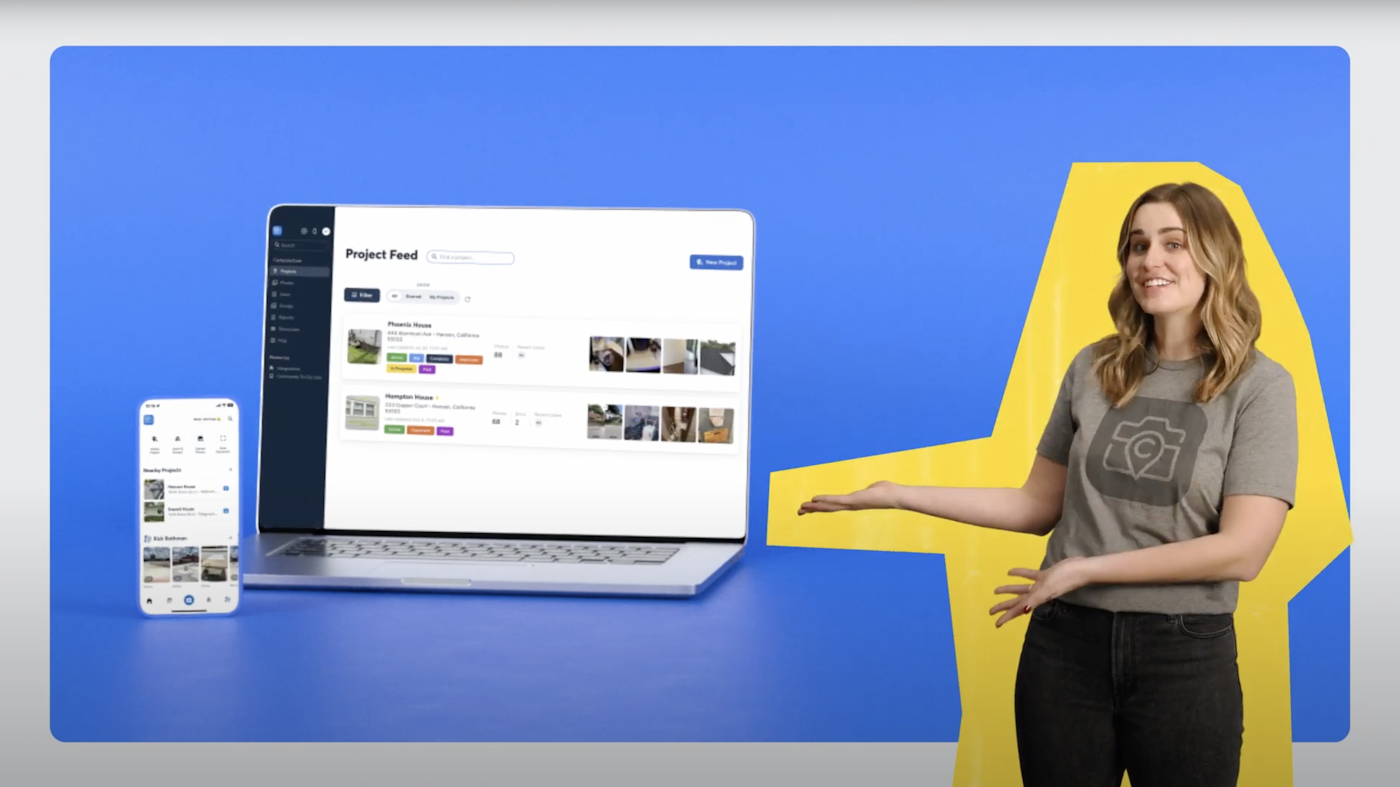
That makes the product useful for progress updates, documented handoffs and explaining work a homeowner cannot inspect. The expertise lies in connecting field capture with the administrative jobs that follow it.
The price of remembering
The business model is subscription software. On the public pricing page checked October 6, 2026, Core starts at $63 a month with annual billing and one user. Crew starts at $119 with three users. Additional annual-billing seats cost $29 a month. Enterprise serves organizations with 50 or more users; marketing tools are an add-on.
$119 base + two $29 seats = $2,124 per year.
Annual billing · published prices checked October 6, 2026.
CompanyCam occupies the documentation layer of contractor software, increasingly reaching into sales. SiteCam offers a direct alternative emphasizing photos pinned to plans and maps. Shared folders and phone galleries remain substitutes. CompanyCam’s distinction is its combination of job-centered capture, crew workflows, customer sharing and AI documents.
It also travels through other software. Its Jobber integration can create a CompanyCam project from a client address and return photos, videos and files to the corresponding request, quote or job. Contractors can retain a familiar customer-management system while improving its view of the field.
From proof of work to payment
The financing followed the photographs: a $6 million investment in 2020, then a $30 million Series B in 2021. In August 2025, B Capital led the Series C. Regional reporting citing PitchBook put the transaction at $415 million and the valuation at $2 billion. Those are reported figures; the company announcement left the amounts undisclosed.
In March 2026, CompanyCam announced its acquisition of Beam, whose tools include estimating, invoicing, payments and budgeting. The announcement said both platforms would continue operating independently. The ambition now reaches from recording a job to winning it and getting paid.

The habit worth stealing
The company’s workplace rituals include CamJam, an employee gathering, and paid sabbaticals. Its customers need a less festive ritual: recording the work consistently.
Hansen’s published rollout advice recommends starting small, training managers and retiring old reporting processes. Leaving texts, emails and paper logs running alongside the new system divides the record again. A useful trial therefore measures retrieval time and documentation gaps, alongside whether crews actually use it.
The lesson travels beyond construction. Give evidence a home at the moment it is created. Decide which observations matter. Make the record available to the next person who needs it. A camera can remember what a roof looked like. A business needs to remember which roof.
Keep looking
Explore the tools, the people and the conversation.