Consider the little metal plate at the joint of a wooden roof truss. It has teeth, no obvious glamour, and a rather serious responsibility. At Alpine, an ITW Company, this modest piece of steel belongs to a business that also writes software, reviews structural designs, and supplies factory machinery. The connection is literal: a drawing must eventually become lumber cut to length, joints pressed together, and a component ready to leave the plant.
- The customer: manufacturers making roof trusses, floor trusses, and wall panels.
- The offer: engineering, design software, connector plates, and production equipment.
- The useful idea: improve the handoffs between bidding, design, cutting, and assembly.
- The buying question: which part of your operation is actually holding up the next job?
A roof with an information problem
A truss is a structural component, but manufacturing it is also an exercise in keeping information intact. The estimator needs a price. The designer needs geometry and loading requirements. The saw operator needs a cutting schedule. Assemblers need to know which piece and which plate go where. A beautiful model offers little comfort if its instructions become muddled on their way to the table.
Alpine occupies that passage between construction drawings and component production. Its direct customers are the businesses making the building’s framing components. Builders and occupants benefit downstream. The engineering team supports wood-truss applications from single-family homes to multifamily and agricultural buildings; TrusSteel extends the offer into cold-formed steel, including commercial and non-combustible building applications.
Production data returns to the office through eShop. Conceptual workflow, not a prescribed approval sequence.
Three customers and a slide rule
In 1966, Bill McAlpine and Charlie Harnden left Sanford Industries and started Alpine Engineered Products in Pompano Beach, Florida. Harnden became president; McAlpine led engineering. Their first-year output was 200 truss designs for three customers. Their tools were paper, pencils, and slide rules. Manufacturing the nail plates was initially contracted to a Miami stamping facility.
There was even a small piece of commercial cunning in the name. Alpine came from McAlpine’s surname and would sit near the top of telephone-directory listings. Search optimization, in its more comfortably alphabetical period.
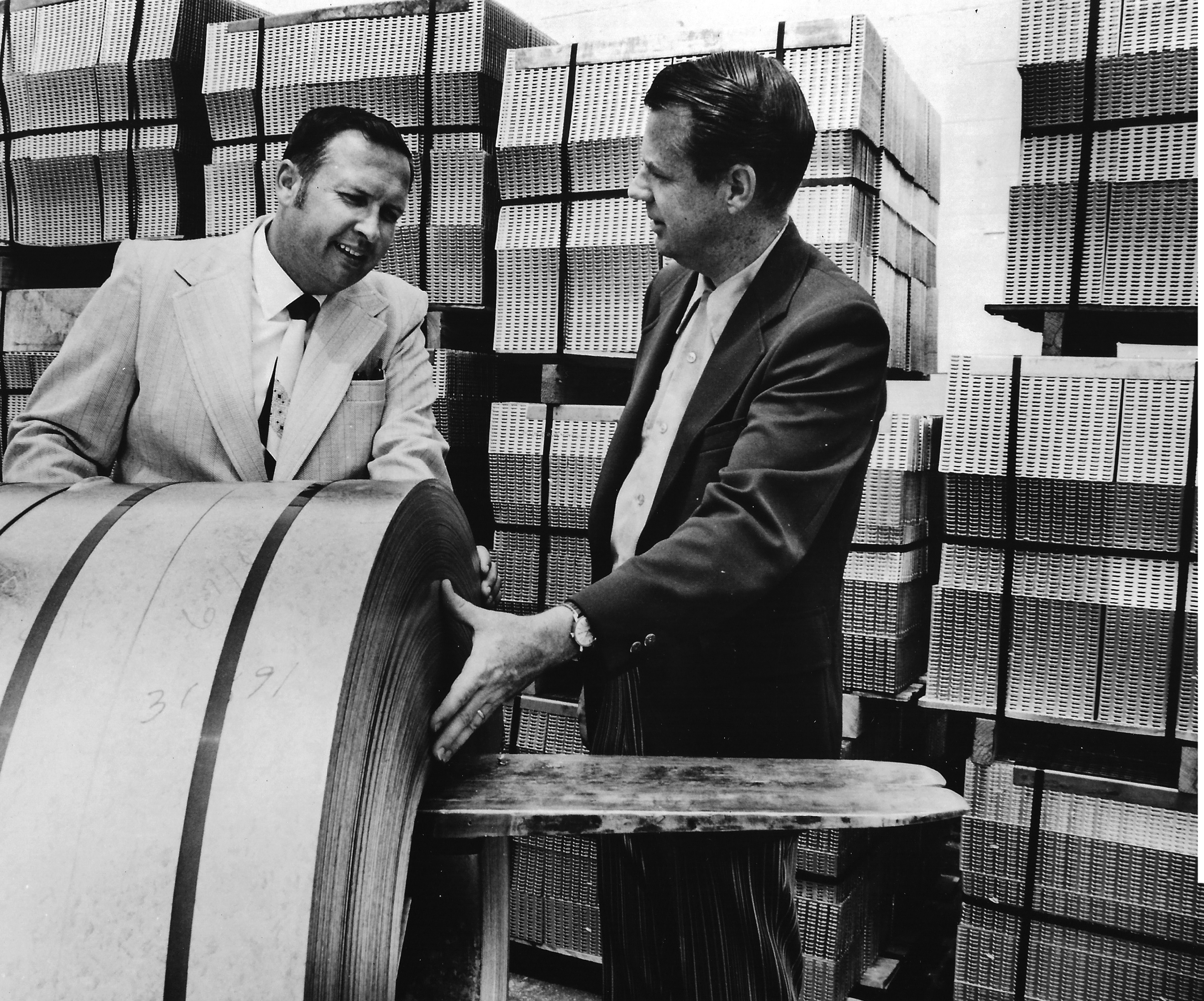
The progression was practical. Alpine acquired Trulox Connectors in 1967, began writing optimizing and pricing software in 1970, and introduced TrusSteel in 1995. ITW acquired Alpine in 2006. The pattern helps explain today’s product mix: engineering decisions, physical connectors, and production tools grew together.
The office has a production line, too
IntelliVIEW is the main wood-framing software suite. Its names sound like departments that have agreed to share a filing cabinet: iModel handles building geometry and component layout; iDesign handles truss analysis; iPanel handles wall panels; iCommand organizes business information, including quotes, costing, schedules, and invoicing. Their integration lets the same job move through several kinds of work.
STITCHER addresses an earlier chore: getting the architect’s plan into that system. Its selection and measurement tools capture walls and openings from two-dimensional drawings and transfer the resulting geometry into IntelliVIEW. It also helps establish drawing scales and highlights problematic areas. The point is to give designers more time to frame the building, rather than repeatedly enter its outline.
Alpine reports average plan-input time savings of 75% with STITCHER, depending on the plan. This measures one task, not the duration of an entire job.
The distinction matters. A reduction in entry time can help a busy design office; its value depends on how much of that office’s day entry consumes. A plant waiting on lumber, engineering review, or assembly capacity has a different problem. The sensible demonstration uses one of your own awkward plans and follows it through the next handoff.
The startup that kept its used machines
United Southwest Components provides a concrete example. Lance Keller started the business in early 2020 and partnered with Jeff Popour, who brought component-design and manufacturing experience. Capital was tight. In Alpine’s 2021 customer case, projects that would have taken three or four days were completed in a few hours using STITCHER.
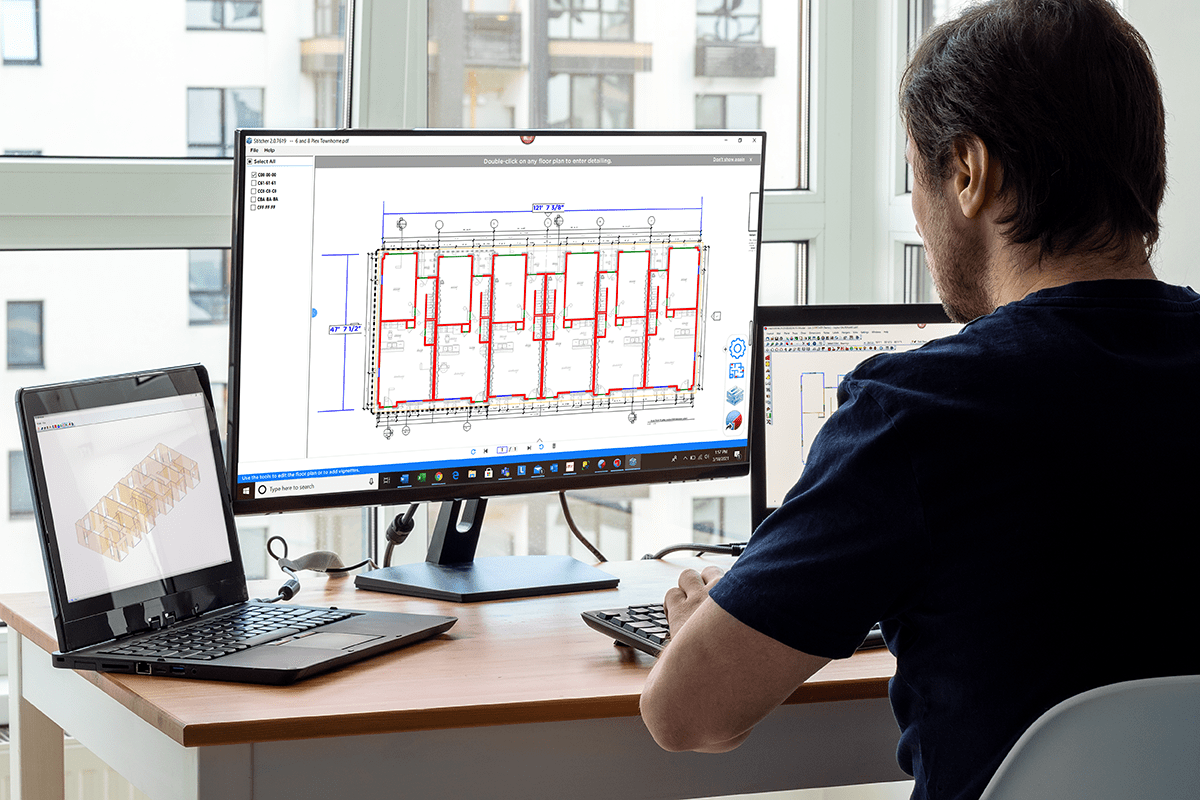
There was another advantage: Alpine’s systems could integrate with the used third-party equipment the startup wanted to run. The case says another prospective supplier could integrate only with its own machines. This was a purchasing decision shaped by the machinery already within reach, as well as the software on the screen.
“The larger the project, the more time we save.”
Jeff Popour, United Southwest Components
Alpine customer case, 2021
The reported result is one customer’s experience. The transferable lesson is straightforward: establish compatibility before spending capital, and look at the work that prevents you from submitting the next accurate bid.
The saw needs more than a sharp blade
The Alpine Linear Saw 5.0 makes the company’s physical side visible. It cuts components, prints identification on lumber, checks board length, and moves small parts to a common outfeed. Optional double stacking lets identical components travel through the cutting workflow together. These details address the handling and identification work surrounding the cut itself.
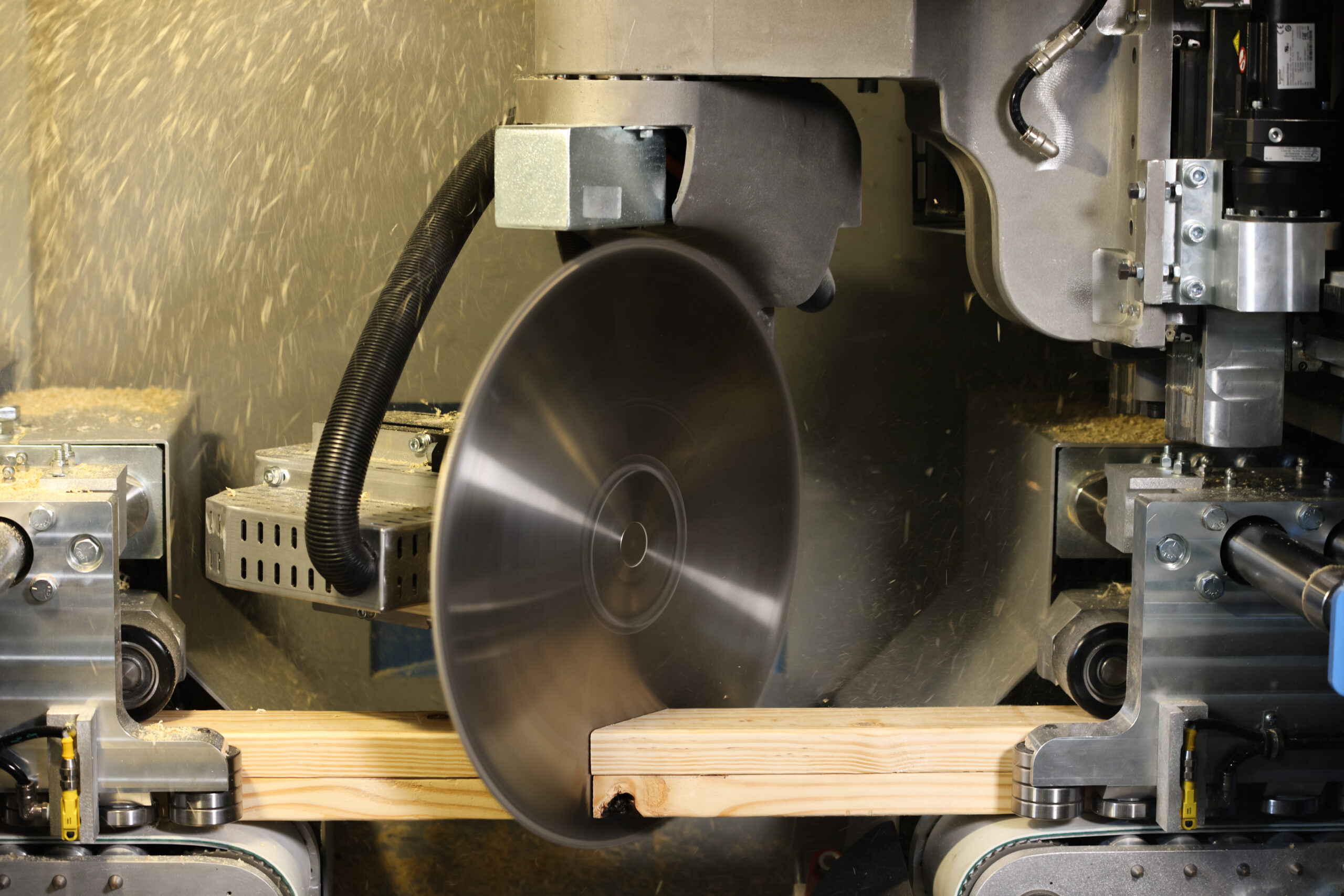
The standard footprint is roughly 43 feet by 13 feet. Its specifications call for three-phase power, compressed air, and reinforced concrete. Installation therefore belongs in the cost calculation alongside the machine, training, maintenance, and the labor around it. For a purchasing decision, compare the cost per finished component at the workload your plant can sustain.
Assembly gets its own tools. AutoSet Plus uses computer-controlled steel pucks to establish the truss jig; Alpine states setup takes less than 25 seconds. In September 2026, the company described a Small Component Table with SpeedSet Automation for trusses under 20 feet. The reasoning is refreshingly concrete: smaller jobs can occupy tables needed for larger ones. A dedicated station changes where that work queues.
Alpine also highlighted an optional Vekta USA PackFeeder connection in its August 2026 BCMC announcement. The feeder scans, selects, and supplies timber to the ALS 5.0. Moving upstream from the blade is a useful reminder that a machine’s productivity depends on the material arriving at it.
A new name for an old relationship
The wide product range has required a clear commercial story. After acquisitions, ITW’s Building Components Group operated across several brands. Branding agency AspireUp’s account describes slowing organic customer acquisition and a generic group name that failed to communicate the offer clearly.
Customer and prospect research informed consolidation under one master brand. The Alpine name returned in a 2014 relaunch, accompanied by the tagline “Building Partnerships.” AspireUp also describes market segmentation and a sales-force restructuring. The lesson is useful to any acquired portfolio: product coverage alone does not tell a buyer how the pieces belong together.
That coverage is not exclusive to Alpine. MiTek supplies an overlapping mix of software, engineering, plates, and manufacturing equipment. Eagle Metal offers TrueBuild software and connector products. Buyers have alternatives. Alpine’s case rests on its particular workflow, engineering support, and compatibility with the customer’s operation, which deserves examination job by job.
The quiet arithmetic of a finished truss
Alpine sells equipment and connectors alongside proprietary software, engineering, training, and support. The software license governs use of its tools; equipment pages invite buyers to request a quote. For a component manufacturer, these purchases meet inside the economics of each completed job.
eShop helps inspect those economics. It tracks work at production stations, provides paperless drawings, and records actual labor and material costs. It supports Alpine equipment and selected third-party machines. Alpine’s June 2026 account describes overloaded jigs, confusing schedule changes, and design notes failing to reach production. Seeing those conditions makes a proposed improvement easier to judge.
The newer Alpine Connect extends that information work into cloud collaboration. Introduced at BCMC 2025, its AI-powered Plan Comparison Tool identifies text, structural, and visual differences between plans, with commenting and team tagging. It gives a specific assignment to AI: help people examine what changed before revised information becomes expensive physical work.
Alpine’s anniversary article recalls McAlpine’s advice: “Find good people and grow old with them.” There is commercial sense beneath the sentiment. Customers need people who understand a drawing, a connector, a machine, and the consequences of getting their relationship wrong. Sixty years after the slide rules, a roof still rewards attention to the joints.
Walk through IntelliVIEW, STITCHER, and eShop; see the ALS 5.0 product demonstration and Alpine’s YouTube videos.