team-collaboration
(34)
CompanyCam turned lost job photos into a $2 billion business
A Nebraska roofer wanted to find the right picture. The company he built now helps contractors turn everyday jobsite evidence into reports, customer updates and a shared memory of the work.

ProjectManager and the expensive art of guessing
A Queensland engineering firm, a Pennsylvania bank and a Hawai‘i space laboratory all ran into the same problem: work was scattered. ProjectManager sells a shared plan - and a reason to keep it honest.

Loom found a fortune in the meeting you never had
A recorder rescued from a struggling startup became a new office habit. Now Atlassian is asking Loom to turn all that talking into work people can actually find and finish.

The Office That Forgot No One
A missing name on a Zoom invitation gave Howard Lerman a peculiar idea: what if a remote company could see itself? Roam built a digital floor plan around that question, then filled it with meetings, messages and AI.
The Workplace Feed That Had to Earn Its Keep
Convo bet that a workplace conversation should live beside the document, decision or store update it concerns. H&M's US rollout made that argument unusually concrete: more than 15,000 employees across 500-plus stores.
The Inbox Born From a Very Bad Text
A stray late-night message exposed a quiet business problem: texting customers worked, but personal phones did not. Heymarket turned that mishap into a shared inbox - and then into an operating system for customer conversations.

Yandex 360 wants to own the working day
Email got Yandex 360 through the office door. Now its suite spans files, meetings, projects and AI - with a growing business built around the hard work of switching.

Taskade Put a Brain Inside the To-Do List
The friendly collaborative outliner has grown into a prompt-powered app factory. For small teams willing to teach their workspace a few tricks, that strange evolution can cut a remarkable number of tabs.

Monday.com Wants to Run the Work, Not Just Color It In
The rainbow boards grew up. monday.com now wants to be the place where humans, workflows, and AI agents share the office - but its sharpest trick is still making messy work visible.

Shortwave Turns Gmail Into a Working Memory
The ex-Firebase crew rebuilt Gmail as a searchable memory and a promptable workbench. It can clear real inbox drag, provided your working life already runs through Google.

ClickUp Ate the Office. Now It Wants the Busywork.
ClickUp can replace half a dozen work apps, provided your team has the patience to tame it. Here is who should move in, what it really costs, and where the all-in-one promise starts to creak.

Pitch Wants Your Deck to Do More Than Sit Pretty
The Berlin-born presentation app has grown from a handsome slide editor into a full pitching workspace. It is built for teams whose decks need to win attention, survive collaboration, and report back after they leave the room.
FeedHive Wants Your Content Calendar to Run Itself
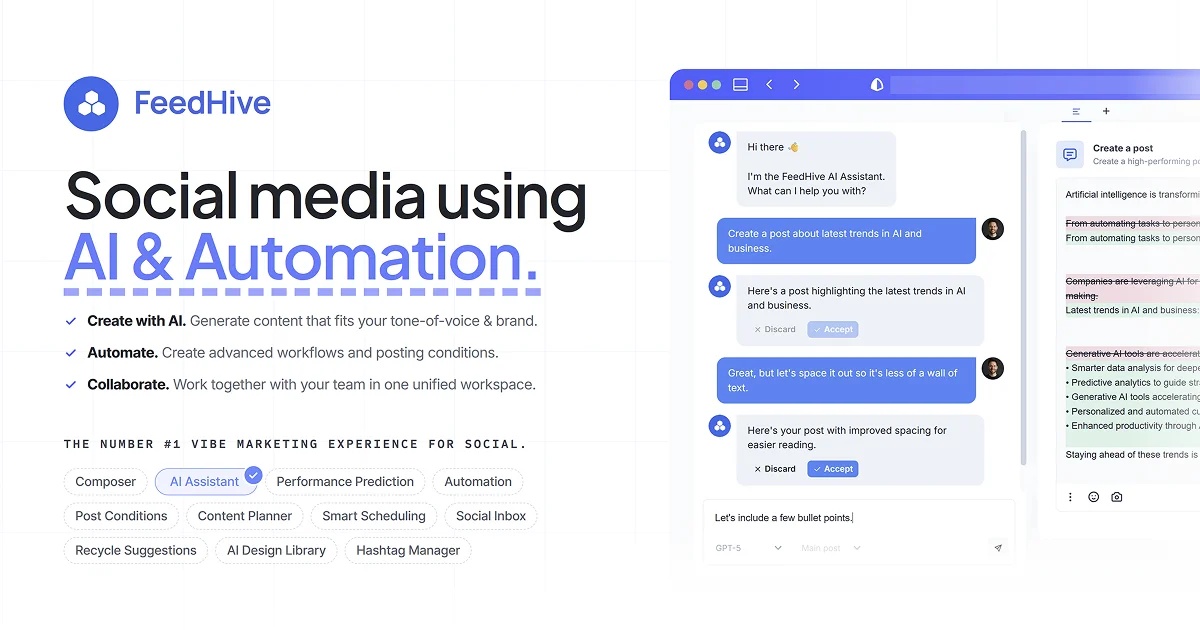
The former Twitter scheduler has grown into a programmable social desk for creators, lean teams, and agencies. Its best trick is not writing posts for you. It is turning the dull machinery around those posts into a system.
Slack Raised $17.5 Million for a Game That Failed - Then Sold the Tool Inside It for $27.7 Billion
Slack's first product was a whimsical game with devoted players and lousy economics. The communication system its developers built for themselves became a case study in noticing the valuable thing hiding beside the plan - and in what happens when a beloved product meets a bundled rival.
Asana Wants to Put Your AI Coworkers on the Same To-Do List
The company that tried to kill the status meeting now has a harder assignment: make humans and AI agents share context, handoffs, and blame without creating another layer of busywork.

Beautiful.ai Built a Presentation App That Tells You “No” - and 100,000 Businesses Said Yes
The PowerPoint challenger’s cleverest idea was not generating more choices. It was removing the bad ones - then selling that constraint as a faster way for teams to think in public.
Karbon’s $59-a-Month Bet: Turn Your Accounting Firm’s Inbox Into an Operating System
Accounting firms lose hours in the seams between inboxes, checklists and billing systems. Karbon’s answer is a shared operating layer - powerful when a firm standardizes its work, pricey when it does not.

Asana or Notion Depends on How Much System You Want
Asana gives teams a project machine that is ready to run. Notion hands them the parts, which is liberating until building the system becomes its own project.

ClickUp and Asana Are Fighting Over Your Free Team
The project-management rivals put different locks on their free plans. ClickUp limits storage while Asana limits collaborators, revealing two distinct bets about how teams become customers.

ReqStudio Is Trying to Fix Software’s Most Expensive Sentence: ‘That’s Not What We Asked For’
The tiny San Diego software company sells a disciplined answer to scope creep: turn fuzzy requests into reviewed, traceable, costed requirements before developers start typing.

The Team Tool That Gets Cheaper as Your Company Grows
Trello charges for each paid seat. Basecamp caps the bill. The better bargain depends less on features than on what happens when another person joins the work.

The Best Project Manager Is the One That Closes Your Tabs
ClickUp, monday.com, and Wrike all promise one place to run work. The revealing difference is how many product boundaries a team crosses between an idea, a conversation, and an assigned task.
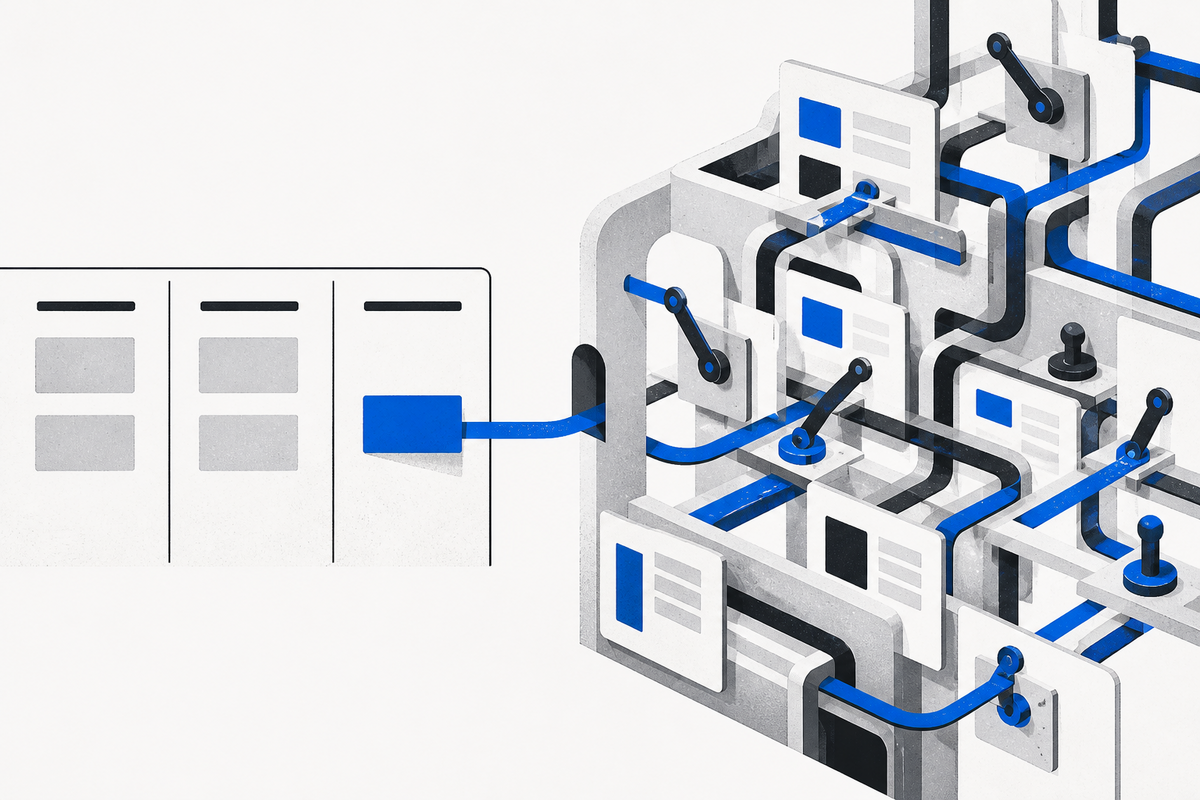
Your Team Doesn't Need More Project Management Software
Trello, Asana, monday.com and ClickUp all promise order. The useful question is how much structure your team can live with before the system becomes the work.
Your Social Media Tool Is Really a Headcount Tax
Sprout Social and Hootsuite sell similar command centers, but their price tags expose the real decision: how many people need in, how many profiles they run, and which workflows they cannot live without.
Nextiva
A phone company that decided phone calls were only the beginning. How Nextiva turned a VoIP line for small businesses into an AI platform that runs a billion customer conversations a year.

Height
Height was a New York-based software company that built an AI-native project management and collaboration tool for product teams. Founded in 2018 by ex-Stripe designer-engineer Michael Villar, Height combined tasks, chat, and adaptive workflows in one keyboard-first app, then pivoted to an 'autonomous' model in which an AI agent called Copilot handled the routine legwork of building software - triaging bugs, updating specs, pruning backlogs, and drafting standups. Backed by roughly $18.3M in venture funding, Height competed with Linear, Asana, and Jira before winding the product down in 2025.

Switchboard
Switchboard was a cloud coworking platform built for remote and hybrid teams. Instead of screen-sharing and tab-juggling, it put video and live, editable web apps - Google Docs, Figma, Jira, Trello and more - side by side in persistent virtual rooms, so a team could return to a project exactly where it left off. Founded in 2020 by serial entrepreneur Amir Ashkenazi, the company raised roughly $38 million from investors including Sequoia Capital, Icon Ventures, Spark Capital and HubSpot Ventures, and held five patents. In late 2024 Ashkenazi wound down Switchboard and pivoted the company into Airtop, an AI web-agent and browser-automation platform.

SoWork
SoWork is a generative-AI-enhanced virtual office platform that gives distributed teams a persistent, customizable workspace where avatars work side by side, spatial audio recreates hallway serendipity, and AI quietly captures meeting notes and action items. Founded at Harvard by three co-founders and legally incorporated as Sophya, Inc., the company raised a $15M seed round led by Talis Capital in 2021 and counts teams from startups to large enterprises among its users - with a stated mission to move workplaces from the earth to the cloud.

Notion
Notion is an all-in-one connected workspace that blends notes, docs, wikis, databases, projects, calendar, and email into a single, modular tool - 'LEGO for software.' Founded in San Francisco in 2013 by Ivan Zhao and Simon Last, it nearly collapsed before its 2016 rebirth and has since grown to more than 100 million users, $600M+ in annual recurring revenue, and an $11 billion valuation, increasingly positioning itself as an AI workspace with built-in agents.
Motion
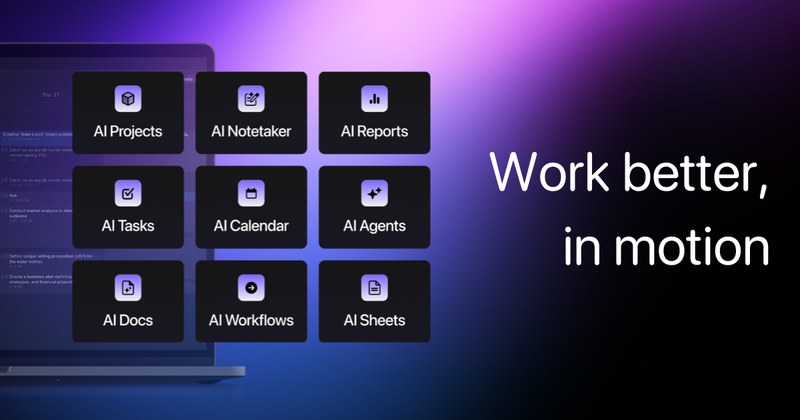
Motion is an AI-native work management platform that started as an automatic calendar and task scheduler and has grown into an 'agentic work suite' for small and mid-sized businesses. It bundles projects, tasks, calendar, docs, notes, SOPs, sheets, reports, search and chat into one system, then layers AI 'Employees' on top that actually execute work - drafting proposals, prepping meetings, updating projects and answering clients. Founded in 2019 and backed by Y Combinator, Motion raised $60M in 2025 at a $550M valuation.