marketing-software
(19)
Vivial sold the art of being found
The phone book became a dashboard. Vivial’s journey from directory advertising to Thryv reveals what small businesses actually buy when they buy digital marketing: someone to make it happen.

Dealer.com sells the space between clicks and car keys
A dealership website is only the beginning. Dealer.com’s bigger bet is that the ad, the payment estimate and the showroom conversation should remember one another.

RightChoice.ai: Every address is a first impression.
A national brand can still lose the customer around the corner. RightChoice.ai puts listings, reviews and local rankings in one place, where the small mistakes become visible.
Alyce by Sendoso: The gift is better when you can refuse it
Alyce built corporate gifting around a small act of surrender: let the recipient choose. Now part of Sendoso, its story offers a useful lesson in selling, software, and the danger of assuming you know someone’s taste.

Unmetric made a business of minding yours
A restaurant app found its audience among global brands. Unmetric turned the competition’s public posts into a working library of what to try next - and eventually became part of Brandwatch.

HNW sold banks a better way to talk to the rich
Money can buy attention. Trust is a more awkward purchase. From 2001 to 2016, HNW combined research, creative work and communications software to help wealth firms earn a more personal hearing.
Ceros wants your best ideas out of the waiting room
The company made interactive content a job for designers, then rebuilt the machinery underneath it. Its wager: a good campaign should reach the web before the committee loses its nerve.
Talk Fusion and the Ten-Second Video That Became a Sales Pitch
A failed email attachment gave Bob Reina an idea. Talk Fusion turned it into video-marketing software - and a business opportunity with a very different set of questions.
The Company That Turned a Factory Tour Into a Customer Relationship
AnyRoad began by selling tours. Its more interesting discovery was the guest list: who came, what changed their mind, and whether they bought again.
PR Volt puts a price on getting noticed
A shower-product entrepreneur turned his media outreach system into a PR business. Today, PR Volt sells a combination of software, human follow-through, and coverage guarantees - with a new bet on AI search.
Obello Wants Your Brand Rules to Do the Boring Work
After years of watching carefully designed brands unravel in production, two agency founders built software to keep the rules intact. Obello’s bet: the next useful AI design tool will know what it is allowed to change.

Sprout Social Puts the Whole Feed on Payroll
A calm command desk for chaotic social teams, Sprout turns posts, replies and performance data into an orderly working day. The catch is a serious per-seat bill, so its value arrives when collaboration and reporting are already serious work.
Sprout Social Built a $457 Million Business on Social Chaos. Now It’s Cutting 20% to Bet on AI.
The Chicago software company made order out of feeds, comments and customer complaints. Its next act is harder: prove that social data is enterprise intelligence - and that the premium price, acquisitions and painful reset are worth it.
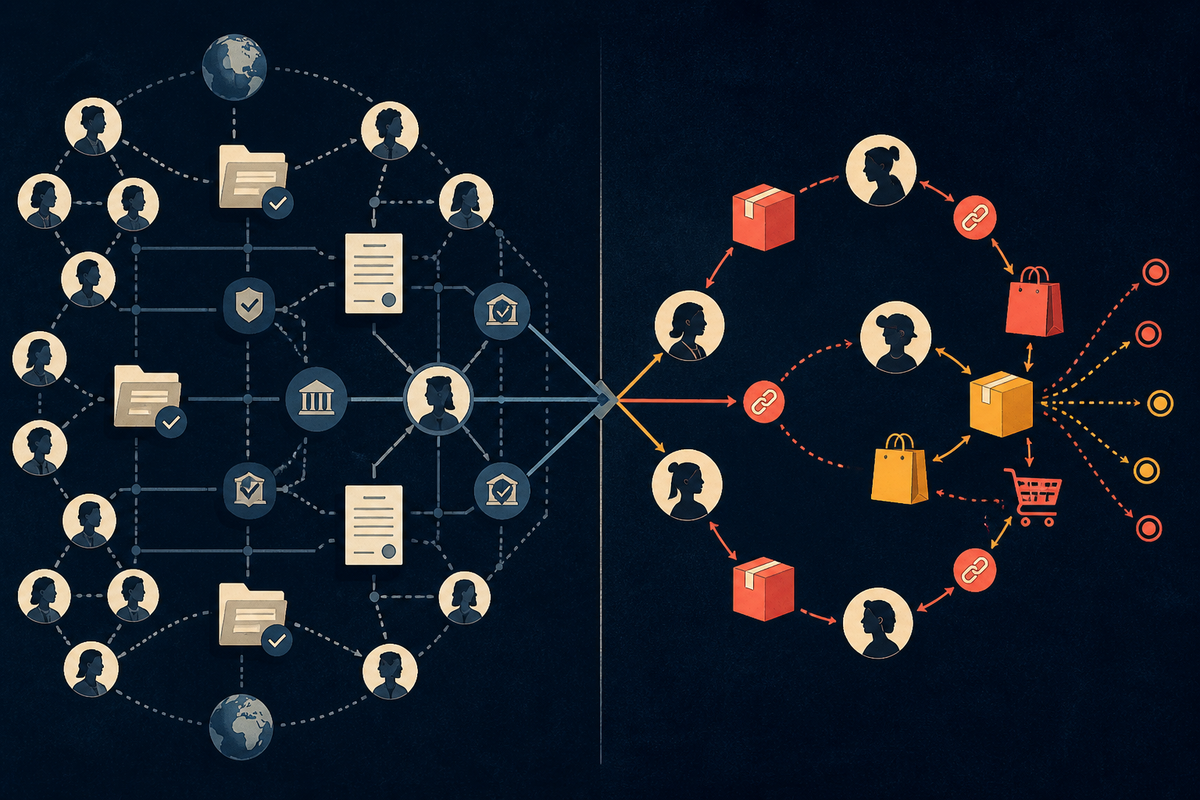
CreatorIQ or Aspire Depends on the Work You Repeat
CreatorIQ organizes the governance of a global creator operation. Aspire turns product seeding, affiliate links and social commerce into a repeatable growth loop.
Innovid’s $500 Million Reset: How a Video-Ads Startup Became the Pipes Behind Streaming TV
It began with clickable video, survived the messy birth of connected TV, and learned that the best business in advertising may be the part viewers never notice. Now, inside Mediaocean, Innovid is betting that neutral infrastructure plus AI can outmaneuver the walled gardens.
Benchmark Email Spent 21 Years Adding More. Then It Bet the Company on Less.
The 2004 bootstrapped SaaS survivor merged, acquired and chased the all-in-one dream. Its 2025 rebuild makes a sharper wager: busy marketers may pay more for software that proudly does less.
Camphouse
Camphouse is a Stockholm-based enterprise software company that runs an intelligent media operations platform for advertisers and agencies. Formerly known as Mediatool, it centralizes media planning, budget allocation, campaign activation and reporting into a single system of record, layering an AI Co-Pilot on top so data-driven marketers can turn scattered spreadsheets and media plans into structured, end-to-end media intelligence. Its customers include global brands and agency networks such as L'Oreal, Heineken, Dentsu and Jellyfish.
Vibe.co
Vibe.co is a New York-based ad tech company that turns connected TV into a performance marketing channel. Its self-serve, end-to-end platform lets brands of any size create, target, buy, and measure streaming TV campaigns from a single dashboard - with AI handling creative generation, audience targeting, and incrementality measurement. Founded in 2022 by serial ad-tech entrepreneurs Arthur Querou and Franck Tetzlaff, Vibe.co reached a $100M revenue run rate in under two years and raised a $50M Series B at a $410M valuation in September 2025.
G2
G2 is the world's largest software marketplace and peer-review platform, where business buyers research, compare, and choose B2B software based on millions of verified user reviews. Founded in 2012 by a team of BigMachines alumni led by Godard Abel, G2 turned the messy, vendor-dominated software buying process into something closer to checking restaurant reviews before dinner. Today the platform hosts millions of reviews across thousands of categories, sells buyer-intent data and marketing services to software vendors, and after its 2026 acquisition of Capterra, Software Advice, and GetApp reaches more than 200 million annual software buyers.