A social media manager can count a thousand likes and still have no idea whether the week went well. Perhaps the competition collected ten thousand. Perhaps everyone benefited from the same holiday. A dashboard supplies numbers; the difficult part is finding a useful neighbour for each one. Unmetric made that problem its business.
- Competitive benchmarking for brand and agency social teams.
- Campaign analysis, content research, alerts and automated reporting.
- Acquired by Falcon.io in 2019; now replaced by Brandwatch Benchmark.
01 / The customers behind the customers
The first idea was smaller. Eyes and Feet, the predecessor to Unmetric, offered competitive social research to small businesses. In a 2012 interview, Lux Narayan recalled visiting the United States to find partners who could introduce the service to restaurants. Meetings with large financial companies revealed an awkward surprise: those companies wanted to understand their own competitors.
Restaurants proved difficult to sell to. The enterprise conversations pointed somewhere more promising. Narayan, Joseph Varghese and Kumar Krishnasami redirected their efforts towards a more sophisticated product for large brands. Unmetric was founded in 2011. The early mistake concerned the market: the need looked more compelling farther up the chain.
That distinction is useful to anyone selling software. A person you approach as a distributor may describe a better problem than the one in your pitch. Listening requires the unpleasant possibility that the pitch is wrong. The three founders gave that possibility a new product.
02 / An analyst hiding in the machinery
Unmetric occupied a particular corner of marketing technology. Publishing software helped teams put content out. Listening software tracked conversations. Unmetric examined what brands themselves published and how those posts performed against peers. Its company profile described a historical database spanning more than 100,000 brands and over 30 sectors. Customers included General Motors, Prudential, the Chicago Bulls, GroupM and Ogilvy.
The less glamorous ingredient was classification. In a 2015 interview, Narayan described analysts categorising content and identifying posts belonging to the same campaign. Computers could crunch the numbers; people helped make the groups worth comparing. The expertise lay partly in deciding what the numbers referred to.
It shared a market with alternatives such as Socialbakers, Sprout Social and TrackMaven. The sensible buying question concerned the job: do you need to publish, manage replies, listen broadly, or study rival campaigns? Unmetric concentrated on the last of those, and Track was designed to sit alongside command-center tools. An organisation could therefore use it as a specialist addition to an existing workflow.
Consider a campaign spread across several posts. A single popular image tells you little about the campaign’s rhythm, recurring themes or quieter instalments. Grouping the work lets a marketer examine the whole attempt. Unmetric’s competitive advantage was this organised view of branded activity, with content and campaign analysis alongside the counts.
The product demanded some housekeeping of its own. Designer Amrinder Sandhu documented printing screens for a visual audit, then building a reusable interface library to reduce repeated work and bugs. It is a modest glimpse of company culture: limited resources, several jobs per person, and consistency earned one component at a time.
03 / Three jobs, three doors
Analyze was the flagship: compare performance, examine campaigns, tag content, arrange alerts and produce reports. For an agency serving several clients, the attraction was partly operational. Less time assembling the monthly presentation left more time to decide what the presentation meant.
Discover, launched in 2016, made branded content searchable by keyword, time, engagement, industry and geography. A creative team planning a seasonal campaign could inspect previous attempts before producing another. Competitive research could also prevent accidental imitation. Nobody enjoys discovering that their fresh idea had a busy life last Christmas.
“The last thing Target wants to do is redo an ad that Kohls ran last year.”Lux Narayan / MediaPost, 2016
Track served a faster situation: the marketing command center during a live event. It gathered competitors’ campaign activity, with customisation by channel, geography and industry. In 2017, Xia added machine-learning features to Analyze, including promoted-post detection, Facebook reach and impression estimates, and alerts for unusual content performance. Estimates needed to be read as estimates; the product’s intelligence did not confer access to a rival’s private ledger.
04 / Tea, cameras and an encore
One customer story makes the workflow concrete. Tata Tea Kanan Devan’s Photography Escapade invited photographers to its tea estates. Through Maxus, its GroupM agency, the brand used Unmetric to compare performance and examine comments and mentions. People were asking for another chance to participate. A company case study says those findings informed a second edition in August 2016.
The team also retrieved engaging images from the first campaign to build a content bank for the next launch. The repeat campaign began with evidence and usable material already in hand. For readers, the transferable habit is straightforward: review what performed, read what people requested, and preserve the assets that can support another attempt.
05 / The bill, and the bigger suite
Unmetric sold enterprise SaaS subscriptions. A historical discontinued-product listing records a standard plan at $1,000 a month with unlimited users, plus an agency pay-as-you-go option. The commercial calculation depended on how much research and reporting the team needed. A small business with a handful of posts had a different equation from an agency producing several client reports.
Nexus backed the first round; JAFCO Asia led the second with Nexus participating.
Investors supplied $8.7 million across two disclosed rounds: $3.2 million in 2012 and $5.5 million in 2013. Falcon.io, Cision’s social media management division, acquired Unmetric in October 2019 to bring benchmarking into a broader suite. Brandwatch now directs Unmetric customers to Benchmark; its integrated version left beta in October 2023.
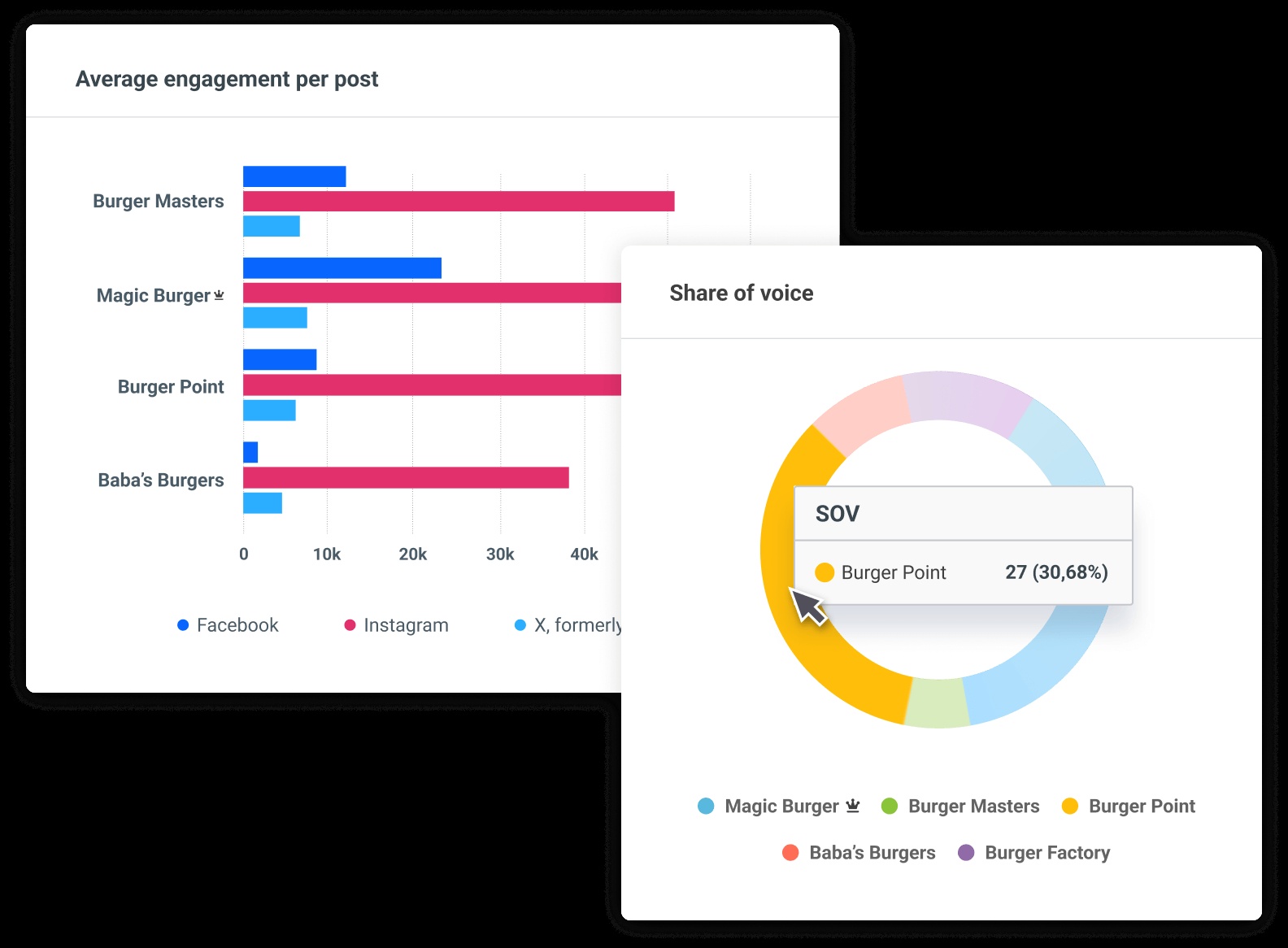
The comparison habit survives the name. Choose relevant peers, compare similar periods and formats, investigate unusual posts, then test a hypothesis in your own account. Public engagement cannot establish sales or explain a rival’s budget. With poor peers or incompatible measures, a tidy chart can mislead. Used carefully, competitive intelligence gives a creative team something better to argue about than taste alone.