In 2004, Bob Reina tried to email a ten-second video of a house in North Carolina. He wanted his family’s opinion. According to the account he later gave IdeaMensch, AOL would not let him send the attachment. It was a small inconvenience, the sort most people file under “computers” and endure. Reina saw a product. More unusually, he saw a way to sell it.
- Talk Fusion packages video messages with branded email design and tracking.
- Customers can buy the software; independent promoters can also sell it.
- The entry offer is $175 upfront, then $20 a month, with month one included.
- Product usefulness and promoter earnings are separate questions.
The house was incidental. The blocked message was the discovery: people might want to show something rather than describe it. Reina called his friend Jonathan Chen, a technology specialist, about solving the problem. Talk Fusion began in 2007 with Video Email. The origin has the pleasing modesty of an invention that starts with someone trying to do an ordinary thing.
Reina also brought a second idea to the table. He had experience in direct selling, and he wanted to distribute the software through a network of people recommending it to other people. The result sits in an unusual corner of the market: a communication tool sold alongside the possibility of becoming its salesperson. To understand Talk Fusion, follow both conversations.
A face where the paragraphs used to be
A conventional email asks words to do all the work. A video message can contribute expression, tone and a demonstration. Imagine a shop owner showing a new arrival, a consultant explaining a proposal, or a charity organizer thanking supporters. These are possible uses, rather than documented customer case studies. Their common ingredient is a person with something useful to show.
Talk Fusion’s current workflow is straightforward: choose a template, record or upload a video, then send it. Its product page describes engagement reporting, including when and how long a message was watched. That can give a sender a reason to follow up. Watching is a clue; a purchase remains another event entirely.

The design service is a more concrete distinction than the familiar claim that video gets attention. Current packages include custom email templates made by the company’s designers. For someone who wants a recognizable business presentation but has little enthusiasm for arranging pixels, that combination of software and human design work may be the attraction.
Historically, the company cast a wider net. Its 2016 trial announcement listed Video Email, Video Newsletters, Live Meetings, Video Chat and Sign-up Forms. In February 2018, an announced Video Chat upgrade added features including permanent rooms and screen sharing. Today’s public pricing page puts Video Email at the center. Buyers should judge the package now on sale, rather than assume an old product list describes their subscription.
“For technology to be useful, it must help solve real world needs”Jonathan Chen, in Talk Fusion’s 2016 award announcement
That sentence supplies a useful standard. Video Chat received TMC’s WebRTC Product of the Year Award in 2016, recognition tied to browser-based communication technology. An award records a moment in product history. The everyday test is whether a customer can communicate more effectively this afternoon.
The arithmetic beneath the daily price
Talk Fusion sells three packages: Starter, Elite and Pro. Each has an initial payment and a monthly subscription. The first month is included. The following chart translates the published USD list prices into a twelve-month total, assuming eleven subsequent monthly payments, before tax, discounts or optional costs.
Calculated from the pricing page checked September 30, 2026. Not a forecast of earnings.
The tiers increase contact limits, storage and included custom designs; Pro includes private labeling. The sensible choice depends on actual use. A larger allowance has little value to a sender with a small audience. A lower monthly fee is less comforting if the account sits untouched.
Here the customer’s calculation can remain refreshingly plain: does the tool save enough effort, or produce enough useful responses, to justify the expenditure? If every message takes longer to record than to write and recipients prefer text, the answer may be no. A subscription cannot manufacture an audience’s appetite.
The software has a second sales pitch
The pricing page asks buyers to choose between Customer and Promoter. That distinction matters. One is paying to communicate. The other is entering a direct-selling business that markets the product and compensates qualifying participants through its plan.
Talk Fusion’s opportunity page emphasizes commission payments in one minute. Historical company material described three minutes. Speed is a memorable feature: the sale happens, the reward follows quickly. But the interval between a sale and payment tells a prospective promoter little about how many sales they will make, their expenses, or the profit they will retain.
Did this message help my business?
Did my sales exceed my costs?
Reina’s attachment problem helps explain the product. His earlier experience helps explain the channel. In a 2017 anniversary release, he recalled building teams at companies that subsequently failed. He presented Talk Fusion partly as a response to that instability. Those are his recollections and motivations, rather than an independent account of the earlier businesses. They make his preference for direct selling easier to understand.
The channel also attracts scrutiny. In February 2024, the consumer watchdog Truth in Advertising notified Talk Fusion of its findings concerning atypical income claims from its 2023 investigation. Talk Fusion also appeared on the FTC’s October 2021 list of recipients of notices about money-making opportunities. The FTC explicitly says inclusion on that list does not indicate wrongdoing. A watchdog challenge and a government notice should be described with that distinction intact.
The company’s own policies, effective April 2025, require responsible promotion and disclaimers about typical results. They prohibit promises of earnings and require promoters to maintain a customer base. The useful lesson for a prospective participant is to ask about ordinary outcomes and expenses before being persuaded by extraordinary examples.
What the video cannot do for you
The original attachment frustration is now a competitive market. BombBomb offers video email and sales workflows. Loom lets people record videos and share them by email. A business can also combine an email service with hosted video. Talk Fusion’s case therefore rests on its particular packaging: templates, included design work, tracking and person-to-person distribution.
For an owner who wants help presenting a brand and has a reason to speak on camera, that package may fit. A team organized around CRM workflows should compare those needs directly with alternatives. A reader who merely wants to send an occasional clip should consider how much subscription machinery the task deserves.
A useful experiment is small enough to finish. Choose a recurring message, such as a follow-up after a customer inquiry. Send a concise video version to one comparable group and a text version to another. Keep the offer and request consistent. Count replies, completed next steps and time spent producing each version. This is an editorial suggestion, not a reported Talk Fusion customer result.
Do not confuse a play with persuasion. A recipient may watch out of curiosity and decline. Others may be unable to listen, prefer a scannable explanation, or have no need for the offer. Put the essential request in text too. The transferable insight from Reina’s story is to remove a communication obstacle; adding a new one would be a curious tribute.
The dogs behind the company’s softer side
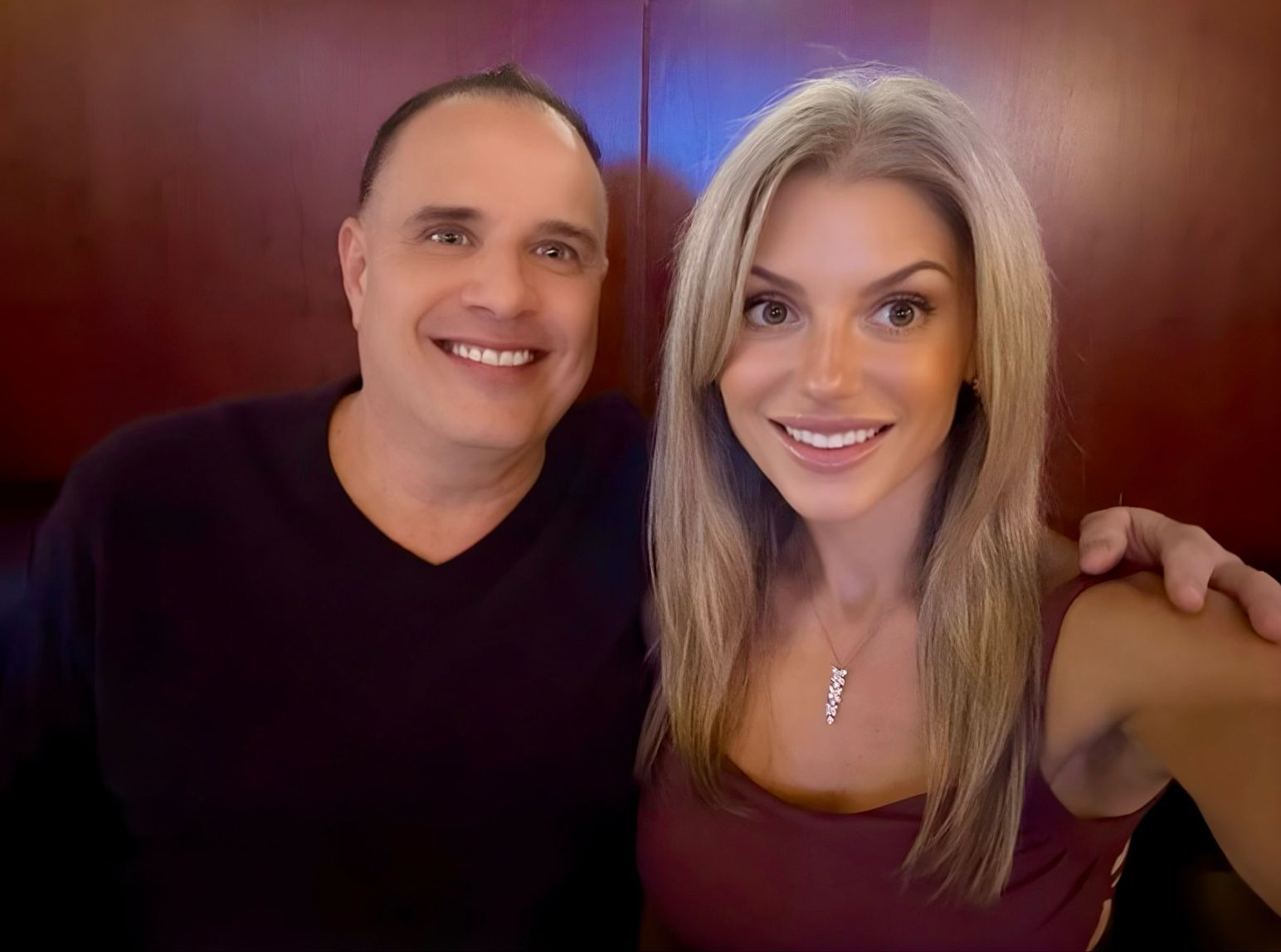
Talk Fusion describes its culture as “One Family” and identifies Bob and Kristie Reina as founders in current materials. The charitable side has a tangible landmark. WUSF reported that the Humane Society of Tampa Bay’s new animal health center opened in September 2012 after Bob Reina’s $1 million donation the previous year and other contributions.
The company says the sponsorship remembered the Reinas’ dogs, Shadow and Thunder. An animal health center is an unusually concrete expression of a corporate sentiment: exam rooms, surgery tables and affordable care rather than another paragraph about values. It belongs in the portrait without becoming an argument for buying the software.
Talk Fusion began with a message that could not travel. Its lasting question is what happens when it arrives. For a customer, the answer is in the conversation it starts. For a promoter, it is in the accounts. The same video can introduce both propositions; each deserves its own careful look.
See the product. Hear the pitch.
Explore the official website, current packages and company story. Watch the official product demonstration or visit Talk Fusion’s YouTube channel.
Follow LinkedIn, X, Instagram and Facebook. Read Reina’s founder interview and browse company announcements.