Three hours is a peculiar unit of persuasion. It is long enough for a shopper to leave a website, close a laptop and get on with life. It is short enough for the shirt in the abandoned basket to remain a possibility. In Listrak’s published account of clothing brand Robert Graham, that is when the first cart-recovery email arrives. Another follows two days later. The campaign begins with a very ordinary fact: someone almost bought something.
- Listrak connects retail customer data with email, SMS, push and website experiences.
- Its specialty is the follow-up: welcome, abandonment, replenishment and win-back campaigns.
- Retail strategy and implementation services accompany the software, depending on the plan.
- The lesson to borrow: use customer behavior to choose both the message and the moment.
Marketing has a weakness for the grand entrance. The launch. The campaign. The expensive advertisement. Listrak concerns itself with what happens next. A person looks at a product, subscribes, buys, disappears, returns. Each action can inform the next communication. The trick is remembering that these actions belong to the same person.
01 / The retailer’s missing memory
Listrak is a marketing software company with a particular appetite for retail. It helps ecommerce merchants and consumer brands bring customer records, shopping behavior and messaging together. Email and text are central, but its current offering also includes push notifications, website personalization and rich mobile messaging through RCS. Its 2026 benchmark report covers more than 1,000 ecommerce clients.
The problem it addresses is easy to picture. A retailer’s email system knows that a customer clicked. The storefront knows that the customer inspected a product. A loyalty service knows that the customer has points. If those systems do not exchange useful information, the next message can be remarkably uninformed. A perfectly polished campaign may arrive with the social grace of a stranger asking your name for the fourth time.
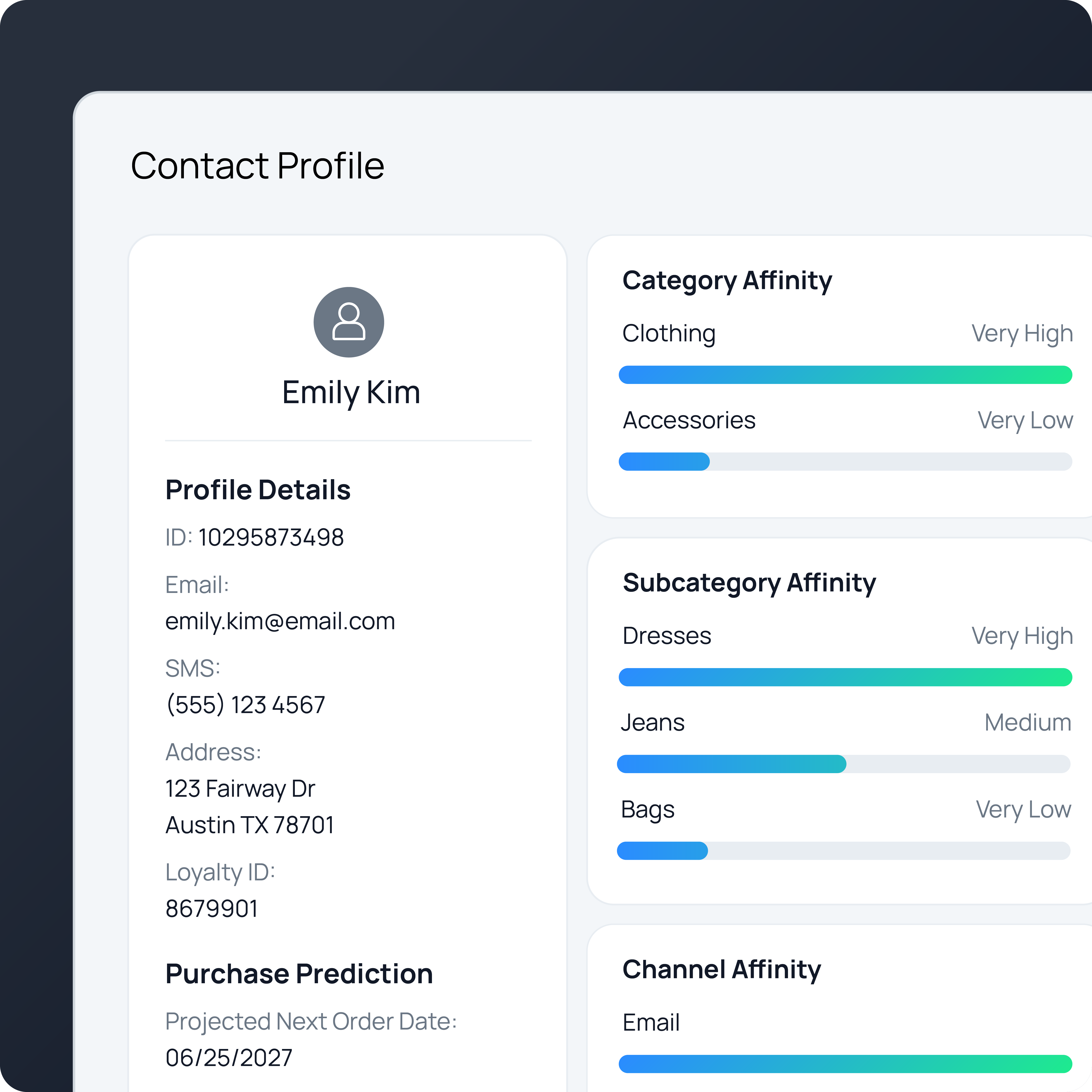
Listrak’s Data Platform assembles behavioral, purchase and engagement information into unified profiles. Identity resolution connects activity across sessions, devices and channels when usable signals are available. Segmentation then turns that information into audiences: recent buyers, lapsed customers, people interested in a particular product or shoppers predicted to engage.
02 / A second chance needs a timetable
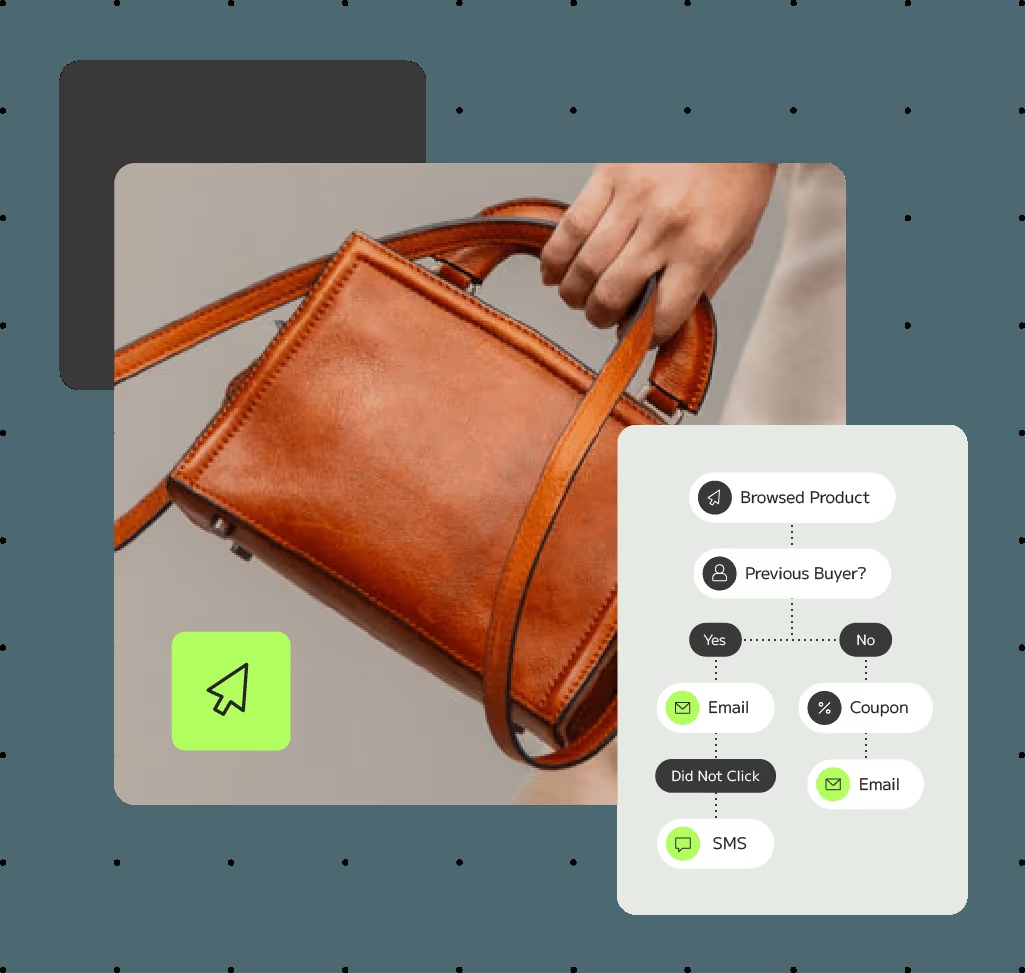
Journey Hub is where that memory becomes a sequence. Marketers build workflows with entry criteria, delays, branches and exit conditions. Someone joining a list can receive a welcome series. Someone leaving a basket can receive a reminder. Someone buying a consumable can receive a replenishment prompt informed by reorder behavior. Webhooks connect journeys to outside systems.
The Robert Graham example makes the machinery legible. Alongside the three-hour and two-day cart reminders, the published case describes a thank-you email eight days after purchase and a win-back campaign 120 days after the last order. These timings are decisions a marketer can inspect and change. They make a better starting point for experimentation than the vague instruction to be more personal.
A product attracts attention
Connect available signals
Choose timing and channel
Exit or change course after purchase
Diagram explains the workflow; it is not a measured customer funnel.
There is an equally useful decision at the other end: when to stop. Exit conditions let the marketer design a journey that changes when circumstances change. A customer who has bought the item should not have to endure a reminder to buy it. Suppression rules and current inventory matter because a relevant message can become irrelevant between scheduling and delivery.
What failed first in this kind of retail problem? The connection between the shopper’s action and the retailer’s response. That is the practical failure the platform is designed to address. An attractive subject line cannot repair a message that ignores what the recipient just did.
03 / The revenue chart needs a footnote
Listrak’s 2026 benchmarks describe an interesting shift within its client base. Triggered and transactional messages accounted for 49% of email revenue in 2025, compared with 45% the previous year. The company says the analysis uses 130 billion email and SMS/MMS messages and a consistent client set for year-over-year comparisons.
Triggered + transactional messages. Listrak’s 2026 client benchmarks; 30-day attribution window. This measures revenue share, not incremental lift.
Those numbers reward a little patience. Transactional messages include communications such as order and shipping confirmations. Triggered messages include welcome series, abandonment reminders and product alerts. These recipients often have more immediate reasons to pay attention than the audience for a general broadcast.
The report uses a 30-day lookback for conversion and revenue-per-send reporting. That matters when comparing vendors. Revenue assigned to a message is not automatically revenue caused by that message. A retailer can borrow the campaign idea while testing incrementality through a suitable holdout. Changing the measurement window can change the apparent result without changing a single customer’s behavior.
“Our partnership with Listrak is creating so much success as we grow our DTC ecommerce business nationally.”Mallory Beattie, Senior Manager of Digital Commerce, Stateside Brands
04 / The small team’s other constraint
LAFCO New York, the home-fragrance and body-care brand, offers another useful angle. Its GXP case study describes adding Listrak’s identity-resolution solution ahead of the holiday season. The appeal included a strategically managed service for a lean marketing team. More capabilities are welcome; more tasks are a less charming gift.
The vendor-published account reports a 139% increase in triggered revenue during Black Friday and the weekend, alongside a 424% increase in total email subscribers. It also reports an 18% increase in total ecommerce revenue on Cyber Monday. These are specific reported outcomes for one client and period, not a forecast for the next retailer. The operational lesson is that execution capacity belongs in the buying decision.
Listrak sells expertise as well as software. Its services describe onboarding managers, integration support, deliverability work, training and strategic reviews. Managed campaign execution is available within its service structure. The extent of that involvement varies by plan, an important distinction for a team expecting someone else to do the daily work.
The business model is a sales-led B2B software relationship with services alongside it. The Shopify app is listed as free to install with external charges possible. Installation is therefore a poor proxy for the cost of running a program. A useful buying exercise prices the proposed scope: channels, message volume, implementation, support and the internal hours required to keep campaigns accurate.
05 / A family business learns to follow up
Listrak dates its establishment to 1999. Its co-founders are Ross Kramer and his father, Howard. A 2020 interview summary traces the email tool’s beginning to a request from Movies Unlimited. That origin is fitting: a retailer had a practical communication problem, and a tool grew around it.
The company’s less digital side is rather enjoyable. In 2022 its headquarters hosted back-to-back eighties-themed fundraising events for the Schreiber Center and Warwick Education Foundation. Ross and Howard appeared as Prom Dude and Slash. Office culture is difficult to judge from a benefits list, but a workplace capable of becoming a charity prom offers a more memorable detail than another photograph of a beanbag.
The current careers material describes volunteer time off, tuition reimbursement, flexible work options and up to 12 weeks of paid parental leave. Listrak also appeared in the Inc. 5000 each year from 2015 through 2019. Its public identity combines retail software, client service and a visible local presence.
06 / The next bottleneck is the rebuild
Its more recent products follow the same practical logic. Experience Builder brings acquisition and website personalization into the shared customer-data system. Listrak Intelligence supplies product recommendations, predictive segments, channel-affinity decisions and text assistance. These tools serve different chores, but each depends on information being usable where the marketer works.
In September 2026 the company announced Listrak Studio, a Figma plugin for turning email designs into responsive emails and publishing them to the platform. The target is an unglamorous production bottleneck: exporting assets, reconstructing layouts and uploading content. The documentation describes previews, validation and synchronized assets. Even a well-chosen message can lose its moment while someone rebuilds the design.
Listrak competes in a crowded category alongside alternatives such as Klaviyo, Bluecore and Attentive. Its positioning emphasizes retail specialization, unified identity and strategic service. A team comparing products should ask each vendor to demonstrate its actual journey, integrations and service scope. A feature checklist cannot show who will own the work on Monday morning.
The approach is most useful when a retailer has reliable customer and product data, a reachable subscriber base and enough operating discipline to maintain the journeys. Poor data, stale stock information or indiscriminate frequency weaken the result. The idea readers can copy is modest and demanding: begin with a customer action, make one useful response, measure it honestly and revise the sequence. Three hours is an experiment. The second chance is the business.