A person visits an ice-cream factory. She queues for a ticket, waits again for a tour, watches ice cream being made, and leaves with a cone. The factory knows it sold one adult ticket. It does not necessarily know where she came from, whether the tour changed her opinion, or whether she will buy the brand next Tuesday. For a company that spent real money making the visit memorable, this is an oddly modest souvenir.
That was roughly the problem at Ben & Jerry’s factory in Waterbury, Vermont. Its case study says tickets once had to be bought on site; at busy times, buying one could take half an hour and the tour could begin hours later. Visitor tracking relied on spreadsheets and paper tickets. AnyRoad brought reservations online in July 2022. The company says 73% of factory tours were later booked online. A smoother queue was the visible result. Knowing more about the visitors was the larger prize.
- AnyRoad helps brands run tours, classes, tastings, activations and other events.
- Its software joins booking and ticketing with guest records, feedback, analytics and follow-up.
- The company began as a custom-tour service before shifting to enterprise software.
- Its wager: a live encounter can be measured beyond attendance.
The company inside the tour
Brothers Jonathan and Daniel Yaffe launched AnyRoad in San Francisco in 2013 with technical co-founder Michalis Polakis. The original spark came on a visit to the Great Wall: they avoided a crowded tourist route by finding a local driver who took them somewhere quieter. The first business sold custom travel experiences. A contemporary report counted 200 tours across five countries, built after the team met more than 3,000 guides in 18 months. AnyRoad took a 14% booking commission. It was a plausible idea with a stubborn ceiling. Jonathan later told TechCrunch that the team had been “pounding our heads against the wall” trying to make experiences accessible at scale. The tour marketplace was not growing into the venture-sized business they wanted. Yet it had produced something useful: data about which experiences people chose and how they responded.
The brothers changed customers. Instead of selling an unusual tour to a traveler, AnyRoad began selling the machinery behind experiences to brands. That shift, around 2017 by Jonathan’s account, took the company from travel into what it called experience relationship management. The phrase is ungainly, as software categories often are. The underlying question is sharp: if a brand meets a customer in person, what can it learn and do afterward?
“We were sitting on a mountain of data.”Jonathan Yaffe, on the decision to pivot
Jonathan had seen the question from another angle while working in marketing at Red Bull. He described a company spending heavily on events to put drinks in people’s hands. The experience could change a relationship with the product, but the evidence was hard to gather. AnyRoad’s answer became a system for collecting that evidence as part of running the event itself.
One booking is not four people
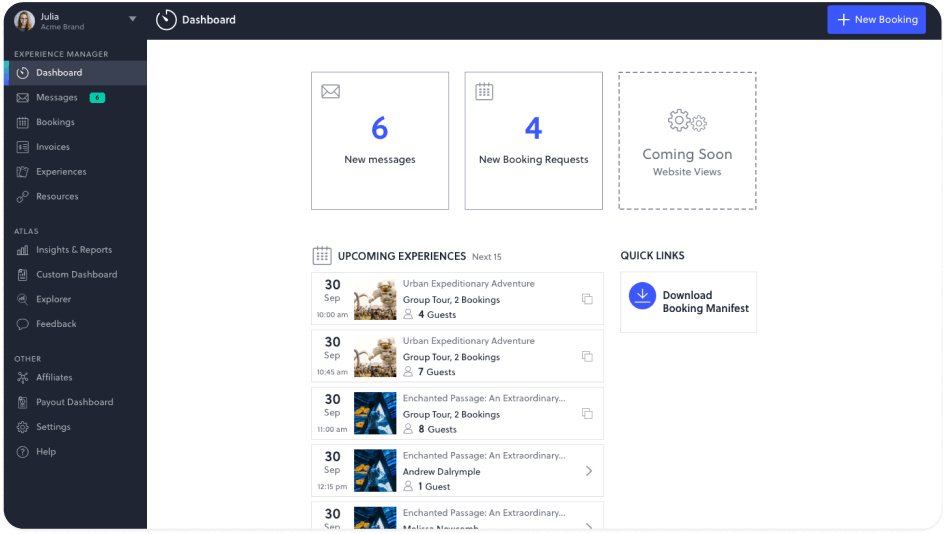
The product starts with ordinary operational chores: calendars, reservations, tickets, payments, staff schedules, front-desk check-in. Experience Manager handles these jobs. The difference begins when a booking turns into a record. A group of four may arrive on one reservation, leaving three people unknown to the brand. AnyRoad’s FullView and on-site tools seek details and permission from individual attendees, including people who never filled out the original form.
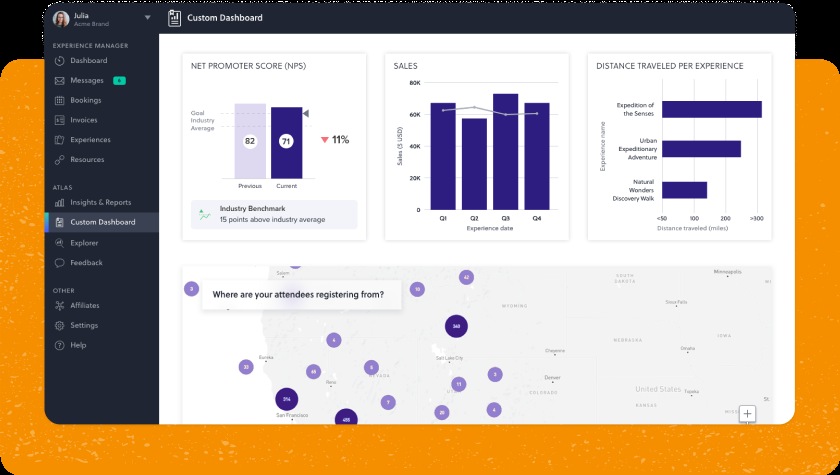
Atlas Insights helps teams compare experiences using measures such as Net Promoter Score, brand perception and purchase intent. Pinpoint, announced in 2023, uses language models to sort open-ended guest comments into themes. The company’s integrations move records into a brand’s CRM or marketing system. In 2024, Purchase Conversions added a way to encourage a later retail purchase with a rebate, then verify a submitted receipt. The brand can see a specific product and retailer associated with that transaction. That is a more concrete answer than “people seemed excited.”
The price of knowing
AnyRoad does not publish a standard price list, so its software cost cannot be compared neatly with a ticketing app. The public record does show the costs borne by customers before they changed course. Leiper’s Fork Distillery in Tennessee had hosted about 24,000 tour and tasting visitors while knowing remarkably little about who they were. Its previous booking tool, its general manager said, gave the team little useful measurement. The distillery adopted AnyRoad’s booking and survey tools, then used the information to adjust its experiences and retail approach.
One decision was especially legible: Leiper’s Fork raised its tour price from $18 to $24. It reported fewer tours in the first month, yet that month became its third-highest for gross revenue at the time. The case study also puts labor savings from simpler reporting at up to $500 a month. Those numbers describe one distillery, not a guaranteed return on a software contract. Their value is that they reveal the sequence: better visibility gave a manager enough confidence to test a price that had previously felt risky.
Sierra Nevada Brewing offers another useful distinction. It already cared deeply about visits to its Chico and Mills River breweries. The problem was that separate surveys created separate piles of answers. Its team used AnyRoad to compare locations and explore what visitors liked. The company’s case study says paid tours produced higher satisfaction than free ones, a finding the brewery used when planning its schedule. The surprise is modest and practical. A dashboard mattered because it changed which tour went into a popular time slot.
A platform with a particular appetite
AnyRoad now courts consumer brands with live touchpoints: distilleries, breweries, retailers, food makers and event teams. Its website says more than 500 enterprise brands use the platform. Publicly named customers include Diageo, Campari Group, Michaels, The North Face, Sierra Nevada and Ben & Jerry’s Factory Experience. The company sells business software, with managed services in its newer loyalty offer. Its 2025 Lifetime Loyalty launch added bottle clubs and premium memberships, taking the relationship beyond a single visit.
This positioning explains the competitive set. A ticketing provider can sell seats. An event platform can manage a conference. A CRM can store contacts. AnyRoad tries to connect those jobs for brands whose event is a marketing channel and whose sale might happen later at a shop miles away. It also asks more of the buyer. Consent, data quality, useful survey questions and integration with existing systems determine whether the resulting analysis deserves anyone’s confidence.
There are limits to the model. A rebate receipt proves that someone who responded bought a product; it does not by itself prove the event caused the sale. Survey respondents may differ from silent guests. A small local program with a simple booking form might find a full enterprise platform excessive. And a brand with no useful follow-up or repeat-purchase path can collect an excellent guest list and do very little with it. AnyRoad’s promise becomes persuasive where experiences recur, teams can act on the findings, and measurement is worth more than the work required to obtain it.
The company’s own history makes a final point. Its first attempt to sell experiences generated the information that exposed a bigger customer problem. The traveler wanted a good afternoon. The brand wanted to know whether the afternoon changed anything. AnyRoad chose to sell an answer to the second question.