The origin story of TicketManager begins with a piece of office furniture. In 2006, Tony Knopp was selling to corporate customers at StubHub when an executive at CBS stopped his pitch, walked to a desk and opened the bottom drawer. It was stuffed with baseball tickets. The executive could, he said, wallpaper his office with the unused Mets seats left at the end of every season. Solve that, and CBS might buy more.
A second customer had supplied the other half of the brief. A financial printer bought tickets through a dozen sales representatives and wanted a monthly report comparing what they spent with what they sold. One customer had waste. The other wanted attribution. Knopp and fellow StubHub executive Joe Greiner put the complaints together and started Spotlight Ticket Management in September 2007. The business later adopted the more literal TicketManager name.
The founders had useful scar tissue. Knopp and Greiner had worked together in StubHub’s corporate sales operation, so they understood both the ticket market and the person inside a company who was suddenly expected to be part concierge, part accountant. Knopp has described TicketManager as a bootstrapped three-person “garage band” and said the project overlapped with his day job for about six months. He also admits they failed to set aside the six months of untouched personal cash he now advises founders to keep. The early cost was therefore not just code. It was long workdays, weekends and a financial safety net they had neglected to build.
“You solve for that, and I’ll consider buying more tickets from you.”A CBS executive, recalling the drawer problem to Tony Knopp
The luxury suite has a back office
From the stands, a company ticket looks like a rectangle of goodwill. Inside a company, it behaves more like a small financial asset with a surprisingly long chain of custody. Someone buys it. Someone else requests it. A manager approves the guest. An administrator transfers it. The recipient may or may not scan in. Finance needs the business purpose. Sales wants to know whether the outing helped an opportunity. Compliance wants proof that the seat did not become a gift to the wrong person.
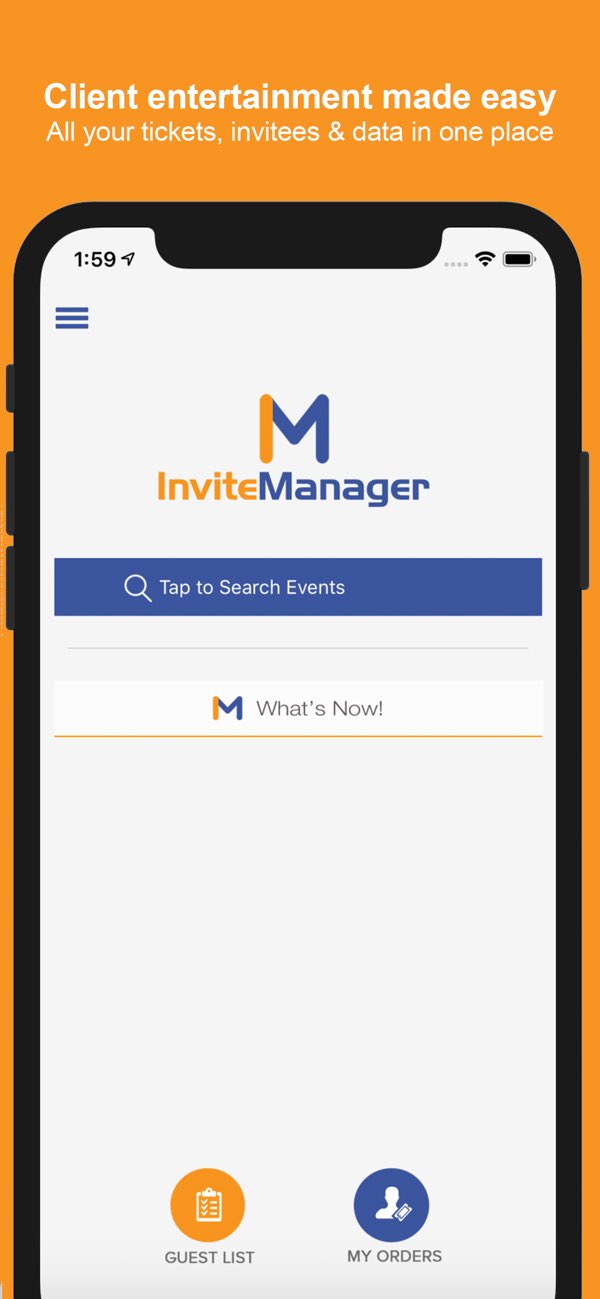
TicketManager puts those handoffs in one system. Its core software centralizes inventory across teams and venues, defines who can see and request what, moves mobile tickets, records attendance and produces reports. Around that spine sit branded invitations, registration sites, guest communications, check-in, credentials, loyalty programs, hospitality sourcing and controlled resale. Integrations with Ticketmaster, Salesforce, Microsoft Dynamics 365, Oracle Sales Cloud and Tickets.com reduce the number of places an employee has to visit.
This distinction matters. Ticketmaster, StubHub, SeatGeek and Vivid Seats are principally transaction markets: they help tickets change owners. TicketManager is designed for the enterprise that already owns the ticket and needs to govern its use. Event platforms such as Cvent or Splash can handle invitations and registration, but corporate ticketing adds recurring inventory, seat-level transfers, resale rules and team-system data. The category lives in the seam.
A recession was better than a rebrand
The first thing to fail was not the software. It was the old confidence that corporate ticket spending did not need an explanation. A 2011 account of Spotlight’s early years said the product took off when the recession made executives demand numbers. Before that, a suite could survive on instinct and tradition. When budgets tightened, “the game was good” stopped being a business case.
That changed the buyer’s mind. Teams also began to see management software as a service they could offer premium customers. The Memphis Grizzlies, Kansas City Chiefs and others made Spotlight tools available to suite holders. This was a tidy distribution wedge: the team improved the value of an expensive package, the corporate buyer got control, and TicketManager met qualified users beside the asset that created the pain.
Anheuser-Busch offers the cleanest published example of the pitch. A TicketManager case study charts its ticket usage rising from 57 percent in 2015 to 71 percent in 2019 with TicketManager and 97 percent in 2021 with the All Access resale program. The comparison is company-produced, not a controlled trial, but it shows what the product is trying to change: not merely where tickets sit, but whether they reach a useful guest or recover value.
The customer roster advertised by TicketManager includes Verizon, FedEx, Adidas, Coca-Cola, Nike, Mastercard and Dell Technologies, alongside teams and properties across the NFL, MLB, NBA, NHL, MLS and college sports. Its LinkedIn page says the system manages more than 50 million invitations, registrations and tickets annually. Public descriptions have moved between more than 500 and roughly 700 brands, a useful reminder that customer, partner and community counts are not always the same denominator.
Software, service and the unused-seat escape hatch
TicketManager is a contract SaaS business, but software is only one line on the menu. Standard terms refer to fees set in an order form, pricing tiers based on asset volume and a 5 percent annual increase unless the parties agree otherwise. Public list prices are not the point. Enterprise complexity determines the deal. Managed hospitality, event operations, integrations and ticket sourcing add service revenue.
Resale makes the model more interesting. All Access can automatically price and list unused corporate tickets within defined controls, then return proceeds with an audit trail. Some team partnerships provide the technology to corporate holders at no charge. TicketManager has also said resale proceeds can offset the software fee; a 2024 overview deck claimed that 38 brands had effectively received TicketManager free that year through resale. The customer is not asked to love another subscription. It is asked to find enough trapped value to pay for one.
The old workflow
Inbox, drawer, spreadsheet
- Requests arrive without a common priority.
- Transfers and attendance live in separate systems.
- Unused inventory is found too late.
- Business purpose is reconstructed during an audit.
The TicketManager bet
One governed lifecycle
- Role-based requests and approvals.
- Ticketing and CRM data meet.
- Resale starts before value evaporates.
- Guest, purpose and outcome travel together.
The economic case is strongest where frequency and value are both high. A national sponsor with seats in ten markets, hundreds of requesters and strict gift rules can drown in coordination. A small firm hosting two dinners a year probably cannot. Dedicated software adds configuration, training and process. If employees will not record why a guest matters, CRM attribution becomes expensive theater. If the ticketing provider does not expose transfer or scan data, part of the lifecycle goes dark. And if hospitality is genuinely ad hoc, a disciplined spreadsheet may remain the cheaper answer.
The ROI claim deserves similar discipline. A scanned ticket proves attendance, not causation. A sales opportunity that closes after a game may have closed anyway. The useful output is comparative: which events attract the intended guests, which assets are chronically stranded, which regions follow up and where hospitality accompanies stronger relationships. TicketManager can make those questions answerable; it cannot turn correlation into certainty. The software works best when a company agrees on the purpose of hospitality before allocating seats, then uses the same definitions after the event.
The niche grows teeth
TicketManager expanded beyond seats in 2021 by acquiring Sports Systems, a specialist in guest registration, media and staff credentialing, and sponsorship asset management. The deal added more than 250 customers and made the platform useful at events where a credential matters as much as a ticket. A London office followed in 2023, placing staff closer to European brands and rights holders.
Then came two transactions in six days. On May 29, 2025, growth investor Valeas Capital Partners acquired a majority stake and committed $110 million to strategic growth. Knopp and chief operating officer Ken Hanscom retained minority interests. On June 3, TicketManager acquired substantially all assets of Ovations from hospitality-software company Cendyn. Sports Business Journal described Ovations as TicketManager’s largest competitor; the purchase included contracts, intellectual property and 10 employees, for an undisclosed price.
“When we first started they were the Goliaths and we were the little Davids.”Paul Kim, TicketManager CMO, on Ovations
The sequence says more than either press release alone. Valeas did not merely fund a sales push. TicketManager immediately consolidated the category that had once defined the standard it chased. The timing also placed the combined company ahead of a dense American live-events calendar: Super Bowl LX, the 2026 men’s World Cup and the 2028 Los Angeles Olympics. In December 2025, the Bay Area Host Committee selected TicketManager as its preferred ticket and guest-management provider for hospitality around the Super Bowl and World Cup matches.
Start. Spotlight Ticket Management opens after two corporate-ticket complaints.
Fund. Three disclosed rounds total about $28.5 million.
Connect. Ticketmaster’s open platform joins the workflow.
Broaden. Sports Systems adds guests, credentials and sponsorship assets.
Consolidate. Valeas invests; TicketManager buys Ovations.
What another founder can copy
The useful lesson is not “build ticket software.” It is to notice when something expensive is being managed with behavior cheaper than the asset deserves. Tickets worth thousands were sitting in drawers while decisions arrived by email. The gap between asset value and workflow quality was the opening.
The stealable playbook
- Collect adjacent complaints. Waste and reporting looked separate until the founders joined them into one lifecycle.
- Sell through the asset provider. Team partnerships met corporate users where they already bought suites and seats.
- Integrate into the daily system. Salesforce and ticketing connections made the product part of existing work.
- Add a recovery mechanism. Resale turns avoided waste into a visible way to fund the platform.
- Know the disqualifier. Low frequency, low value and weak process discipline make dedicated software unnecessary.
TicketManager’s culture has long sounded like its market: sociable, sports-heavy and impatient with sitting still. The company has repeatedly appeared on Los Angeles-area best-workplace lists; its careers page says eight consecutive years. Earlier profiles describe funded learning, community service, gym benefits and plenty of games. That is pleasant color, but the more durable cultural clue is Knopp’s account of product discovery: get out, meet people and ask questions. Nearly two decades later, the company still sells software for being there.
The approach would travel poorly into a market where suppliers refuse integrations, assets cannot be transferred, outcomes never enter a shared system or end users touch the workflow too rarely to learn it. It also depends on patient enterprise selling and support. A consumer app can tolerate a user disappearing after one transaction; a ticket administrator with a championship game tomorrow expects a human answer. TicketManager’s premium-service layer and customer-success emphasis are not decorative. They compensate for the fact that live events have fixed start times and no sympathy for a failed workflow.
The overlooked elegance is that TicketManager makes the fun thing accountable without trying to remove the fun. A client night remains a client night. The system simply remembers who was invited, who walked in, what it cost and what happened next. It gives the Monday-morning meeting a factual answer without turning the Saturday-night game into a quarterly review. The drawer is empty. Finance can breathe. Someone still gets to watch the Mets.
Keep going