In July 2018, Buffer spent $3.3 million buying out its main venture investors. That was about half the cash in its bank account. Consider the oddity: a software company, having persuaded investors to put money in, was now paying to let some of them out. Joel Gascoigne wanted to keep building Buffer. He wanted more say over the speed.
- Buffer turns social posts into a queue you can prepare ahead.
- Hiring outran revenue in 2016; ten teammates lost their jobs.
- A $3.3 million investor buyback supported a different pace of growth.
01The queue before the company
Go back to Birmingham in 2010. Gascoigne wanted to space out his tweets without deciding a publication time for every single one. His answer was a queue: write when you have something to say; let the software distribute it later. The idea addressed a familiar nuisance. Inspiration and a sensible posting schedule rarely arrive together.
Before building the app, he made two web pages to test interest. Then he inserted a pricing page to see whether visitors would click a paid option. Those clicks were an encouraging signal, though hardly a purchase order. He built the first version and launched on November 30. Within the first few days, someone paid $5.
The rough edges were almost comic. Early customers waited for manual account upgrades. A queued tweet could not be edited; you deleted it and started again. One customer entered Bitly details into a box that did nothing, then emailed to ask why. Gascoigne fixed it. The lesson travels well: test a narrow problem before funding a whole imagined workflow. Copy the small experiment; give customers a working promise.

02The house the paycheck could not afford
Leo Widrich joined as co-founder in 2011. Buffer raised $450,000 across accelerator and seed investment, reached one million registered users in 2013, and raised a $3.5 million Series A in 2014. It was also publishing salaries and financial numbers. This made the business unusually easy to inspect, including when inspection became uncomfortable.
By 2016, hiring had raced ahead of revenue. The team had grown from 34 people to 94. Buffer faced the prospect of only five months of runway and laid off ten teammates, 11 percent of its staff. Gascoigne’s published explanation took responsibility. In an advisor’s metaphor, the company had moved into a house its monthly paycheck could not afford.
The product ambitions also needed pruning. Buffer had acquired Respondly and turned it into Reply, a social customer-service product. Reply’s monthly revenue eventually exceeded $70,000 at its peak, but demand developed differently from what Buffer expected. Serving distinct customer groups stretched the company. It sunset Reply in 2020. A paying customer validates a need; that still leaves the question of whether the company should serve it.
03Freedom, paid in cash
The layoffs pushed Buffer toward a choice about growth and spending. Gascoigne held onto remote work and transparency. Leadership disagreed over the company’s direction; Widrich and CTO Sunil Sadasivan left in early 2017. Buffer rebuilt profitability and accumulated the cash required for a buyback.
In July 2018 it bought out seven of sixteen Series A investors. The $3.3 million transaction also changed provisions that had restricted liquidity for other shareholders. This was a negotiated rearrangement of ownership, with real costs and remaining investors. The company needed profits, reserves, and cooperative agreements to make it possible.
For a founder, the useful question is what your financing expects you to become. A business that needs years of heavy spending before earning revenue cannot simply borrow Buffer’s solution. Even a profitable business needs enough cash left to operate after a buyback. Independence has to fit the accounts.
“We moved into a house that we couldn’t afford with our monthly paycheck.An advisor’s metaphor, recalled by Joel Gascoigne
04A week of posts, fewer interruptions
Today, Buffer serves creators, small businesses, agencies, and nonprofits that want an audience without a large marketing operation. Its place in the market is approachable, multi-network publishing. Alternatives include Hootsuite, Sprout Social, Later, Metricool, and each network’s own tools. The sensible comparison starts with the tasks your team actually repeats. A freelancer and an agency with a dozen clients will count those tasks differently.
Buffer’s tools follow a post through its working life. Create stores ideas and drafts. Publish provides queues and a calendar. Community gathers supported comments for replies. Insights measures performance and offers AI-powered Takeaways. Start Page supplies a link-in-bio microsite; AI Assistant helps refine or repurpose writing. Canva and storage integrations bring existing assets into that routine.
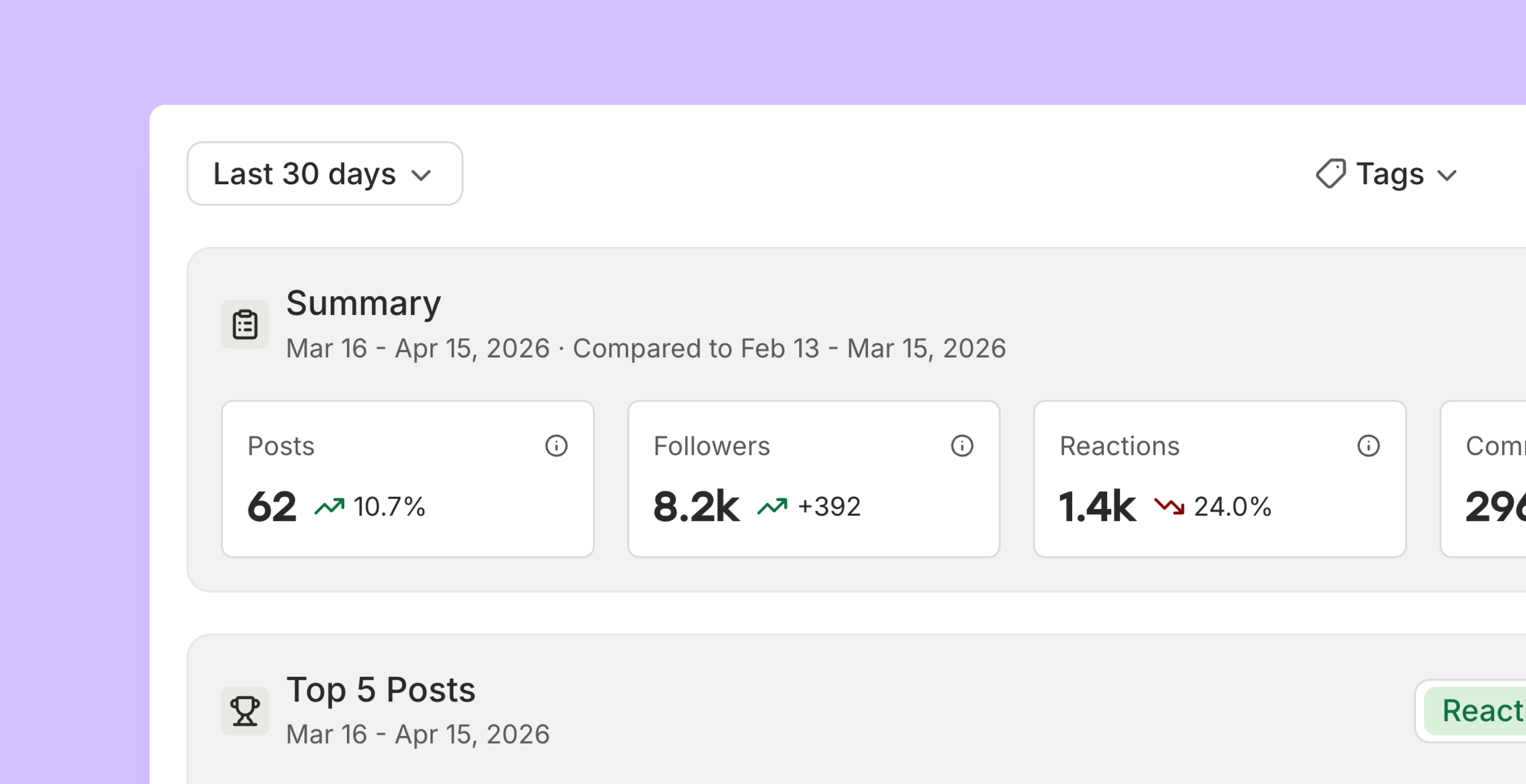
A practical first week might start with one useful customer question. Draft an answer, adapt it for three networks, place the versions in your queue, and check replies after publication. Then inspect which version earned attention. That is an example workflow, not a promise of growth. Scheduling creates room to work; the audience still decides whether your post deserves its time.
The free plan allows three channels and ten queued posts per channel, with slots reopening after publication. On annual billing, Essentials starts at $5 per channel per month; Team starts at $10 and adds collaboration controls. Upgrading means paying for every connected channel, including the three previously free. Count accounts before comparing bills.
Buffer keeps following the platforms. It rebuilt Insights in April 2026, added Substack Notes in September, and expanded Instagram options in October. Support still depends on each network and account type. Some formats use reminders to finish publishing in the native app. Check your particular workflow before assuming every action can be automated.
10 queued posts each
$60 billed yearly
$120 billed yearly
05A shorter week needs a longer conversation
The company behind those queues works a four-day week. Buffer began a one-month experiment in May 2020 and extended it indefinitely at the end of that year. In a report published in January 2022, 91 percent of surveyed teammates said they felt happier and more productive. But 27 percent still worked more than four days.
Those are internal survey results, not a controlled productivity study. Buffer also reported difficulties making room for team connection. The useful management detail is the conversation about workload: can the required work fit the available time? Changing the calendar leaves that question open.
The same question runs through Buffer’s history. How much can a queue hold? How much hiring can revenue support? How much growth fits the company people want to keep? For the reader running a small business, Buffer offers a modest place to start: prepare the posts, review the results, and keep enough room in the week to do the work worth posting about.

Plan once. Post all week.
Buffer schedules your posts to LinkedIn, X, Threads, Bluesky, Substack and more. Start on the free plan.
Start freeOpen the next tab
Try the tools, follow the company, or watch the queue at work.