retirement
(21)
Jean Kim Smart and the family business of growing old
Her parents built businesses. Her employers built retirement plans. Jean Kim Smart founded Penelope to bring those two worlds together - and named it for the daughter she wants to leave more than a bill.
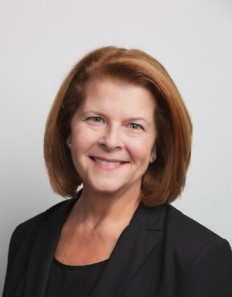
Beth Wood Wants Money to Feel Human
The chief marketing officer of Principal Financial Group built a career on a stubborn idea - that an industry running on spreadsheets and fine print can still make people feel understood.
Symetra Sells Certainty in a Business Built on Careful Guessing
Founded in 1957 as a Safeco side project and now owned by one of Japan's oldest life insurers, the Bellevue company underwrites 2.5 million Americans' retirement income, benefit claims and life policies - then sponsors their hockey team.

Victory Capital
How a management buyout out of a Cleveland bank turned into a $300-billion-plus asset manager that collects boutiques the way other firms collect logos.
CNO Financial Group
The middle of the market that Wall Street forgot has a $4.5-billion insurer built entirely around it - one careful policy, and one kitchen-table conversation, at a time.

Greg Boosin
After nearly two decades learning every side of Mastercard, Greg Boosin moved to Equitable with a practical thesis: complicated financial products still have to make sense to actual people.
Franklin Templeton
The mutual-fund house founded in 1947 now runs a federation of specialist managers, an expanding private-markets shelf and one of Wall Street's more serious blockchain experiments. Franklin Templeton's wager is that old-fashioned distribution and new financial rails belong under the same roof.
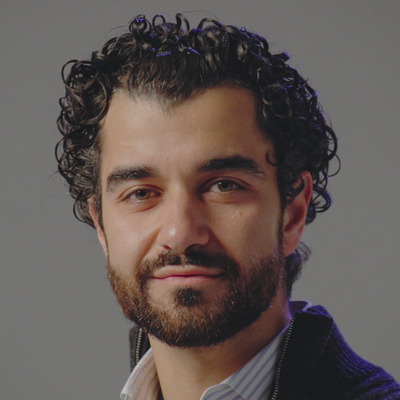
Abdul Al-Asaad
He grew up in a refugee camp and learned finance at Goldman Sachs. Now Abdul Al-Asaad wants to hand ordinary savers the borrowing power that has always belonged to the wealthy.

Aaron Schumm
He built the plumbing behind America's savings accounts - the 401(k)s, 529s and state programs most people never think about - by betting that the boring middle of finance was the biggest opportunity nobody wanted.

Mahaana
Mahaana is Pakistan's first licensed digital wealth manager, a Y Combinator (W22) backed fintech that lets anyone start investing from PKR 1,000 in about ten minutes with no paperwork. Regulated by the SECP as a Non-Banking Financial Company, it offers Shariah-compliant savings, money-market funds, an index ETF and retirement plans through a mobile-first, robo-advisory platform aimed at onboarding Pakistan's largely unbanked, non-investing population.

Basic Capital
Basic Capital is a New York fintech building a modernized 401(k) and IRA platform that lets everyday workers finance their retirement investments rather than only contribute out of pocket. For every dollar a saver puts in, the company supplies supplemental capital - roughly four additional dollars - so contributions are deployed into diversified portfolios of ETFs, bonds, and access to alternatives like private credit. Founded by former Goldman Sachs banker Abdul Al-Asaad, it positions itself as the first platform to bring financing and alternative assets into tax-advantaged retirement accounts, and raised a $25M Series A in August 2025 led by Forerunner and Lux Capital.
Paychex
Paychex is a Rochester, New York-based provider of payroll, human resources, retirement and insurance services for small and medium-sized businesses. Founded in 1971 by Tom Golisano with $3,000, it has grown into a Fortune 500 company that pays roughly 1 in 11 U.S. private-sector workers and now embeds AI across its platforms following its 2025 acquisition of Paycor.

Penelope
Penelope is a New York fintech that makes 401(k) retirement plans practical for the businesses that usually get ignored - the corner shop, the two-person startup, the solopreneur. Founded in 2021 by former Wall Street executive Jean Kim Smart and named after her daughter, the company started as a low-cost, self-service platform offering Pooled Employer Plans, traditional 401(k)s and Solo 401(k)s, and has since built a cloud-native, API-first, SECURE 2.0-ready recordkeeping platform that independent recordkeepers and benefit providers can run under their own brand. The pitch is unglamorous but real: automate the paperwork, cut the cost, and let roughly 60 million Americans who work for small employers start saving.

Jean Smart
Jean Smart is the founder and CEO of Penelope, a New York fintech rebuilding the retirement recordkeeping layer for the small and micro-businesses Wall Street forgot. After a 20-plus year career as a financial-services executive at Charles Schwab, TD Ameritrade, Citigroup and UBS, she left a managing-director seat to build affordable, fully-digital 401(k) infrastructure for solopreneurs and mom-and-pop shops. The company, which she named after her daughter, launched in 2022 with a mission to put generational wealth-building within reach of the workers institutions have historically overlooked.

Chapter
Chapter is an AI-native Medicare advisory platform that helps older Americans choose the right Medicare and retirement healthcare coverage. Instead of acting as a commission-driven marketplace, Chapter reviews plans from every insurance carrier nationwide and pairs that data with licensed, independent advisors to deliver unbiased recommendations. Founded in New York in 2020, the company has supported more than 500,000 enrollees and crossed $100 million in annual recurring revenue.

Cobi Blumenfeld-Gantz
Cobi Blumenfeld-Gantz is the CEO and co-founder of Chapter, an AI-powered Medicare navigation platform he started in 2020 after watching his own parents struggle to enroll. Built with co-founder Vivek Ramaswamy and early backing from J.D. Vance, Chapter crossed $100 million in annual recurring revenue and raised a $100 million Series E in April 2026 at a roughly $3 billion valuation. A former Palantir government-team lead with degrees from Wharton and Cambridge, he calls himself one of the most hated people in the Medicare brokerage business precisely because Chapter's advisors are paid to recommend the best plan rather than the most lucrative one.
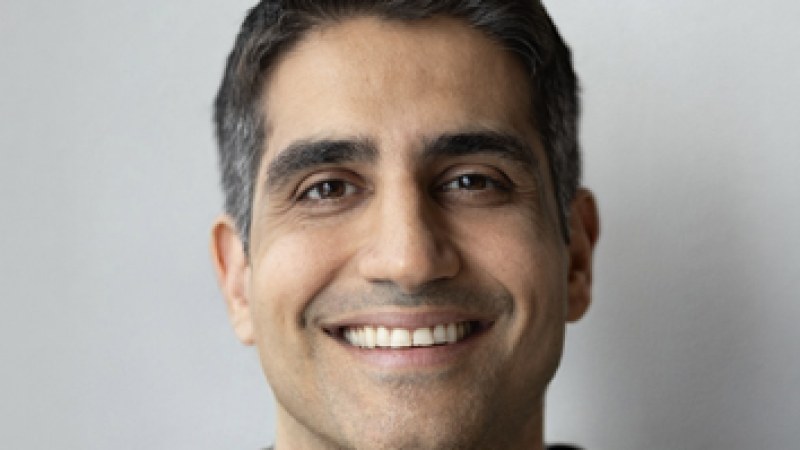
Kevin Nazemi
Kevin Nazemi is the co-founder and CEO of Charlie, a Los Angeles fintech building banking specifically for Americans aged 62 and older. After co-founding the health insurance disruptor Oscar Health and later the retiree health platform Renew Health, he turned to a market almost everyone in fintech ignored: seniors collecting Social Security. Charlie launched nationwide in May 2023 with faster access to Social Security checks, no monthly fees, competitive yields, and fraud safeguards built for a generation that loses an estimated $36 billion a year to financial scams.

Finhabits
Finhabits is a bilingual financial wellness platform built by Latinos, for Latinos, that turns small, automatic deposits into diversified investment portfolios. Founded by MIT-trained engineer Carlos Garcia, the New York fintech pairs low-minimum Roth and Traditional IRAs with Spanish-and-English financial education to close the wealth gap for first-time investors, serving hundreds of thousands of members who often start with as little as a few dollars a week.
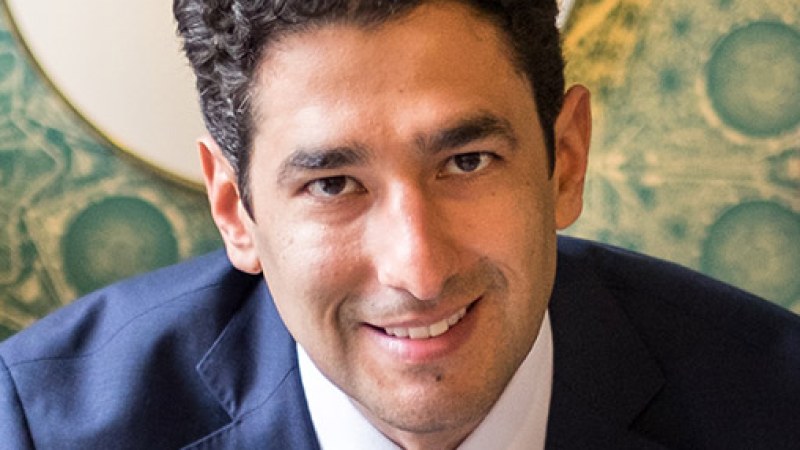
Carlos Garcia
Carlos Garcia is the founder and CEO of Finhabits, a bilingual money app built to close the wealth gap for U.S. Latinos. An MIT-trained engineer who spent nearly two decades on Wall Street, he turned the realization that he once had no idea what a 401(k) was into a platform that lets people start investing for as little as $5 a week. Finhabits has grown to more than 800,000 members and earned recognition from Goldman Sachs and Fast Company.

Human Interest
Human Interest is a San Francisco-based fintech company on a mission to make retirement savings accessible to every American worker, regardless of where they work. The company provides affordable, full-service 401(k) and 403(b) plans designed for small and medium-sized businesses — the 99% of employers who have historically been priced out of quality retirement plan options. With a platform that handles recordkeeping, compliance, payroll integration, and investment management all in one place, Human Interest has become one of the fastest-growing retirement plan providers in the U.S., serving nearly 50,000 employers and 2 million+ eligible employees.

Jeff Schneble
Jeff Schneble is the CEO of Human Interest, a San Francisco-based fintech company on a mission to close America's $28 trillion retirement savings gap by making 401(k) and 403(b) plans affordable and accessible for small and medium-sized businesses. A physicist turned venture capitalist turned operator, Schneble brought together a rare trifecta of academic rigor (PhD from Cambridge, MBA from Harvard), investment experience (Partner at Wing Venture Capital), and hands-on operational chops (Silver Lake Partners) before taking the helm at Human Interest in 2019. Under his leadership, the company has grown to serve over 45,000 companies, surpassed $200 million in ARR, raised over $1 billion in total funding at a $3 billion valuation, and is eyeing a public listing.