facial-recognition
(22)
Aware, Inc.
Aware spent decades teaching machines to recognize a person. Now the small, public biometrics company is betting that the bigger business lies in deciding which identity system to trust - and when.

Munily App
Munily is a Panama-based proptech company building an access-control and community-management platform for gated communities across Latin America. It replaces broken intercoms and paper visitor logs with an app-and-tablet system that connects security guards, residents, and property administrators - guards photograph a visitor's ID and pick the apartment, and residents approve or deny entry from their phones. A Y Combinator W22 company, Munily has expanded into billing automation, live amenity reservations, and AI-assisted access (license-plate and facial recognition).

Intellicene
Intellicene is a Melville, New York-based security software company that builds Symphia, a unified, video-centric platform for physical security operations. Spun out of Verint and Cognyte's Situational Intelligence Solutions business and acquired by Canada's Volaris Group in December 2022, the company connects and correlates data from cameras, access control, intrusion detection and other networked devices so security teams can detect threats and respond to mission-critical events in real time. With roughly 25 years of heritage, it serves retail, airports, transportation, healthcare, safe cities, higher education and industrial customers worldwide.

ScorePlay
ScorePlay is an AI-powered media asset management platform built specifically for the sports industry. It centralizes photos, videos and live broadcast content into one system, then uses computer vision and facial recognition to automatically tag athletes, sponsors and moments so teams, leagues and federations can find and distribute content in seconds instead of hours. Founded in 2021 and headquartered in New York, ScorePlay is used by 200+ sports organizations worldwide and raised a $13M Series A in February 2025.

IntelliVision
IntelliVision is a San Jose-based developer of AI and deep-learning video and audio analytics software for smart cameras. Founded in 2002, its software runs on the edge, on-server and in the cloud to power face detection and recognition, license plate recognition, object detection and classification, intrusion detection, and driver-assistance (ADAS/DMS) systems. Sold primarily to camera makers (ODMs), chipset vendors, security integrators and OEMs, its analytics have shipped in millions of cameras across smart home, smart city, retail, banking/ATM, transportation and automotive markets. The company was acquired by Nortek Security & Control in 2018 and now operates as part of Nice.

ID.me
ID.me is a McLean, Virginia-based digital identity network that lets people prove who they are online once and reuse that verified credential across government agencies, healthcare portals, and retail discount programs. Founded in 2010 as a military discount site, it evolved into a NIST-certified identity wallet used by well over 150 million Americans, and it is one of the primary identity-verification vendors for U.S. federal agencies including the IRS, the VA, and the Social Security Administration.

RUTI INC.
RUTI is a women's fashion label and boutique chain founded in 2009 by Israeli-American designer and former tech executive Ruti Zisser. Built on three rules - cool, flattering, and practical - the brand designs ready-to-wear clothing, shoes, bags and accessories aimed at women over 35, and pairs its slow-fashion boutiques with a homegrown AI platform (including opt-in facial recognition and a purpose-built retail CRM) that personalizes both in-store and online shopping. Headquartered in the Bay Area with stores across California, New York, Arizona and Dallas, RUTI raised a $6M Series A in 2019 led by Viola Ventures.

Trusting Social
Trusting Social is an AI fintech company that builds credit scores and identity products for the roughly one billion people across Asia who fall outside traditional credit bureaus. Founded in 2013 and headquartered in Singapore, it combines big-data and machine-learning models with alternative data - telco, web, and mobile signals - so banks and lenders can underwrite, verify, and acquire customers who were previously invisible to the financial system. In recent years the company has extended into generative AI, launching Agent Foundry, a platform of autonomous banking agents, on Microsoft Azure.
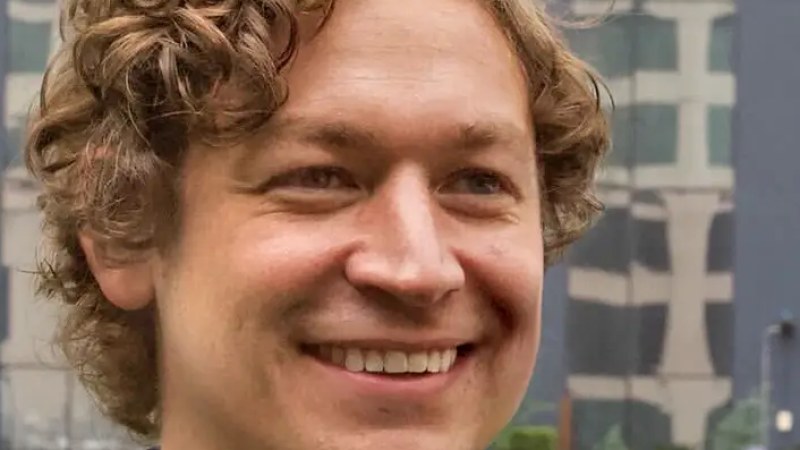
Shaun Moore
Shaun Moore is the co-founder and CEO of TERN, an Austin-based startup building an Independently Derived Positioning System (IDPS) that locates vehicles using onboard sensors and map data alone - no satellites, no GPS, no cellular. Before TERN, he founded Trueface, which became one of the world's fastest facial-recognition platforms before its 2021 acquisition by Pangiam. A two-patent inventor, global keynote speaker, and World Economic Forum contributor, Moore builds companies that challenge foundational assumptions across technology, policy, and capital.

Wyly Wade
Wyly Wade is the CEO of Biometrica Systems (also operating as Safience), a Las Vegas and Virginia-based company that links physical and digital information to help prevent crime, identify threats, and recover victims. A self-taught coder who published his first video game at age ten and fixed a bug in Lotus Notes 4 while barely out of his teens, Wade has spent more than two decades at the intersection of biometrics, cybersecurity, and public policy. He helped build biometric standards for the U.S. passport, advised the ICAO on e-passports, and was part of the founding core team behind India's Aadhaar, the largest biometric identity program on Earth. Today he is pushing Biometrica toward a privacy-first, biometric-free model of threat and victim detection.
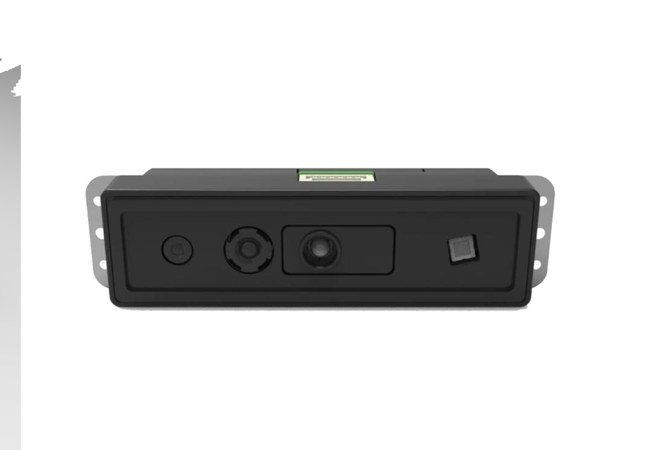
Deptrum
Deptrum (光鉴科技) is a Chinese 3D vision company founded in 2018 by three Silicon Valley scientists, including a former Apple depth-hardware lead. It builds full-stack 3D depth-sensing solutions - nanophotonic chips, structured-light and Time-of-Flight cameras, and AI perception algorithms - that let machines see and measure the physical world. Its hardware powers robots, smart cockpits, palm-payment terminals, smartphones and new-retail systems across finance, automotive and IoT.

Loti AI
Loti AI is a Seattle-based startup that scans the public internet to find, verify, and remove unauthorized uses of a person's face and voice - including deepfakes, AI impersonations, scams, and leaked content. Founded in 2022 by Luke Arrigoni, Rebekah Arrigoni, and Hirak Chhatbar, the company began protecting A-list celebrities through talent agencies like WME and CAA, then opened a free consumer tier so anyone can claim control of their own likeness. Its automated takedown engine removes flagged content with roughly a 95% success rate, typically within about 17 hours.

OLOID
OLOID is a Sunnyvale, California software company building passwordless, biometric identity and access for the 1.8 billion deskless and frontline workers who rarely sit at a desk or carry a company laptop. Its cloud platform lets factory, hospital, retail and pharmaceutical workers authenticate with their face, an NFC or RFID badge, or a QR code on shared devices and doors, without new hardware, while plugging into existing HRIS, SSO and physical access control systems. In 2025 OLOID extended into agentic identity with AURA, an AI identity-assurance agent that verifies employees in real time during help-desk requests like password resets and account unlocks.
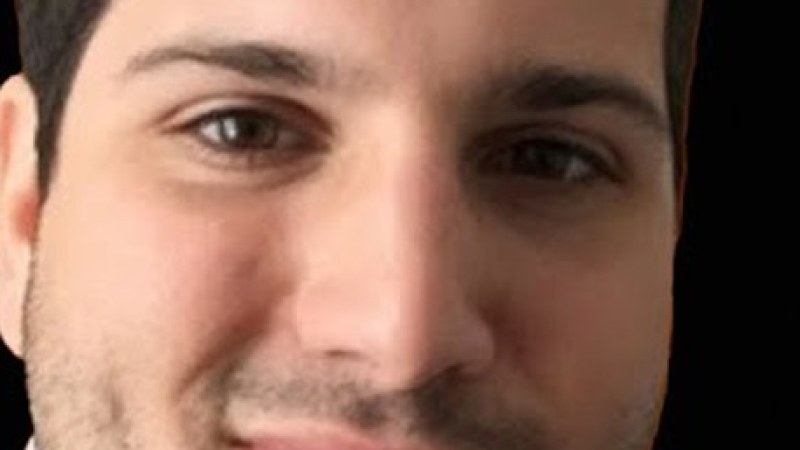
Luke Arrigoni
Luke Arrigoni is the founder and CEO of Loti, a Seattle startup that hunts the internet for deepfakes, impersonators, and unauthorized images of its users and gets them taken down - usually within 17 hours. A mathematics graduate turned data scientist, he spent over a decade running the AI consultancy Arricor for clients like Getty Images and AT&T before co-founding Loti in 2022 with his wife Rebekah Arrigoni. The company scans roughly 100 million images and videos a day, has captured a large share of the A-list celebrity market, raised a $16.2M Series A led by Khosla Ventures, and now offers free likeness protection to everyday people.

Mohit Garg
Mohit Garg is the co-founder and CEO of OLOID, a Sunnyvale-based company building passwordless authentication and identity tools for the 1.8 billion frontline and deskless workers who clock in on shared devices rather than personal laptops. A serial entrepreneur out of Silicon Valley, he earlier co-founded Mindtickle, the AI-driven sales-readiness platform that grew into a unicorn, and trained at the Stanford StartX accelerator on a computer-vision product for the enterprise. He was named to Thinkers50's Leaders50 list in 2024.

Incode
Incode is an AI-powered identity verification platform that lets businesses confirm who is really on the other side of a screen — in under two seconds. Founded in San Francisco in 2015, the company has built a modular biometric platform used by banks, hotels, hospitals, and gaming companies across more than 190 countries. Its flagship product, Incode Omni, handles everything from document verification and facial recognition to AML screening and liveness detection, processing more than 100 million user verifications per year. Backed by General Atlantic, SoftBank, J.P. Morgan, and Capital One Ventures at a $1.25 billion valuation, Incode has been named a Gartner Magic Quadrant Leader for Identity Verification two consecutive years running.
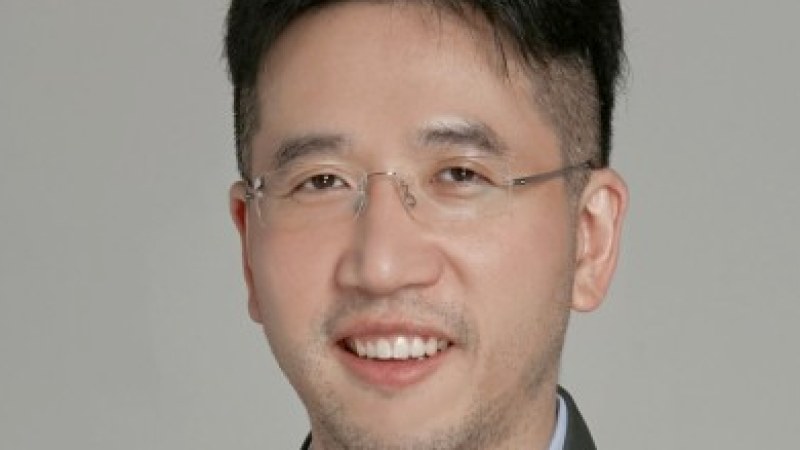
Junhwan Kim
Junhwan Kim is the CEO of STRADVISION, a South Korean AI perception company building the vision software that teaches cars to see. After selling his facial recognition startup Olaworks to Intel in 2012 - the first full acquisition of a Korean firm by Intel - he pivoted into automotive AI and helped build STRADVISION into a company with over 3 million cumulative production units deployed, $331M in total funding, and a pending KOSDAQ IPO. His flagship product, SVNet, runs on 50+ vehicle models across 13+ OEM partners and can identify pedestrians, lanes, traffic signs, and obstacles in real time on low-power edge chips.
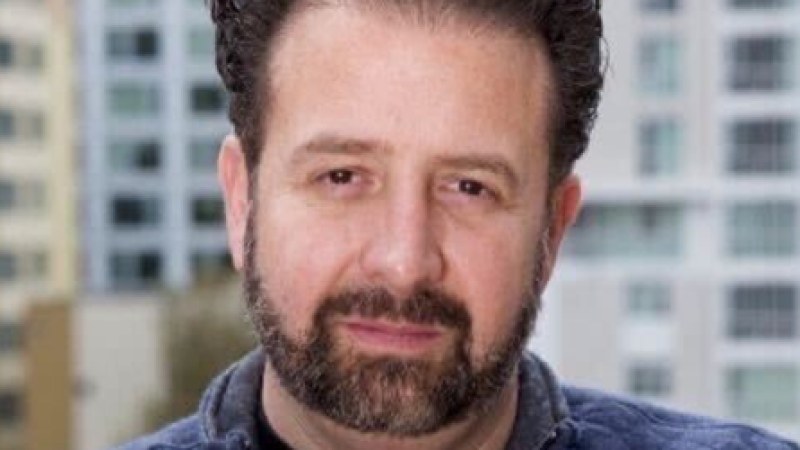
Ricardo Amper
Ricardo Amper is the Founder and CEO of Incode Technologies, a San Francisco-based AI-powered identity verification unicorn valued at $1.25 billion. A Mexican-born serial entrepreneur with two prior exits totaling ~$200 million, Amper built Incode from a near-failed social media startup into a global leader in biometric authentication and KYC/AML compliance — processing over 4 billion identity checks for clients including Citi, Nubank, Ford Credit, and government agencies. He is a World Economic Forum Technology Pioneer contributor, a champion of Gen Z hiring, and the driving force behind Incode's DeepSight deepfake-detection platform.

Coram AI
Coram AI is a Sunnyvale-based AI video security platform that transforms existing IP camera infrastructure into an intelligent security operation. Founded in 2022 by two PhD-holding ex-Lyft autonomous driving engineers, Coram replaces outdated, hardware-locked surveillance systems with a cloud-native platform featuring natural language video search, real-time AI threat detection, access control integration, and emergency management — all without requiring customers to rip out their existing cameras. The company serves industries from healthcare and education to manufacturing and warehousing, and in January 2025 raised a $13.8M Series A led by Battery Ventures.

Paravision
Paravision is a San Francisco-based Identity AI company building face recognition, liveness, deepfake detection, and age estimation tools used by governments, airports, banks, and stadiums worldwide. Rebranded from Ever AI in 2019 after topping NIST's facial recognition leaderboard, it sells ethically trained biometric SDKs to enterprises and Five Eyes partners.
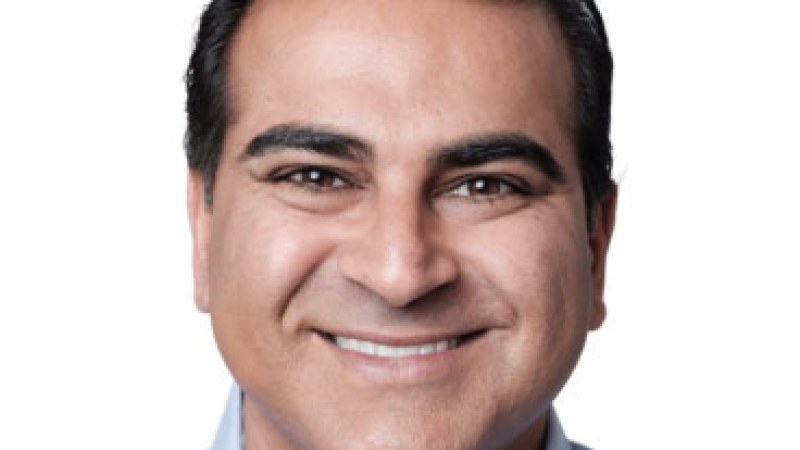
Ajay Amlani
Ajay Amlani is President and CEO of Aware, Inc., a Burlington, Massachusetts biometrics company. He co-founded the company that became CLEAR, founded YOU Technology (acquired by Kroger), helped launch the Defense Innovation Unit, served as a White House Fellow at the early Department of Homeland Security, and led the Americas for iProov before taking the top job at Aware in February 2025.
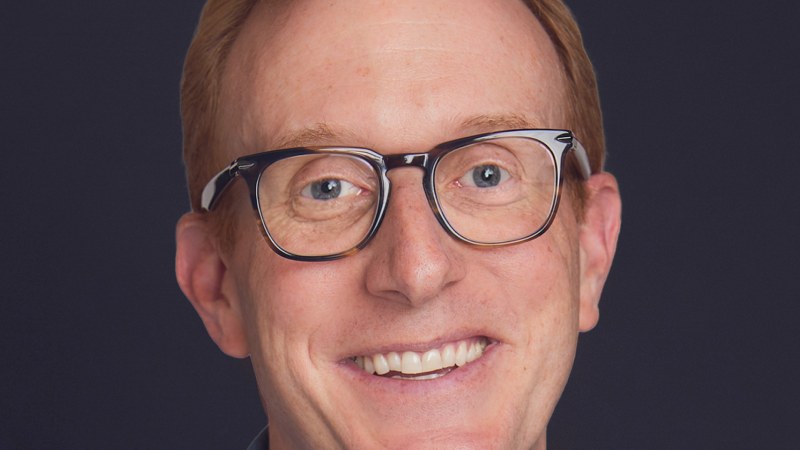
Doug Aley
Doug Aley is the CEO of Paravision, a San Francisco-based AI company building the world's most accurate facial recognition and identity AI technology. A Stanford and Harvard Business School alumnus, Aley co-founded his first company at 19, scaled Zulily from $100M to $700M in sales pre-IPO, and eventually landed at Paravision where he has guided the company to back-to-back #1 global rankings on NIST's Face Recognition Vendor Tests. Under his leadership, Paravision has raised $47M in funding, established itself as the only US company in the top 10 globally for facial recognition accuracy, and built a portfolio of AI tools spanning liveness detection, deepfake detection, and biometric authentication used in government, travel, border security, and enterprise applications worldwide.