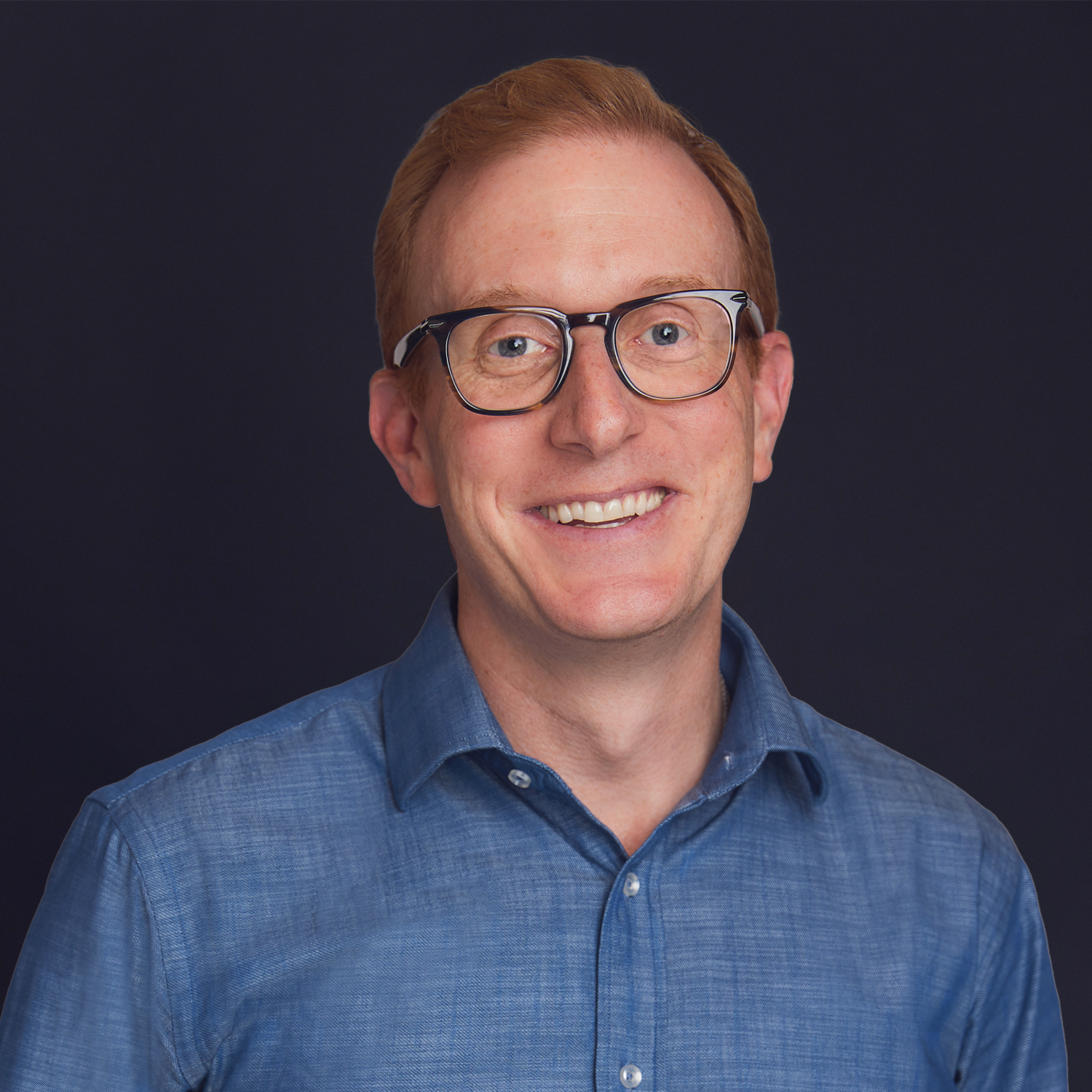
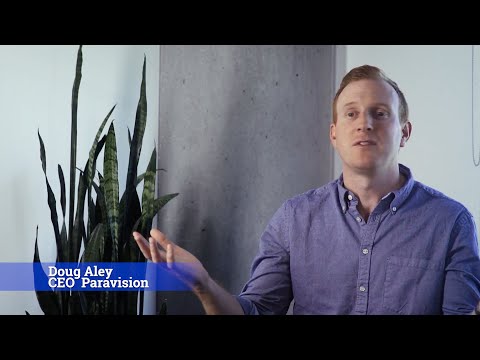
Doug Aley, CEO of Paravision
Identity AI // CEO

Doug
Aley

The Man Who Taught Machines to See Faces - And Said No to the Biggest Market

Building the infrastructure layer that secures borders, banks, and a billion biometric moments.

CEO @ Paravision Stanford + Harvard MBA San Francisco #1 NIST Global Ranking
BREAKING: Paravision maintains global #1 ranking on NIST face recognition leaderboard - only US company in top 10
#1 NIST Global Rank
$47M Total Raised
90% Error Rate Reduction
19 Age at First Founding
Profile

The Face at the Frontier

You are already inside his world. The passport gate that waved you through in two seconds - that was probably Paravision. The border agent who barely glanced at your face before nodding - same. Doug Aley runs the company that the government agencies and security firms call when they need the numbers to actually work.

Paravision holds the #1 global ranking on NIST's Face Recognition Vendor Test - the most rigorous independent benchmark in the industry. They're the only American company that has consistently cracked the global top 10. Their error rate for one-to-many face identification dropped by 90% in four years. These are not marketing figures. NIST tests everyone, publishes everything, and doesn't take calls from PR departments.

Aley came up through the long route. He co-founded his first company at 19 - a web accessibility firm called SSB BART Group (now Level Access) before ADA compliance was anything more than a nuisance footnote for most tech teams. Then came stints at Amazon, a string of startups, a run as VP of Product at Zulily during the years the company went from $100 million to $700 million in revenue ahead of its IPO, and a brief, high-profile turn as CEO of Shuddle - the "Uber for kids" - in 2015.

He arrived at the company that would become Paravision in 2016 as an operating partner at Atomic Ventures - the venture studio where the original entity was incubated. He took the CEO role in 2018. The company was still called Ever AI then, running a consumer photo app. The facial recognition models built in-house were almost incidentally good. Enterprises started asking to license them. The consumer app got shut down. The company pivoted, rebranded, and went after the global identity infrastructure market.

What followed was a methodical, measurable climb up the NIST leaderboard - not through PR, but through engineering. Paravision submitted to the vendor tests repeatedly, published results transparently, and built products that enterprise customers and government agencies could actually deploy. By 2022, they'd claimed the #1 spot on the 1:N identification test - the hardest challenge in the category, matching a face against a large database rather than just verifying a 1:1 match.

"We regularly turn down business when we are unconvinced of the responsible use of this technology. So while countries like China are leading the way in the implementation of face recognition, it is unlikely that we will ever operate there."

That quote gets cited a lot - because it's the kind of thing tech CEOs almost never say out loud, let alone mean. China is the biggest deployment market for face recognition technology in the world by orders of magnitude. Aley walked away from it. The company's ethics policy isn't a landing page - it's a deal filter that's cost them revenue.

The company's current trajectory runs right through the problems that matter most in 2025: liveness detection (is this a real face or a photo?), deepfake detection (is this face real or AI-generated?), and cross-domain identity convergence (can one biometric layer work across physical security, digital login, and government ID?). In March 2025, Paravision launched Liveness 2.0 with passive detection - no active challenge, no instruction to blink or turn. In June 2025, Deepfake Detection 2.0 arrived, targeting the wave of synthetic faces proliferating through identity fraud pipelines.

Aley's own description of his role at the early company: "I would say all of us early folks at Paravision kind of feel like founders, but not technically founders." That framing - the deliberate extension of founder identity to the full early team - says something about how he builds. Not by title, not by equity cap table, but by culture of ownership.

His LinkedIn bio lists his priorities as: "Husband, Father, CEO." In that order. He lives in Greenbrae, Marin County, with his wife Susan and their two sons. It's the kind of biographical detail that would read as a press-trained softening if it weren't for the consistent pattern across his career: he builds things that work, stays until the work is done, and moves with intention.
"Paravision got its start creating our own in-house computer vision models for another business we had. Our models were incredibly accurate and we received enough inquiries from other organizations that we ended up productizing them."
- Doug Aley, CEO of Paravision
Performance

The Leaderboard Doesn't Lie

NIST's Face Recognition Vendor Test is the gold standard in the industry - an independent, government-run benchmark that tests every major provider under identical conditions. Paravision has been in the top 6 globally for four consecutive product generations.

Their Visa/Border Test ranking came with an error rate 18% lower than the second-ranked vendor. That's not a rounding error - it's a meaningful gap that translates directly to fewer false matches at border crossings and identity verification checkpoints.

The progression is relentless: in 2019, they claimed the #1 spot on 1:1 verification after rebranding from Ever AI. By 2022, they'd taken the top position for 1:N identification - the harder test. In both categories, they've maintained elite performance through multiple submission cycles.

1:1 Verification Error Rate Reduction 80%
1:N Identification Error Rate Reduction 90%
Visa/Border: Accuracy Lead Over #2 18%
Consecutive Top-6 Product Generations 4
Career Arc

Built Different, Every Time

Doug Aley's career looks less like a ladder and more like a field map - he moves across domains with the consistency of someone who knows exactly what he's looking for: a hard problem, a nascent market, a team willing to build.

The SSB BART Group founding at 19 is the tell. Most 19-year-olds building software in the late '90s were chasing eyeballs and Y2K anxiety. He built a company around ADA compliance - a market defined by regulation, institutional buyers, and long sales cycles. Not glamorous. Also not going away. The company eventually became Level Access after a majority stake sale to JMI Equity.

Amazon followed - product management in digital video and sporting goods, two categories that required him to build fluency in both consumer behavior and category-specific operations. Then a VP role at Jott Networks. Then Off & Away, his own travel startup that auctioned hotel upgrades. Then the Zulily run, where he joined when the company was at $100M in sales and left when it was heading to IPO at $700M.

The Shuddle interlude - brought in to replace the founding CEO of an on-demand kids' transportation startup in 2015 - was brief, but illustrative. He was the operator called in when the founder couldn't scale the job. It's a specific kind of executive reputation: the person you call when the building needs a grown-up.

Paravision is the longest run. Six years as CEO. In a sector - biometric AI - where the technical complexity is real, the regulatory environment is shifting, and the ethical stakes are genuinely high. He's built not just a company but a position: the responsible choice in a category often associated with surveillance overreach.

Timeline

Key Milestones

~1997 - Age 19
Co-founded SSB BART Group (now Level Access) - web accessibility compliance, sold majority stake to JMI Equity
2005 - 2007
Product Manager at Amazon Digital Video, then Senior PM for Amazon Sporting Goods
2012 - 2013
VP of Product & Corporate Development at Zulily - scaled company from $100M to $700M in sales pre-IPO
2013 - 2014
VP Product & Corp Development at Room 77 (hotel booking technology)
2015 - 2016
CEO at Shuddle - on-demand transportation for kids and seniors (the "Uber for kids" startup)
2016
Joined Paravision (then Ever AI/Everalbum) as Operating Partner at Atomic Ventures and Chief Revenue Officer
2018
Appointed CEO of Paravision
2019
Led company to #1 global NIST FRVT 1:1 ranking following rebrand from Ever AI to Paravision
2021
Raised $23M Series B with HID Global strategic investment; FTC consent order settled; corporate rebrand complete
2022
Paravision ranked #1 globally on NIST FRVT 1:N (most accurate face recognition in the world)
2025
Launched Liveness 2.0 and Deepfake Detection 2.0; named Liveness Pioneer in market reports
"There is an increasing demand for face recognition from enterprises and governments worldwide to improve safety, security, and convenience - whether it be keeping borders safe, or facilitating frictionless, personalized, secure transactions. It is imperative that the performance of the technology should be independently verified."
- Doug Aley // CEO, Paravision
Products

The AI Layer Nobody Sees

👁

Liveness Detection

Liveness 2.0 (2025) uses passive detection - no "blink twice" prompts, no awkward challenges. The system determines whether the presented face is physically present or a spoof (photo, video replay, 3D mask) with near-invisible friction. A Liveness Pioneer designation in the 2025 market report.

🤖

Deepfake Detection 2.0

Built for 2025's threat landscape - synthetic faces generated by diffusion models, GAN outputs, and AI face-swap tools. Deepfake Detection 2.0 targets the identity fraud pipelines where fabricated faces are used to bypass onboarding and verification. Named Luminary in the 2025 Synthetic Identity Prism.

📶

Age Estimation

Passive age estimation from a face image - used in retail, gaming, and access control for age verification without requiring ID document submission. Deployed in contexts where friction is the enemy of compliance.

📋

Identity SDKs

Biometric SDKs for mobile, cloud, and edge. APIs for identity verification pipelines. Tools designed for enterprise developers who need to integrate world-class biometric performance without building the underlying AI. B2B, developer-first, performance-guaranteed.

Details

The Specifics

Fact 01

He co-founded his first company at 19 in the late 1990s - a web accessibility firm years before ADA compliance became a tech-industry flashpoint. SSB BART Group is now Level Access, one of the leading accessibility platforms in the market.

Fact 02

His LinkedIn headline is "Husband, Father, CEO at Paravision" - in that order. Small thing. Consistent thing.

Fact 03

Paravision's facial recognition models were originally built for an internal consumer photo app called Ever (Everalbum). The models turned out to be so accurate that enterprises started requesting to license them - which is how the company pivoted to its current identity AI focus.

Fact 04

The company explicitly does not operate in China - the largest facial recognition deployment market in the world - due to concerns about responsible use. This is a documented, stated business policy, not a hypothetical ethical stance.

Fact 05

He holds a BA from Stanford and an MBA from Harvard Business School - but describes his early Paravision colleagues as "feeling like founders" despite not having founder title or equity structure. The framing reveals something about how he thinks about organizational culture.

Fact 06

Before identity AI, he ran Off & Away - a startup that auctioned hotel room upgrades. Travelers bid on premium rooms at checkout. An early move into the premium travel market years before that segment exploded.

Fact 07

At Zulily, he was VP of Product and Corporate Development during the company's fastest growth phase - from $100M to $700M in annual sales, ahead of its 2013 IPO. A different category entirely from biometrics, but the same operational tempo.

Fact 08

Paravision's error rate for face identification has been cut 90% since its initial NIST submission. That is not a product iteration. That is a sustained engineering campaign sustained over multiple years with consistent public measurement.

Watch & Listen

Doug Aley on Camera

"I would say all of us early folks at Paravision kind of feel like founders, but not technically founders. That sense of ownership - we built that deliberately."
- Doug Aley, CEO of Paravision