Company File · Fintech · New York
Finhabits
The bilingual financial wellness platform built by Latinos, for Latinos - where small, stubborn habits turn into actual wealth.
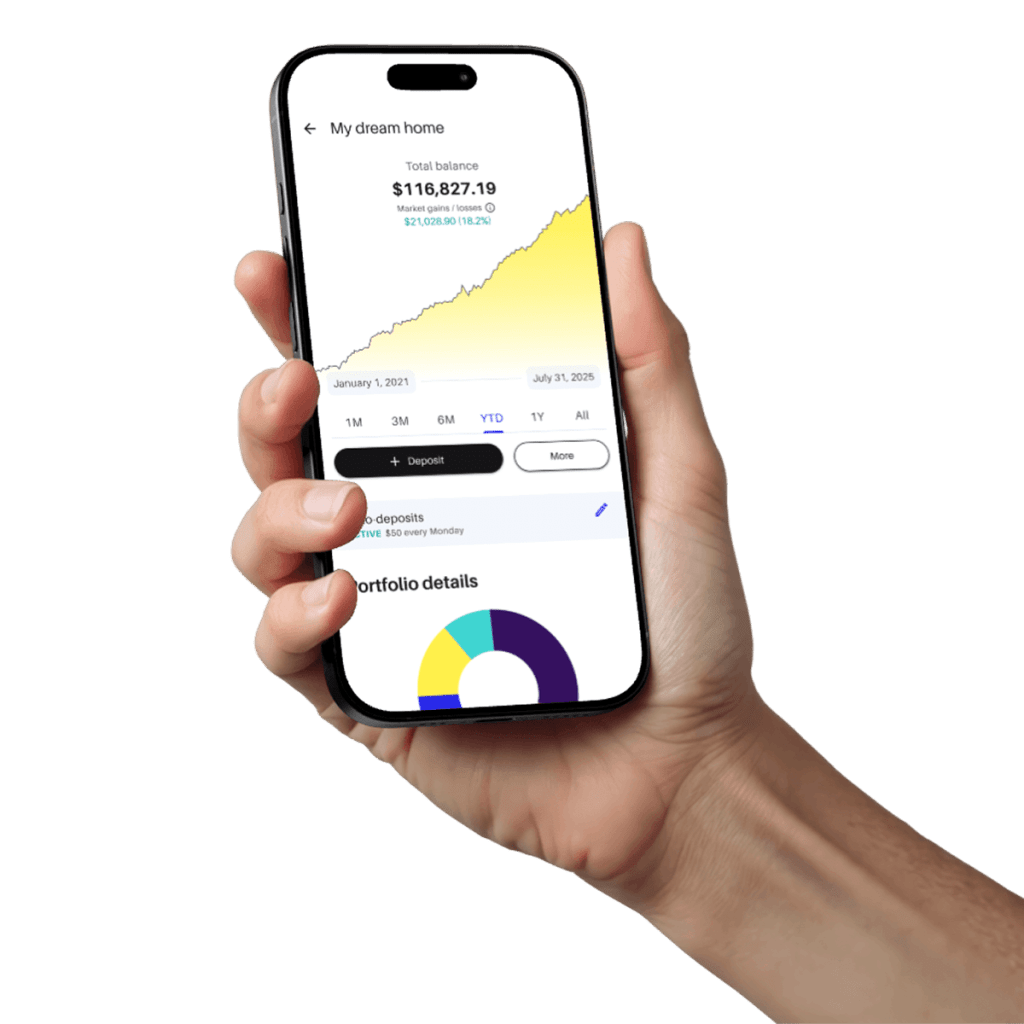
The bilingual financial wellness platform built by Latinos, for Latinos - where small, stubborn habits turn into actual wealth.
It's a Tuesday, and somewhere a 34-year-old line cook in El Paso opens an app on her phone. Forty dollars moves, quietly, from checking into a diversified portfolio of low-cost ETFs. No broker called. No jargon survived. The app speaks Spanish when she wants it to and English when she doesn't. This is Finhabits, and this small, unremarkable moment is the entire point.
Finhabits is a New York-based fintech and bilingual robo-advisor that has grown to more than 680,000 members. It is not trying to make day-traders out of anyone. It is trying to do something harder and far less glamorous: get people who have never invested a dollar to start - and to keep going.
“The bilingual financial wellness platform by Latinos for Latinos that helps you build, grow and protect your wealth.”
Finhabits, in its own wordsThe US Latino community represents trillions in spending power and a shockingly thin slice of invested wealth. The gap isn't about willingness. It's about access - and, more quietly, about language. For decades, the instructions for building wealth were written in a dialect of fine print that assumed you already had money, a financial advisor, and an MBA's tolerance for acronyms.
Most first-time investors don't get a warm welcome to the markets. They get a minimum balance requirement and a 40-page disclosure. Finhabits looked at that and decided the real product was not a portfolio. It was permission.
Investing shouldn't require a translator. For millions of households, it did.
The gap Finhabits set out to closeCarlos Armando Garcia grew up crossing between El Paso, Texas and Juarez, Mexico - studying on both sides, switching languages mid-sentence, belonging fully to neither and entirely to both. He left the border for MIT, earned a degree in electrical engineering and computer science, and went to work in finance: Merrill Lynch, then his own quant fund, Madison Quant Labs.
He had spent years building tools for people who already had wealth. The bet behind Finhabits, founded in 2015, was that the same machinery - diversification, automation, fiduciary advice - could be pointed at people the industry had ignored. Not dumbed down. Translated. In every sense of the word.
The hard part was never the math. It was making the math feel like it belonged to you.
On the Finhabits thesisGoldman Sachs noticed. Garcia was selected for its Launch With GS program and named one of the bank's 100 Most Intriguing Entrepreneurs - which is a generous way of saying the establishment was curious about the man trying to bring its tools to its blind spot.
Carlos Garcia starts building the first bilingual investment platform aimed squarely at US Latinos.
A bilingual digital investment advisor goes live, built around automatic deposits and low minimums.
A $6M round (part of roughly $14M raised) from backers including TTB Partners, Mentors Fund, Exor Ventures and WR Hambrecht + Co.
Fast Company recognizes Finhabits for design that makes investing approachable.
Finhabits launches Emma, an AI-powered bilingual financial planner available around the clock.
Open an account and you can start with $5. Finhabits builds you a diversified portfolio of ETFs - US stocks, international stocks, bonds, REITs - then quietly handles the parts people abandon investing over: automatic deposits, rebalancing, dividend reinvestment. You can hold a Roth IRA, a Traditional IRA, a rollover, or a regular brokerage account.
Wrapped around the accounts is the thing that actually makes habits stick: education. Bilingual blogs, livestreams, videos, podcasts, a retirement calculator, and the Latino Investment Report. In 2025 the company added Emma, an AI bilingual planner, and rolled out 401(k) plans aimed at Latino-owned small businesses. There's even auto and home insurance through its own insurance arm - because protecting wealth is part of building it.
You can start investing with five dollars. The radical part isn't the five dollars. It's that you actually start.
How Finhabits lowers the barAutomated, diversified ETF portfolios that rebalance themselves so you don't have to.
Roth, Traditional and rollover IRAs with a $5 minimum and tax-advantaged growth.
A 24/7 bilingual financial planner for first-time investors, launched in 2025.
Bilingual content, livestreams and the Latino Investment Report - 100K+ newsletter readers.
The skeptical reader's question is fair: does any of this move the needle, or is it a feel-good app with a Spanish toggle? The behavior of its members is the most honest answer. People in their 30s, mostly new to investing, putting in roughly $40 a week, week after week - that is not a marketing metric. That is compounding, the slow kind.
Then there's the validation from outside the community: a Fast Company Innovation by Design award, Goldman Sachs' attention, and roughly $14M in venture funding from investors like TTB Partners and Exor Ventures. The press - NBC News, Fast Company, El Paso Inc. - kept circling back to the same story: a financial product that people who don't trust financial products actually use.
Most clients are new investors in their 30s, saving for retirement using Roth IRAs and contributing an average of $40 a week.
Finhabits, on who shows upFinhabits is, at heart, an argument: that the wealth gap is not a character flaw but a design failure - and design failures can be fixed. The mission is to close that gap for the US Latino community by making investing, retirement, and financial literacy accessible in the languages people actually live in.
It would be easy to oversell this. The company hasn't single-handedly fixed inequality, and a $40 weekly deposit won't make anyone rich by Friday. But it does something the industry rarely managed: it shows up, in plain language, for the people who were told the markets weren't for them.
The wealth gap isn't a character flaw. It's a design failure. And design failures can be fixed.
The Finhabits worldviewReturn to the line cook in El Paso. A year from now her balance is larger, not because she got a raise or got lucky, but because forty dollars left every Tuesday and never came back. Multiply her by 680,000. Add an AI planner that answers in Spanish at 2 a.m. and 401(k)s reaching small businesses that pensions forgot. The picture stops looking like an app and starts looking like a generation rewriting what it expects from money.
Finhabits bet that wealth-building was never really about being rich enough to start. It was about being invited. That Tuesday deposit is the invitation, finally written in a language people speak.
Small habits. Real wealth. Two languages. One stubborn idea that the markets belong to everyone.
Finhabits, in one breath