robo-advisor
(17)
The 40-Year-Old Fintech Hiding Behind Your Credit Union App
Access Softek has spent nearly four decades building the digital front door for community financial institutions. Its unusual edge is not a flashy consumer brand, but a founder-owned platform designed to make a local credit union feel as capable as a national bank.
The Discount Broker That Became Wall Street's $13 Trillion Operating System
Charles Schwab spent half a century making investing cheaper. Now its harder trick is making a brokerage, bank, adviser, custodian and trading machine feel like one calm place to keep a financial life.
Vanguard
For fifty years, Vanguard turned a strange ownership structure and a suspicion of fees into an investing machine for ordinary savers. Its next act mixes index discipline with advice, AI tools and private markets - without losing the low-cost bargain that made it matter.

Abyan Capital
Abyan Capital is a Riyadh-based, app-first robo-advisory and savings platform that lets everyday Saudis open an investment account in about three minutes and put money into Sharia-compliant portfolios of sukuk, real estate, and local and international equities. Founded in 2021 and regulated by Saudi Arabia's Capital Market Authority, it was the Kingdom's first robo-advisor and has grown to more than 100,000 funded portfolios and over SAR 1.4 billion in deposits, backed by an $18M Series A led by STV.

Astor
Astor is an SEC-registered AI investment advisor built for retail investors. It connects to a user's existing brokerage accounts, reviews their holdings across performance, risk and diversification, monitors markets around the clock, and delivers tailored research and recommendations through a chat and voice interface. Founded in 2025 by ex-Nubank and ex-Stripe/Robinhood engineers, the company went through Y Combinator's Summer 2025 batch and raised a $5M seed led by Monashees.
Mahaana
Mahaana is Pakistan's first licensed digital wealth manager, a Y Combinator (W22) backed fintech that lets anyone start investing from PKR 1,000 in about ten minutes with no paperwork. Regulated by the SECP as a Non-Banking Financial Company, it offers Shariah-compliant savings, money-market funds, an index ETF and retirement plans through a mobile-first, robo-advisory platform aimed at onboarding Pakistan's largely unbanked, non-investing population.

Ellevest
Ellevest is a New York-based financial company built by and for women. Co-founded in 2014 by former Wall Street executive Sallie Krawcheck and Charlie Kroll, it launched a gender-aware digital investing platform in 2016 designed around the realities of women's financial lives - longer lifespans, earlier salary peaks and the persistent pay gap. After selling its automated-investing (robo) business to Betterment in 2025, Ellevest now focuses on wealth management and financial planning delivered by an all-women team of advisors for clients investing $500,000 or more.

Tickeron
Tickeron is an AI-driven financial marketplace that packages quantitative research into automated trading tools for retail and professional investors. Founded by PhD mathematicians, it builds pattern-recognition engines, trend-prediction models, and a growing fleet of AI trading robots powered by its proprietary Financial Learning Models (FLMs). The pitch: compress thousands of hours of investment research into minutes, and let non-experts trade on statistical probabilities instead of gut feel.

M1
M1 is a Chicago-based personal finance platform that bundles investing, borrowing, and spending into a single app it calls 'The Finance Super App.' Built around customizable 'Pies' that let people design a portfolio of stocks and ETFs and automate contributions and rebalancing, M1 aims to give self-directed investors the kind of automated, low-cost money management once reserved for the wealthy. Founded in 2016 by Brian Barnes, the company has raised more than $300 million and surpassed $10 billion in assets under management.

Brian Barnes
Brian Barnes is the founder and CEO of M1, a Chicago-based personal finance platform that blends investing, borrowing, and spending into one automated 'finance super app.' He started investing in the fifth grade with a real brokerage account opened by his parents, studied economics at Stanford, and launched M1 in 2016 after concluding that the tools for managing money had barely improved in two decades. M1 has raised more than $320 million, reached unicorn valuation, and grown to roughly a million members and billions in assets under management.
Margaret Hartigan
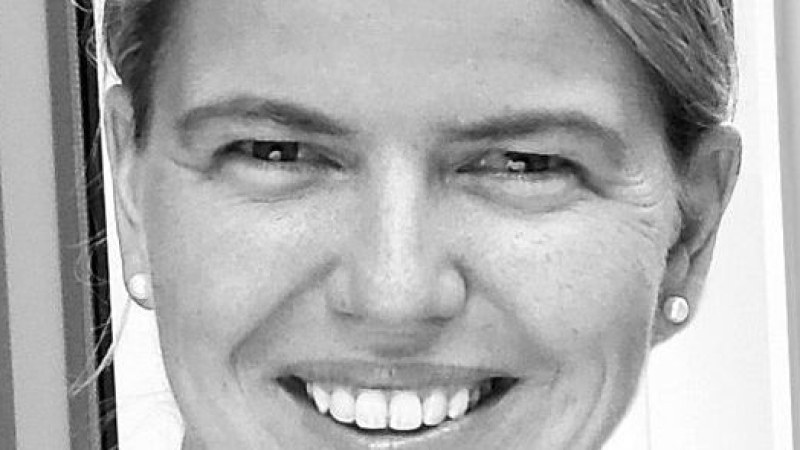
Margaret Hartigan is the founder and CEO of Marstone, a Providence-based digital wealth management platform that banks and financial institutions white-label to deliver investing and planning tools to clients of all means. A former top-quintile Merrill Lynch financial advisor, she launched Marstone in 2013 to demystify and humanize finance, raised a Series B in 2024, and was named Innovator of the Year at the 2025 US Fintech Awards.
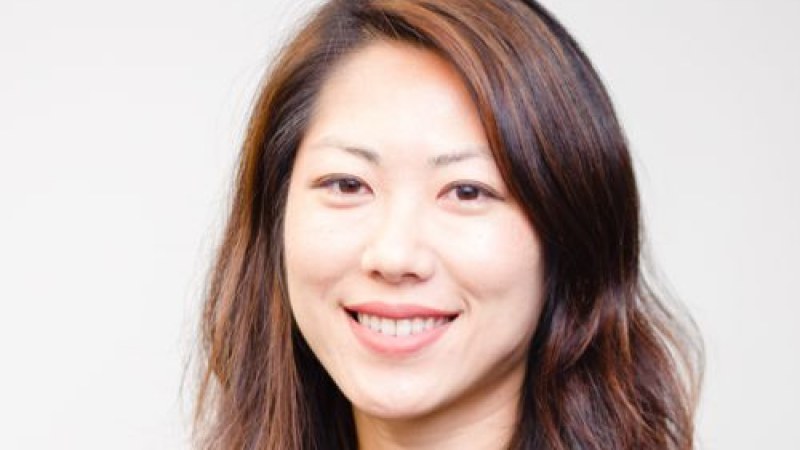
Qian Liu
Qian Liu is a fintech operator and data scientist who helped build the robo investing movement from the inside. A computer scientist by training - PhD in machine learning from Penn, BS from Tsinghua - she was an early member of the Wealthfront founding team and its Director of Research, then Head of Data at GoFundMe, then Chief Data Officer at Guideline, the small-business 401(k) platform. When Gusto acquired Guideline, she moved into a leadership role at Gusto, where the brokerage entity sits inside its HR, payroll and benefits platform serving small and medium businesses. In 2024 she co-authored 'The Little Book of Robo Investing' with Elizabeth MacBride, turning a decade of building automated investing products into a plain-spoken guide for ordinary savers.
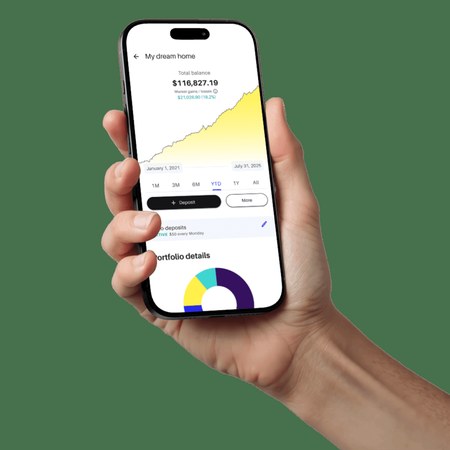
Finhabits
Finhabits is a bilingual financial wellness platform built by Latinos, for Latinos, that turns small, automatic deposits into diversified investment portfolios. Founded by MIT-trained engineer Carlos Garcia, the New York fintech pairs low-minimum Roth and Traditional IRAs with Spanish-and-English financial education to close the wealth gap for first-time investors, serving hundreds of thousands of members who often start with as little as a few dollars a week.
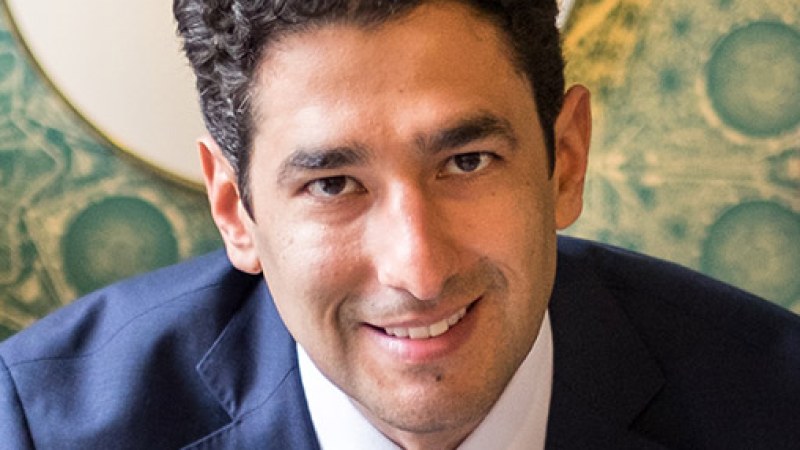
Carlos Garcia
Carlos Garcia is the founder and CEO of Finhabits, a bilingual money app built to close the wealth gap for U.S. Latinos. An MIT-trained engineer who spent nearly two decades on Wall Street, he turned the realization that he once had no idea what a 401(k) was into a platform that lets people start investing for as little as $5 a week. Finhabits has grown to more than 800,000 members and earned recognition from Goldman Sachs and Fast Company.

Tandems
Tandems is an AI-native wealth operating system for banks, RIAs, and insurance firms - the rebrand of robo-advisor pioneer SigFig. Its TandemsMeet, TandemsGrow, and TandemsInvest products automate the meeting prep, client outreach, onboarding, and portfolio work that consume roughly 90% of a financial advisor's day, with SOC 2 Type II controls and bank-level encryption baked in.
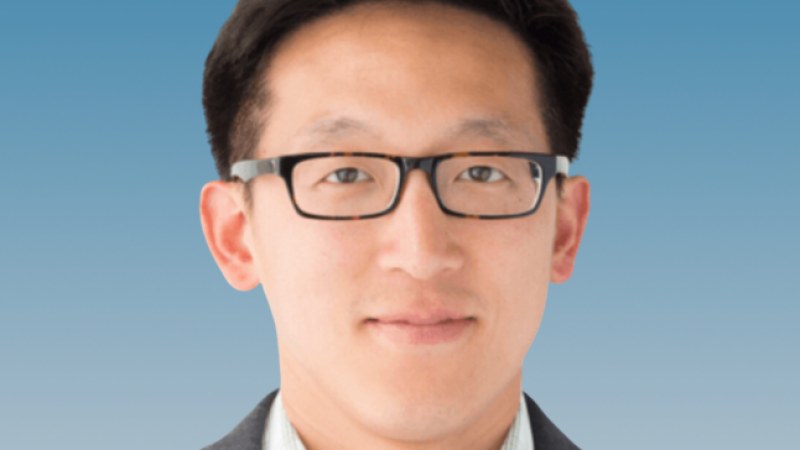
Mike Sha
Mike Sha is the CEO and co-founder of Tandems (formerly SigFig), a San Francisco-based fintech company that builds AI-native software for financial institutions. Starting as a contributor to Amazon Prime's invention and the Amazon Visa Card launch, Sha co-founded Wikinvest in 2006 with Parker Conrad, which evolved into SigFig and then Tandems - now powering over $60 billion in assets across 2 million client accounts at firms like Wells Fargo, UBS, Scotiabank, Citizens Financial, and New York Life.
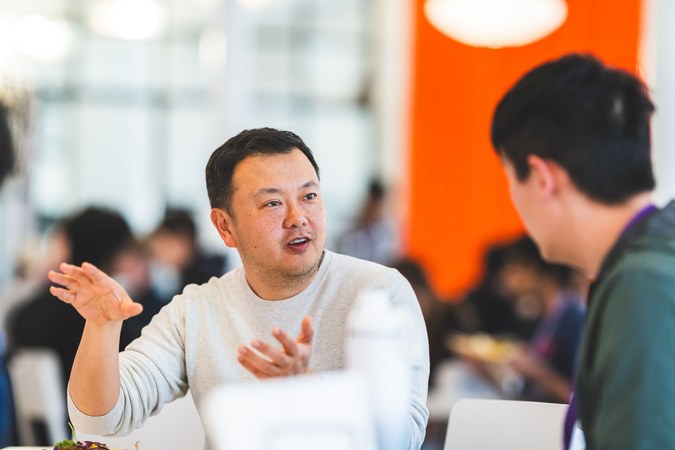
Jon Xu
Jon Xu is a General Partner at Y Combinator, the world's most influential startup accelerator, having joined full-time in May 2025 after serving as a Visiting Group Partner for the S24 batch. A YC alum himself, he co-founded FutureAdvisor (YC S10) - one of the first robo-advisors - which was acquired by BlackRock in 2015 for an estimated $150-200M. With an MIT Computer Science degree and stints at Microsoft, Canvas Ventures, and as an angel investor, Xu brings rare dual-sided credibility: he has both built a company through YC and now helps shape the next generation of founders from the partner seat.