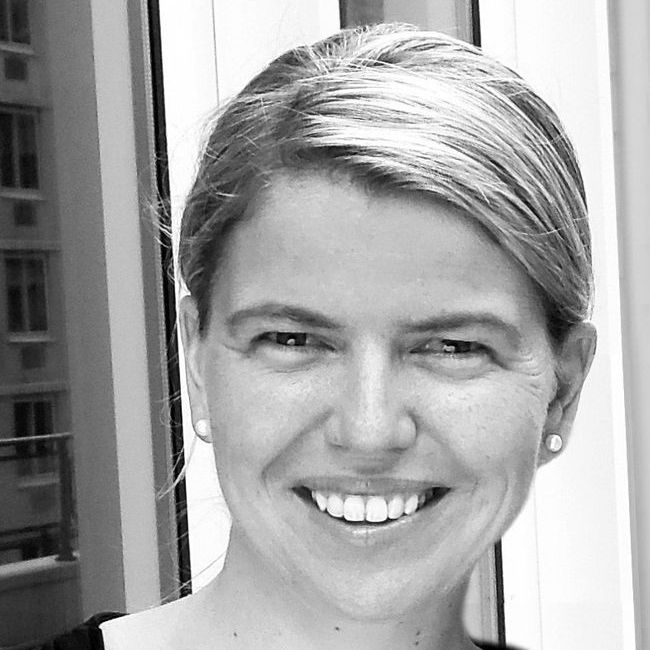
What she is building now
Walk into a community bank today and ask to start investing, and there is a decent chance the screen that greets you was built by Margaret Hartigan. Her company, Marstone, does not put its own name on the door. It hands banks and financial institutions a finished digital wealth management platform - portfolios, planning, onboarding, dashboards - and lets them paint their own logo on top.
The products carry plain names: Powered by Marstone and Marstone Maps. The promise underneath is harder to pull off. A community bank that has never offered investing can flip the platform on in roughly a month, and suddenly its customers can open an account, build a goal, and watch a portfolio without ever leaving the brand they already trust. Hartigan spent years forging custodian and technology integrations so the minimums could stay low enough that this works for someone with modest savings, not just the already-rich.
That is the part she keeps returning to. Marstone exists, in her telling, to demystify and humanize finance - to push world-class portfolios down the wealth curve and treat financial literacy as a feature, not a footnote. In January 2024 the company closed an $8 million Series B, part of a reported $43 million raised across its life. In 2025 the US Fintech Awards named her Innovator of the Year.
We joke that we are the ten year overnight story.- Margaret Hartigan, on Marstone's slow-burn arc
Three cracks in the system
Before any of this, there was a desk at Merrill Lynch. For roughly a decade-plus, Hartigan was a top-quintile financial advisor in the Global Wealth Management Group, splitting her career between New York and San Francisco. She was good at the job. She was also paying close attention to where it broke.
Then came 2008. From inside the wreckage she could see three faults running through the whole industry at once: retail clients had almost no real financial literacy or tools that spoke to them like humans; the systems advisors used to serve those clients were antiquated and slow; and a generation of advisors was aging out with no clean way to pass clients to the next one. Most people saw a crisis. She saw a product spec.
In 2013 she founded Marstone to answer all three at once - an enterprise-ready piece of fintech that institutions could integrate to reach, acquire, and keep the everyday clients the old model quietly priced out.
Literacy
Retail investors lacked tools that humanize finance. Marstone makes the education part of the interface.
Old plumbing
Advisor systems were antiquated and slow. Marstone gives institutions a modern, deployable stack.
New Hampshire, Prague, and a Velvet Revolution
The road in was not a straight line, which she will be the first to tell you - her motto is "Always forward, rarely straight." Hartigan grew up the eldest of five children in a divorced New Hampshire household, raised in good part by aunts, uncles, and grandparents. She calls it "a very GenX story." She skied. She played soccer. She did not, by any obvious sign, set out to run a fintech company.
She went to Phillips Exeter Academy, then Brown University, where she studied the humanities - not finance. Part of her degree happened in Prague, where she ran an independent study on Eastern Europe alongside an Economist correspondent covering the Velvet Revolution. It is a strange resume line for a wealthtech CEO, and it is also a tell: she reads the world through people and stories first, balance sheets second.
Always forward, rarely straight.- Her favorite motto
The reading list she credits says the rest. Barbara Corcoran's memoir and Yvon Chouinard's Let My People Go Surfing - both prized, she says, for their vulnerability and their refusal to separate values from business. She defines leadership in three words: being of service.
How the overnight took ten years
Top-quintile financial advisor at Merrill Lynch's Global Wealth Management Group, across New York and San Francisco.
The financial crisis exposes three industry gaps - literacy, old systems, advisor succession - that become Marstone's founding thesis.
Founds Marstone as an enterprise-ready platform to reach, acquire, and retain everyday clients.
Marstone closes an $8 million Series B financing round.
Named Innovator of the Year at the US Fintech Awards.
Diversity as a design choice
Hartigan does not treat who builds the product as separate from the product. More than half of Marstone's senior leadership is female and/or people of color, with women and people of color holding leadership posts throughout the company. She frames it plainly: a company built to humanize finance for everyone should be built by an equally diverse group of people.
She has kept something else intact through a decade of fundraising and partnership - an independent voice. In a market where many fintechs get absorbed into a single distribution channel, she points to Marstone's refusal to do so as the thing that keeps it unusual.
Marstone has consistently maintained an independent voice, making it unique in the fintech market.- Margaret Hartigan