enterprise-storage
(24)
The Company Behind the Invisible Show
At Las Vegas’s Sphere, the spectacle is all pixels. Behind it sits a more prosaic talent: moving vast amounts of data without making the audience wait. Hitachi Vantara has built a business around that invisible obligation.

Akinobu Shimada and the Quiet Machinery of Trust
He spent more than three decades learning what happens beneath the software. Now Hitachi Vantara's CEO is betting that the most important promise in artificial intelligence is not magic, but machinery people can trust.

Avery Pham and the Art of Making Hardware Disappear
The storage veteran built a career in the unglamorous space between an idea and its arrival. At VAST Data, that instinct turned hardware logistics into someone else's specialty - and made room for a much larger software ambition.

Douglas Gourlay and the Seventy-Percent Decision
The former infantry officer and networking inventor now runs a data company by one compact rule: prepare hard, decide before certainty arrives, and own what happens next.

Jon Toor Has Spent Four Decades Making Storage Sound Urgent
Before AI needed data lakes, Jon Toor was already translating hard drives, virtualized I/O and object storage into reasons to care. His career is a lesson in staying with one difficult industry long enough to watch its quiet machinery become the main event.
Scality Bet Against the Storage Tax - Now AI Is Making the Bet Look Timely
For 17 years, Scality has sold a stubborn idea: the valuable part of storage should be software, while the hardware underneath stays replaceable. Ransomware, sovereignty rules and GPU-hungry AI have made that once-technical argument a boardroom concern.
Cloudian Survived a Telco Crash. Now It Wants to Feed AI Without Shipping Your Data Away
Cloudian turned the wreckage of a mobile-messaging company into an enterprise storage business. Its newest wager is that the AI race will be won as much in the data room as in the GPU rack.
DataCore’s 28-Year Bet: Your Storage Hardware Isn’t the Product - Control Is
DataCore built a business by telling IT teams to keep the expensive storage they already own. Now, after acquisitions and a Kubernetes push, it is trying to make the same anti-lock-in argument from the data center to the edge.
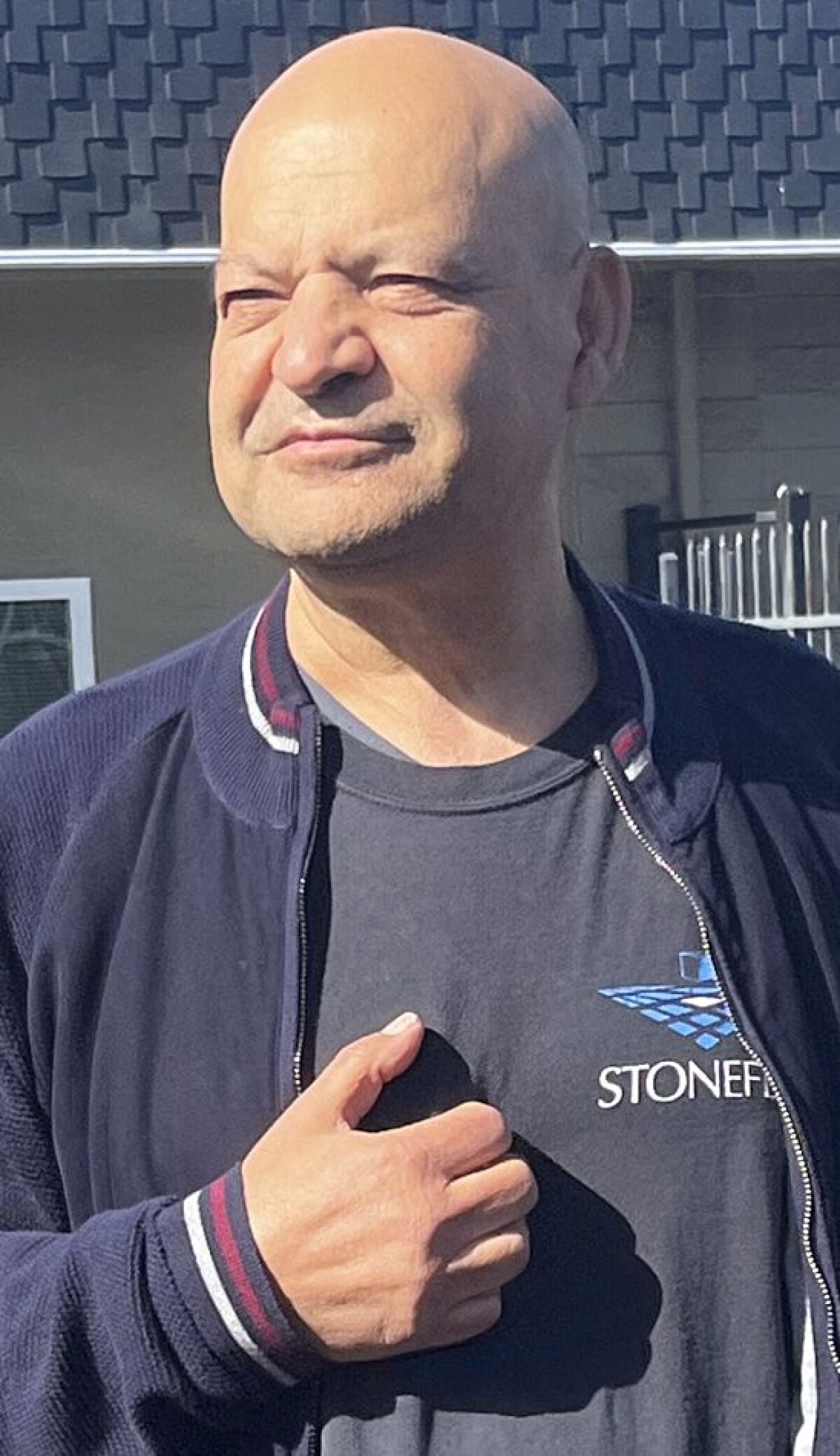
Mo Tahmasebi Built a Storage Career on the Things Nobody Notices - Until They Break
For four decades, Mo Tahmasebi has worked in the least glamorous corner of technology: keeping important data available, recoverable and out of trouble. His playbook is equal parts engineering, thrift and the confidence to close a deal before the coffee gets cold.

Karthik Ramamurthy Is Making the File System Interesting Again
After two decades spent deep in storage, product and transformation work, Panzura's CEO is betting that the least glamorous layer of enterprise technology may become AI's most important one.

Tim Klein Built a 38-Year Company in the Space Between the Machines
ATTO does not make the computer or the storage. Tim Klein built a durable business in the vital space between them - one careful connection at a time.
ATTO Built a 38-Year Business in the Unsexy Gap Between Your Computer and Your Data
The Buffalo-area company does not sell the server or the storage array. It sells the crucial middle - and has spent nearly four decades turning compatibility, predictable throughput and long support cycles into a durable niche.
Everpure Wants to Turn the Storage Room Into an AI Control Room
Pure Storage changed its name, but the more consequential move is underneath the sign: a flash-storage pioneer is trying to make the data layer itself searchable, governed and ready for AI.
Western Digital
The 55-year-old hard-drive maker bet its whole future on the spinning platter - right as the AI boom made cheap, bottomless storage the most valuable thing in the data center.
StorONE
StorONE is a New York-based enterprise storage software company founded in 2011 by Gal Naor and Raz Gordon. Its ONE Storage Platform separates storage services from hardware, delivering block, file and object storage from a single, hardware-agnostic engine. By rewriting the storage stack from scratch, StorONE combines high performance, real-time auto-tiering across flash and HDD, immutable-snapshot ransomware recovery and per-drive licensing to help enterprises cut storage costs while running on commodity servers.

Gal Naor
Gal Naor is the co-founder and CEO of StorONE, a New York based enterprise storage company built on the idea that software, not more hardware, is the real bottleneck in data storage. He first made his mark in 2004 as co-founder of Storwize, which pioneered real-time enterprise storage compression and was acquired by IBM in 2010 for $140 million. Naor spent roughly six years and dozens of patents building StorONE's unified S1 storage engine, which provisions block, file and object storage from the same commodity drives at a fraction of legacy cost. He is known for a contrarian, efficiency-first philosophy and for steering StorONE to cash-flow positivity with an eye toward an eventual IPO.
StoneFly, Inc.
StoneFly, Inc. is a Castro Valley, California enterprise storage company founded in 1996 that helped turn iSCSI into an industry standard - it registered iSCSI.com in March 1996 and shipped one of the first iSCSI storage appliances in 2002. Today it builds NAS, SAN, unified scale-out (USO), backup and disaster-recovery appliances, and cloud storage, all powered by its patented StoneFusion operating system and Air-Gapped Vault immutable, ransomware-resistant technology. A subsidiary of Dynamic Network Factory (DNF), StoneFly serves 10,000+ customers from SMBs to Fortune 500 and government - including deployments aboard US Navy Littoral Combat Ships and Virginia-class submarines.

NetApp
NetApp is a San Jose-based data infrastructure company that helps enterprises store, manage, protect and move their data across on-premises systems and every major public cloud. Founded in 1992 as Network Appliance, it built its business on the ONTAP data management operating system and today sells all-flash storage arrays, cloud storage services and software that increasingly targets AI and machine-learning workloads. A Fortune 500 company trading on the Nasdaq as NTAP, it reported record fiscal-2026 revenue of roughly $6.93 billion.

Nimbus Data
Nimbus Data is a privately held, largely self-funded American flash storage company founded in 2003 by Thomas Isakovich. It designs all-flash arrays and solid state drives - most famously the ExaDrive DC100, the 100-terabyte SSD it introduced in 2018 that remained the world's largest for years. Rather than chase venture money, the company built a profitable business selling high-capacity, power-efficient storage to enterprises, cloud providers, and AI and edge workloads, backed by its HALO/AFX software and a flat-rate support model.

Thomas Isakovich
Thomas Isakovich is the founder and CEO of Nimbus Data, the flash-storage company behind the ExaDrive DC100 - the 100-terabyte solid state drive that, years after its 2018 debut, still has no equal in capacity. He built and sold his first storage system as a teenager, launched TrueSAN Networks from his Stanford dorm room, watched it collapse in the dot-com bust at age 26, then started over with Nimbus Data and self-funded more than 90% of its growth into a profitable global business spanning 200 customers in 12 countries. He is a rare bird in Silicon Valley: a hardware founder who turned down the venture-capital playbook, kept the company his own, and went back to finish his Stanford degree purely because he missed thinking.

Panzura
Panzura is an enterprise hybrid cloud data management company whose flagship CloudFS turns object storage into a single, global file system - letting distributed teams edit the same files across continents as if they were sitting in the same office. Paired with its Symphony data services platform and the newer Nexus AI connector, Panzura consolidates sprawling unstructured data, defends it against ransomware with immutable storage, and is now positioning that data to feed enterprise AI tools like Microsoft 365 Copilot.
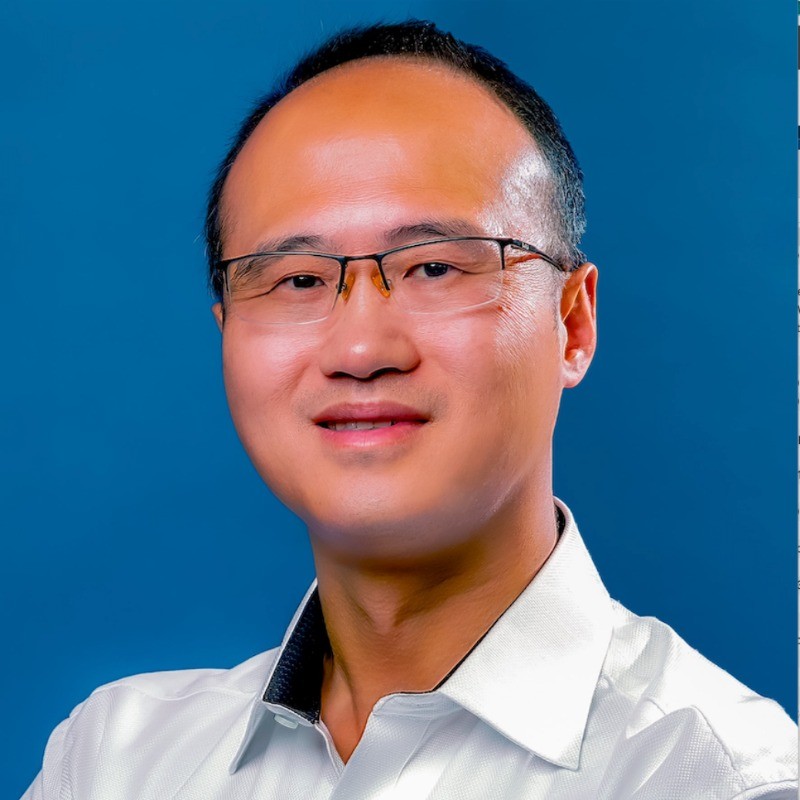
Hao Zhong
Hao Zhong is the CEO and Co-Founder of ScaleFlux, a San Jose-based fabless semiconductor company that builds computational storage drives and CXL memory solutions for cloud, AI, and data center workloads. With 20+ years in flash storage and LDPC technology — including stints at LSI, SandForce, and Fusion-io — Zhong co-founded ScaleFlux in 2014 to rethink what a storage device can do: compress data in hardware, cut write amplification, and deliver 4x effective capacity at roughly half the price of standard NVMe SSDs. ScaleFlux has raised $288M in funding and posted record-breaking growth in 2024.
ScaleFlux
ScaleFlux designs computational storage drives and CXL memory devices that push compute into the storage layer itself. Founded in 2014 by chip and flash veterans Hao Zhong, Tong Zhang and Yang Liu, the Milpitas company sells NVMe SSDs whose on-drive ASICs handle compression, encryption and data services that used to burn host CPU cycles - giving enterprises more usable capacity, longer flash endurance, and faster database and AI workloads.

Leander Yu
Leander Yu is the founder and CEO of Graid Technology Inc., a Sunnyvale-based startup that invented the world's first GPU-accelerated RAID solution for NVMe SSDs - SupremeRAID. With over 25 years in the storage industry and a prior successful exit (Bigtera to Silicon Motion in 2017), Yu built Graid in 2019 to solve a fundamental bottleneck: traditional RAID controllers can't keep up with modern NVMe speeds. By offloading RAID computation to a GPU, SupremeRAID delivers up to 28 million IOPS and 260GB/s throughput from a single card. The company raised a $30M Series B in March 2025 led by Foxconn and CTBC joint venture, and signed a landmark licensing deal with Intel for VROC technology in late 2025.