A storage system may be sold as software, but sooner or later it becomes a box on a pallet. The box needs drives. The drives need testing. Somebody must assemble the thing, finance it, put it on a truck and make certain it reaches a customer who would rather not know how many small catastrophes have been prevented along the way. Avery Pham has built a career in that stubborn interval between invention and arrival.
It is not the usual setting for a technology fable. There is no garage, no late-night flash of genius, no black turtleneck waiting in the wings. There are component lists, product-introduction schedules and a formidable quantity of cardboard. Yet this is where a company discovers whether its ideas can survive contact with commerce. Pham's route through the industry - manufacturing engineering, program management, supply-chain planning, product operations and eventually the business office - follows that test from one end to the other.
Today Pham is Chief Business Officer at VAST Data, the company that began by challenging the compromises of enterprise storage and now describes its product as an AI operating system. The title is broad. The continuity beneath it is precise: decide what the company itself must do, identify what another specialist can do better, and make the seam hold under pressure.
The education of an operator
Pham studied industrial engineering at the University of Illinois Chicago. It is an apt discipline for somebody whose later work would live between systems: materials and money, engineers and vendors, speed and repeatability. The public outline of the career is a tour through the physical foundations of modern computing. There were engineering and new-product roles associated with 3Com, Qualcomm and Kyocera Wireless, followed by supply-chain and operations work across Cisco, EMC and other hardware businesses.
Then came increasingly senior product-operations posts. At DataDirect Networks, Pham led new-product operations. At Pure Storage, Pham rose through operations leadership and served as vice president of product operations. Both companies lived in a market where the elegant abstraction presented to a customer rested on an exacting physical stack. A storage appliance has to behave like certainty even when its manufacture involves hundreds of opportunities for surprise.
By the time Pham joined VAST in 2018, the new company had a technical thesis and a commercial inconvenience. It wanted to make flash storage simple, fast and economical at enormous scale. Customers, however, did not purchase a thesis. They purchased working systems.
The box that ate the startup
In its early commercial life, VAST bought off-the-shelf hardware, installed its software, integrated complete systems and sent them to customers. Every step was legitimate. Together they formed a hungry side business. Hardware tied up cash. Multiple vendors introduced handoffs, delays and errors. Integration absorbed time that engineers and product teams could have spent on the company's intellectual property.
This is the sort of problem that flatters nobody. A founder can unveil an architecture; a customer can admire its speed. In between sits a purchase order with the social gifts of a parking ticket. Pham's contribution is most visible in the way VAST framed the choice. The company did not need to become less serious about hardware. It needed to stop confusing control with ownership.
“It was a leap of faith. We were placing bets on ourselves, and bets on Avnet - we've won on both those bets.”Avery Pham
VAST chose Avnet, a century-old technology distributor and systems integrator, to handle the machinery around its appliances. Avnet expanded its San Jose integration facility, created dedicated configurations using Dell hardware, managed validation and systems integration, and connected finished products to a network of resellers. VAST's engineers and product teams remained close enough to the facility to meet regularly. Distance from the chores did not mean distance from the product.
Pham said VAST needed “nimbleness and flexibility,” paired with a partner that had mature structures, processes and experience. It is an operator's compact manifesto. Agility alone is improvisation. Process alone is ceremony. The useful company borrows discipline without surrendering speed.
There was also a clock. Pham spoke of a limited period in which VAST could gain market share. The best product would mean little if the young company could not deliver it quickly. Outsourcing integration therefore was not housekeeping. It was a decision about where invention stopped, where partnership began and how cash should move through the business.
Relationships are part of the machine
Pham later joined a public conversation about long-term relationships in technology distribution. That subject can sound gentle beside throughput charts and flash architecture, but the operating model depended on it. The partner held consequential work: proof-of-concept systems, configurations, finance, transport and hundreds of reseller relationships. A weak relationship would simply move the risk to a place with less visibility.
The arrangement also exposed a useful paradox. VAST became more purely a software company by paying closer attention to the ecosystem around its hardware. Its software demanded leading-edge components, Pham said, so the hardware had to complement it. The company did not escape physical reality. It designed a better interface with it.
That is the less celebrated form of business architecture. It has no single unveiling. Its success is measured by absences: the delayed shipment that never delays, the working capital that is not trapped, the engineer who does not spend Tuesday untangling a vendor handoff. Operators are often judged by how little drama remains after they have done their work. It is a profession with a curious reward system: excellence erases its own evidence.
The operator's achievement is not making the physical world vanish. It is arranging the work so everyone else can concentrate.The quiet logic of scale
From operations to the business
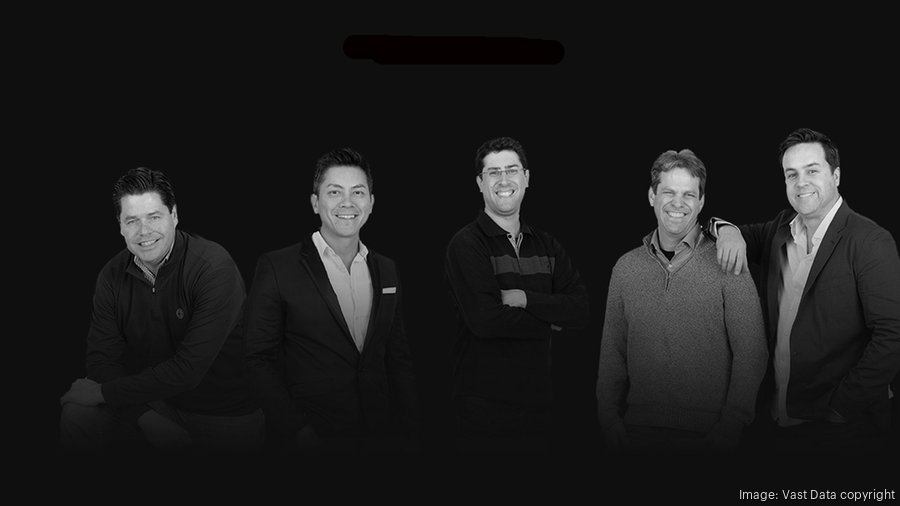
Pham's titles at VAST trace a widening radius. In 2020, company materials placed Pham in a five-person management group as vice president of operations. Later listings used vice president of strategic operations. By 2026, Pham was identified as Chief Business Officer. Public biographies provide little theater around the transitions, which seems almost appropriate. The work widened before the title did.
Meanwhile, VAST itself kept changing scale. The company was valued at $1.2 billion after its 2020 financing. In April 2026 it closed a Series F transaction of approximately $1 billion in primary and secondary capital at a $30 billion valuation. VAST reported more than $4 billion in cumulative bookings and over $500 million in committed annual recurring revenue at the end of the prior fiscal year.
Those are company figures, not a personal scorecard, and they should not be mistaken for one. They do, however, describe the environment in which Pham's operating questions became business questions. When a company expands from a storage product into a platform for data, databases, compute and AI agents, every partnership boundary becomes strategic. What should be built? What should be bought? What must remain tightly integrated? Which dependency is a risk, and which is leverage?
The hardware comes back into view
In August 2025, Pham appeared in a collaboration around Silicon Motion's MonTitan SSD technology and VAST's Ceres V2 architecture. The demonstration paired high-capacity and high-performance solid-state drives with a disaggregated storage design for demanding AI workloads. Pham's description linked powerful SSD technology with the ability to scale AI infrastructure “more efficiently and intelligently.”
The remark completes a neat circle. VAST had moved the mechanics of hardware integration out of its center, yet hardware remained central to what its software could accomplish. The distinction is subtle and important. Specialization is not indifference. A restaurant may not grow its own wheat, but it ought to care very much about flour.
AI has only made the physical stakes larger. Models require GPUs; GPUs wait on data; data systems depend on density, power, networking and storage media. The language of intelligence can become ethereal, but the infrastructure is stubbornly material. Pham's career is useful precisely because it refuses the fantasy that code floats free of factories and freight.
It also resists another common fantasy: that scale is simply growth with more zeroes. Scale changes the kind of organization required. Informal coordination becomes a process. A supplier becomes an ecosystem. A product decision changes cash flow. The executive who began near manufacturing ends up in the business office because the distance between those rooms was never as great as it appeared.
What remains when the friction is gone
Pham is not a prolific public autobiographer. The available record is professional and exact, more concerned with partnerships and architecture than with personal mythology. Even the most revealing anecdote is a business decision: two companies placing bets on one another. Yet it says something about the temperament the work demands. Delegation at this scale is neither retreat nor blind faith. It is judgment, documented in contracts and tested in delivery.
The resulting portrait is of an executive shaped by the places where systems meet. Engineering meets manufacturing. A startup meets a hundred-year-old distributor. Software meets silicon. Ambition meets the loading dock.
There will always be a box on a pallet. Someone will have to notice it. Pham's art has been to notice the box early, understand everything it implies, and then build a company in which fewer people have to think about it at all.