A visitor to Sphere in Las Vegas can spend an evening staring at a screen so large that ordinary measures lose their meaning. Inside, the LED display covers 160,000 square feet; the outside adds a programmable 580,000 square feet. The visitor sees a spectacle. The people running it have another question: will the next piece of high resolution content arrive on time? Hitachi Vantara’s software helps process and stream that content. It is a rather public demonstration of a business usually judged by what nobody notices.
The short version
- Hitachi Vantara sells enterprise storage, data management and hybrid cloud infrastructure to organizations whose data cannot casually disappear.
- It began in 2017 as a combination of Hitachi’s storage, analytics and IoT businesses; a later reorganization put data infrastructure back at the center.
- Its current pitch joins several storage types in VSP One and offers pay per use operations through EverFlex.
- The practical test is simple: can customers find, protect and use their data with fewer tools and less waiting?
A merger with three accents
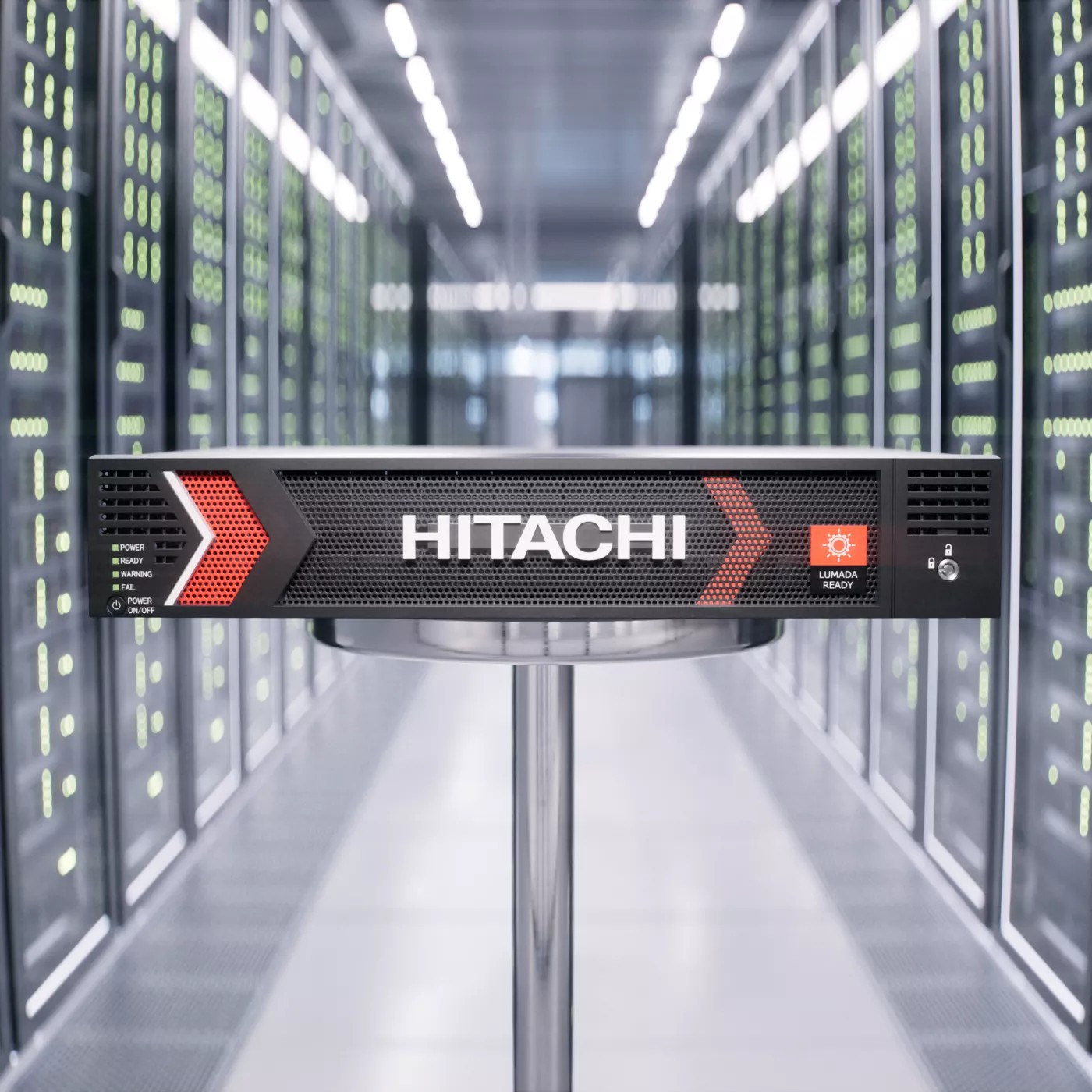
The company was created in September 2017 by bringing together Hitachi Data Systems, the old enterprise storage specialist; Pentaho, known for data integration and analytics; and Hitachi Insight Group, the home of industrial IoT work. There was a plausible thesis in the combination. Data could be collected from machines, joined and analyzed, then stored and served by one corporate family. It also made for a very broad story to tell a customer.
By 2023, Hitachi had changed the emphasis. Its Digital Solutions services operation became the separate Hitachi Digital Services, while Vantara concentrated on designing and delivering data infrastructure. The shift did not erase the value of analytics or industrial expertise. It clarified which problem Vantara would own: the durable, manageable foundation beneath them. In 2024, Hitachi also integrated its IT platform product division with Vantara, bringing more research, engineering, manufacturing and sales activity into the same operation.
That history makes the company unusual among storage rivals. It is a relatively young name resting on decades of Hitachi hardware experience, a software inheritance from Pentaho, and a parent whose industrial businesses meet data outside the data center. Yet the most useful way to understand Vantara today is narrower: it is an enterprise infrastructure vendor with a particular interest in keeping many kinds of data available across on premises systems and clouds.
Four kinds of storage, one argument
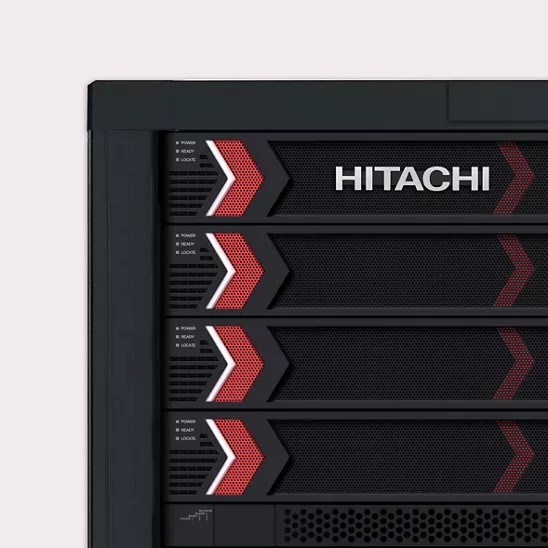
Virtual Storage Platform One, or VSP One, is the centerpiece. Hitachi says it brings block, file, object and mainframe storage into one platform with a shared data and control plane. Those categories sound like an IT inventory, but each serves a different habit of work. Databases need block storage. Teams share files. Archives and cloud applications often use objects. Mainframes still run critical records. A large company may need all four, and each one can accumulate its own tools, staff rituals and failure modes.
The payoff depends on the existing estate: fewer separate consoles matter most when a customer really has several storage worlds to run.
Hitachi also sells Hitachi Content Platform for object storage and content management, VSP One SDS Cloud for software defined cloud storage, and VSP 360 for management. Hitachi iQ packages AI ready infrastructure with compute partners. EverFlex puts storage and other infrastructure into a consumption contract, with self managed and managed options. VSP One SDS Cloud can be bought through pay as you go cloud licensing or by bringing a license bought from Hitachi. For the broader enterprise portfolio, public list prices are not the story; contracts, capacity, performance and service levels determine the bill.
A guarantee deserves more attention than a slogan. VSP One advertises a 100% data availability guarantee, while EverFlex can turn availability into a contractual service level agreement with specified remedies. The exact terms matter. An IT buyer can copy the discipline even without buying the product: ask which workloads are covered, how availability is measured, what recovery requires and what happens if a promise is missed. A confident percentage is only useful when the fine print survives contact with a bad Tuesday.
The best case studies are about waiting
At Rabobank, compliance investigations once sent IT staff looking through communications from multiple sources and countries. The bank built a central “ingest and search” platform on Hitachi Content Platform, with an immutable, auditable collection of records and a web interface for approved users. Rabobank says discovery searches fell from weeks to hours. The gain was not simply faster retrieval. Compliance staff could search from their desks, while IT spent less time acting as a manual courier for evidence.
“The HCP solution has transformed the way we handle compliance investigations, and cut the time needed for discovery searches from weeks to hours.”Colin Chatelier, Rabobank
BMW Group illustrates the other end of the problem. Its Hitachi case study describes 18 data center locations, thousands of virtual servers and roughly 60 petabytes of data. A change in storage there touches a sprawling operational system, not a tidy application demo. BMW uses Hitachi VSP systems with EverFlex Managed Services as it pursues a cloud style operating model for storage. The point is not that every business needs 60 petabytes; it is that the work becomes expensive and risky when an organization can no longer treat availability as someone else’s problem.
Sphere, meanwhile, gives the same principle theatrical scale. Its audience is not shopping for storage. Its producers need large video files processed and served reliably to displays inside and outside the venue. That is the revealing thing about an infrastructure supplier: the customer’s business may be banking, cars or entertainment, while the supplier keeps encountering the same problems of movement, access and resilience.
Where the pitch meets the market
The alternatives are serious: Dell Technologies, HPE, NetApp, Pure Storage, IBM and hyperscale cloud services all compete for pieces of the enterprise data estate. Hitachi Vantara’s argument rests on consolidation across storage types, long experience with critical workloads, service commitments and the option to consume infrastructure rather than buy every unit up front. Its alliances with Cisco, VMware and NVIDIA, plus a 2025 collaboration with Supermicro, fill in compute, virtualization and AI pieces around the storage base.
That argument will appeal most to a company with mixed workloads, existing on premises systems, strict audit demands or a reason to keep certain data close. It will be less compelling for a small team already comfortable with one cloud provider and a simple managed storage service. A unified platform only simplifies life if the customer actually has complexity to unify, and consumption pricing only helps if the meter and service terms suit the workload.
AI has put a fresh spotlight on this old work. A model needs data that can be located, governed, moved and fed to compute systems. Hitachi’s iQ portfolio and its NVIDIA and Supermicro work address that demand, but the storage question remains stubbornly ordinary: is the right data available, at a manageable cost, when the job begins? The company’s September 2026 commitment to reach net zero across its value chain by fiscal 2040 adds another constraint. Its validated targets include emissions per usable petabyte sold, a reminder that more data has a physical bill in power and cooling.
Vantara’s story, then, is not a tale of making infrastructure glamorous. It is a case for making it legible. Begin with the actual bottleneck - a delayed compliance search, a hard to manage estate, a video feed that cannot stutter. Count the tools and handoffs involved. Decide what must be guaranteed and what can be paid for as used. Then make the vendors prove the operational change, not merely the speed of a box. The audience at Sphere may never know the name Hitachi Vantara. If the system does its work, they have no reason to.
Keep reading
The company’s own product pages, customer accounts and channels give a closer view of the systems and the claims behind them.