The least glamorous machine in an enterprise is often the one everyone calls after the glamorous machines have failed. It holds the MRI scans, payroll archives, television footage, email attachments, AI training sets and backup copies. Scality has spent nearly two decades making that machine less like a machine. Its software turns fleets of ordinary servers and different storage media into one resilient pool, addressable through familiar file protocols and Amazon's widely adopted S3 interface.
That is the practical answer to what Scality does. The strategic answer is more interesting: it sells companies a way to own the control plane without marrying a proprietary storage box or sending every byte to a hyperscaler. Hardware can be bought from partners such as HPE, Supermicro and Lenovo. Backup software can come from Veeam, Commvault, Rubrik or Cohesity. Scality sits underneath, deciding where data lives, how it survives a failure and how an application retrieves it.
The original bet
Make the hardware boring
Scality began in San Francisco and Paris in 2009, led by co-founders Jérôme Lecat and Giorgio Regni with an early engineering team. RING reached general release the next year. Instead of scaling through a larger proprietary appliance, customers could add standard servers and let distributed software spread data and work across them. In 2012, Scality patented what it calls MultiScale Architecture - capacity, performance, namespace and geography can grow independently rather than as one expensive lump.
The company says its first exabyte deployment arrived in 2014. By then, the wager was no longer theoretical. Telecom operators needed to hold enormous mail and media estates. Broadcasters had libraries that kept growing. Banks and governments wanted data in specific jurisdictions. A global resale agreement with HPE gave Scality something a storage start-up badly needed: servers, support and a channel that cautious infrastructure buyers already knew.
“We absorb the hard problems at the source.”Scality's description of its engineering job
The company is private and, by its own account, profitable and independent. Public funding records are untidy, but disclosed rounds include $7 million in 2011, $22 million in 2013, $45 million in 2015 and $60 million in 2018. HPE also made a strategic investment reported at $10 million in 2016, while a 2023 corporate minority round was reported at $25 million. Scality does not publish a valuation or list prices.
That missing price tag matters. This is enterprise infrastructure sold by quote, licensed with support and often bundled with servers or partner services. ARTESCA offers consumption-based options; the new ADI product advertises outcome-based pricing around availability, throughput, protection and service guarantees. The relevant cost is therefore not a clean cents-per-gigabyte sticker. It includes hardware, software, support, power and operators - then subtracts public-cloud egress, repeated migrations and the labor spent tending storage silos.
Three products, three jobs
A ring, a vault and an AI traffic cop
RING remains the large-estate product: distributed file and object storage from petabytes toward exabytes. It fits service providers, national archives, research centers and enterprises that need many applications or sites to share a durable pool. ARTESCA, launched in 2021, makes a narrower promise. It is S3 storage built first for backup, available as software, an appliance or an integrated Veeam package, and it scales from roughly 20 terabytes into petabytes.
ARTESCA's sales language is security-forward, but the useful mechanics are specific: object locking and retention policies, encrypted connections, AES-256 encryption at rest, distributed erasure coding and multi-site deployment. Scality groups those controls into a five-level framework called CORE5. In 2026, it added a $100,000 cyber guarantee for eligible customers if an external attack destroys or encrypts properly stored immutable data. A guarantee is not a recovery plan, and the terms matter, but putting money behind the claim is sharper than another padlock icon.
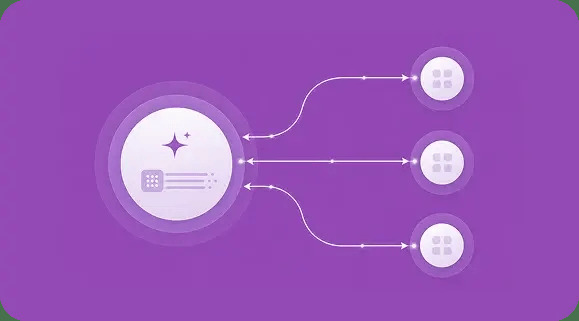
ADI, released in May 2026, is the wider swing. AI pipelines do not keep every byte hot. Training sets, retrieval indexes, video, model artifacts and inference caches have different needs. ADI places media classes under one namespace and policy layer, adds S3 over RDMA and GPU-oriented access, and exposes power telemetry. Its Guardian agent recommends expansion, healing, rebalancing and upgrades, while humans approve decisions. The idea is autonomy with an audit trail, not a robot left alone in the server room.
One namespace, different economics
Where proof beat promises
First, break the backup
The clearest explanation of Scality is a failed backup at ALPMA, a German maker of dairy-processing equipment. Its old tape system needed 36 hours for a full run. If anything failed, the whole job began again. The system was complex enough that one specialist became a bottleneck. What changed the company's mind was not a keynote. An HPE consultant recommended ARTESCA, then ALPMA ran a two-month proof of concept on a 225-terabyte server.
The full backup fell to four hours, an 89 percent reduction. More important, ALPMA now runs monthly recovery drills: delete files, restore them and verify that immutable copies cannot be altered. That routine is the most copyable idea in this story. Buyers can specify a representative dataset, inject disk and node failures, time a full restore, test credentials and object-lock policies, and make a second operator perform the work. A demo that never breaks is theater.
“Every month, we test our recovery by simulating data loss.”Andreas Preissinger, IT security architect at ALPMA
Other customers supply the less tidy before picture. Ventnor City, New Jersey, discovered that its previous system had silently missed five months of data while its renewal price more than doubled. With one IT administrator and hurricane outages that can last weeks, local immutable backup mattered more than fashionable cloud purity. Its reported restore time fell from as long as five days to minutes or hours.
Australian service provider Somerville had a different breaking point: growth created storage silos, slower customer onboarding and anxiety about recovery. It deployed RING with Veeam across three sites on HPE servers. The company reports roughly 30 percent lower total cost of ownership. When a hacker locked 19 customer servers, immutable copies helped the team restore them during one weekend. Centric, meanwhile, replaced a platform plagued by drive failures and overtime; it reports zero service downtime and a 25 percent backup cost reduction passed to customers.
The competitive map
The rival is often a default setting
Scality competes with Cloudian, MinIO, NetApp StorageGRID, Dell ObjectScale, IBM, Pure Storage and self-built Ceph, with Qumulo nearby in file-heavy work. But the bigger opponent is habit: click Amazon S3, Azure Blob or Google Cloud Storage and postpone the architecture discussion. That default is rational for many teams. Public cloud removes procurement and physical operations, scales instantly and gives developers a familiar API.
Scality becomes interesting when the postponed bill arrives. At petabyte scale, egress and long retention can distort economics. Regulated data may need to stay inside a country or facility. A service provider may want its own margin and brand. A hospital or government agency may prefer local recovery during a network outage. An AI operator may have already bought expensive GPUs and need to keep them fed without placing the entire corpus on premium flash.
It fits when
Data is measured in hundreds of terabytes or petabytes; sovereignty and recovery are hard requirements; the team can operate infrastructure; hardware choice and predictable long-term economics matter.
It does not fit when
The dataset is modest; nobody wants to run storage; one cloud already meets cost and compliance needs; the workload needs a fully managed service more than infrastructure control.
There are tradeoffs. Software-defined does not mean hardware-free. Someone still sizes networks, replaces drives, tests upgrades and owns the failure domain. Integrations reduce friction but also create a dependency graph across backup vendor, server vendor, Scality and the operator. A smaller team may save more money by paying a cloud provider precisely because the apparent storage premium includes outsourced operations.
What to steal
Sell the failure drill, not the feature list
Scality's reusable playbook has five moves. Keep the core technical thesis stable. Use partners for hardware, distribution and adjacent applications. Package a broad platform into a simpler product around an urgent job. Let customers prove recovery before the contract. And translate engineering claims into a clock: four hours instead of 36, minutes instead of days, one weekend instead of an unrecoverable loss.
Company founded across San Francisco and Paris; RING ships.
MultiScale is patented; Scality reports its first exabyte deployment.
ARTESCA packages S3 storage around the backup problem.
CORE5 turns resilience into a five-layer product framework.
ADI extends the architecture toward mixed-media AI data estates.
The condition behind every move is scale. Scality's approach works when a customer has enough data, risk or regulatory pressure to justify owning more of the stack. It weakens when convenience dominates and infrastructure is a distraction. The company has never made storage disappear. Its more credible achievement is making the unpleasant parts - failed disks, locked servers, cold archives and expensive bytes - visible early enough to design around them.