The strange thing about Sanmina is how often you have probably encountered its work without encountering its name. A hospital technician studies an image from a scanner. A network operator watches traffic cross a router. A pilot trusts a box bolted inside an aircraft. A cloud engineer brings a dense rack of compute online. The logo on the outside usually belongs to Sanmina's customer. The difficult work between prototype and dependable machine may belong to Sanmina.
That is the job: take complex electronics and electromechanical systems from design and new-product introduction through components, assembly, testing, fulfillment, repair and retirement. Sanmina serves original equipment manufacturers in industrial, medical, defense and aerospace, automotive, communications and cloud infrastructure. It manufactures advanced circuit boards, backplanes and flex circuits; machines precise metal; integrates optical and radio-frequency components; assembles entire systems; then manages the unphotogenic business of getting them delivered and fixed.
This is contract manufacturing, but the word “contract” makes it sound like rented hands. Sanmina's wager is that difficult hardware needs an operating partner. A regulated medical device has traceability requirements. A defense system must survive hostile conditions. A fiber network card needs signal integrity and repeatable testing. An AI rack adds prodigious power, heat and liquid cooling. The further a product sits from a cheerful plastic widget, the more valuable the accumulated process knowledge becomes.
The product is a shorter distance between idea and repetition
A prototype answers one question: can this thing work? Manufacturing answers a more irritating set. Can it work every time? Can parts be sourced at the right grade and price? Can a test catch the quiet failures? Can the design be assembled without relying on one heroic technician? Can production move closer to the buyer when tariffs, subsidies or shipping routes change?
Sanmina tries to own enough of that sequence that information does not evaporate at every handoff. Its Integrated Manufacturing Solutions business - the assembly, integration and services engine - generated about 80 percent of fiscal 2025 revenue. The rest came from a collection called Components, Products and Services, including circuit boards, mechanical systems, defense technology and storage products. The split matters. Assembly brings scale; proprietary process depth and component capability make the relationship harder to swap out.
The commercial arrangement is less cozy than the word partnership suggests. Sanmina typically signs major OEM supply agreements for three to five years, then receives purchase orders against customer forecasts. Those agreements commonly let customers reschedule or cancel and do not promise a minimum quantity. Customers are generally responsible for approved materials bought on their behalf, but recovering every dollar is not automatic. Some contracts also contain cost-reduction targets. Sanmina therefore makes money by keeping factories utilized, buying and moving materials well, improving yields, and attaching higher-value engineering or component work to the assembly. A brilliant factory with an empty schedule is still an expensive room.
Then the AI racks arrived
In May 2025, Sanmina agreed to buy the manufacturing business of ZT Systems from AMD. The price was $2.55 billion in cash and equity, plus as much as $450 million tied to performance - up to $3 billion. The deal closed in October, earlier than first expected. Sanmina gained large plants in New Jersey and Texas, an operation in the Netherlands, advanced liquid-cooling capability and teams accustomed to building data-center systems for hyperscalers.
The purchase also came with a strategic relationship: Sanmina became a preferred U.S.-based new-product-introduction manufacturing partner for AMD's cloud rack and cluster-scale AI systems. AMD retained ZT's system-design business. Sanmina bought the industrial machine that turns those designs into deployed hardware.
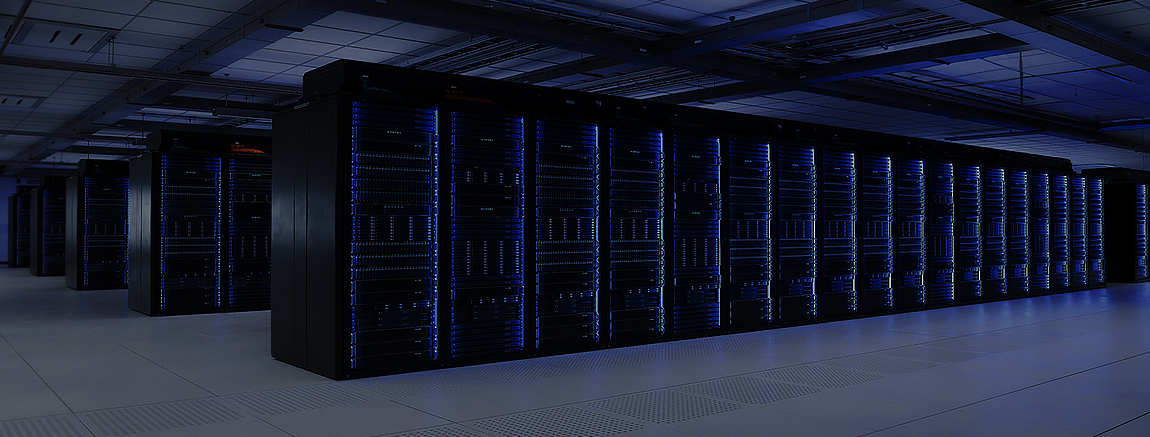
Why change altitude now? Because the AI infrastructure problem is spreading outward from the chip. Accelerators require boards, power distribution, networking, cooling, racks, validation and installation. The system becomes the product. Sanmina already knew advanced circuit boards, precision mechanical work, optics and global supply chains. ZT supplied the missing experience at rack scale and a path into hyperscaler programs.
Sanmina's real product is not a rack or a circuit board. It is fewer expensive surprises between the drawing and the loading dock.
The early numbers show the scale change, not yet the final verdict. Sanmina reported $3.46 billion of revenue for the quarter ended June 27, 2026, versus $8.13 billion for the whole of fiscal 2025 before ZT was fully inside the company. In July it raised its fiscal 2026 revenue outlook to between $14.0 billion and $14.3 billion. Revenue is the obvious line. Integration, margins, program ramps and cash conversion will tell the more interesting story.
What failed first - and what changed the answer
In hardware, failure often begins before a line stops. It starts when a forecast changes after components have been ordered, when a design is elegant but miserable to assemble, or when a test fixture catches defects too late. Sanmina's own filing is blunt: customers can cancel, reduce or push out orders; major supply agreements usually do not guarantee a minimum quantity. If forecasts fall, inventory rises and working capital gets trapped. The top ten customers represented 52 percent of fiscal 2025 sales, with one accounting for 10.1 percent. The factory can be excellent and still wait for an order that moved.
That reality explains much of the model. Design-for-manufacturing work shifts mistakes left. Component capability provides more control over cost and lead time. Regional plants let a program move near its end market. Repair services keep Sanmina involved after shipment. Vertical integration does not abolish demand risk, but it gives the company more places to find savings and more reasons for a customer to stay.
The expensive caveat
“End to end” is only an advantage when the links share data and accountability. Otherwise it is a long vendor list wearing one badge. ZT integration must prove that added scale improves launch speed, quality or economics rather than merely adding debt and organizational distance.
A smaller example shows the model working under a deadline. Nokia chose Sanmina to manufacture fiber-broadband electronics and optical modules in Wisconsin for U.S. infrastructure projects subject to Buy America requirements. By April 2024, compliant optical line terminal cards were rolling off the line. The products were not new inventions. The achievement was translating a policy constraint into sourcing, process, documentation and output quickly enough for customers to order.
The part a hardware founder can actually copy
Nobody reading this needs to buy a factory in Texas. The portable idea is to treat production risk as product work. Bring manufacturing engineers into the design before the drawing freezes. Define the test strategy while failures are still cheap. Give one owner responsibility for the transitions among design, sourcing, assembly and repair. Choose where the first run happens based on learning speed, then choose volume geography based on total landed cost and resilience.
Write a production pre-mortem: unavailable part, low first-pass yield, late certification, bad forecast, field return. Assign a measurable countermeasure before tooling.
Vertical integration adds fixed cost and coordination. Earn the right to add each layer by proving it removes a failure, shortens a cycle or improves economics.
Make material liability, rescheduling, forecast windows, test ownership and engineering changes explicit. A long agreement without volume commitments is not certainty.
Feed test escapes and field repairs back to design. The boring database of defects is often more valuable than the heroic late-night save.
The model will not work everywhere. A simple, low-volume product with stable local suppliers and little regulation may be cheaper and faster with a small specialist. A young company whose design changes weekly can drown in the procedures of a global manufacturer. And if demand is too uncertain to support tooling or committed material, integration merely concentrates the bill. Complexity has to be real, volume has to be plausible, and someone has to value traceability enough to pay for it.
Sanmina fits in the market between the OEM that wants to own its intellectual property and the messy physical reality required to ship it. It competes with Jabil, Flex, Foxconn, Celestica, Benchmark and Plexus, with focused regional manufacturers, and with customers doing the work themselves. Its differentiation is most credible where the product is high-mix, regulated, technically fussy or expensive to fail.
That is also the test for the $3 billion bet. If AI infrastructure becomes standardized commodity assembly, the advantage narrows and price pressure follows. If racks keep becoming denser, hotter, more customized and more urgent, the acquired factories and liquid-cooling experience become strategic. Sanmina has chosen the second future. Now it has to manufacture the proof.