A contract manufacturer lives in the least glamorous, most consequential gap in hardware: the distance between a beautiful prototype and a million identical objects that survive freight, fingers, heat and deadlines. Hi-P International has occupied that gap since 1980. It began in Singapore as Hi-P Tool & Die, making insert-molding and metal-forming tools. Today it can help design a device, fabricate its molds, inject its plastic, stamp and finish its metal, populate its circuit boards, assemble the pieces, test the result, package it and manage parts of the supply chain.
That is a long list because the list is the point. Hi-P does not have a famous consumer product of its own. Its product is the removal of handoffs. A brand that would otherwise coordinate an industrial designer, tool shop, molding vendor, metal specialist, electronics assembler, test lab and logistics partner can buy a larger portion of that chain from one network. The promised payoff is shorter development time, fewer tolerance disputes and one escalation path when the new enclosure warps at production speed.
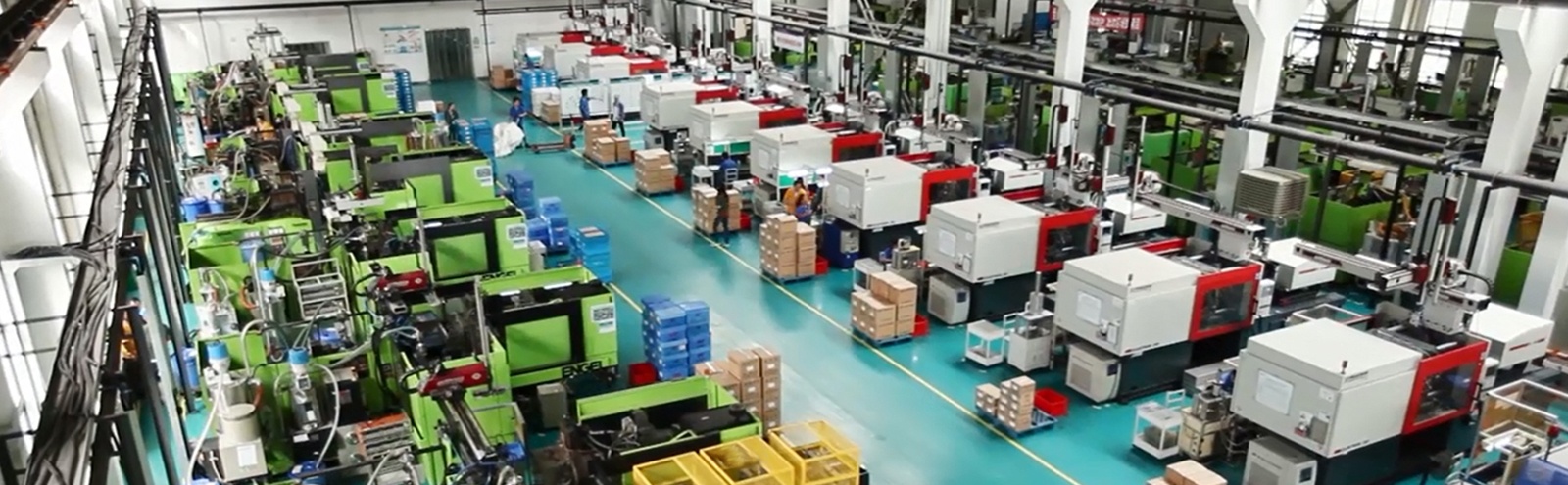
The factory behind the logo
Hi-P sells to companies, not shoppers. In a 2024 announcement it named Amazon, Colgate-Palmolive, Dyson, Keurig Dr Pepper, Logitech, Meta, Motorola Solutions, Procter & Gamble and Seagate among its customers. That roster looks scattered until you notice the common problem: each company needs physical products or components made repeatedly, at commercial cost, with cosmetic and functional standards intact.
The company organizes that work across mobile devices, consumer and lifestyle products, computing, industrial equipment, automotive and medical devices. Its mechanical catalog includes multi-shot and insert molding, precision stamping, CNC machining, laser welding and surface decoration. Its electronics operations cover surface-mount assembly, module and finished-product assembly, software loading, calibration, radio-frequency testing, Wi-Fi and Bluetooth testing, audio checks and reliability work. A Singapore design center adds hardware, mechanical, software-integration, simulation and prototyping skills.
One roof, fewer relay races
- Design and feasibility
- Tooling and prototype
- Plastic, metal and PCB
- Assembly and validation
- Pack, ship and support
Vertical integration is the distinction, but it is not magic. Owning more processes can improve feedback: the mold engineer can flag a wall thickness before the tool is cut; the assembly team can spot a fastening decision that will slow the line; the test group can design validation before production ramps. It can also load a manufacturer with expensive machines and people that need programs to stay utilized. Hi-P competes with giant electronics manufacturers such as Foxconn, Flex, Jabil, Pegatron and BYD Electronic, along with specialist shops that may be sharper in one narrow process. Its pitch works best when a product genuinely benefits from coordinated mechanical and electronic work.
Hi-P’s quiet product is time-to-market without tolerance roulette.
The S$100 million lesson
In 2015, the integrated model met its ugliest failure mode. Hi-P had agreed to co-design and manufacture a dual-screen smartphone for Russia’s Yota Devices. The program advanced far enough to create serious exposure before Yota failed to take delivery. Hi-P later said it had not done enough due diligence on the customer. Inventory and other write-downs helped produce the company’s first annual loss since its 2003 listing. The damage was roughly S$100 million. Hi-P pursued a US$126 million claim; the dispute ended in 2017 with a US$17 million out-of-court settlement.
What failed first was not plastic, electronics or assembly. It was judgment before production. A factory can measure a component to microns and still misread whether the buyer will be able or willing to collect the finished goods. The line may run perfectly while the commercial logic underneath it cracks.
The failure changed Yao Hsiao Tung’s succession plans and Hi-P’s operating model. Yao, who had been looking for a successor, returned to troubleshooting. The company reorganized into four business units, diversified its customer base, strengthened internal controls and added systems intended to limit exposure. The lesson was less “never take a big swing” than “do not let enthusiasm outrun counterparty diligence, exposure limits and delivery safeguards.”
That is the part a smaller hardware company can steal. Before committing non-cancellable material or dedicating a line, score the customer as rigorously as the product. Break risk into gates: prototype acceptance, tooling payment, component purchase, pilot sign-off and volume release. Give one program owner visibility from engineering change to receivable. Cap the cash and inventory any single unproven customer can consume. None of those moves looks visionary. That is why they are useful.
Where a hardware program hides risk
Private, then partnered
Hi-P’s next structural decision looked like a retreat from outside scrutiny. In 2020, a vehicle controlled by Yao offered S$2 a share for the stock he did not own. The deal valued Hi-P at S$1.6 billion, about US$1.2 billion. The company delisted from the Singapore Exchange in April 2021. The stated rationale was management flexibility and more freedom in allocating capital; Yao also argued that Hi-P no longer needed public markets to fund itself.
Three years later, outside capital returned with a different job description. Temasek-backed 65 Equity Partners invested S$100 million through Singapore’s Local Enterprise Fund. Hi-P said the two would develop a new strategic focus, address leadership succession, strengthen the board and work toward the possibility of another public listing. The investor appointed technology veteran Lim Chin Hu to the board.
This was not necessarily a change of mind about control. Going private removed quarterly market pressure at one stage; bringing in a minority partner added capital, network and governance for another. The common objective was optionality. Between the two moves, Hi-P said revenue grew from S$1.6 billion in 2021 to a projected figure above S$2 billion in 2024. It also added manufacturing in the Philippines, Malaysia, Vietnam and India to an existing footprint that included Singapore, China and Thailand.
The company went private to gain flexibility. It took new money to make succession less private.
What customers actually buy
The obvious answer is production capacity. The better answer is synchronized decisions. A young device company can use Hi-P to turn a concept into prototypes, refine design-for-manufacture, establish test procedures and ramp. A mature brand can relocate a component, consolidate suppliers, reduce cost or add geographic redundancy. An industrial customer with low volumes and complicated electro-mechanical assemblies can access processes that would be uneconomic to own. Medical-device customers can use sites with ISO 13485 quality systems, while automotive programs can draw on relevant automotive quality controls.
The business model mixes engineering and production economics. Tooling and development create early program revenue; component manufacturing, assembly and test earn money as volumes rise; sourcing and logistics deepen the relationship. More work under one roof can increase Hi-P’s share of a product’s manufacturing value. It can also make switching harder once tools, procedures and quality data are embedded. The customer gets coordination. Hi-P gets a longer, broader program.
The playbook worth copying
- Add the adjacent capability that removes the most expensive customer handoff.
- Separate customer enthusiasm from credit, delivery and concentration limits.
- Use stage gates before tooling, materials, pilot production and full ramp.
- Put commercial, engineering and quality signals in one program review.
- Diversify geography only when demand can support the duplicate capability.
Where the model breaks
Hi-P is not the automatic answer for every hardware project. A startup without stable specifications, credible financing or a realistic volume path may be too early for an integrated manufacturer. A simple commodity part may be cheaper from a specialist. A product requiring a process outside Hi-P’s strongest capabilities may deserve a dedicated supplier. Vertical integration can become overhead when demand is erratic, and a broad factory network does not eliminate geopolitical, tariff, labor or logistics risk.
The copyable controls also have conditions. Stage gates do not work if sales teams can waive them casually. Customer diversification does not help when several buyers depend on the same end market. Multi-country capacity is not resilience if tooling, critical materials or engineering knowledge remain concentrated in one place. And tighter exposure limits may reject a program that later becomes enormous. Risk control trades some upside for survival; it does not provide foresight.
Hi-P’s culture is built around results, ownership, discipline and follow-through, with parallel technical and management career tracks described in recruiting materials. That operational temperament fits a business where tiny misses become large scrap piles. Yet the company’s most revealing episode remains a miss that no measuring machine could catch. The failed phone program taught a precision manufacturer to measure the customer.
Now the larger experiment is succession. Yao moved from investor to operator in 1983 and is still executive chairman decades later. He has said he wants Hi-P to last a century, not be sold. The 65 Equity Partners deal makes that ambition a governance project rather than a founder’s wish. Machines can be duplicated. Processes can be documented. The final test is whether judgment can be transferred.