Most technology companies would kill for the numbers Reagan Wireless Corp. posts every month. Roughly 150,000 smartphones, tablets, and smartwatches flow through a single warehouse in Deerfield Beach, Florida - sorted, wiped, tested, graded, boxed, and shipped, often the same day. That is close to 1.8 million devices a year. And almost nobody has heard of it, which is exactly how the company likes it.
Reagan Wireless is a wholesale distributor and reverse-logistics operator. In plain terms, it is one of the invisible middlemen of the phone economy: the business that stands between your carrier trade-in and the next person who ends up using that device. It buys used and new inventory in bulk from carrier trade-in programs, major retailers, and manufacturers, then resells it - graded and guaranteed - to resellers, retailers, and other businesses around the world.
What makes it worth writing about is not the volume. It is the posture. The company says it does zero advertising, zero PR, and zero public events. It has no outside investors and, by its own account, no debt. It has been owned by the same person, lawyer-turned-founder Daniel Kaufman, since it opened in 1997. In an industry that runs on hustle and volume, Reagan Wireless competes on the opposite trait: discretion.
01What a phone wholesaler actually sells
Strip away the jargon and Reagan Wireless does three connected things. First, wholesale distribution: bulk sales of smartphones, tablets, smartwatches, and accessories across brands including Apple, Samsung, Google, Motorola, LG, HTC, and Kyocera. Recent hot sellers listed on its site range from the Galaxy S22 and S23 Ultra to the iPhone 13, 14, and 15 Plus and the Google Pixel 8. Second, reverse logistics: the unglamorous intake side - receiving returned and secondary-market devices, sorting them, sanitizing data, testing, and grading. Third, ITAD, or IT asset disposition, the certified process businesses use to retire old hardware without leaking data or dumping e-waste.
The connective tissue between all three is grading. In the secondary market, a phone is not simply "used." It is an A, B, C, or D, and that single letter drives the price. An A-grade device looks and works nearly like new; a D-grade unit may be sold for parts or repair. Getting that grade right, consistently, at the scale of thousands of units a day, is the actual product Reagan Wireless sells. Buyers are not paying for phones so much as for trust that the phone is what the invoice says it is.
The grading ladder
How a single letter sets the price in the secondary phone market (illustrative)

02Who buys, and why they keep coming back
Reagan Wireless does not sell you a phone. It is strictly business-to-business, and it means it: buying requires an approved wholesale account and bulk orders. The customer base is resellers, retailers, carriers, and companies that move devices for a living - the kind of buyers who care less about a slick storefront and more about whether 500 units will arrive graded correctly and on time.
For those buyers, the appeal is supply. Reagan Wireless reports more than 21 years of uninterrupted carrier relationships, which in this trade is the whole game. Access to legitimate secondary-market inventory is gated - not by money, but by trust and paperwork. Carriers do not hand trade-in volume to just anyone. That is where the company's second, quieter asset comes in.
03Certifications are the real barrier to entry
Anyone can buy and flip phones. Very few can do it at the volume, and with the compliance, that carriers and enterprises require. Reagan Wireless leans hard on its certification stack: R2v3, ISO 9001, ISO 14001, and ISO 45001. According to the company, it was the third organization in the world - and the first non-smelter - to achieve R2 certification, the responsible-recycling standard that governs how electronics are handled at end of life.
Those acronyms are not decoration. R2 and the ISO standards are the permission slips that let a company touch carrier inventory and enterprise devices in the first place. They cover data security, environmental handling, worker safety, and quality management. For a buyer, a certified vendor means less legal exposure. For Reagan Wireless, the certifications function as a moat: they take years to earn and audit to keep, and they quietly disqualify most would-be competitors before a single phone changes hands.
The environmental side is not a footnote either. The company says it recycles more than 95% of its disposable material - OEM batteries, LCD displays, circuit boards, plastics, and the rest of the debris a device produces when it finally dies. In a category better known for landfills full of dead electronics, that is a meaningful claim, and a certified one.
04From your trade-in to someone else's upgrade
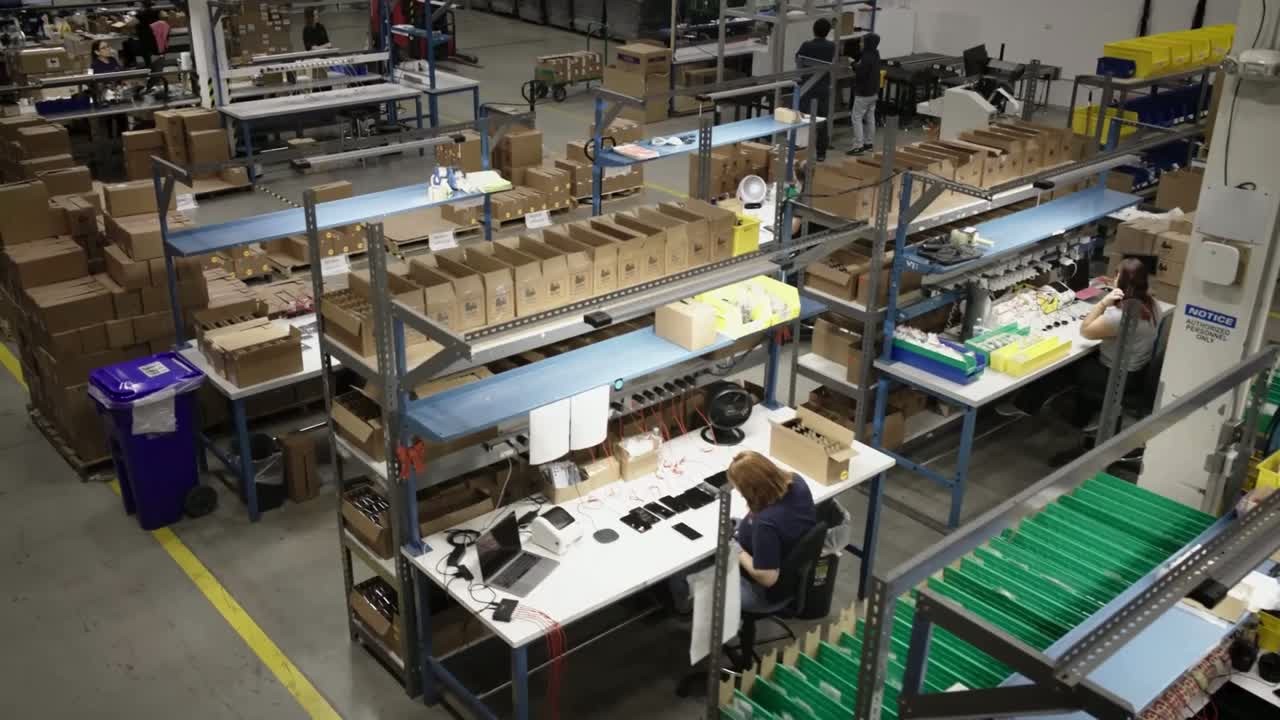
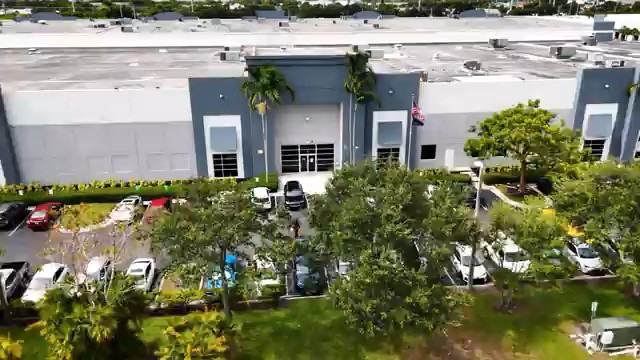
Everything happens under one roof - a single 49,000 sq. ft. facility with 32-foot ceilings, a UL-rated alarm system, full-time armed security, and surveillance throughout. High-value phones are, functionally, cash sitting on pallets, and the building is designed around that fact. Keeping intake, data sanitization, grading, and shipping in-house is also how the company controls the chain of custody that its certifications demand.
That single-site model is unusual. Many distributors spread across warehouses or outsource the messy testing-and-wiping middle to third parties. Reagan Wireless keeps it together, which is slower to build but easier to defend - one gate to guard, one process to audit, one place where the grade gets decided.
The difference05The anti-marketing wholesaler
Here is the part that will annoy every growth marketer: Reagan Wireless grew without them. The company states plainly that it runs on zero advertising, PR, or public events, and that it prizes confidentiality and trust-based relationships over public promotion. It cites a flawless NDA track record - zero breaches - and no employee litigation across its history as evidence that the discretion is real, not a slogan.
In a consumer business, that would be malpractice. In this one, it is a strategy. When your customers are carriers and resellers moving sensitive, high-value inventory, being loud is a liability. A vendor that stays out of the news and honors its NDAs is more valuable than one with a viral account. Reagan Wireless has essentially made reputation its distribution channel - the referrals and repeat orders that come from 29 years of not embarrassing anyone.
06A lawyer who sells phones
Daniel Kaufman is not a typical electronics entrepreneur. He graduated cum laude from the University of Florida in 1984 and earned his law degree from the University of Miami in 1990, seven years before founding the company. That legal background shows up everywhere in how Reagan Wireless is run: the emphasis on NDAs, compliance, certification, chain of custody, and clean paperwork reads like a business built by someone who thinks about liability first and marketing last.
The founder-owned structure reinforces it. With no investors demanding a growth curve and no debt forcing risky bets, the company can optimize for durability instead of a quarterly story. That is a genuinely different set of incentives from the venture-backed norm - and, judging by nearly three decades of continuous operation, an effective one.
07Where it fits
The secondary smartphone market is large and growing, fed by an endless upgrade cycle - every new flagship pushes a wave of last year's models back into circulation. Somebody has to catch that wave, verify it, and route it to buyers who want a working device at a lower price. Reagan Wireless sits squarely in that channel, alongside larger names in wholesale and reverse logistics such as PCS Wireless, Assurant's device-processing operations, and a field of B2B refurbished-electronics marketplaces.
Against those competitors, Reagan Wireless's edge is not scale - it is a mid-size, roughly 23-person operation with an estimated $2.5M in annual revenue by third-party accounts. Its edge is the combination that is hard to copy quickly: decades of carrier trust, an early and rare certification pedigree, a fortified single-site operation, and a reputation for discretion. None of those can be bought with a marketing budget, which is presumably why the company never bothered with one.
What can a reader take from it? A few things worth stealing. Sell to businesses if you want durability over hype. Get certified before you scale, because in regulated supply chains the paperwork is the moat. Own your facility and your process if trust is your product. And know when not to advertise - some businesses grow faster by being quietly, provably reliable than by being loud. It would not work for a consumer brand that needs demand generation. For a compliance-heavy B2B wholesaler, it has worked for 29 years.