In a warehouse in Flowery Branch, Georgia, a humanoid robot has a remarkably modest assignment. It takes a plastic tote from a mobile robot and puts it on a conveyor. No witty conversation. No grand entrance. Just the same handoff, again and again. The customer is SPANX. The operator is GXO Logistics. The robot is Digit, built by Agility Robotics. Somewhere between the tote and the conveyor lies an unusually clear explanation of GXO’s business.
- GXO runs the warehouses behind brands’ shopping promises.
- Its automation experiments begin with specific, repetitive work.
- Contracts, integration and competition rules decide what growth costs.
A pair of legs, one small job
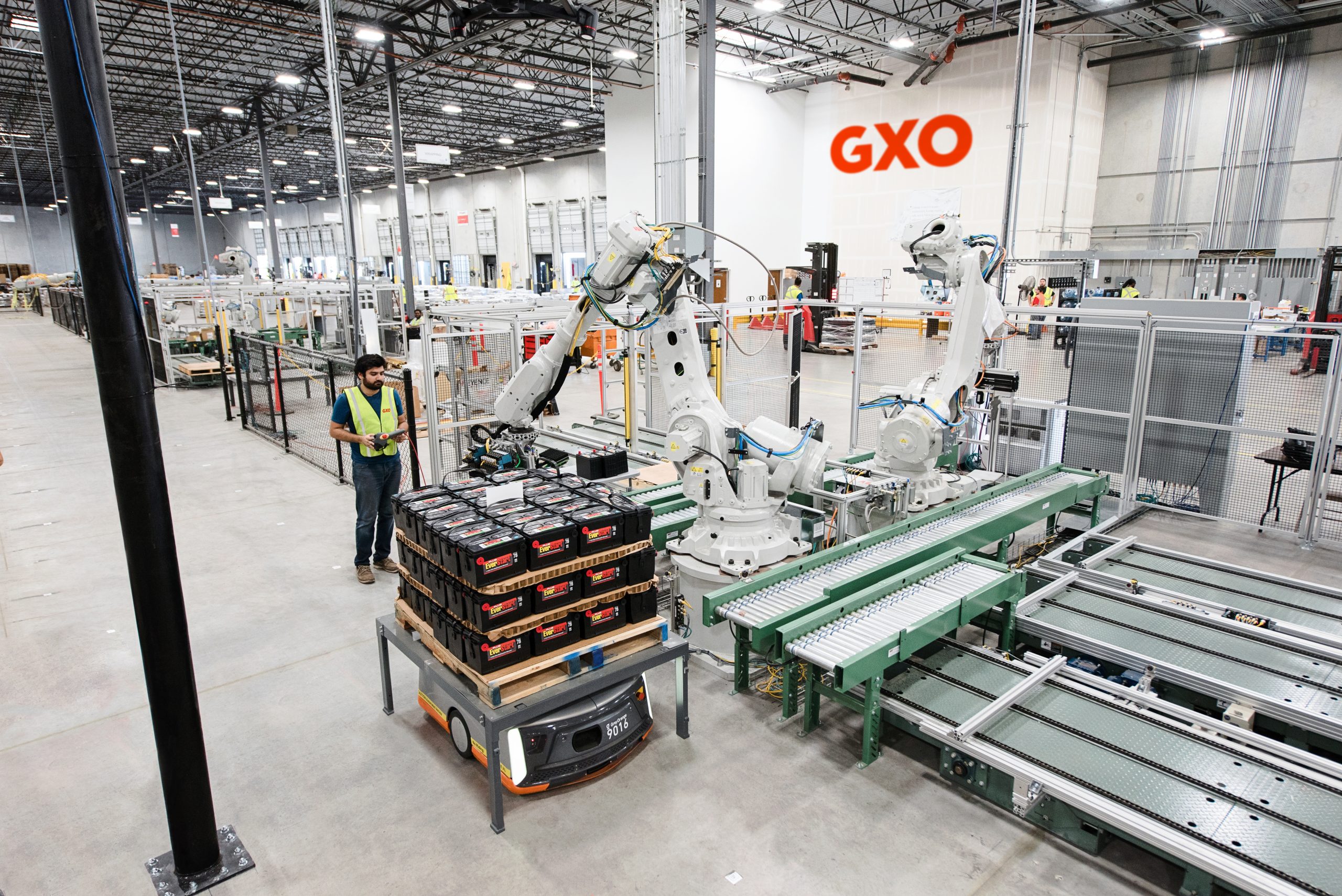
GXO began a proof-of-concept pilot with Digit in late 2023. In June 2024, it announced a multi-year robots-as-a-service agreement. The commercial deployment connected Digit with existing mobile robots, while Agility’s Arc software managed the workflow. The interesting detail is the sequence: a defined task, a test inside an operating warehouse, then a contract. The robot had to find a place in an existing system.
“Digit is the perfect addition to work alongside our people in our fulfillment center.”Adrian Stoch, GXO Chief Automation Officer · June 2024
There is something pleasingly practical about giving a humanoid such an ordinary job. Warehouses contain countless transfers between people, equipment and locations. Improving one transfer may be useful; repeating that improvement across an operation is where the economics become interesting. The public announcement establishes the move from pilot to deployment. It does not establish a universal robot return on investment.
Agility Arc coordinates the robotic workflow.
The warehouse behind the promise
A shopper sees a buy button. A warehouse operator sees incoming stock, storage locations, picking routes, packing benches, shipping cutoffs and returns. GXO takes responsibility for those activities on behalf of other companies. Its customers buy an operating capability: people who can run the site, systems that can track goods and processes that can keep orders moving.
That makes it relevant to a retailer managing online and store orders, a manufacturer organizing distribution, or a brand whose growing order book has outgrown its fulfillment arrangements. Dedicated operations can be tailored to a customer. GXO Direct offers shared, multi-client warehousing and fulfillment, letting brands use existing infrastructure and adjust capacity. A successful checkout deserves a less exciting sequel: the correct item arriving.
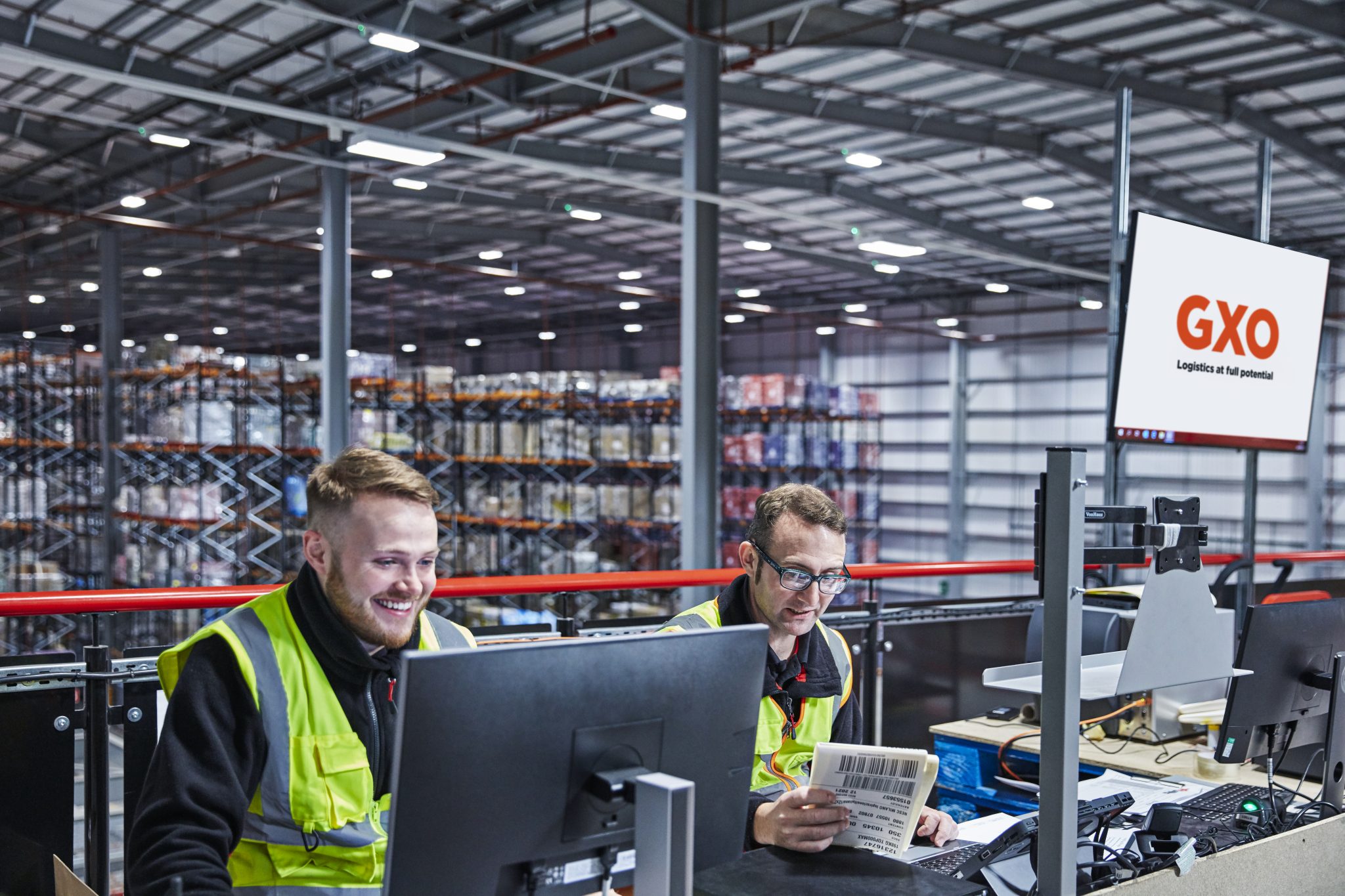
The return journey adds another layer. A returned item needs to be received, checked and routed to its next destination; simply transporting it back leaves those decisions undone. GXO offers reverse logistics, including repair and refurbishment capabilities. For a brand, outsourcing that work can make sense when the complexity exceeds its own operating capacity. The customer relationship survives or suffers through these little decisions, long after the marketing campaign has finished.
A young ticker with an old trade
GXO became independent in August 2021 when XPO separated its contract logistics business. Brad Jacobs, then XPO’s chairman and chief executive, led the separation; Malcolm Wilson became GXO’s first CEO. The company inherited an operating business rather than starting with an empty warehouse and a persuasive slide deck. Patrick Kelleher has led GXO since August 2025.
Its market position rests on focused contract logistics, scale and the ability to apply technology within customer operations. Alternatives include DHL, CEVA, DSV, GEODIS, ID Logistics, Kuehne + Nagel and Ryder. A customer can also keep the work in-house. Automation alone cannot settle that contest. Buyers still care about price, service quality and whether the operator understands their particular inventory.
Who carries the bill?
GXO’s predominantly long-term contracts include fixed-price and cost-plus arrangements. Under a fixed price, estimating the work correctly matters: unexpected costs can eat the operator’s profit. Cost-plus contracts reimburse allowable costs and add a specified margin. These terms explain why warehouse productivity receives so much attention. Someone must pay for every extra hour, idle station and awkward peak.
In 2025, GXO reported $13.178 billion in revenue and $36 million in net income. Those numbers measure different things, but their distance is instructive. A large revenue line does not excuse sloppy execution. In the second quarter of 2026, revenue reached approximately $3.4 billion, with organic growth of 3.4%. This remains a business of winning work and delivering it economically.
Scale brings work. Profit depends on what it takes to do it.
Fast machines, slow queues
A faster picking machine can leave a packing station waiting, or overwhelm it. That is the coordination problem behind GXO IQ, launched in June 2025. GXO describes a platform spanning inventory movement, orders, picking, packing, shipping and staffing. Its technology stack includes Google Cloud’s Vertex AI and Snowflake Cortex AI. An interactive agent called GIL helps users interrogate the operation.
The distinction is practical: individual machines perform tasks; orchestration decides how tasks fit together. In September 2026, GXO announced labor-management pilots across the U.S., UK, Netherlands, Poland and Spain, with wider scaling expected in 2027. Its stated values put safety and inclusion alongside results. With people still central to warehouse operations, how work is planned matters as much as which machine arrives.
The price of getting bigger
Buying capacity has complications of its own. GXO completed its Wincanton acquisition in April 2024 for approximately £762 million. Britain’s Competition and Markets Authority subsequently found that the combination would reduce competition in dedicated grocery warehousing. In June 2025, it cleared the deal subject to selling Wincanton’s dedicated grocery warehousing business to an approved buyer. Expansion required surrendering some of the work.
September 2026 brought a different kind of expansion: a ten-year relationship with Columbia Sportswear. GXO now manages Columbia’s European distribution center in Cambrai, France, supporting ecommerce, retail replenishment and wholesale. The agreement illustrates what outsourcing can mean for a brand: an operating partner with a long planning horizon, entrusted with the unromantic business of keeping several sales channels supplied.
Copy the experiment, then earn the scale
The useful lesson from Digit is an inference from the sequence, not a promise from GXO: identify one repetitive bottleneck, test a change under live conditions and measure the whole process before extending it. Low volumes, unreliable integrations or unpredictable demand can undermine an automation case. For a buyer, the questions are concrete. What improves? Who pays when assumptions fail? Can the operation keep its promises during the busiest week? The tote is small. The obligation is considerable.