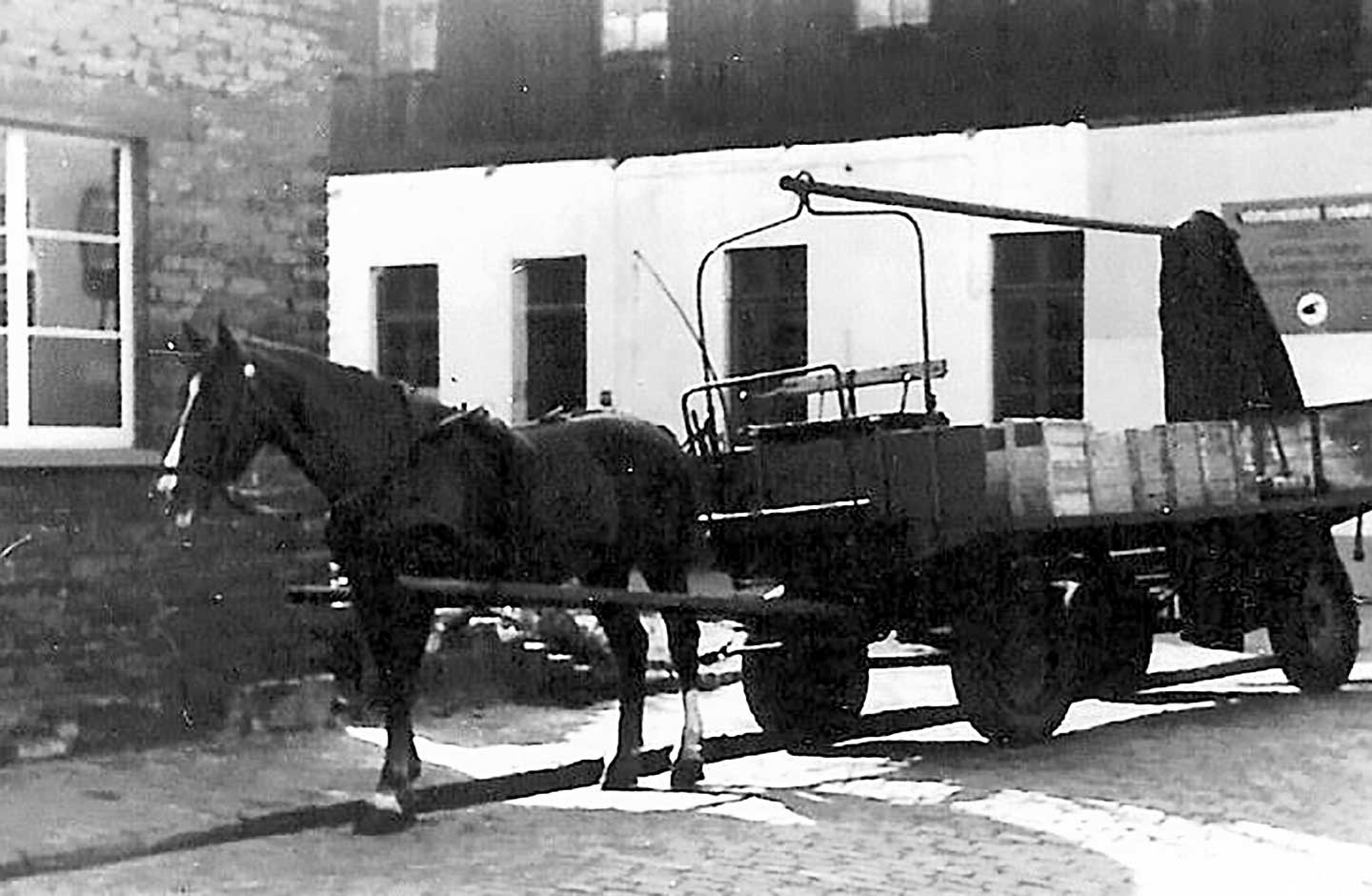
In 1961, a horse called Lisa was still pulling a cart for Hellmann. The company had introduced motor vehicles in 1925. For thirty-six years, the old and the new had shared the job. It is an oddly reassuring detail in an industry now discussing warehouse robots: progress can arrive without everyone leaving the building at once.
- Hellmann arranges freight and runs the warehouse work around it.
- Siemens, Lacoste and Eaton illustrate three different customer needs.
- In 2025, shipments rose while revenue fell. Volume alone does not explain the business.
Carl Heinrich Hellmann began the business in Osnabrück in 1871 with a horse-drawn cart. A warehouse followed in 1912; international expansion gathered pace with Hong Kong in 1982. Today, the family-owned company sells airfreight, seafreight, road and rail transport, and contract logistics. That last phrase sounds like paperwork. In practice, it means running a substantial part of somebody else’s business.

The building is only the beginning
Consider Siemens Smart Infrastructure’s central warehouse in Nuremberg. Hellmann took over operations on June 1, 2025. About 12,000 square metres of the roughly 15,000-square-metre facility are dedicated to Siemens. Around 125 employees handle an average of 4,500 outbound order lines daily. An order line is an item entry, rather than necessarily a parcel. Even the units require attention.
The five-year agreement covers warehouse operations and global distribution of building technology products. Hellmann implemented its LFS V8 warehouse management system, alongside conveyor technology, set-building processes, customs capabilities and airfreight handling. The customer is buying a working relationship between those pieces. A beautifully packed order with the wrong inventory record remains a beautifully packed mistake.
- 01Receive
- 02Record stock
- 03Pick + pack
- 04Dispatch
Inventory data accompanies the goods; customs and transport connect the warehouse to the customer.
Lacoste’s Mexican operation gives the same idea a different wardrobe. Hellmann’s September 2024 announcement described an 11,000-square-metre warehouse supplying 45 retail locations and direct consumers across Mexico. Receiving, stock management, picking, packing and shipping sit together. Replenishing a shop and sending one customer a shirt are different tasks. A shared operation must understand both.
This is where Hellmann competes with providers such as DHL, DSV and Kuehne+Nagel: coordinating freight and operational services for business customers. Its distinctive story combines family ownership, international forwarding and sector-specific execution. Those features are not exclusive. The meaningful comparison is the team, systems and capacity available for a particular customer’s products and routes.
The sector expertise is practical. Fashion orders need inventory that can serve shops and home deliveries. Building technology distribution needs accurate sets and international dispatch. Healthcare goods demand attention to handling and delivery reliability. Hellmann can connect those warehouse requirements to several transport modes. The customer’s advantage is having fewer operational seams to manage, provided the provider understands the products. That qualification deserves more attention than the size of a global network.
More shipments, less revenue
The 2025 figures introduce a complication. Hellmann reported about 21 million shipments, up from 20 million in 2024, while revenue declined from €3.8 billion to €3.7 billion. Its results announcement described subdued trade, geopolitical tensions and margin pressure. More activity did not produce a larger top line. For a forwarder, the price environment matters alongside the number of things moved.
Each pair has its own scale. Group figures for fiscal years 2024 and 2025.
The business earns money from transport and forwarding services, warehouse operations and additional work such as packing or returns. Contracts turn these activities into a customer-specific arrangement. Hellmann’s published budget guidance identifies inventory levels, process complexity, IT integration, labor and value-added services as cost drivers. The sensible buyer prices the complete operation, including transition work and the consequences of mistakes.
Smaller shippers have another entrance. HEX, developed with software partner Shipsy, brings express booking, tracking, analysis and invoicing into one interface across courier networks. Its North American expansion was announced in June 2025. The SkyNet partnership adds cross-border consumer delivery and returns, initially for EU and UK shippers. Both propositions simplify connections that a customer would otherwise have to manage.
Why the robots are arriving now
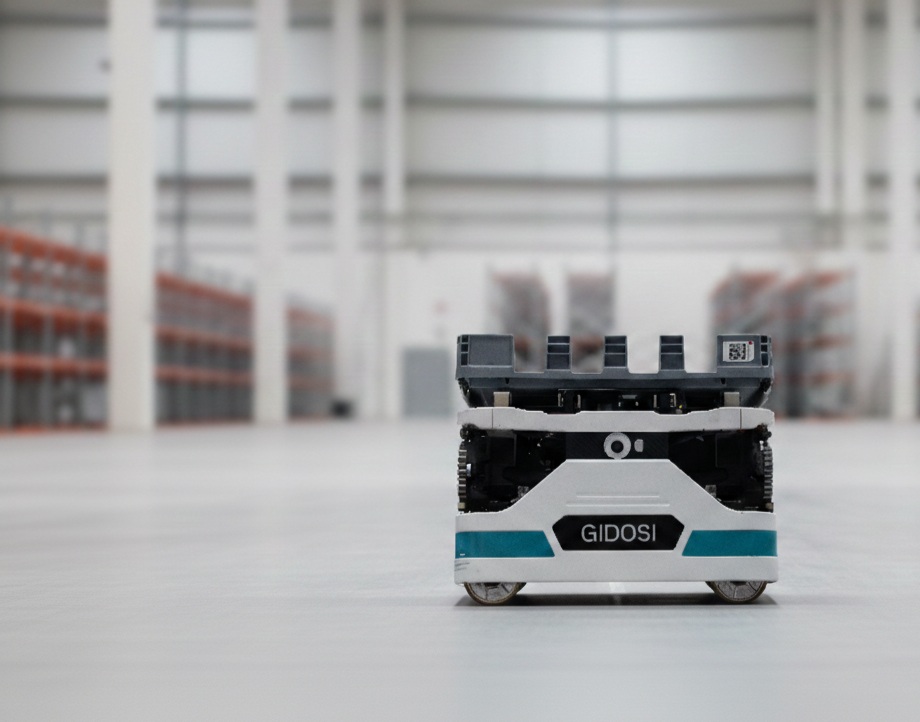
In February 2026, Hellmann signed a global framework agreement with Exotec. The first project, already launched for a German healthcare customer, uses goods-to-person fulfillment: an employee checks incoming goods, robots store them, and the retrieval system brings stock into the picking process. Shorter order cut-offs, fluctuating volumes and scarce skilled workers explain the attraction. A robot is much easier to justify when walking has become a constraint.
“flexibility and short-term scalability are playing an increasingly important role in contract logistics”Volker Sauerborn / COO Contract Logistics / February 2026
Specialization also explains the March 2026 joint venture agreement with automotive supplier Motherson. Hellmann contributes logistics execution and supply-chain technology; Motherson contributes industrial knowledge and supplier relationships. The announcement planned a June launch from Dubai. The logic is straightforward: knowing how factories depend on their suppliers can improve decisions about moving the parts.
The computer is part of the convoy
Hellmann’s modern operation has an obvious dependency. In December 2021, a cyberattack forced systems to shut down. The company subsequently warned customers about fraudulent communications after a confirmed data breach. The episode exposes a weak point in digitally coordinated transport: information can stop even when vehicles are available. Current security materials describe mandatory awareness training, threat detection, incident management and external audits.
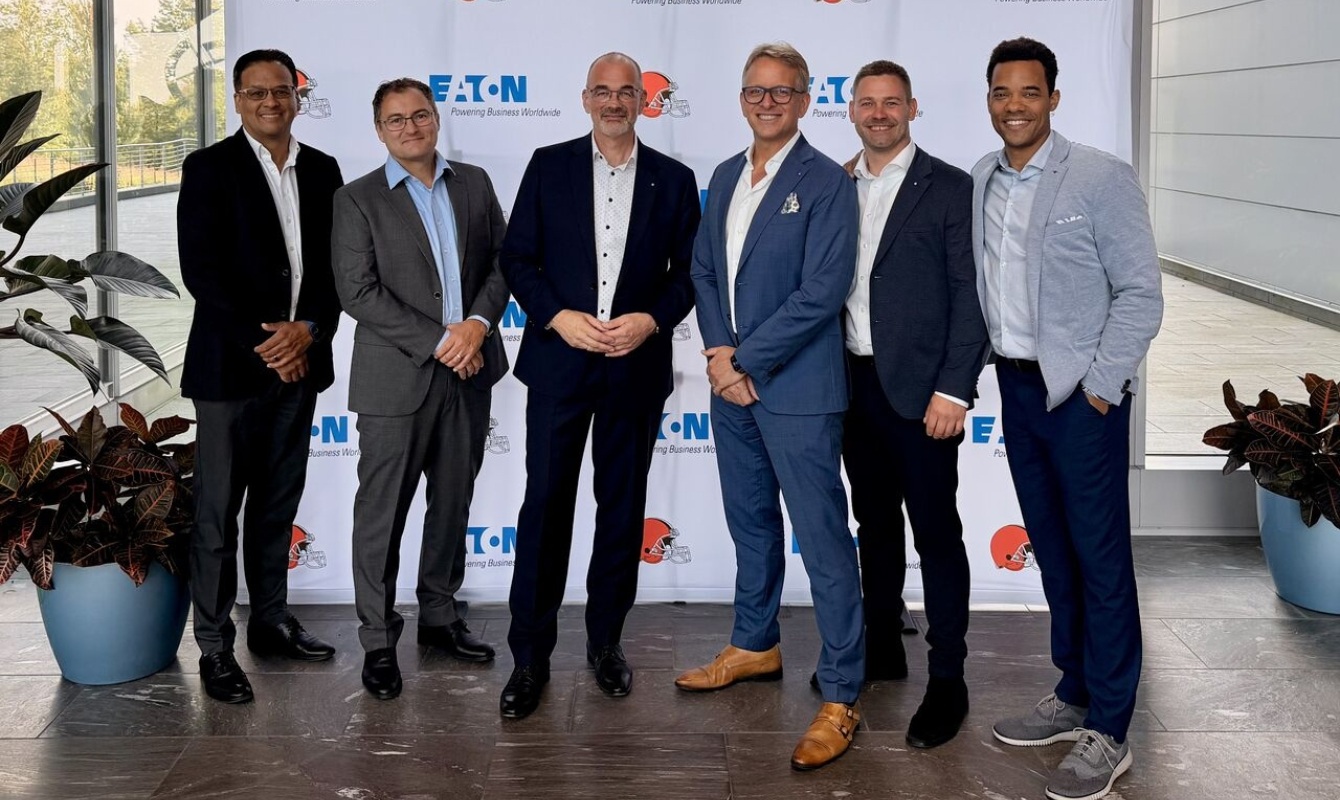
In August 2026, Eaton awarded Hellmann supplier recognition for maintaining ocean freight into the Middle East during disruption, according to Hellmann’s account. That is a useful customer example, rather than a guarantee. Freight networks remain subject to border restrictions, carrier capacity and events outside any forwarder’s control. An award does not clear customs.
Copy the handoff, not the horse
The transferable lesson is to examine the moments between tasks. Who owns the stock record? Who fixes a missed collection? What happens when the warehouse system goes offline? Before outsourcing, specify those responsibilities and compare total costs. For an importer or retailer, the starting point is a clearly described shipment or warehouse requirement, followed by a tailored quotation. Ask how performance will be measured and which team will respond when an order misses its promised departure. A dedicated operation or intricate integration may be a poor fit for simple, low-volume shipping. Automation needs compatible products, order patterns and systems. Lisa’s successors still need somebody to organize the journey.