In May 2015, Kintetsu World Express bought a company that did much of the work its own business did not. The price was $1.2 billion. APL Logistics brought warehouses, land transport, order management, and a customer base in automotive and retail. KWE brought an air-and-sea forwarding business with a particular strength in electronics. The attraction lay in the gaps between them.
- Buy the missing work. APL Logistics extended KWE beyond international forwarding.
- Follow demanding customers. Electronics helped shape its handling and transport expertise.
- Count the full bill. Borrowing, goodwill, and systems continuity belong in the growth story.
The expensive attraction of being different
Acquisitions often come dressed as arithmetic: two businesses, one larger total. KWE’s explanation was more interesting. Its 2015 annual report pointed to little overlap between the customer bases, complementary services, and similar corporate cultures. Buying another version of itself would have added volume. Buying APLL added tasks it could offer customers.
“The main reason for this decision was the high degree to which our business portfolios complement each other.”
KWE Annual Report 2015
The transaction closed on May 29, with the announced purchase price subject to cash and working-capital adjustments. APLL became a wholly owned subsidiary. A company accustomed to arranging a shipment’s international passage now had a wider claim on what happened around that passage. A container could arrive, its contents enter stock, and orders move onward through the same corporate group.
For a manufacturer, this is a practical distinction. Landing a component and making it available to production are separate accomplishments. Someone must clear it, store it, identify it, and release it at the right moment. Logistics has a remarkable talent for making arrival look like completion.
A railway family takes the air
KWE’s roots reach back to a travel-service department established by Kintetsu Railway in 1948. The independent air-freight company emerged in 1970 from Kinki Nippon Tourist. This was a corporate family finding another use for its experience of moving people and goods.
Its overseas choices were revealing. An American magazine publisher’s move from Japan to Hong Kong helped prompt the first foreign subsidiary in 1969. The American operation followed that year in Chicago, a manufacturing hub, while other Japanese forwarders were establishing themselves in New York. By the mid-1970s, American electronics offered another opening. KWE invested in relationships with companies that would grow into global businesses.
That history helps explain its present offering. High-value electronics need careful packaging, security, customs expertise, and sometimes impact and vibration monitoring. The customer is buying the prospect of a usable component at the other end. The cheapest journey is a poor bargain if the goods cannot do their job.
The work between arrival and usefulness
Today, KWE sells air freight, ocean freight, customs brokerage, and logistics services. Air options include consolidation and charters. Ocean customers can book full containers or share space through less-than-container-load services. KWE acts as a non-vessel-operating common carrier, arranging ocean transport through carrier relationships rather than presenting itself as a shipping line.
The warehouse menu is more intimate: sorting, kitting, picking, labeling, quality inspections, returns, and vendor-managed inventory. Dedicated control towers coordinate work across the chain. UFS+, its core business system, supports forwarding, warehousing, and accounting; CSS+ supplies customer tracking and electronic data interchange. These systems connect physical movements to the records that make them useful.
Revenue comes from business customers paying for transport and related services under shipment arrangements and logistics contracts. The model is asset-light, though warehouses and facilities remain part of the operation. It competes with Kuehne+Nagel, DSV, DHL Global Forwarding, and other forwarders. Its electronics expertise and APLL’s complementary capabilities give buyers specific reasons to consider it; global reach alone is hardly an exclusive invitation.
Consider the procurement choice in ordinary terms. A plant importing sensitive components might need secure handling, customs clearance, and stock released against production demand. A retailer might need consolidated orders, warehouse picking, and returns processing. Those are different briefs, even when both contain the phrase “international shipping.” KWE’s range makes sense when the buyer specifies the work behind that phrase.
Growth comes with an invoice
KWE’s acquisition report acknowledged that bank loans would lower its equity ratio in the near term. Another consequence appeared in APLL’s January-to-September 2017 results. Core operating income rose 66% to ¥2.535 billion, yet the APLL business segment recorded an operating loss of ¥2.096 billion because of acquisition-related goodwill amortization.
Those figures measure different things. The underlying operation could improve while the accounting charge pushed the reported result below zero. It would be careless to call that proof of operational failure. It would be equally careless to pretend the acquisition price had stopped mattering once the signing photographs were taken.
The same discipline applies to a freight quote. Route, timing, shipment size, storage, and handling requirements affect the assignment. A buyer comparing providers should make those requirements explicit and compare the same scope. Otherwise, two attractive prices may be attached to two quite different promises.
The useful lesson is to list the customer tasks your business cannot perform, then price the capabilities needed to perform them. Complementarity is a promising starting point. Debt service, integration work, and accounting consequences still require their own arithmetic.
A network is only as good as its next handoff
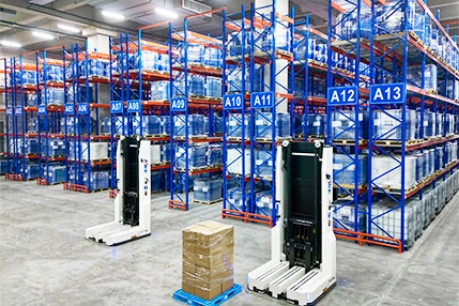
In March 2026, Shanghai Kintetsu Logistics began operating a new 34,242.94-square-metre facility in the Waigaoqiao Free Trade Zone. Automated guided forklifts and shuttle-based storage support a warehouse serving electronics, healthcare, and automotive customers. Its services include manufacturing supply through vendor-managed inventory and overseas procurement logistics.
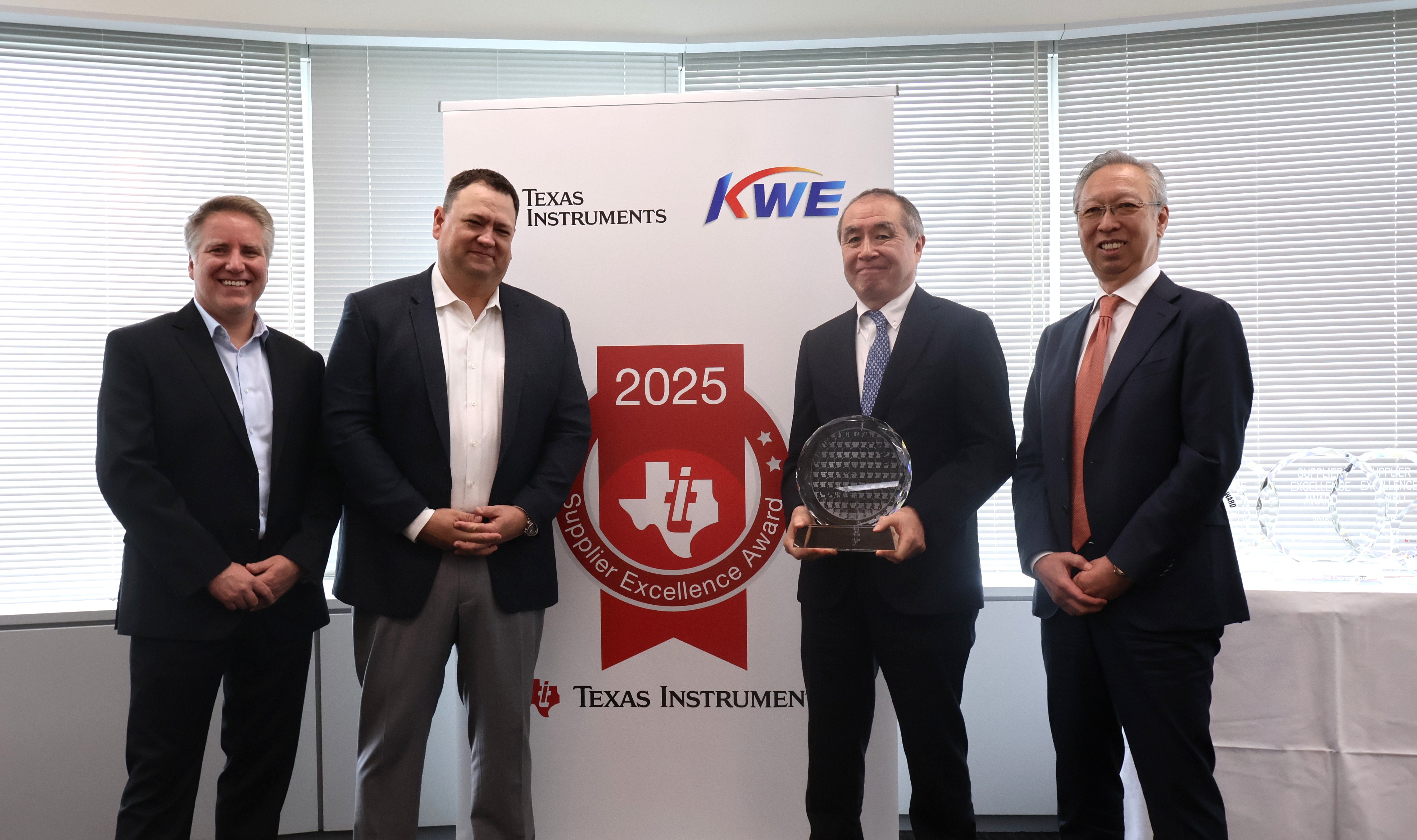
There is customer evidence, too. In May 2026, KWE announced its sixth Texas Instruments Supplier Excellence Award. It was one of 19 recipients for 2025, chosen from more than 10,000 suppliers. The recognition covered transportation and logistics support, including quality, on-time performance, and responsiveness.
The same month exposed a dependency. Unauthorized access affected KWE’s Singapore subsidiary on May 15. Systems were isolated; by May 20, KWE reported restoration and normal operations, with no confirmed operational impact outside Singapore or on its core Enterprise Business Systems at that time.
For a buyer, the questions are concrete: which trade lane, which handling standard, who controls the inventory, and what happens when information stops flowing? A simple domestic shipment may have little need for this machinery. A complex international supply chain may need every piece. KWE’s story is most useful at that boundary, where moving a box becomes the business of keeping someone else’s business moving.
KWE website ↗ LinkedIn ↗ Company news ↗ Aperture & Focus ↗ Watch the corporate film ↗ YouTube ↗