Consider the peculiar problem of a Formula 1 team. The cars are designed to make time disappear. The equipment supporting them must travel through a world of ports, customs desks and timetables. Ferrari’s logistics partner, CEVA, uses six equipment kits simultaneously, each comprising six 40-foot containers. Some equipment travels by sea. The apparent contradiction is the interesting part: a slow boat can serve a fast business if somebody sends it early enough. CEVA’s Ferrari program puts that principle into practice.
- CEVA runs the transport and warehouses between production and delivery.
- Ferrari’s duplicate kits show how planning creates room for slower freight.
- Acquisitions expand the network; shared systems also concentrate risk.
01 / Six kits, one calendar
CEVA’s Ferrari relationship began in 2022. By its November 2025 extension, the company reported handling logistics for 92 Grands Prix, crossing 52 countries and moving more than 4,000 tons of equipment. Its responsibilities include routing, carrier selection, customs clearance and emergency planning. These are the supporting actors who rarely receive a close-up.
The useful detail is where things wait. CEVA stores kits within its warehouse network rather than sending everything back to Italy. It has also combined rail and ocean transport, including a rail journey from Maranello to Antwerp for the 2025 Shanghai Grand Prix. The partnership expanded to Ferrari Hypercar activities in 2026. The equipment itinerary explains the business better than a logo on a racing car.
02 / The business between the handoffs
CEVA sells the coordination that makes these journeys possible. Freight management arranges movement by air, sea, road and rail. Contract logistics handles the work inside and around warehouses: receiving, inventory, order fulfillment, manufacturing support, returns and refurbishment. Customs services address another awkward handoff, where a shipment meets a national border. Customers can buy individual services or a more connected operation.
The customer list spans carmakers, retailers, healthcare businesses, industrial suppliers and technology companies. Michelin supplies a less theatrical example than Ferrari. In Thailand, CEVA manages four warehousing sites and distributes tires nationwide. The companies celebrated 22 years together in 2025. Their work includes lighting upgrades, changes to material-handling equipment and electric prime movers. A relationship that long suggests how much practical knowledge accumulates around an ordinary product.
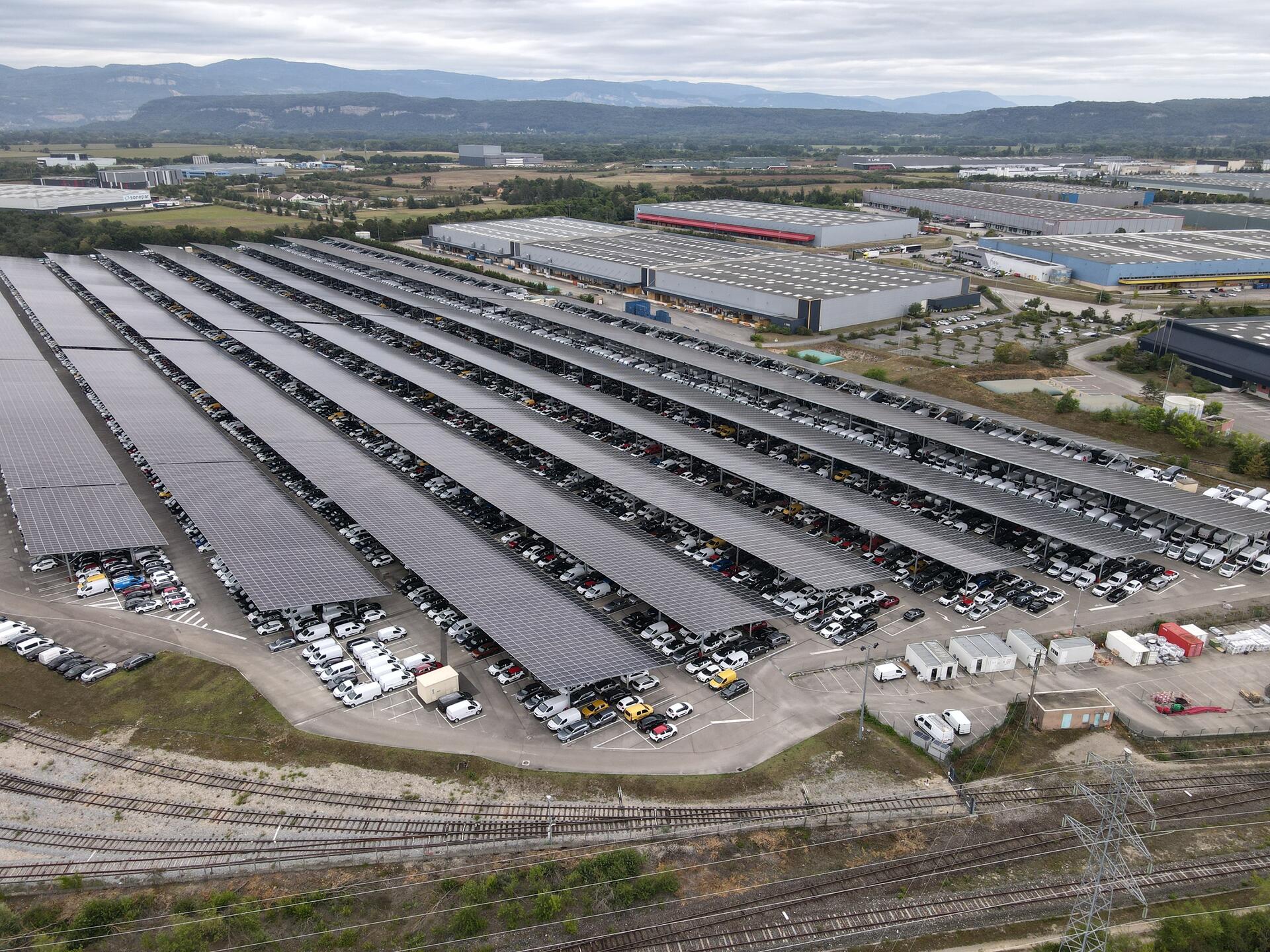
Its business model follows those two jobs: customers pay for freight services and for operating agreed logistics activities. The comparison set includes DHL, DSV, Kuehne+Nagel and GEODIS. CEVA’s distinctive position is its ownership by container-shipping group CMA CGM, connecting warehouse expertise with a parent whose business extends across ocean transport and terminals. Whether that combination helps depends on the actual route and operation.
03 / Buying the map
This company was assembled. Apollo bought TNT Logistics in 2006 and combined it with EGL in 2007. TNT’s roots reach back to Ken Thomas, an Australian entrepreneur who started with one truck in 1946; EGL began in Houston in 1984. CEVA listed in Switzerland in 2018, then joined CMA CGM in 2019. The family tree contains more transactions than garage anecdotes.
The expansion has a price tag. CMA CGM completed the purchase of Bolloré Logistics in February 2024 for €4.85 billion. On October 1, 2026, it completed its $1.4 billion enterprise-value acquisition of FedEx Supply Chain. That latest deal adds approximately 34 million square feet of warehouse space and nearly 10,000 employees, nearly tripling CEVA’s North American contract-logistics footprint. Buying locations buys possibilities; connecting them remains an operating task.
Enterprise value of the completed FedEx Supply Chain acquisition
Scale deserves a date attached. CEVA’s 2025 figures show $18.3 billion in gross revenue. Its parent reported $1.7 billion of logistics EBITDA, down 2.2%, with pressure in freight management and automotive markets while contract logistics improved. Those results temper the acquisition headlines: a larger network still has to earn its keep.
04 / A ramp is a better brief than a buzzword
In September 2026, CEVA started a Singapore pilot with two Zelostech Z10 autonomous electric vehicles. The assignment is pleasingly specific: move pallets, totes and inventory between floors at Blue Hub using the building’s existing ramps, replacing diesel-truck operations. The experiment tests a repeatable movement within a defined environment. It is easier to judge than a promise to automate everything.
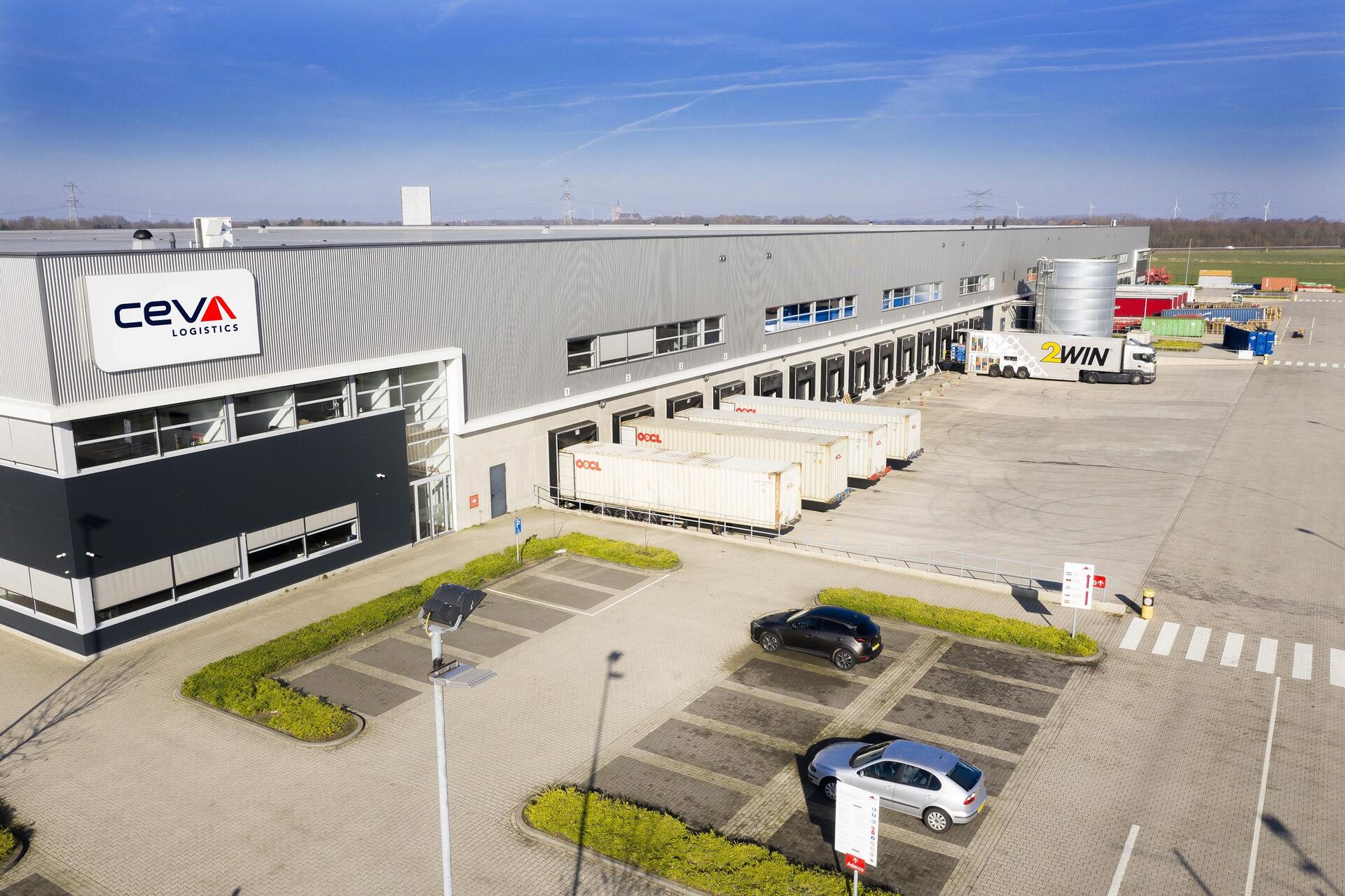
In Toledo, Spain, the company announced a 75,000-square-meter fashion distribution operation capable of processing more than 120 million garments annually. Sixty percent of order preparation is automated. The facility’s permanent workforce of 400 can expand beyond 1,000 direct jobs during peak periods. Robots and seasonal demand occupy the same building; machinery does not make the sales calendar disappear.
05 / The computer can stop the warehouse
There is a less cheerful illustration of interdependence. In August 2026, public reporting described a cyberattack affecting at least eight CEVA warehouses in Europe and delaying customers’ shipments. The reported disruption shows why evaluating a logistics provider also means examining its information systems. Trucks can be available while the instructions that make them useful are interrupted.
“Our mission is to connect people, products and providers all around the world.”CEVA Logistics / mission statement
CEVA’s public culture borrows its parent’s four values: excellence, exemplarity, imagination and boldness. Its stated commitments are ambitious; the everyday test is more concrete. People must reconcile a customer’s promise with the goods, equipment and information available on a particular shift.
06 / Borrow the calendar trick
For a shipper, myCEVA offers quotes, booking, documents and milestone tracking. Its advertised one-hour air-freight quotation applies to standard cargo. More complex operations need a designed service. FORPLANET adds emissions measurement, route and mode choices, alternative fuels and circular logistics. The practical starting point is a shipment’s requirements, not a vague ambition to become more efficient.
The lesson to borrow is conditional. Advance positioning helps when demand, destinations and deadlines are predictable enough to justify extra stock and storage. Unique equipment, changing specifications or urgent orders can defeat it. A customer should compare total costs, including handling, inventory and recovery arrangements. Ferrari’s calendar offers an attractive thought: sometimes the cheapest way to buy speed is to stop requiring everything to hurry.