Two weeks before Black Friday, a machine was due at Barrett Distribution Centers’ Somerset, New Jersey, warehouse. It could make a carton to fit an order. That was the appealing part. The awkward part was teaching it to exchange information with the warehouse software before the shopping rush arrived. A packing machine has very little use for a deadline. Customers, unfortunately, have rather strong feelings about them.
- Barrett runs outsourced fulfillment for consumer brands selling online and through retailers.
- Its Somerset operation reported moving from three-day order turnaround to one day after packaging automation.
- The lesson travels: find the bottleneck, connect the systems, and give the operator your actual demand patterns.
Two weeks to teach a machine
Somerset’s manual packing stations had reached a productivity plateau. Barrett purchased CMC’s CartonWrap and brought in SVT Robotics to connect it to the warehouse management system through the SOFTBOT platform. Buying the equipment solved only part of the problem; integrating it determined whether the purchase would help in time.
The vendor case study reports deployment without service interruption, thousands of orders processed in the first week, and peak-season turnaround reduced from three days to at most one. The operation also needed fewer temporary workers. Those are results from this installation, rather than a promise attached to every Barrett shipment.
The useful question is why packing had become the ceiling. A warehouse can receive inventory and pick merchandise efficiently, yet still accumulate orders at the final station. Automating an already comfortable step would have left that queue waiting politely for attention.
The wool merchants left. The warehouse stayed.
Barrett’s first customers had a different sort of inventory. James Barrett II founded the company in Lawrence, Massachusetts, in 1941 to serve wool merchants. When textile activity moved south, his son James Barrett III helped diversify the business into grocery and raw-material customers.
This is a practical origin story for a logistics company: the goods change, and the service must change with them. In a 2024 executive interview, brothers Arthur and Tim Barrett identified winning Best Buy’s business as another turning point, one that helped open the door to other retailers.
Today the family-owned operator positions itself around growing brands that need a national warehouse network and access to decision makers. Inc. lists 16 appearances on its Inc. 5000 rankings through 2024. Longevity supplies the backstory; repeated changes in the customer’s business supply the work.
One inventory, several kinds of promise
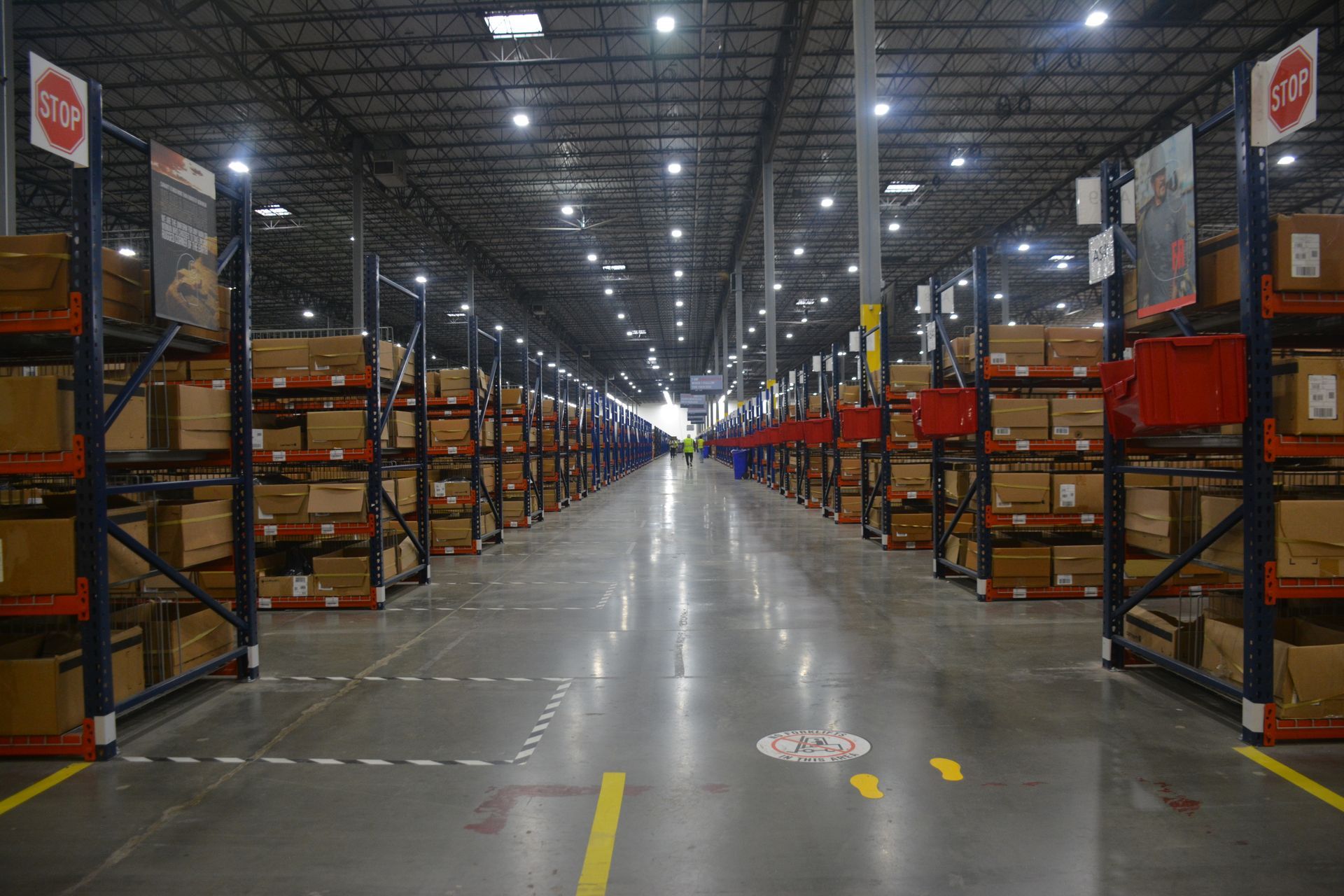
Barrett receives products, stores them, picks orders, packs them and arranges their onward movement. Clients include apparel and footwear names such as johnnie-O, OOFOS and NOBULL, alongside consumer-product businesses. Fruit of the Loom and Ken’s Foods appear in its customer testimonials.
An online shopper wants the right item promptly. A retailer brings routing guides, labeling requirements and electronic data exchanges. Barrett offers both direct-to-consumer fulfillment and B2B distribution, plus kitting, branded packaging, inserts and transportation management. The product is a managed operation, sold through a customer-specific logistics arrangement.
That breadth explains its place in the market. A brand can compare Barrett with national contract logistics operators, ecommerce fulfillment networks or its own warehouse. Barrett’s particular pitch combines customized workflows, retail compliance and family-business access. Choosing between those options requires the details of the business being shipped.
The people get to see the numbers
Barrett’s culture has a concrete mechanism: open-book management. Employees see financial results and can benefit when financial goals are met. The company uses the Great Game of Business, connecting financial education with participation in business performance.
Its October 2026 account also describes daily huddles and employees progressing from hourly work into lead and supervisor roles. Think about what that changes in an ordinary decision. Packaging waste, an avoidable error or an inefficient movement has a financial consequence someone can understand. Profit sharing gives that consequence personal weight.
A drone needs a readable label
Inventory brings another kind of queue: verifying that the product is where the system says it is. In May 2026, Barrett reported deploying Gather AI at 10 facilities, using drones and machine vision to check storage locations against warehouse records.
The company reported approximately 40% less spending on inventory-counting labor and, in certain dense storage environments, up to 2,000 scans an hour. These are company-reported operating results, with conditions attached. A particularly revealing condition concerns the label.
“The technology needs to see the license plate.”Jim Rapoza / VP of Business Process Optimization
Rapoza was describing the inventory identifier. Visible labels and proper pallet placement help the vision system work. The drone makes a modest demand on its human colleagues: put things where they belong, facing the right way. Automation still needs housekeeping.
Barrett describes technology as its largest annual capital investment and says it has spent millions of dollars programming warehouse workflows. Its Synapse system supports functions including lot management, replenishment and batch picking. Those investments make the economics less glamorous than the robot photographs suggest: the operating software needs attention, too.
Bring your ugly spreadsheet
Barrett’s pricing discussion begins with order history, seasonality and incoming inventory. Its commercial team explains that incomplete information forces conservative assumptions. A monthly average can conceal a promotion that overwhelms the week, or a stock arrival that crowds the building before sales begin.
For a prospective customer, the copyable move is straightforward. Show the peaks, the quiet stretches, the product mix and the retailer requirements. Ask how receiving, packing and returns behave together. A tailored operation depends on that candor; a quote for an imaginary average business is a poor guide to your real one.
For a simple, steady operation, some of this customization may offer less value. The fit depends on the work: how many channels need serving, what the products require, and whether the seasonal pressure justifies the proposed setup.
The next experiment crosses the building line
On October 1, 2026, Barrett announced an expanded UNIT AI partnership, with deployment beginning in 2027. The proposed platform would coordinate inventory, fulfillment and returns across multiple facilities through a Warehouse-as-a-Service model.
That moves the question from how quickly one building works to how several buildings work together. The plan remains prospective. Somerset supplies the more immediate lesson: give the constraining step your attention, and count the recovered days. A customer opening a box will never see the integration work. They will notice whether the box arrived.
Step onto the warehouse floor
Explore Barrett’s website, services, company blog and newsroom.