A shipping container is an oddly revealing place to look for a company’s philosophy. At Saddle Creek Logistics Services’ Modesto operation, the problem was heat, heavy boxes and the repetitive business of getting those boxes onto a dock. FANUC’s account describes container temperatures reaching 140 degrees. It is difficult to become sentimental about manual work under such conditions.
- Saddle Creek runs warehousing, fulfillment and transportation for other businesses.
- Its proposition is custom operations for brands selling through several channels.
- The useful lesson: examine the bottleneck before buying the technology.
A robot earns its place on the dock
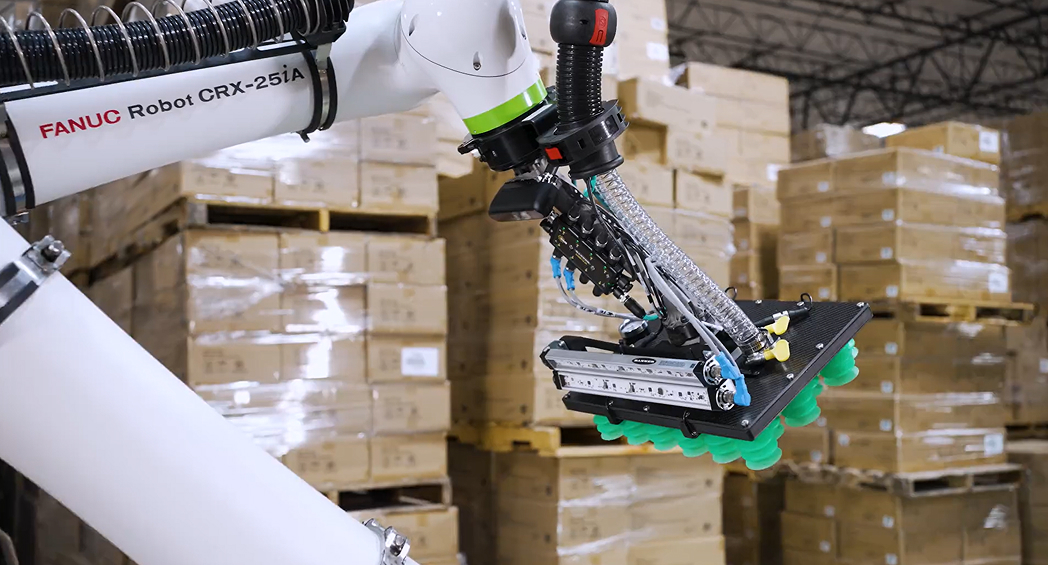
The company brought in Anyware Robotics’ Pixmo, a mobile box-handling system using a FANUC collaborative robot. It could work in the existing footprint without a major infrastructure rebuild. According to the vendor’s case, unloading support fell from four or five people to one or two, with automated unloading completed in under three hours.
That result belongs to a particular deployment. It nevertheless explains the appeal: remove an unpleasant constraint and the operation can use its people differently. Warehouse automation is often presented as a contest of machines. Here, the better opening question is what a person should have to endure during a shift.
A million dollars has to go somewhere
Saddle Creek’s work is easiest to understand through a customer’s geography. Nu Skin was based in Provo, Utah. Delivering its skin-care and nutrition products east of the Mississippi was a different proposition from serving customers nearer home. Saddle Creek established a temperature-controlled fulfillment operation in Charlotte, North Carolina.
The customer case puts an unusually concrete number beside the idea: Saddle Creek invested more than $1 million in automation and material-handling equipment. The list included pick-to-light technology and motorized conveyors. These are tools for directing attention and moving products through a repeatable process. Their glamour is largely confined to the spreadsheet.
The historical results were specific: about 2,200 ecommerce orders a day, 100 percent order accuracy in 2016, and more than 98 percent of orders shipped the same day. Negotiated lightweight-parcel rates produced savings of up to 11 percent. Those figures describe that account and period; they are not a promise attached to every new contract.
NU SKIN CUSTOMER CASE · ACCURACY BENCHMARK: 2016 · CASE-SPECIFIC RESULTS
For a brand choosing a logistics partner, the distinction matters. A warehouse can be inexpensive per square foot and expensive per delivered order. Location, handling, accuracy and carrier arrangements all belong in the same calculation. The cheapest-looking component can make the finished service dearer.
The other conveyor carries data
Saddle Creek sells businesses a combination of physical capacity and operating expertise. Warehousing, fulfillment, transportation and packaging can be bought as separate services or assembled into an integrated operation. Its market is manufacturers, retailers and ecommerce companies whose orders require more coordination than a shipping label suggests.
A pallet heading to a retailer and a parcel heading to a bathroom shelf may contain the same product. They make different demands on the warehouse: quantities, packing, documentation and compliance. Saddle Creek’s company description emphasizes handling pallets, cases and pieces under one roof. The attraction is an operation that can accommodate those differences without asking the customer to manage every handoff.
There is also a less photogenic conveyor. A Cleo case published in 2018 describes legacy integration technology that could not connect with newer warehouse-management software or support multiple file formats. Saddle Creek replaced it with Cleo’s data-transformation tools. The case reports reduced development effort and faster customer integration.
This is a revealing competitive detail. The loading dock can be ready while the information needed to use it remains stranded elsewhere. A company that can connect to a customer’s systems has solved part of the delivery problem before anyone picks an item.
The luxury of saying “not yet”
David Lyons founded the business in 1966 with a 12,000-square-foot warehouse. Its later technology laboratory offers a useful clue to the company’s development: ideas get tested before they are entrusted with live work.
In a 2022 interview, innovation chief Donna Slyster described earlier voice and vision trials that did not satisfy productivity and worker-comfort criteria. A drone experiment ran into line-of-sight problems. The company was revisiting technology as it evolved, rather than treating an earlier rejection as permanent.
“But if it adds difficulty to their job, it does not help us.”Donna Slyster · 2022 interview
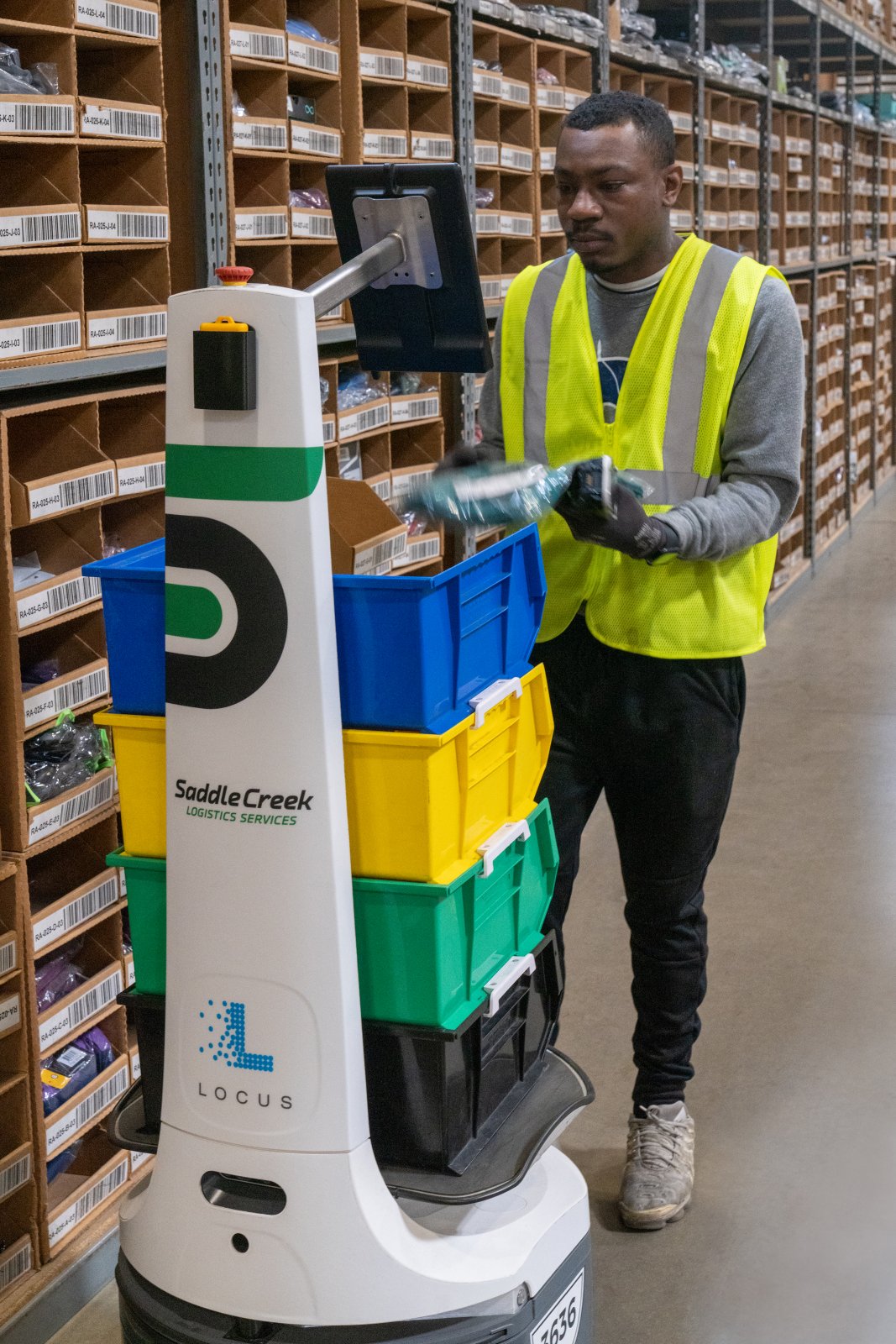
That is a useful purchasing discipline. The demonstration must survive the workday. A pilot can reveal that the elegant solution on a screen is awkward in an aisle. Waiting lets a vendor improve the technology without making associates live inside the experiment.
Growth arrives in awkward shapes
The customer list explains why flexibility matters. IPSY’s published case describes beauty-subscription kitting and quality checks. Jocko Fuel’s 2026 case describes retail, marketplace and ecommerce orders supported from a single inventory. Itzy Ritzy’s 2026 update reports unit-volume growth exceeding 70 percent over two years across several sales channels.
These are different businesses asking the same underlying question: can the operation keep up when the mix changes? Saddle Creek sits in the US contract-logistics market, where buyers can also consider providers such as GXO, Ryder and DHL Supply Chain. Its pitch centers on combining services and tailoring the operation. Procurement still has to test that pitch against the buyer’s actual locations, volumes and requirements.
Physical commitment accompanies the technology. In January 2026, the Las Vegas Review-Journal reported Saddle Creek’s $96.75 million purchase of its previously leased North Las Vegas warehouse. In July, Grady Martin succeeded retiring CEO Mark Cabrera. The business requires decisions about buildings and leadership as well as robots.
Copy the question before the machine
The practical takeaway is an editorial one: define the troublesome task, measure the existing operation, then test a change against productivity and worker usability. Include integration and delivery costs in the calculation. Low volumes, unpredictable demand or handling requirements that defeat the equipment can change the economics considerably.
For a prospective customer, the useful first conversation is therefore about orders: what arrives, what leaves, what peaks and what goes wrong. A robot may eventually enter that conversation. It should have to earn its invitation.