In 2019, Marc Gyöngyösi arrived in Kent, Washington, carrying twelve cameras, a laptop, and printed forklift manuals he had found online. He was there to work with Holman Logistics. In his later account of that visit, the OneTrack founder describes an early customer willing to try an unproven idea. It is a pleasingly scruffy beginning for an artificial intelligence project: before the software could explain the warehouse, someone had to learn the forklift.
Holman had a thoroughly physical problem. Lift trucks acquired scuffs. Incidents happened outside a supervisor’s line of sight. Managers needed to understand the moments between a goods scan and the next goods scan. A warehouse can know exactly where its inventory belongs while remaining surprisingly ignorant of how its people and machines actually move.
- Warehousing, factory support, fulfillment, and freight.
- 2019: computer vision tested against existing telemetry.
- Video evidence. Supervisor coaching. Repeat.
01The floor crack that cried wolf
Holman and OneTrack started a pilot at two Washington warehouses in early 2019. The experiment tested whether computer vision could improve safety and productivity beyond the existing telemetry. Cameras mounted on lift trucks supplied a view of events; software classified them; managers could use the footage for coaching.
At a Kimberly-Clark facility in Maumelle, Arkansas, the older system had an irritating habit. Driving over a floor crack, debris, or a dock plate could generate an alert resembling a safety incident. Managers spent time examining noise. The new system helped distinguish those events and gave them a record of what happened. The first weakness to address was the quality of the signal.
Holman reported improvements in nearly every incident category within fewer than three months, then extended the system to customer locations. The published 2020 sample also shows falling counts for phone violations, impacts, and aggressive turns. These are recorded events with different starting quarters, not injury rates or a controlled trial. Even with that caveat, the operational question becomes wonderfully concrete: which behavior should a supervisor discuss tomorrow?
Fewer recorded events.
02Two horses, then a very long learning curve
Edward and Jack Holman were teenagers when they started hauling goods from Portland’s Willamette River docks in 1864. They had moved west from New York the previous year. Their equipment consisted of two draft horses and a cart. Steamships brought the opportunity; the brothers supplied the short journey that connected arriving freight with the city.
The business later adopted motorized carts. During the Great Depression, Herbert M. Clark Sr. bought Holman using company stock and life insurance as collateral. The company’s history describes a business with debt, six trucks, some horse-drawn wagons, and one warehouse. His wager required personal financial exposure, decades before anyone arrived with computer vision.
By its 160th anniversary in 2024, Holman reported more than 1,500 employees across nine states and over nine million square feet of owned or managed warehouse space. Kimberly-Clark, GE Appliances, and Hill’s Pet Nutrition were among its named customers. The scale matters because a small recurring mistake has so many opportunities to recur.
03The work behind the brand
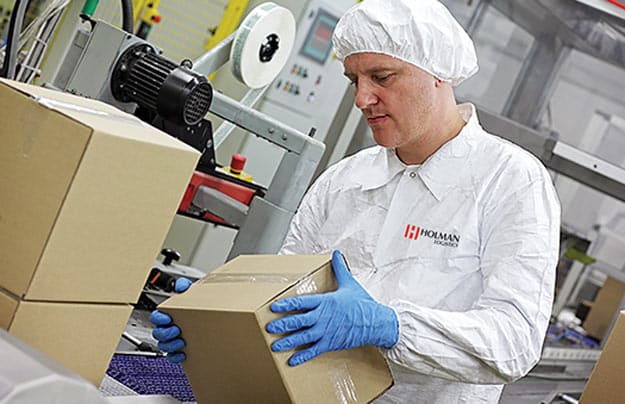
Holman sells logistics services to businesses. A customer can share a multi-client warehouse or use a dedicated operation shaped around its requirements. Holman can work with its own building and warehouse software or with a customer’s. Packaging, kitting, labeling, and rework sit alongside storage and distribution. This is an operating relationship with people, equipment, and inventory responsibilities.
Inside manufacturers’ plants, the remit reaches further upstream: raw-material inventory, material delivery, shipping and receiving, lot control, flexible workforce management, and equipment maintenance. For a manufacturer, the practical attraction is being able to concentrate on production while an outside specialist manages the surrounding choreography. A carton on the wrong side of a building can be a remarkably expensive prop.
Fulfillment extends that work to orders placed through different channels, including online shopping. On the road, Holman operates its own trucks and trailers with employed drivers, offering truckload, less-than-truckload, dedicated, and shuttle services. Managed brokerage adds outside carrier capacity when required. Its revenue comes from these contracted services; prospective customers request a tailored quote.
The relevant comparison is with other outsourced logistics operators, including GXO’s contract and shared-warehouse services. Holman’s pitch combines private ownership, long customer relationships, manufacturing support, and its own freight assets. Its AI partnerships add a specific operational practice to that pitch. Buyers still need to compare facility locations, handling requirements, service commitments, and the total quoted cost.
04An operator buys into software
In 2023, Holman formed Holman Logistics Ventures to invest in early-stage logistics technology companies. Fulfilld, a warehouse-software business using AI and machine learning, was among its initial investments. Holman said it was exploring deployment opportunities. Investing in a supplier gives the operator another way to participate in the tools it may eventually use.
Physical expansion continued too. A new Spanaway-Frederickson facility replaced two Kent multi-client operations in April 2023, offering additional space and easier truck access. In April 2025, Holman announced a Foreign Trade Zone facility at the same address. Eligible trade-zone arrangements can change the timing or treatment of customs duties; the company positioned the service around inventory flexibility and cash flow.
Leadership changed in June 2025. Mike Gardner took day-to-day operational leadership as president, while Brien Downie became CEO with responsibility for strategy and growth. In April 2026, Holman added a revenue growth manager role. The commercial push sits beside the company’s continuing investment in operations.
05After the alert
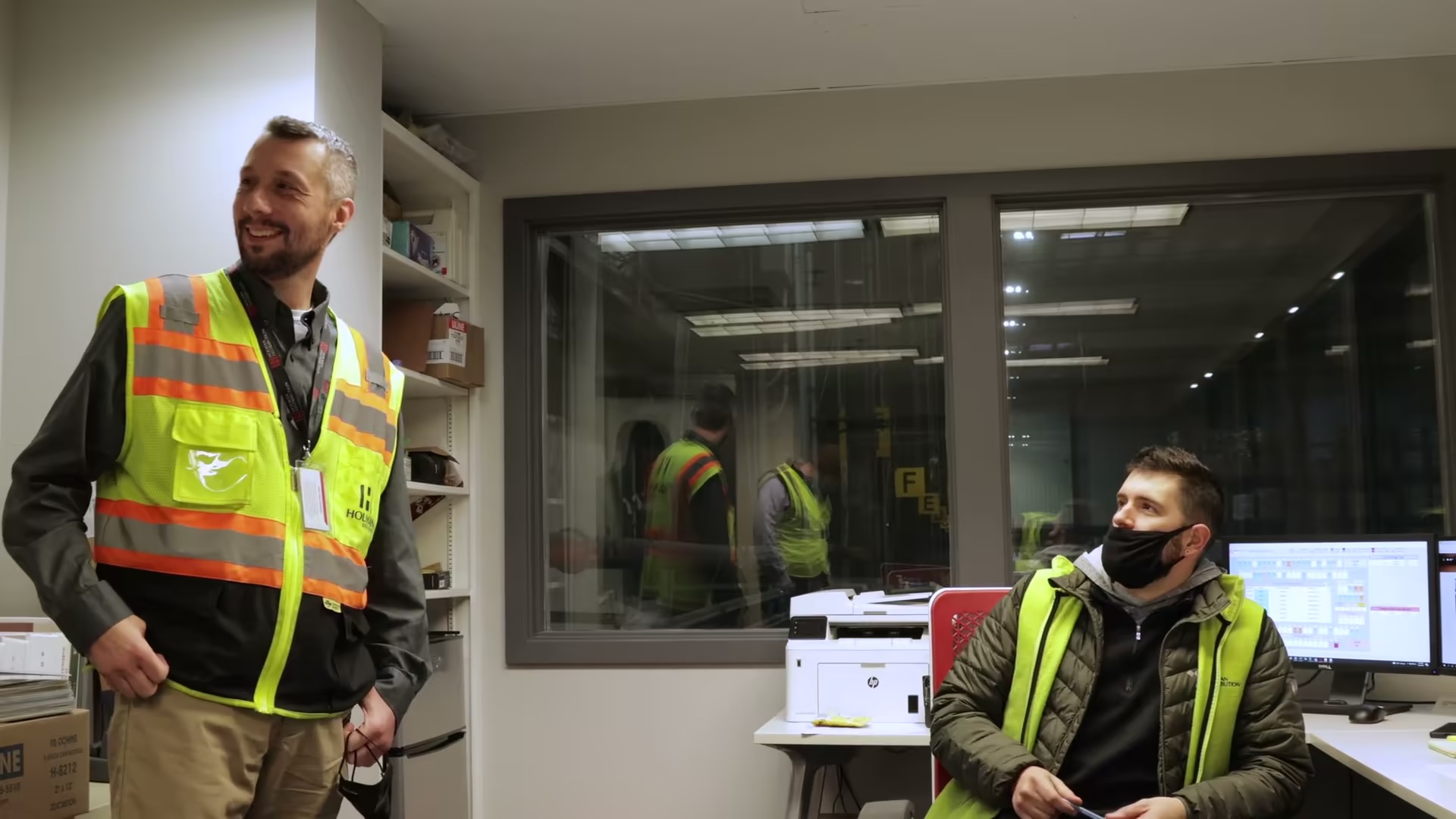
Holman calls its operating method the Extraordinary Service Process. It prioritizes hiring for character, safety training, technology that reduces errors, and a culture in which employees feel valued. The company explicitly describes technology as assistance for its people. In the forklift example, that philosophy acquires a practical test: does better evidence produce a better conversation?
The lesson another operator can copy is modest enough to be useful. Start with a recurring problem, test against the existing process, and decide in advance what improvement would justify expansion. Give supervisors time and training to act on what the system reveals. A camera program loses much of its value when alerts accumulate and coaching never happens.
OneTrack’s implementation guidance emphasizes supervisor involvement and employee buy-in. Those conditions matter as much as installation. Holman’s case makes an attractive argument for technology at the point of work: a useful system should help someone make a better decision on an ordinary shift. The next dent is a fairly unforgiving examiner.
“Everything we do at Holman has a Safety Focus.”
Brien Downie / 2021