A bottle has an inconvenient life before it reaches a refrigerator. It may need a sleeve, a variety pack, a pallet, a safe corner of a warehouse, a compliant label, a truck and half a dozen software updates. Every transfer creates another chance to lose time, inventory or patience. Verst Logistics has made a 60-year business out of those transfers. The private company from Walton, Kentucky does not simply store products. It picks orders, decorates containers, builds retail packs, brokers freight, runs dedicated fleets and gives customers a portal to watch the choreography.
That range places Verst in a particular corner of the third-party logistics market. Large national operators can offer enormous networks. Ecommerce specialists can make parcel fulfillment feel like software. Local warehouses can be flexible and familiar. Verst's proposition sits between them: enough physical scale to run roughly 8 million square feet across 25 warehouse locations, but a family-owned structure that still advertises direct access to leadership. The company says more than 2,200 people work across its divisions; its own website puts the figure above 2,500.
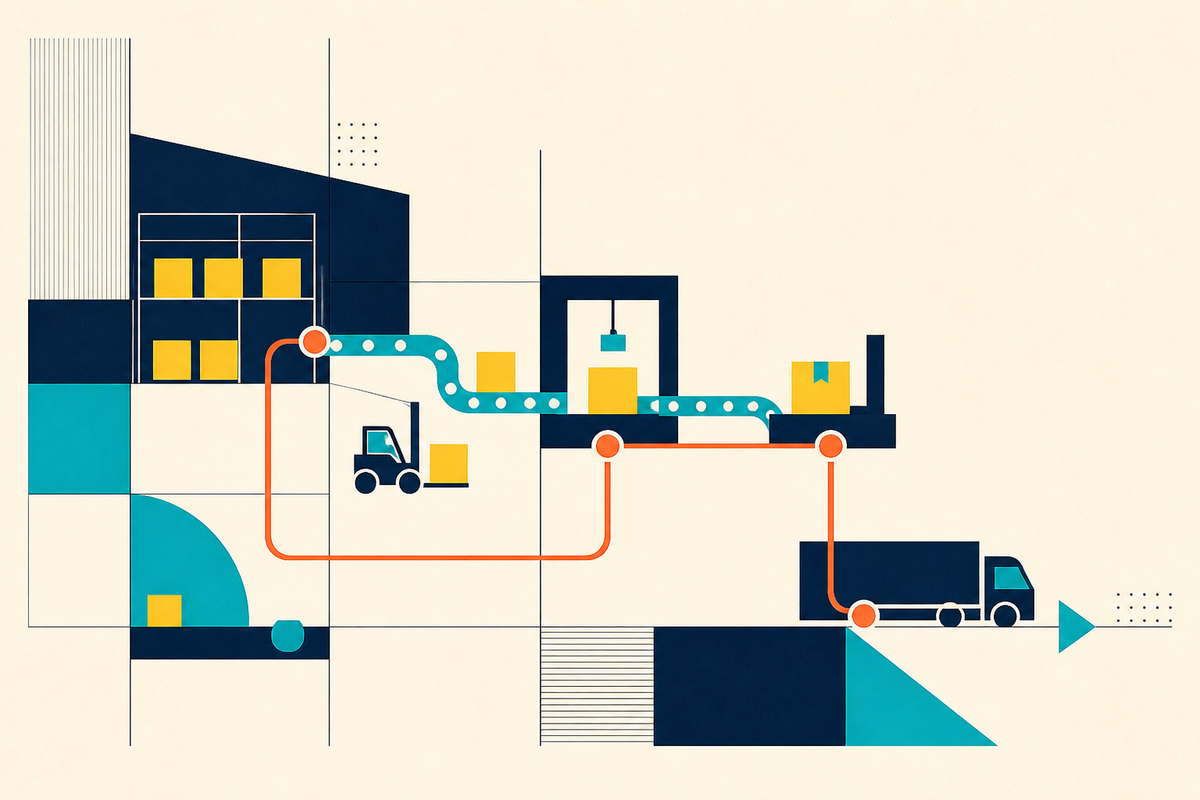
The business between the factory and the front door
Verst describes itself as an extension of the customer's business. In practical terms, that means selling infrastructure and operating skill to brands that would rather not buy a warehouse, recruit a holiday workforce, install a packaging line or build a transportation department. A company can hire Verst for one piece, such as freight brokerage, or combine dedicated warehousing, fulfillment, packaging and transport under one contract relationship.
One operator, four connected jobs
The packaging capability is the wrinkle. Many 3PLs will receive a finished case and ship it. Verst can work closer to the production line. Its services include shrink-sleeve and pressure-sensitive labeling, filling, repacking, bundle wrapping, palletizing and cartoning cans into variety packs. The company has shown a shrink-sleeve line running as fast as 550 cans per minute. For a beverage brand, the same provider can turn plain inventory into a retail-ready product, store it and arrange outbound freight.
“The middle of the supply chain is where small handoffs become expensive problems.”The logic behind Verst's integrated model
Surfside Iced Tea Vodka offers a tidy example. As the ready-to-drink brand expanded, Verst said it built 8-, 12- and 18-pack cartons, stored inventory, coordinated outbound freight and supplied tracking. Bugaboo presents a different puzzle: premium strollers and car seats require careful handling and a delivery experience that does not cheapen the product. Verst says Bugaboo eventually consolidated all North American inventory with the company after rapid onboarding and parcel-cost work. Georgia-Pacific, Allegion, Kraft Foods, Alani, Celanese and Fresh Baby also appear in public case studies.
Customers buy fewer surprises
The visible product is a warehouse or a truck. The thing customers actually buy is a reduction in unpleasant events: an automotive line waiting for a component, a retailer issuing a chargeback for a bad label, an ecommerce customer receiving the wrong color, or a beverage launch arriving after the promotion. Verst's customers span consumer packaged goods, food and beverage, automotive, industrial manufacturing and ecommerce. It says it works with 10 of the world's top 12 CPG companies and moves 200 million cases into grocery retail each year.
Each sector has its own tedious hazards. Food-grade buildings need track-and-trace, date-code and lot control. Wine and spirits require licensing and state-by-state knowledge. Automotive suppliers need real-time inventory because a missing part can stop a line. Ecommerce brands need returns, shopping-cart connections and parcel rates that do not erase a margin. Verst's appeal is not that these problems vanish. It is that one operator can see more of them at once.
The business model follows the physical work. A dedicated warehouse can produce recurring revenue from space, labor, equipment and management. Fulfillment adds activity fees for receiving, storage, picks, packs, parcels and returns. Packaging introduces line time, materials and changeovers. Transportation can be sold through a dedicated fleet, brokerage margin or a managed program that covers procurement, tracking, freight audit and payment. Verst does not publish a rate card because these are designed operations; building type, order profile, seasonality, service level and integration work all change the price.
This also explains why the sales process is consultative. Moving a fulfillment operation is not like changing a software password. Inventory has to be counted and transferred, retailer rules loaded, systems connected, packaging procedures tested and carrier cutoffs rehearsed. Once the operation works, switching costs can be substantial. The 3PL earns a durable relationship, while the customer expects continuous improvement rather than a static lease. Verst says its Cleo integration work has shortened traditional 90-day implementation timelines to roughly 30 to 45 days in some cases. The important product is therefore not floor space alone. It is a repeatable launch plan for turning a building into a functioning part of the customer's company.
Family name, enterprise machinery
William G. “Bill” Verst started the story in 1966 by buying Strothman Express. He added assets from J.C. Buckles Transfer two years later. Verst Group Logistics was formed as a management company in 1991; a packaging acquisition followed in 2000. This history explains why the modern business feels assembled rather than invented. Transportation came first, warehousing grew around it, and specialized packaging made the network more useful to consumer brands.
The family language could sound nostalgic if it were not paired with enterprise systems. Körber powers the warehouse-management layer. Cleo connects EDI and APIs to systems such as SAP, NetSuite, Amazon and Shopify. McLeod supports transportation management. Locus robots work beside pickers, reducing warehouse walking and helping the company report 99.7 percent order accuracy in robot-assisted operations. An automated shipping sorter can process 6,000 cartons an hour, with a reported 98.7 percent read rate.
The technology is not sold as a separate software subscription. It is embedded in the service: a customer sees inventory, order status and loads through dashboards while Verst runs the building and labor behind them. That distinction matters. Verst competes partly with Ryder, Penske Logistics, DHL Supply Chain, GXO and NFI, but also with software-forward fulfillment providers, regional warehouse firms, packaging specialists, freight brokers and the in-house team a customer might build instead.
Where the model wins - and where it must prove itself
Versus a national giant
Verst offers a smaller network, direct ownership access and specialized packaging inside the logistics relationship.
Versus a point vendor
It can reduce handoffs by connecting warehouse, fulfillment, decoration and freight operations.
Versus doing it yourself
Customers avoid large facility, equipment, technology and recruiting commitments.
Bundling is only valuable when the pieces work. A customer handing several operations to one provider gains a single point of accountability, but also increases dependence on that provider. Verst therefore has to demonstrate accuracy, uptime, safe operations and transparent pricing across several disciplines. The company uses quality controls, KPI dashboards and a stated “Zero Harm” safety goal as evidence. Its long tenure and private ownership support the promise of continuity, though private ownership also means outsiders receive little audited financial detail. A supplied business-data estimate places annual revenue near $230 million, not a figure publicly reported by Verst.
Geography is the other test. Verst's Northern Kentucky base is well placed for Midwest distribution, but national customers need more than a central dot on a map. Recent moves answer that problem. A 201,716-square-foot Baraboo, Wisconsin operation opened in 2024. A 331,683-square-foot packaging, distribution and fulfillment center followed in Glendale, Arizona in 2025. In 2026, an alliance with Matrix Bottling Group brought a planned 550,000-square-foot operation in Morganton, North Carolina, extending Verst's beverage capabilities into the Southeast.
A succession at 60
The anniversary year also changed who runs the company. Paul Verst, CEO since 1992, moved to executive chairman on August 1, 2026. Todd Johnson, president since 2019 and previously chief operating officer, became CEO while retaining the president title. The plan keeps a family owner engaged in long-term strategy and customer relationships while handing daily leadership to an operator with more than 30 years in the industry.
That arrangement will be measured less by ceremony than by execution. Verst is entering new regions, serving faster-growing beverage and ecommerce accounts and installing more automation, all while preserving the direct, familiar service it treats as an advantage. Scale tends to add layers. The company's job is to add square feet without adding distance between a customer and a decision.
“Our success has always been rooted in our people - their commitment, their expertise, and their passion for serving our customers.”Paul Verst, marking the company's 60th anniversary
There is nothing glamorous about a correctly labeled pallet leaving on time. That is precisely the point. Verst fits in the broad middle of American commerce, where brands become physical, retailer rules become real and software eventually meets a loading dock. Its most persuasive idea is simple: the fewer times responsibility changes hands, the fewer places there are for an excuse to hide.