The revealing number at EASE Logistics is two. Two minutes to answer a customer. In freight, that can sound almost comically modest. Nobody is buying a pleasant conversation; they are buying the arrival of something heavy, perishable or urgently missing. Yet the interval before someone answers tells you something about the system behind the telephone.
- EASE combines freight brokerage, fleet services, warehousing and outsourced logistics management.
- Its specialty is time-sensitive freight, particularly automotive and food and beverage shipments.
- AMMI supports daily operations; autonomous trucks remain distinct research deployments.
The reply is only the beginning
Peter Coratola Jr. founded EASE in 2014 in the back of his father’s office. Its name nearly became Midwest Loyal, until a lawyer questioned the geographical ceiling. EASE was a useful alternative: a promise about the customer’s experience rather than a boundary on the map.
Automotive freight supplied an unforgiving education. A missing component can interrupt an entire production schedule. EASE’s automotive offering now includes just-in-time deliveries, safety-stock coordination, dedicated carrier resources and contingency planning. The point is to keep a plant supplied, including when the original plan has become fiction.
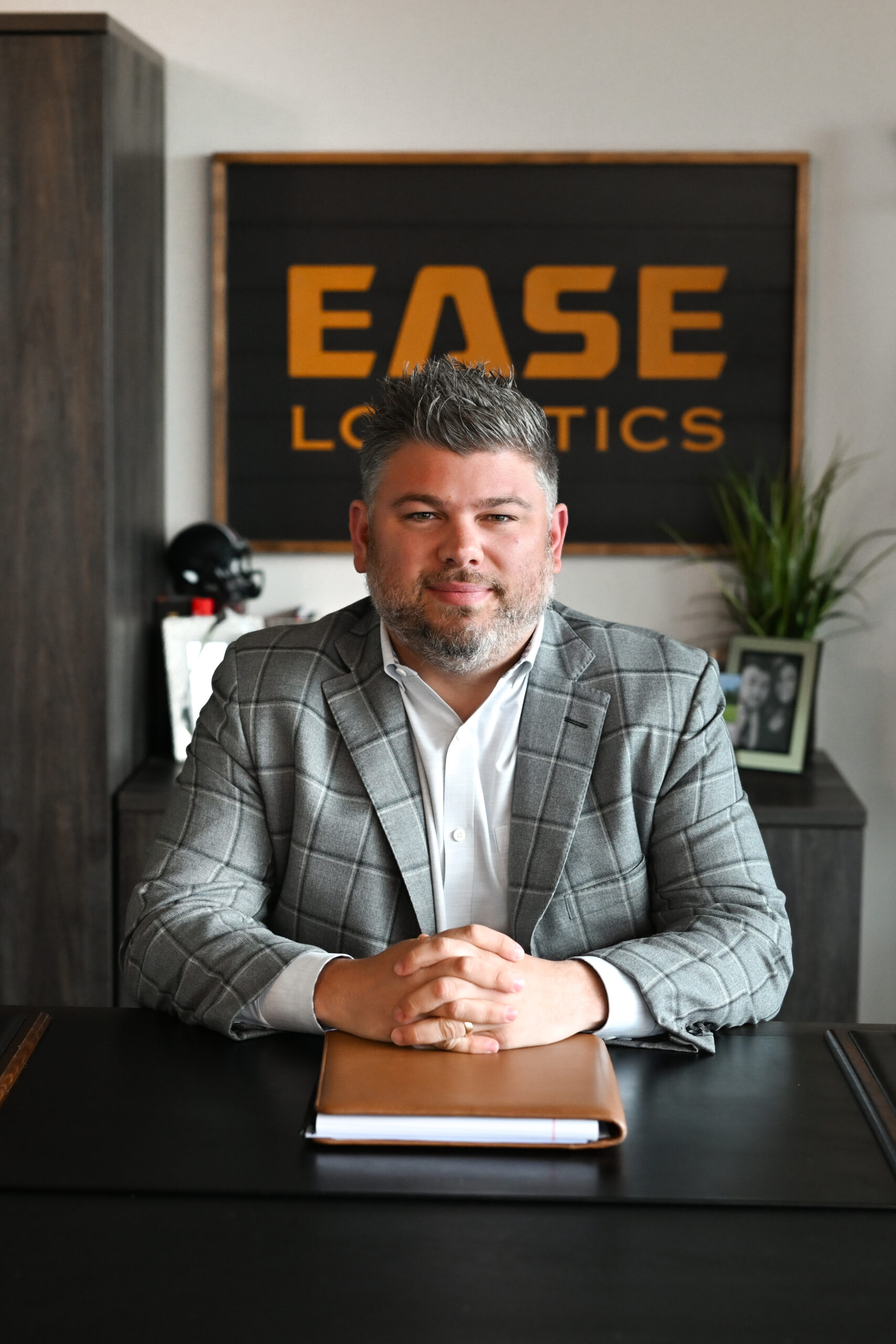
A February 2026 case study describes an unnamed global automaker with fragmented expedite operations. EASE installed a single-source model: continuous dispatch, on-site specialists, shared tracking and performance audits. The company reports that issue resolution fell from 60 minutes to 20. Replying quickly opened the door; organizing responsibility got the problem through it.
One automotive customer’s result, published February 2026.
A Friday audition
BODYARMOR provides a named example. According to EASE’s account, the beverage company needed help before it could complete the usual bidding process. EASE took the call on a Friday afternoon and doubled shipment volume without delays. The glamorous moment was, apparently, someone picking up.
BODYARMOR subsequently named EASE its 2022 Carrier of the Year. EASE reported 99.49% on-time delivery over the preceding 12 months. That is a historical account score, rather than a promise that every future shipment will behave. It does explain why a customer might buy responsiveness alongside trucking capacity.
Food freight adds another clock: temperature. EASE offers refrigerated transport, dry vans, emergency recovery and retail consolidation. These customers need products to arrive usable, traceable and within the receiving window. A cheap movement that spoils the contents is a rather expensive bargain.
A newer automotive account supplied another test. EASE says it joined as a small spot-recovery provider in November 2025, then took over freight incumbent brokers could not cover during storm disruption. Its June 2026 case study reports load growth above 900% through January and tender acceptance of at least 95% across five months. The customer remains unnamed, so the story is a provider’s account of its work. Still, the sequence is instructive: an initial assignment allowed the shipper to observe performance before expanding the relationship. An emergency turned that small audition into a much larger responsibility.
Buying more than a truck
Customers can buy an individual spot shipment, a dedicated lane, urgent delivery or specialist handling. The available modes range from less-than-truckload and intermodal to drayage and air charter. That breadth lets a shipper choose the movement around the problem, instead of bending every problem around one type of truck.
For larger assignments, EASE offers managed third-party logistics and fourth-party logistics. The latter makes it a lead provider coordinating vendors, suppliers, bids and transportation decisions. Its asset services add storage, fulfillment, distribution and cross-docking. A manufacturer can hand over a freight emergency or a substantial slice of its logistics operation.
The brokerage’s published terms identify its role as arranging third-party carriage. Customers pay shipment charges, with fuel and additional services affecting the bill. Beside conventional brokers and carriers, EASE’s distinctive pitch is the combination of operational attention and multiple services. The fair buying question is whether that coordination reduces the customer’s own workload.
Warehousing also changes the relationship. Cross-docking can move freight between incoming and outgoing equipment, while storage absorbs inventory that cannot immediately travel onward. With transport and facilities under one provider, the handoff becomes part of the assignment. That is particularly useful when production and receiving schedules disagree.
The bill for being available
There is physical weight behind the promise. In September 2022, EASE announced plans to spend more than $25 million on headquarters property, repairs and sustainability measures, plus $7 million in payroll associated with 140 planned jobs. Those were announced commitments, not a venture-funding round or a receipt for completed expenditure.
Culture has practical machinery, too. EASE says it created a cross-department employee strategy and innovation team during COVID-19. Its community work includes school-supply drives and food charities. Neither establishes freight performance by itself, but both describe a company asking employees to participate beyond their immediate desks.
“Stick to the plan, not your mood.”Peter Coratola Jr. / The Freight Pod, 2025
Forty-five seconds, with a human nearby
In April 2026, EASE announced AMMI, its proprietary operational intelligence layer. The company reported more than 40,000 tasks weekly and quote-to-confirmation time below 45 seconds, down from five to six minutes. That measures one workflow; it does not mean a truck arrives in 45 seconds. Logistics retains certain stubborn loyalties to geography.
AMMI’s customer dashboard brings shipment activity, alerts and performance information into the same view used by EASE’s teams. It is embedded in the service rather than sold as standalone software to implement. In May, EASE appointed Ken Adamo chief strategy officer, with responsibility for the platform roadmap and pricing intelligence.
Purple lights, real freight
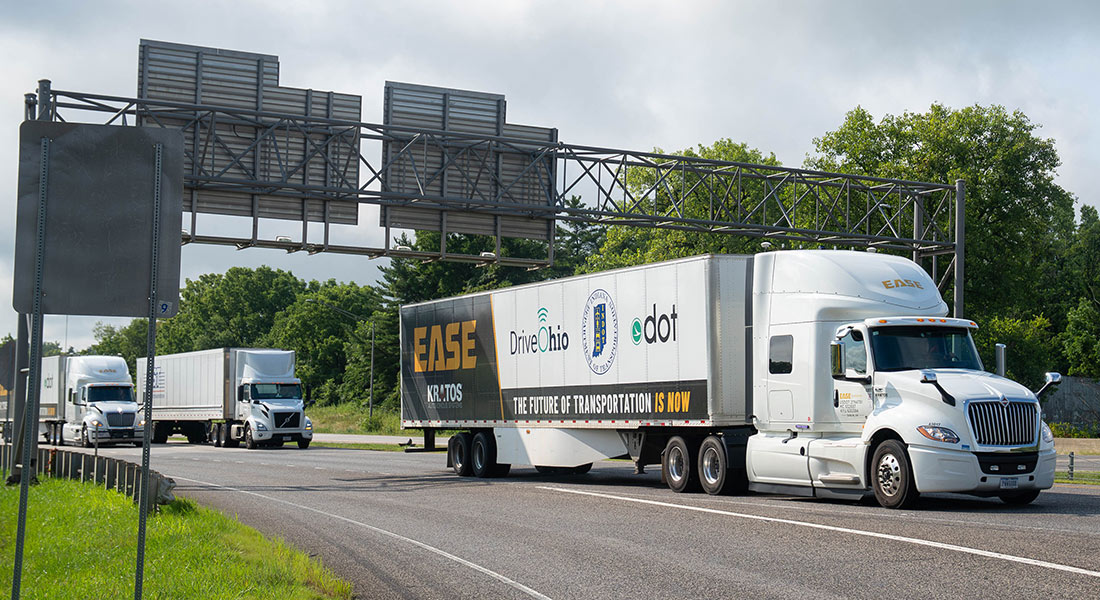
The trucking experiments are more visible. EASE hosts fleet work on the 166-mile I-70 corridor between Columbus and Indianapolis. Kratos technology links a human-driven leader to an automated follower. This deployment keeps a safety driver in the follower’s cab; purple lights signal platooning mode.
A separate May 2026 announcement with Einride described cab-less electric trucks moving goods between Marysville warehouses, with remote monitoring and summer proof-of-concept service planned. A bounded warehouse run and highway platooning answer different questions. Neither announcement proves that unrestricted autonomous freight is ready everywhere.
Borrow the discipline
The transferable idea is to measure what happens after the reply: who owns the exception, what information everyone shares and how quickly somebody can authorize recovery. EASE’s case studies make those responsibilities concrete. Buying its services starts with a quote; copying its discipline starts with an escalation plan.
The model makes most sense where interruption, perishability or coordination consumes money. A buyer wanting only self-service price shopping may choose differently. Software and quick answers cannot create unavailable capacity. EASE’s useful proposition is that, when a shipment becomes a problem, somebody remains responsible for working it.