Consider a box of frozen seafood arriving at an American port. Its itinerary looks simple: off the ship, into a warehouse, onto a truck. Yet each arrow conceals a negotiation. Who unloads it? Where does inspection happen? Who keeps it cold while somebody answers the first two questions? FreezPak Logistics has built a business around making those arrows less troublesome. The freezer is only the most conspicuous part.
- Follow the cargo: build cold-storage capacity around port markets.
- Join the chores: offer storage, transport and handling through one operator.
- Mind the machinery: warehouse design and forklift power shape the economics.
A freezer is a geography problem
Brothers David and Michael Saoud founded FreezPak in 2001. Their education in food preceded the company. The family traces its involvement in the trade to 1961, through a business that moved from retail into wholesale and frozen foods. A retailer sees the customer waiting. A wholesaler sees the stock waiting. A cold-storage operator must accommodate both kinds of impatience.
The brothers carried that background into a company offering frozen, chilled and dry storage alongside distribution services. Today, their network reaches from New Jersey to California. Its expansion has concentrated on port markets, where goods enter the country and a poorly arranged journey can accumulate miles before it accomplishes very much.
That preference gives the company its organizing idea. Storage belongs close to the movements it serves. A convenient address can shorten a truck journey; combining services there can simplify the next decision. For an importer, the attraction is practical: fewer arrangements between the arrival of a container and the departure of an order.
The forklift that ran out of patience
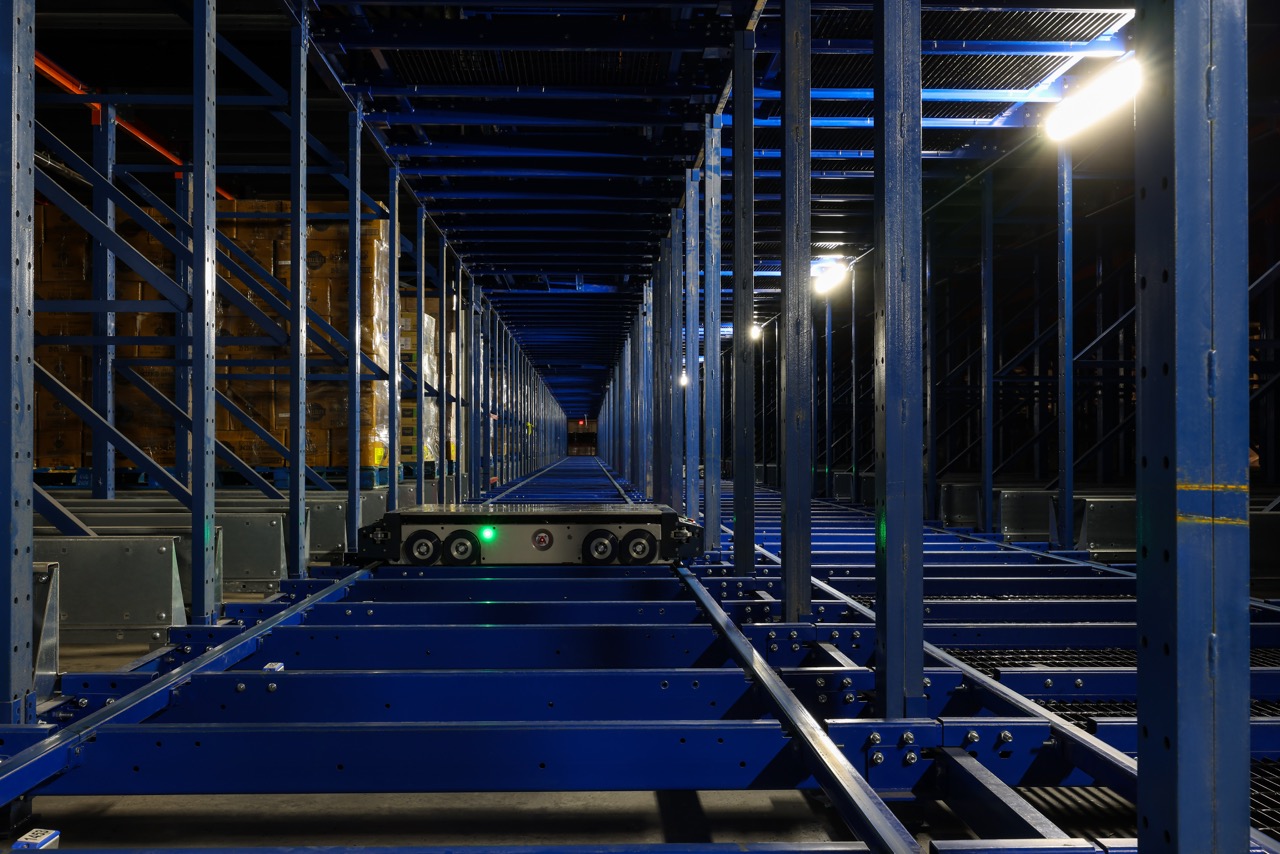
The more amusing clue to FreezPak’s thinking sits below the warehouse skyline. Refrigerated environments are unkind to forklift batteries. A 2016 industry account noted that a battery rated for eight hours at 77 degrees Fahrenheit might deliver half that life in a cold or frozen setting. The room stays cold; the equipment loses endurance.
FreezPak adopted Plug Power hydrogen fuel cells. Plug dates operation of its small-scale solution in Carteret to 2015 and its extension to Paterson to 2016. Instead of reproducing the whole fueling arrangement, the company used Carteret as a hub, transporting hydrogen roughly 30 miles to the second site. Infrastructure could serve more than one address.
By October 2022, Plug announced an agreement covering nine additional FreezPak sites and nearly 400 lift trucks. Its release reported that FreezPak had seen a 100% productivity increase after replacing lead-acid batteries. That is a customer-reported result published by the supplier, so it deserves narrower treatment than a universal promise. The useful lesson is to examine the bottleneck: charging interruptions and declining power can make an otherwise busy warehouse wait.
Share the infrastructure when distance and demand make the arrangement sensible.
The expensive art of keeping things cold
Warehouses do not appear through managerial conviction alone. In July 2022, FreezPak and BG Capital announced a partnership to develop $1 billion in cold-storage facilities nationwide. This was a development ambition. Treating the number as a venture round, company valuation or completed construction bill would give it a meaning it never had.
One project makes the cost tangible. December 2022 reporting put the Philadelphia facility’s estimated price at $93 million. Separately, its property financing included $30.08 million in C-PACE debt from Nuveen Green Capital. The program announcement described energy-efficiency and water-conservation measures, including insulation-related building components, lighting and freezer equipment.
The Philadelphia Energy Authority said the design would be 30% more efficient than the city’s building energy code required. That was a project claim at financing, rather than a measured operating result. Still, it reveals a useful connection: in a building dedicated to removing heat, energy decisions belong in the construction conversation.
“Peace of mind. Delivered.”
FreezPak’s company tagline
Saoud Development, established in 2020, is the founders’ real-estate arm. It designs and develops facilities for the logistics business. In a 2024 industry interview, David Saoud emphasized ground-up construction and facilities tailored to FreezPak’s operating needs. The editorial inference is straightforward: owning the design conversation gives an operator a chance to arrange the building around the job.
Selling fewer handoffs
FreezPak’s customers are businesses moving temperature-sensitive goods: food importers, exporters, manufacturers and distributors. Its announcements also identify pharmaceuticals and other perishables. They can buy storage, transportation, container unloading, repacking and fulfillment services. Inspection support adds another task that would otherwise require coordination elsewhere.
Crossdocking is a particularly revealing service. Goods move from inbound transport to outbound transport with less time in storage. A warehouse operator offering a way to avoid prolonged warehousing may sound like a restaurant recommending a shorter lunch. But the customer is buying movement as well as space. Faster passage can be the service that earns the next assignment.
The business earns contracted storage, handling and logistics charges. FreezPak describes itself as a fourth-party logistics provider, emphasizing coordination across services. Buyers should translate that phrase into questions about their own freight: which services are available at the chosen facility, which movements are covered, and how inventory information reaches their team?
The map keeps getting bigger
Ranked by warehouse capacity, not revenue or service quality.
The 2025 Global Cold Chain Alliance list placed FreezPak fourth in North America and eighth globally, behind much larger operators including Lineage and Americold. The ranking establishes scale. It cannot tell a particular importer which company will handle Tuesday’s container better.
A Los Angeles facility announced in December 2024 added 20,000 frozen and cooler pallet positions about 20 miles from the Los Angeles and Long Beach ports. Jacksonville followed with an April 2025 opening announcement and over 50,000 pallet positions. In 2026, FreezPak announced its Fall River opening, extending the network into New England.
The approach needs freight demand, suitable financing and routes that reward these locations. Shared hydrogen infrastructure needs reliable fuel supply and sufficient utilization. A shipper with different routes or modest requirements may find a regional specialist more convenient. Readers can copy the questions: where does work stall, which handoffs can disappear, and can expensive infrastructure serve twice? Frozen seafood, after all, has little interest in corporate ambition. It needs the next arrow to work.