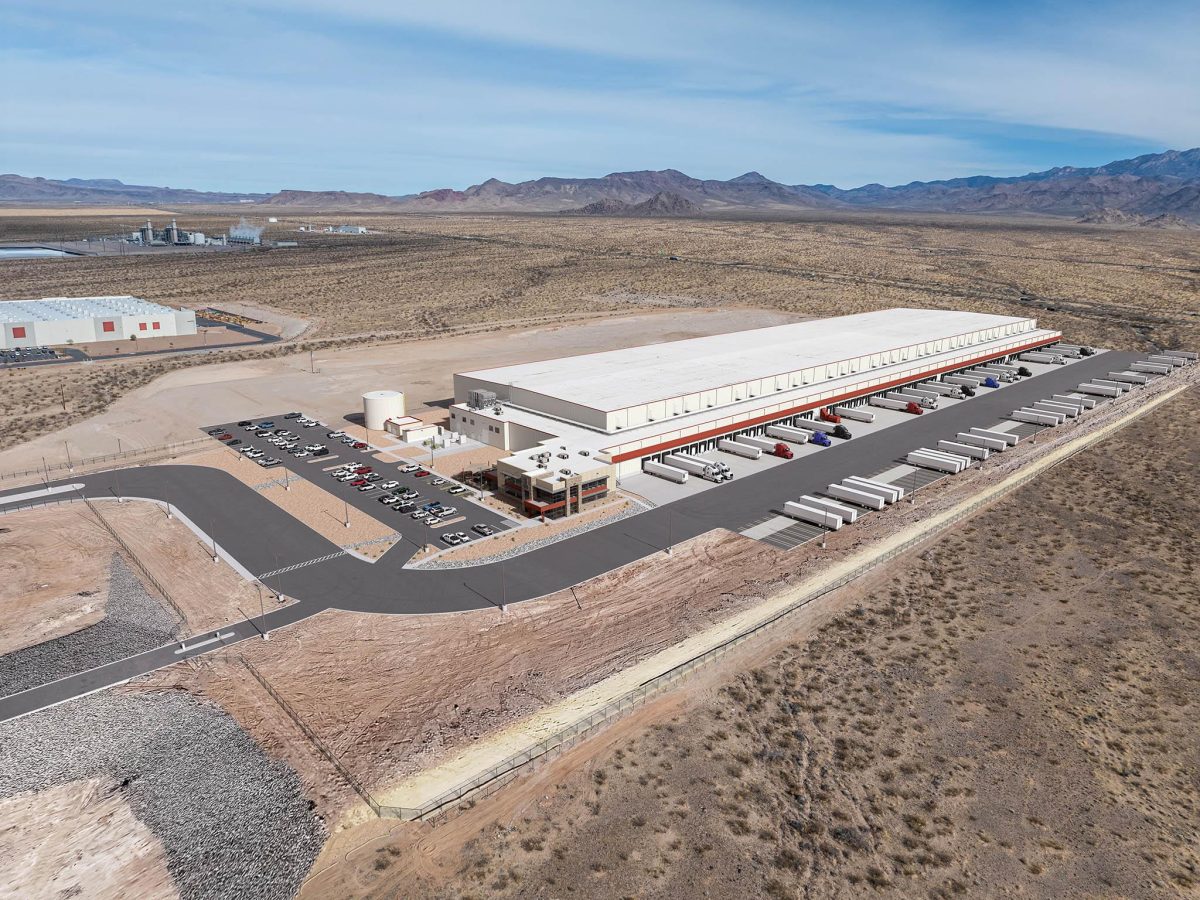
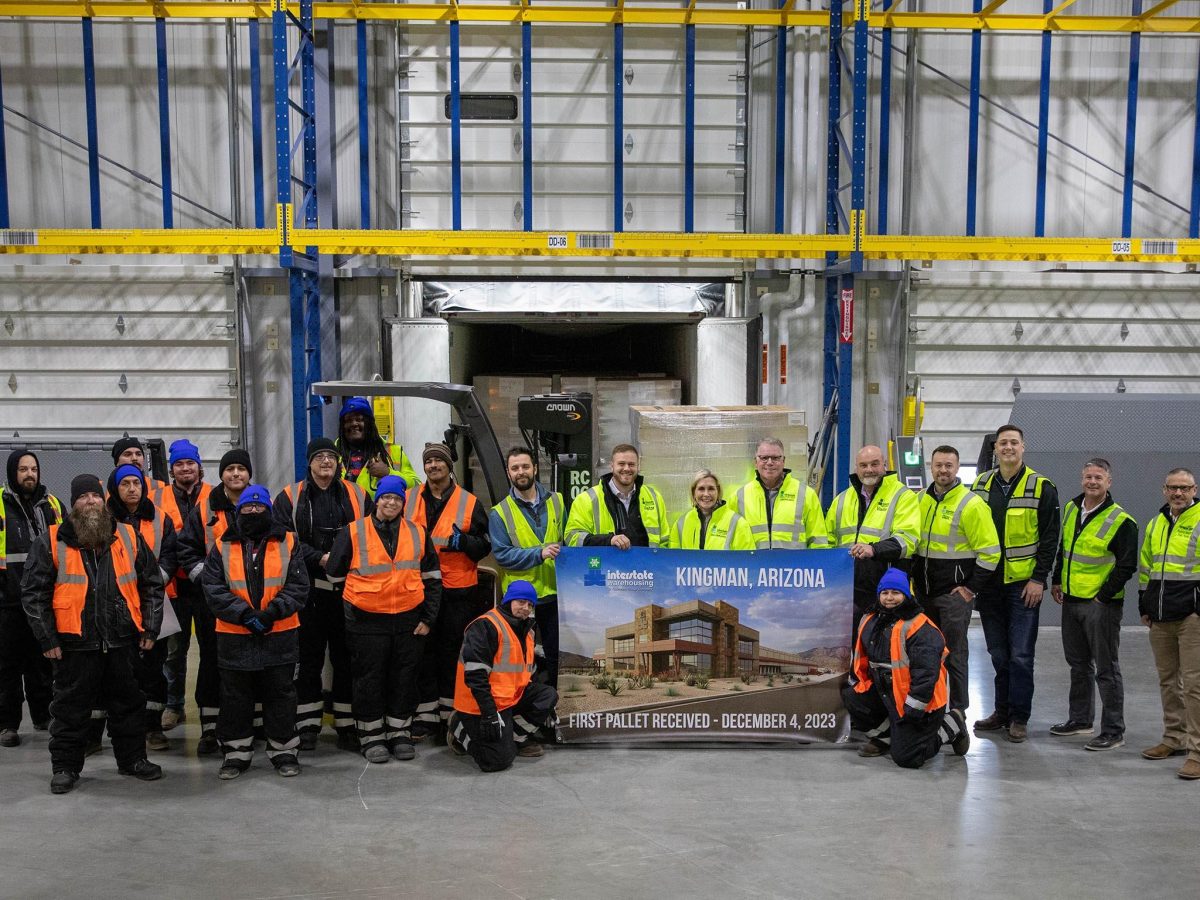
On December 4, 2023, a truck from Bakehouse Bread Company brought the first pallet into Interstate Warehousing’s new Kingman, Arizona, facility. Bread is an agreeable guest. It does not demand a corner office. Yet within a couple of months, according to the company, the entire building was full. A 273,000-square-foot freezer had acquired the most flattering problem in warehousing: nowhere left to put things.
- Kingman filled within months of its December 2023 opening.
- A 2025 expansion brought it to 467,000 square feet.
- Customers buy cold storage and a coordinated route into food distribution networks.
Kingman handled nearly 100,000 orders during 2024. In February 2025, Interstate announced another 194,000 square feet and 24,000 pallet positions. Its current facility listing records the expansion as completed in 2025, with 467,000 square feet and 55,000 pallet positions. The first constraint was space. Customers’ demand for more storage and distribution capacity supplied the reason to build again.
That sequence offers a useful way into a business most shoppers never see. Interstate stores and distributes refrigerated and frozen food for producers, retailers and foodservice businesses. Its customers need goods kept at the right temperature, orders assembled correctly and deliveries coordinated. The freezer is only the beginning. A building full of food can still be a building full of expensive confusion.
The desert was already on the shopping list
The Arizona move did not begin with a vacant lot looking for a purpose. In its 2022 groundbreaking announcement, Interstate said existing customers had spent years asking for a western alternative. Kingman offered access to Las Vegas, Phoenix and Los Angeles. The company bought a 92-acre site and planned for eventual development of up to 1.2 million square feet. Expansion was drawn into the map before the first loaf arrived.
Kroger made the commercial logic unusually explicit. A June 2023 letter to suppliers described Kingman as a new frozen consolidation point supporting its western distribution centers, including King Soopers, Ralphs, Fry’s, Smith’s and Fred Meyer. The retailer expected shorter lead times, lower transportation costs and additional network capacity. These were expected benefits, rather than published measurements of savings.
Consolidation sounds like a committee’s word for tidying up. Here it means coordinating suppliers’ frozen products through a shared distribution point for retail replenishment. A food producer gets access to an established flow into a retailer’s network. The retailer gets a more coordinated supply chain. The useful question is whether those destinations match your customers, rather than whether the warehouse looks impressive from the highway.
A freezer with its own builder
Interstate’s unusual advantage sits next door on the organization chart. Tippmann Construction, its sister company, designed and built Kingman. One business operates cold warehouses; the other constructs temperature-controlled facilities. That gives the group direct operating experience to bring into design decisions. At Kingman, those decisions include a 55-foot clear ceiling and turret trucks working in very narrow aisles to make more room for pallets.
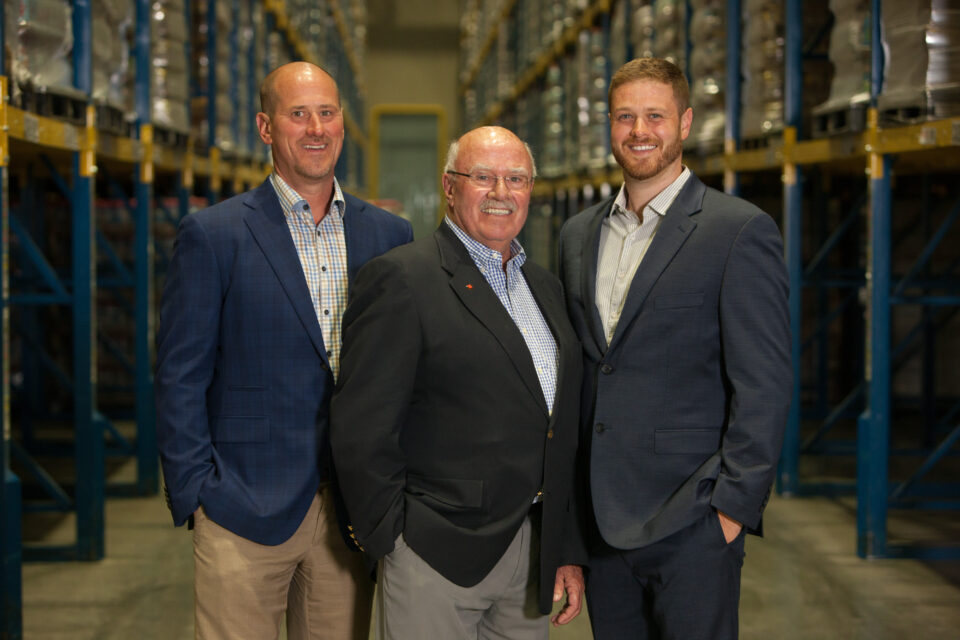
The relationship has a long history. John Tippmann Sr. founded Tippmann Construction in 1968 and began operating cold-storage facilities under the Interstate Warehousing name in 1984, according to the group’s timeline. John Tippmann Jr. became president in 2013. Interstate describes a management development and training program intended to carry its culture through the company. Family ownership supplies continuity; training gives that continuity a practical mechanism.
Today Interstate lists eight U.S. warehouse locations and more than 500,000 pallet positions. GCCA’s 2026 North American table ranks it fifth among member operators by temperature-controlled capacity, at roughly 141 million cubic feet. Lineage, Americold and United States Cold Storage are larger alternatives. Interstate’s proposition combines a national network, food-focused consolidation and the operating knowledge of a related builder. Buyers still need to compare the specific lane and facility.
The clever part is the air
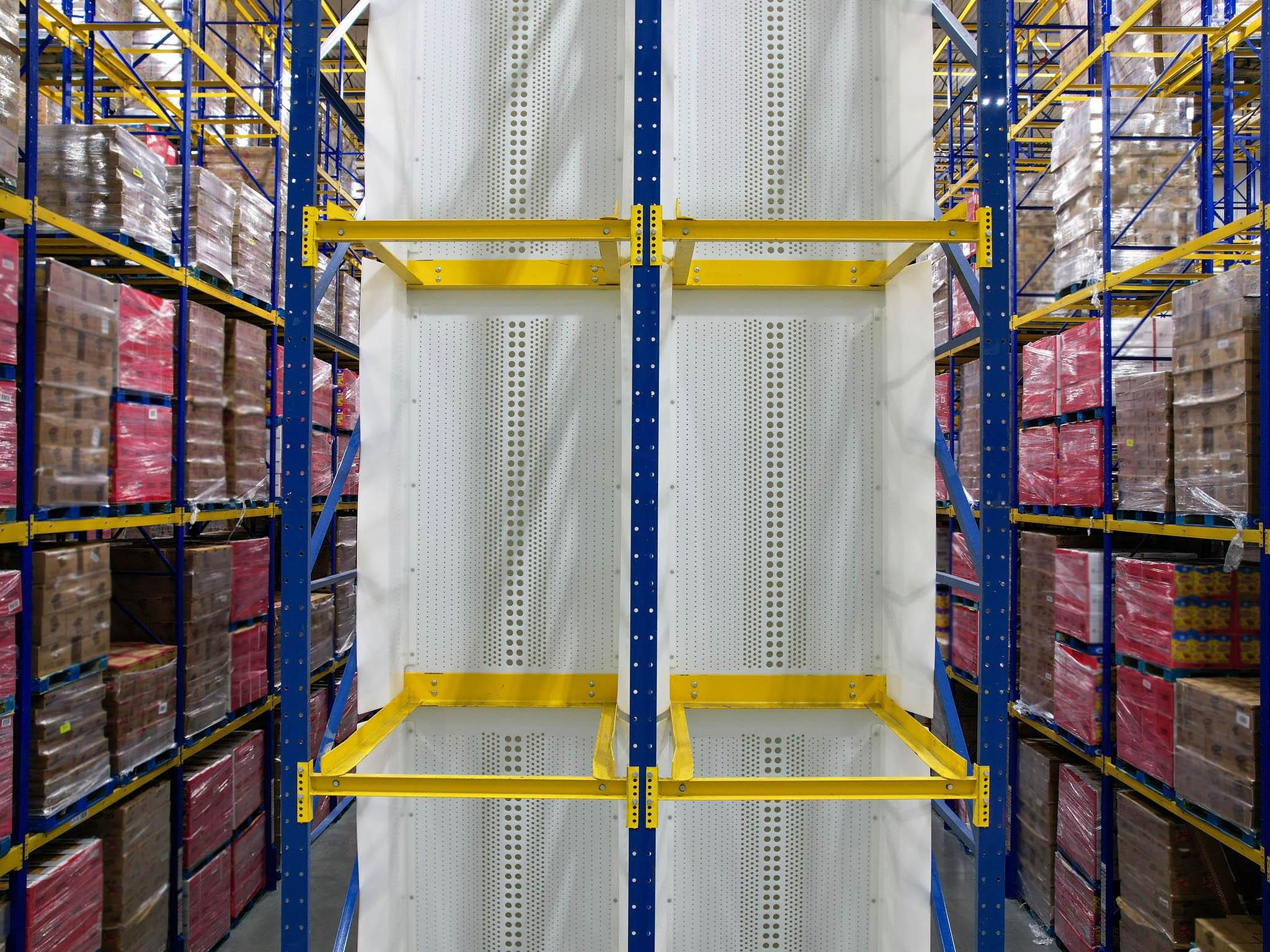
Some of the group’s engineering came from operating the warehouses themselves. Its timeline places development of the QFR Zone in-rack freezing system at Interstate’s Newport News facility in 2006, followed by the first installation in 2009. The central idea is wonderfully unglamorous: move chilled air through palletized product more effectively, rather than simply making the surrounding space colder.
The current design uses side seals and a Perforated Plenum Panel to regulate pressure and direct airflow. Tippmann says the arrangement reduces freezing time and energy use, with flexibility for full or partial pallets and containers such as pails and barrels. Those are company claims, dependent on the application. By 2025, the group’s timeline records installation of its 25,000th QFR pallet position.
The agreeable irony is that Lineage, a warehousing competitor, also uses the group’s freezing and thawing equipment. Tippmann’s Stevens Point case study describes Lineage choosing QFR and QTR systems for added services. These equipment customers should not be mistaken for Interstate storage customers. The distinction reveals two businesses inside the group: handling food for clients and supplying technology that other operators can use themselves.
“we have had several customers express an interest in having Interstate Warehousing provide a West Coast alternative”John Tippmann Jr. · December 2022
What a pallet actually buys
Interstate’s business is paid storage, handling and distribution work for other businesses. At Franklin, Indiana, its Partner SHIP retail frozen consolidation program sits inside an 885,000-square-foot facility with 115,000 pallet positions. Customers also get eView, a real-time inventory portal. The facility lists round-the-clock operation, voice picking, drop-trailer staging and a secured yard. These details matter when the product must move, rather than merely remain cold.
Physical scale carries a physical bill. The initial Anderson, Indiana, warehouse was announced in 2017 as a $30 million capital investment. Contemporary reporting split that into about $20 million for the property and $10 million for equipment. This is a historical project cost, not a customer price or a funding round. Cold-chain capacity arrives with concrete, machinery and an electricity account.
There is also a perfectly sensible customer who should choose another arrangement. In Tippmann’s JBS Worthington case study, the producer wanted to freeze at its processing plant to retain control and avoid outside transportation and third-party freezing fees. It bought QFR equipment instead. For a producer with suitable on-site capacity, outsourcing that step can add a journey the product does not need.
The lesson to copy is specific: establish the customer route before committing to the site, preserve expansion room, and improve the movement of both product and air. Kingman’s early fullness shows how quickly demand can outrun the first building. Interstate answered with another phase on the same plot. The bread had barely settled in before the floor plan needed another chapter.
Follow the food
Services · Kingman · QFR · News · LinkedIn · Instagram · Facebook.