In Indianapolis, a customer brought Vertical Cold Storage a request that had little to do with making a room colder. The warehouse needed organic certification. There would be documents to review, an inspection to pass and operating procedures to examine. Vertical obtained the certification from Where Food Comes From Organic in February 2026. A freezer had acquired a new capability without changing its temperature.
THE STORY IN THREE POINTS
- The bet: earn business by handling the complicated work around refrigerated storage.
- The scale: 13 U.S. facilities announced by June 2026, assembled through acquisitions and construction.
- The lesson: a customer’s awkward requirement can reveal which capability to build next.
A certificate is a warehouse upgrade
The Indianapolis announcement explains the practical reward: customers can consolidate organic products from multiple origins at one location. A regulatory requirement becomes a distribution opportunity. For a food business, the useful question is not simply where the inventory can stay cold. It is how many separate arrangements are needed before that inventory can leave.
“A customer came to us with a need and we delivered.”
Jim Henderson · Chief commercial officer
There is an appealing lack of glamour here. The addition consists of documentation, inspection and procedure. Somewhere in the cold chain, paperwork has become a product.
Buy the building. Keep the customer.
Founded in 2020, Vertical publicly launched its approach in 2021 under former Cloverleaf Cold Storage executives Curt Mastbergen and Ken Smith, with backing from investment firm Platform Ventures. Its diagnosis was pointed: temperature-controlled space had become a commodity, while service deteriorated. That was the company’s argument for entering the market, rather than an independently established verdict on every rival.
Platform’s launch explanation supplies the other half of the origin story. The investor was interested in cold storage before COVID, but wanted operational expertise to accompany its capital. The former Cloverleaf team supplied that experience. The point is easy to miss amid acquisition announcements: money could purchase the buildings, but it needed people who understood the activities inside them. The combination made the proposed network credible to its backer.
Its first acquisition offers a better explanation than its launch rhetoric. In 2021, Vertical bought Liberty Cold Storage near Chicago from West Liberty Foods. The meat processor remained a major customer. West Liberty could concentrate on manufacturing and packaging; Vertical could take responsibility for the warehouse work supporting them. The sale changed who owned the building while preserving a reason to fill it.
More purchases followed: Lone Star Cold Storage, three facilities from United States Cold Storage, and Indiana operator MWCold. Vertical also built from scratch. West Hutchison, appointed CEO in September 2022, brought experience at Americold, Emergent Cold and Lineage. The enterprise was young; the people running it had already spent years learning the business.
The freezer came with a $66 million price tag
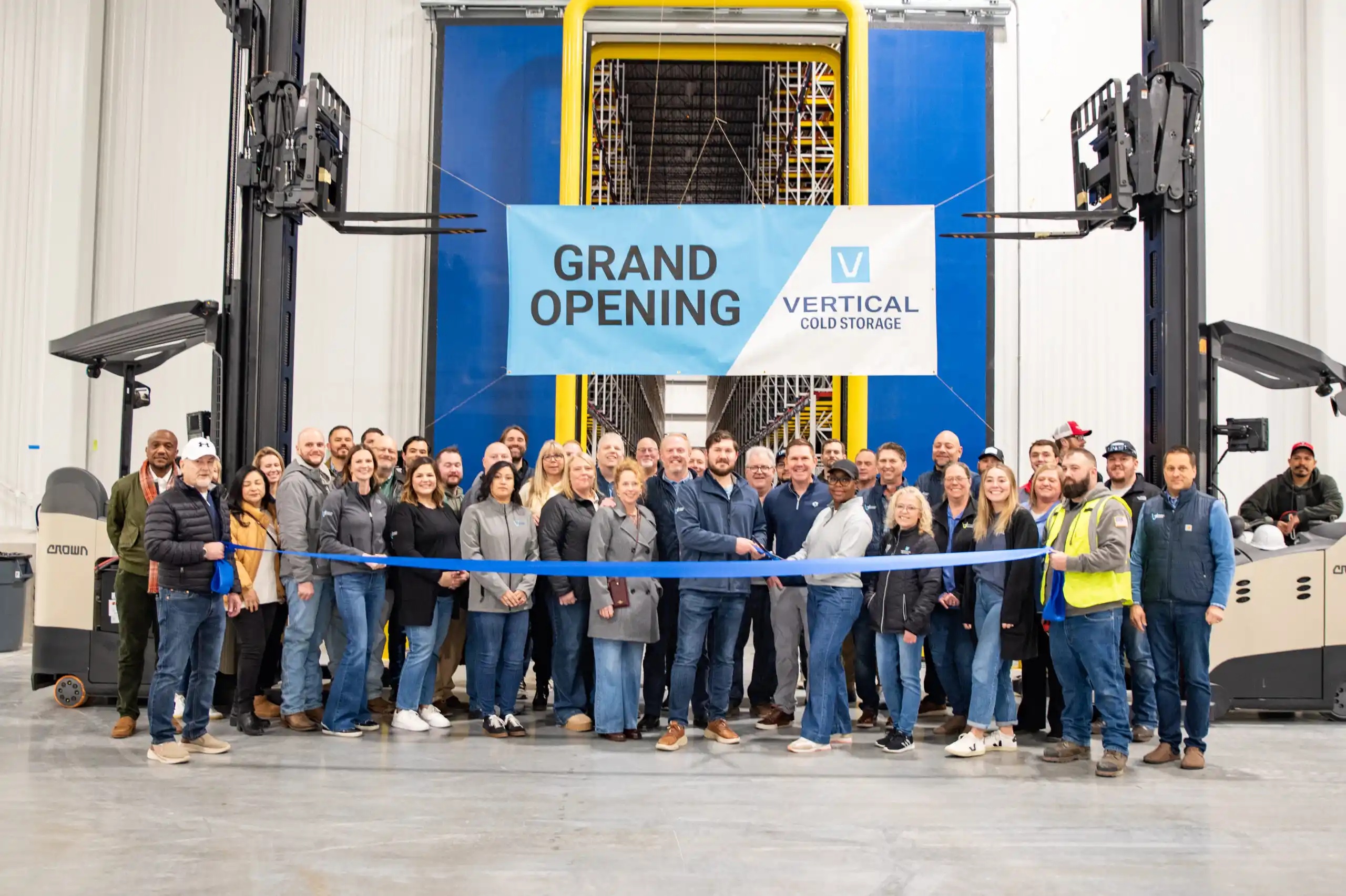
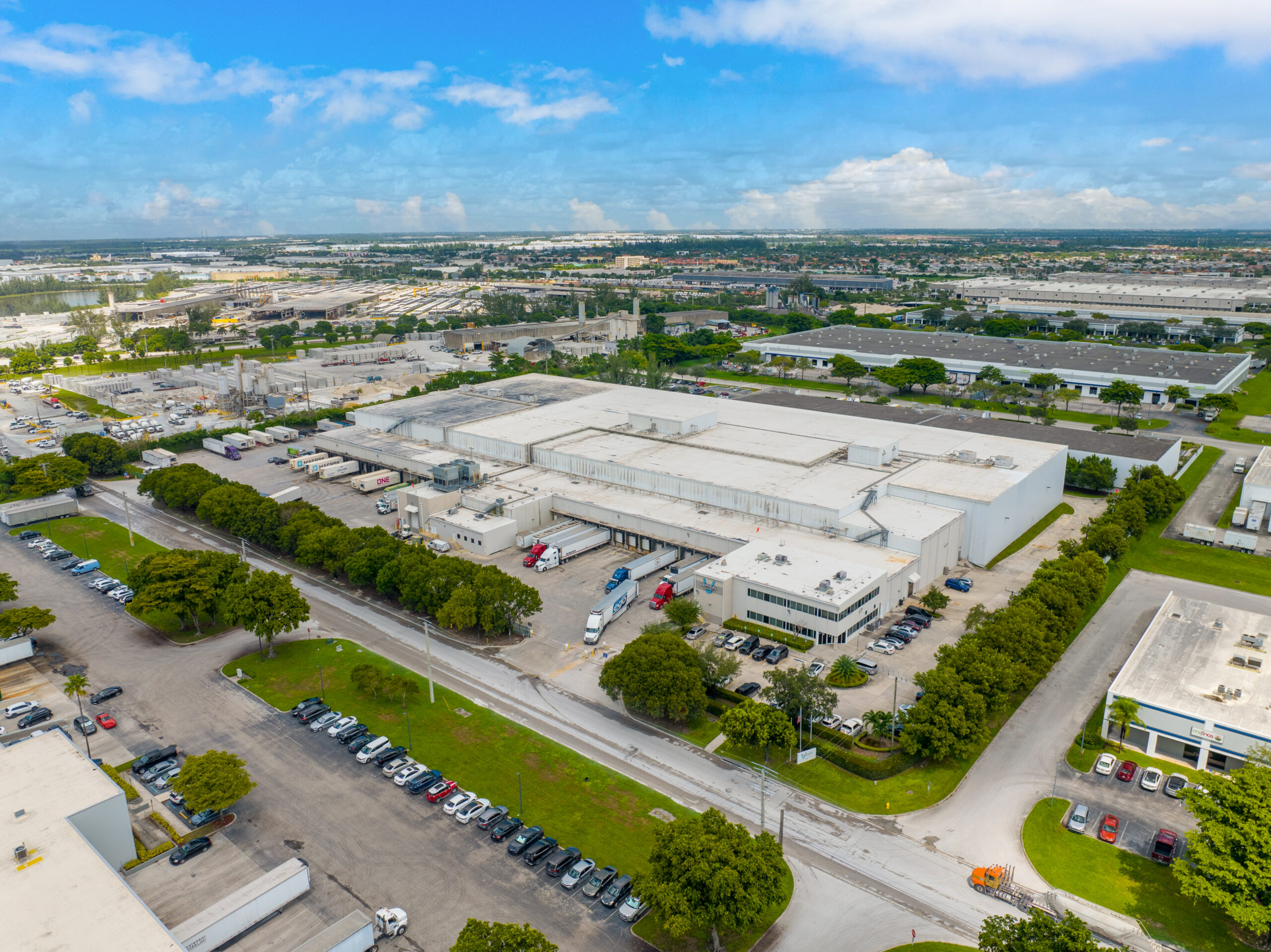
This strategy requires substantial capital. The Real Deal reported that Vertical paid $66 million for the Medley, Florida, freezer property in May 2022, citing records. It also reported a $41 million UMB Bank loan financing the purchase. Those figures concern one property and its financing, rather than the value of the whole company. Cold storage may sound dull; its purchase orders are quite awake.
Kansas City shows the construction side of the wager. Opened in January 2025, the facility spans more than 311,000 square feet and sits beside a CPKC intermodal terminal. Its opening announcement described convertible rooms from +35°F to -20°F. The layout accommodates different products, while the location connects warehouse operations to rail and road distribution.
A NETWORK TAKES SHAPE
Reported refrigerated capacity
Cubic feet, rounded. GCCA annual member capacity lists; capacity is not a measure of sales or occupancy.
GCCA’s April 2026 list places Vertical seventh in North America by member-reported refrigerated capacity, at roughly 101.4 million cubic feet. Lineage, Americold and United States Cold Storage operate substantially larger networks. Vertical’s stated distinction is its willingness to do labor-intensive, complicated work. Buyers still need to compare actual services and routes; a pitch is not a service guarantee.
A pallet has more than one problem
Consider what happens around storage. Blast freezing rapidly freezes product. Case picking assembles the particular quantities a customer wants. Labeling and date coding prepare cases for their next destination. Cross-docking transfers goods onward without a lengthy storage stay. Import and export work adds documentation and inspection. Each service can remove another handoff from the customer’s itinerary.
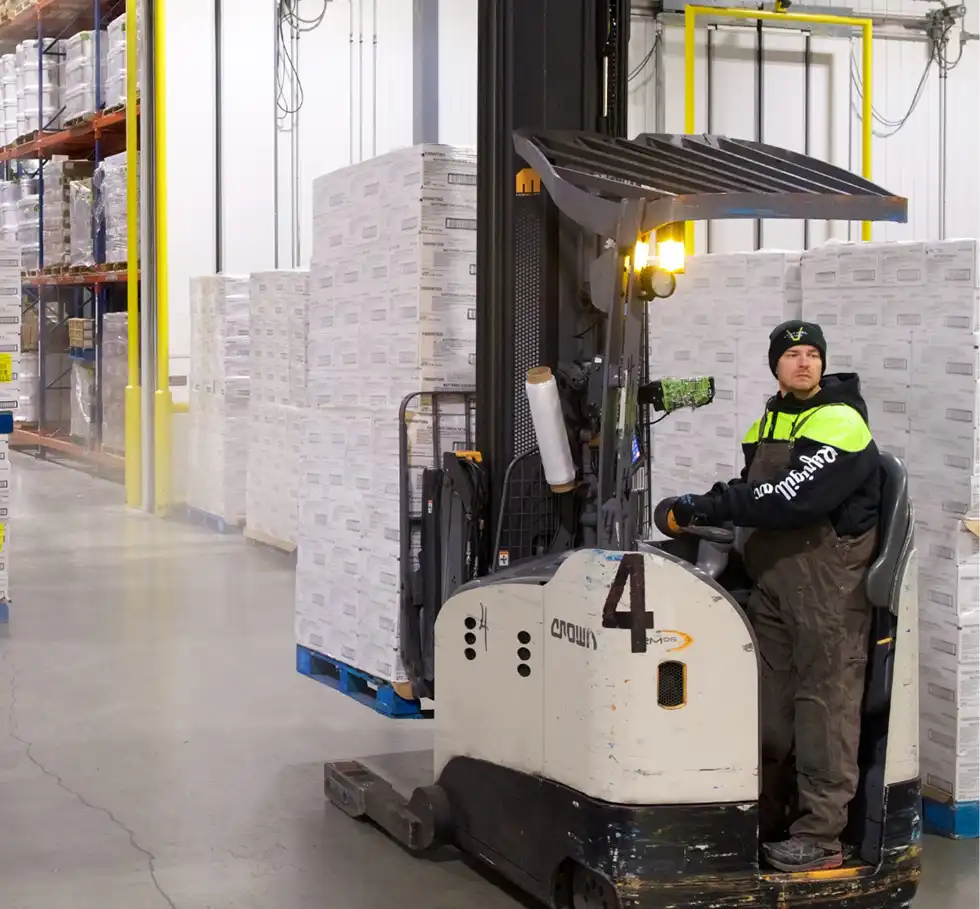
Butter brings its own requirements. In April 2026, Vertical announced CME Spot Call Butter approval at five facilities: Chicago, Fort Worth, Detroit, Indianapolis and Kansas City. Exchange approval makes those sites available for a specialized commodity market with rules for storage and handling. It is another route to serving a particular customer group, alongside the broader business of keeping food cold. The approval applies to the named facilities and program.
At Medley, Vertical added customs bonded warehousing in October 2025. Eligible frozen imports can remain under bond with duties deferred while stored. For a seafood or meat importer, the freezer becomes part of managing cash flow as well as inventory. Duty deferral is timing relief; the goods still need handling, storage and compliance.
The network also respects the peculiarities of place. In June 2026, Vertical acquired a second Dothan warehouse, bringing its announced total to 13. The cooler operates at 34°F to 50°F and serves the region’s peanut producers. Its nearby freezer primarily supports poultry. A peanut and a chicken share a logistics town, but disagree about the thermostat.
Standardize the plumbing. Leave room for judgment.
Acquisitions create another problem: consistency. Vertical’s facilities use a common technology platform, and its Dothan announcement describes converting the earlier freezer acquisition to its standard warehouse-management system. At the same time, its published values favor decentralized local leadership, open debate and incentives tied to performance. The proposed bargain is shared systems with decisions made close to the work.
The Indianapolis certificate offers a lesson other businesses can copy without purchasing a freezer. Start with an actual customer obstacle. Build the capability that removes it. Then ask whether other customers face the same obstacle in their businesses. It is a more disciplined starting point than adding services because they look handsome in a brochure.
For prospective customers, fit comes down to details: the right temperature, available capacity, handling requirements, freight routes and the approvals needed at that particular site. Indianapolis’s organic certification does not certify every warehouse; Medley’s customs bond does not cover every address. A straightforward bulk-storage order may gain less from an elaborate service menu. The complicated orders are where Vertical’s argument earns its hearing.
FOLLOW THE COLD CHAIN