In 2023, the proposition sounded tidy: two automated frozen-food facilities, a major grocery customer, a twenty-year commitment. Americold’s investor presentation estimated $336 million in development capital and projected stabilized returns of 10-12%. Three years later, the company and the customer agreed to unwind the arrangement. One facility would wind down; the other would never commence operations. Somewhere between a spreadsheet and a supermarket, the tidy proposition had become untidy.
- Americold stores food, handles orders and connects refrigerated transport.
- Its grocery automation retreat exposes the cost of getting the economics wrong.
- Rail connections, inventory visibility and shared capital offer other ways to grow.
That reversal is a useful way into Americold. Most people encounter its work without encountering its name. A bag of frozen vegetables reaches a shop looking unremarkable. Keeping it unremarkable requires buildings, power, people, information and timing. Food has the rather inconvenient habit of deteriorating while everyone else is arranging the paperwork.
A freezer with a billing department
Americold owns and operates temperature-controlled warehouses, with transportation and handling services attached. Producers need somewhere to put finished food; retailers need the right cases delivered in the right combinations; distributors need stock close to demand. Americold occupies the space between these obligations. It can freeze, store, pick, label, repack and consolidate products, depending on the facility.
The business has two clocks. Storage earns money while goods occupy capacity. Handling earns money when goods move or require work. Fixed commitments help reserve paid capacity even when customers’ actual inventories fluctuate. Throughput, meanwhile, determines how much handling there is to bill. A warehouse can be busy in one sense and disappointingly quiet in another.
Although it trades as a real estate investment trust, this is property with an unusually demanding daily routine. Americold reported about $2.6 billion in revenue for 2025. Its heritage runs back to the ice businesses consolidated with Ernest Woodruff’s involvement in 1903. The old business sold cold itself; the modern one sells cold combined with coordination.
The expensive part was the assumption
The automated facilities in Lancaster, Pennsylvania, and Plainville, Connecticut, were purpose-developed for ADUSA Distribution, part of Ahold Delhaize USA. In July 2026, the parties agreed to wind down Lancaster and not commence operations at Plainville. Lancaster’s planned deadline was year-end, with an extension available by mutual agreement.
“were not meeting our return expectations”
Rob Chambers, CEO · August 2026 earnings call
On the Lancaster and Plainville projects
Chambers said the facilities would require further capital, time and resources to reach full operation. That explains management’s change of course: the projected returns no longer justified the investment needed to obtain them. For a customer-specific facility, this is a particularly awkward calculation. The building remains, but the intended work can disappear. An automated distribution center has to earn its keep through useful output, not merely through the presence of automation.
The impairment includes other real-estate items. It reduces asset carrying values; it is not an additional construction bill.
The distinction matters. An impairment acknowledges that assets are worth less on the books; it does not mean that amount of cash left the business that quarter. Americold’s broader lesson is about the distance between a projected return and an operating return. Long commitments and impressive equipment cannot erase that distance by themselves.
Sometimes the clever bit is the address
Consider Kansas City. Americold opened a 335,000-square-foot import-export hub there in August 2025, connected to CPKC’s rail network and its Mexico Midwest Express refrigerated service. The opening announcement described an investment exceeding $100 million. The appeal is concrete: link refrigerated storage to a route carrying food between Mexico and the United States.
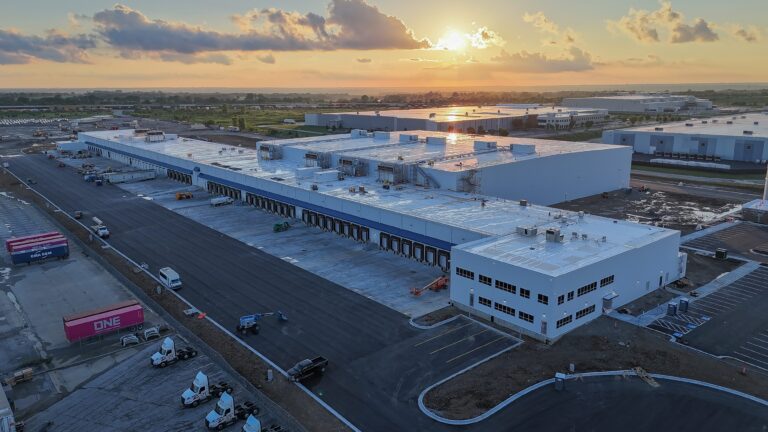
Port partnerships extend the same idea. DP World and CPKC connect maritime and rail capabilities with Americold’s storage. Geography becomes a service. A supplier choosing a warehouse should care about the journeys its stock must make, because every extra handoff introduces another appointment, another wait and another chance for temperature control to go astray.
Capital is being rearranged too. In August 2026, EQT acquired 70% of a twelve-facility joint venture valued at more than $1.3 billion in gross assets. Americold retained 30% and the management role, receiving roughly $1.1 billion in net cash proceeds intended for debt repayment. Customers still need an operator; ownership can be shared.
A steak subscription still needs a warehouse
The customer list stretches from industrial food production to doorstep orders. Americold’s work with Good Ranchers includes individual-order preparation, packaging and shipping. A meat brand can concentrate on selling dinner while Americold deals with the less photogenic business of getting dinner into a suitable box.
Information makes that arrangement usable. The i-3PL portal lets customers inspect inventory across Americold locations, manage orders, receive alerts and schedule carrier appointments. Electronic integration connects business systems. For consumer fulfillment, its SmarTrakr platform adds inventory and shipment visibility. Knowing where stock is becomes especially valuable when someone is already asking where their order went.
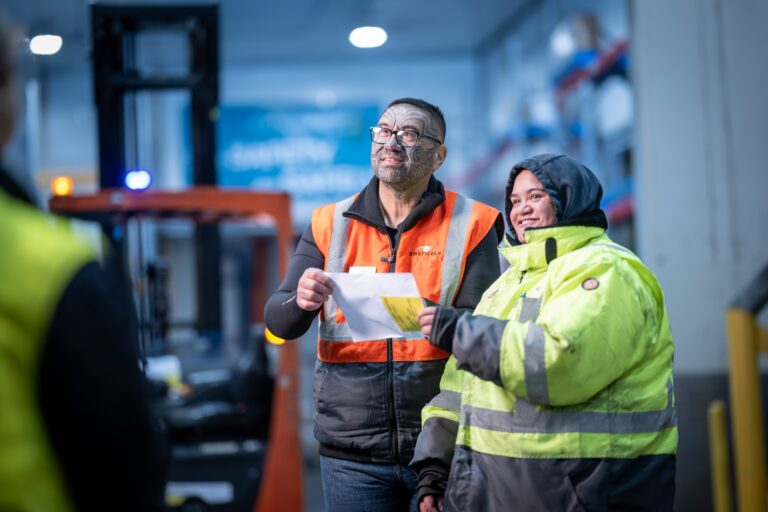
Americold’s operating framework measures productivity, cost, delivery, safety, quality and morale. The inclusion of morale is revealing: even a freezer depends on people. Its stated culture includes accountability and teamwork, alongside a Feed the Children partnership. These commitments matter most when translated into ordinary decisions on a warehouse floor.
Borrow the discipline before the machinery
GCCA’s 2026 global member ranking places Americold behind Lineage, with NewCold and United States Cold Storage among the alternatives. Americold’s appeal is the combination of a broad network and several services in one relationship. A particular customer still needs the right location, temperature range, volume and price. Scale cannot compensate for a bad fit.
The copyable lesson is an editorial one: measure the wait, the work and the ramp-up separately. Test the economics before commissioning specialized infrastructure. Ask what happens if volumes arrive late or another investment is needed. Americold’s century of experience did not exempt it from those questions. Neither will a beautiful spreadsheet.